
Why Professional Sprinkler Installation Makes Sense
Professional sprinkler installation offers homeowners a smart solution that saves time, conserves water, and maintains healthier lawns through automated precision watering systems.
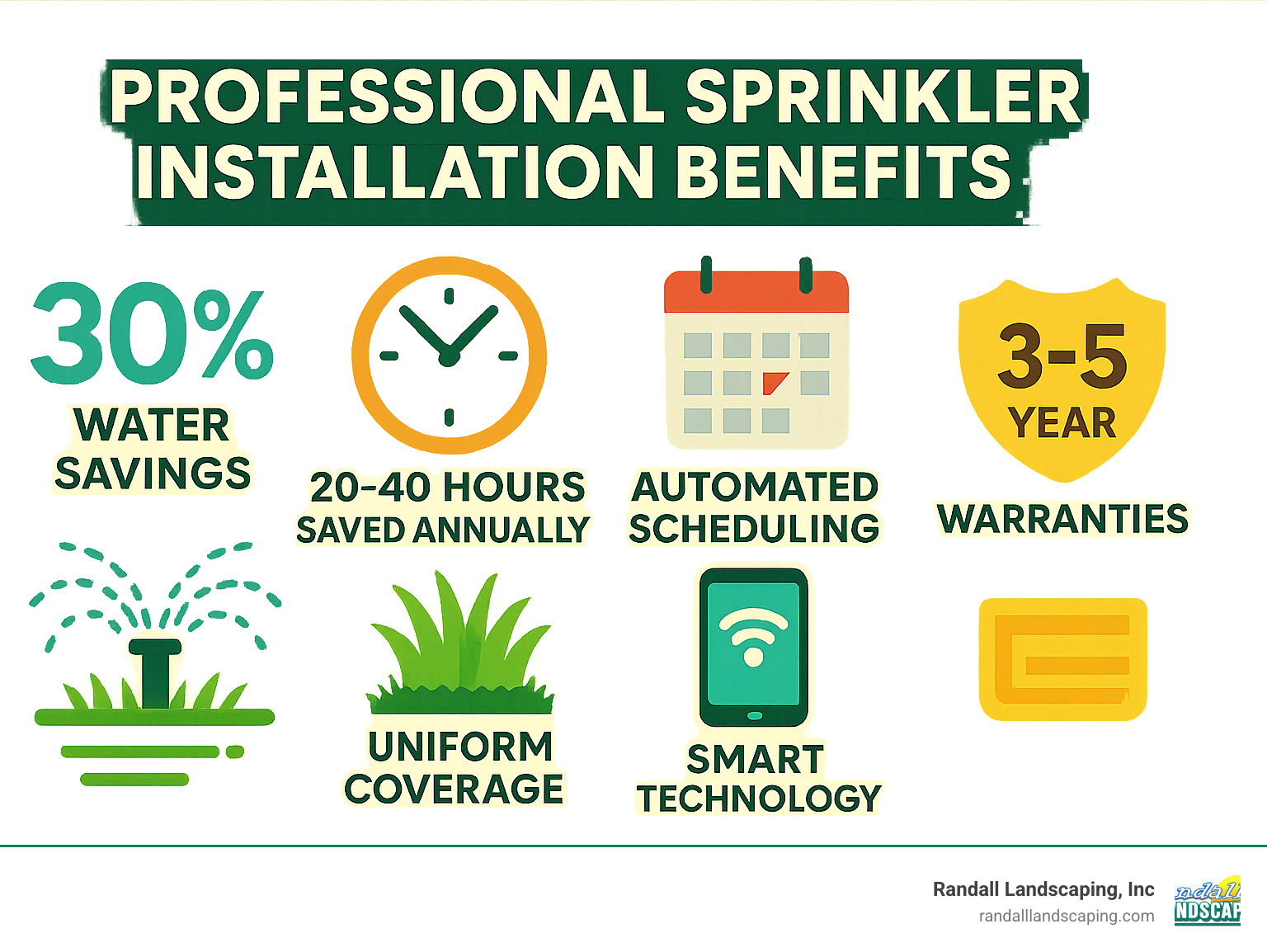
Key Benefits of Professional Sprinkler Installation:
• Water savings: Up to 30% less water usage vs. manual watering
• Time savings: 20-40 hours saved annually
• Better coverage: Uniform head-to-head spray patterns eliminate dry spots
• Smart features: Rain sensors, moisture detection, WiFi controls
• Property value: Can increase home value up to 15%
• Warranties: 3-5 year coverage on new installations
As one Denver homeowner put it: “Don’t waste your weekends watering the lawn” – a sentiment that captures why busy property owners are choosing automated irrigation over dragging hoses around their yards.
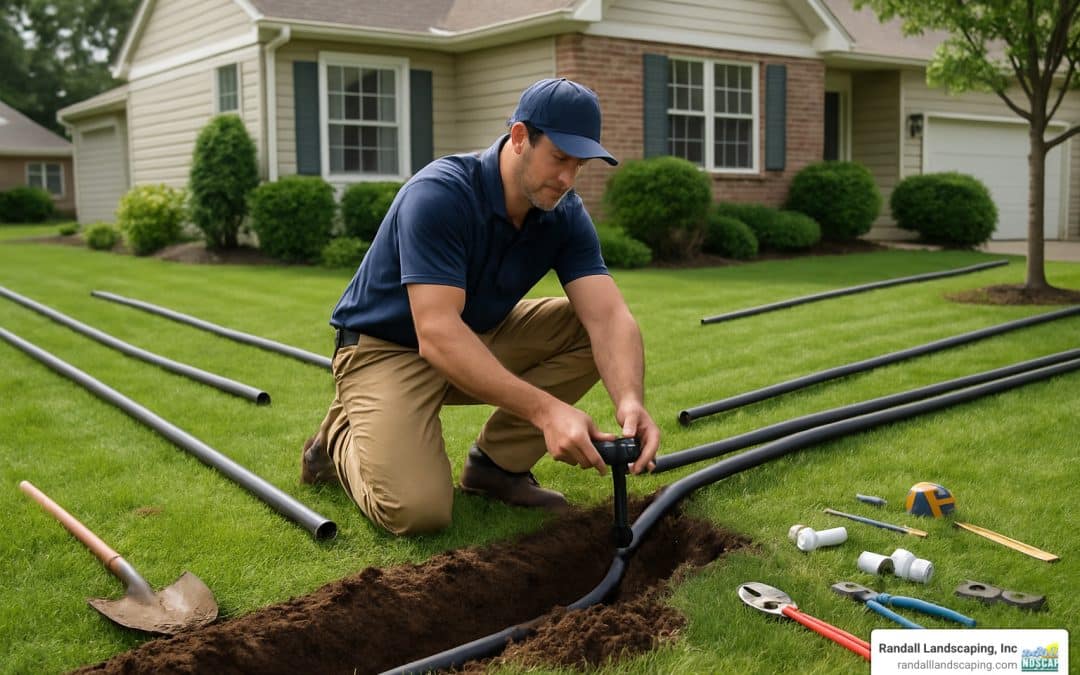
The typical professional sprinkler installation involves site design, trenching, pipe laying, valve placement, controller wiring, and system testing. Most residential projects take 1-3 days and include permits, utility locates, and minimal landscape disruption.
I’m Tommy Randall, owner of Randall Landscaping Business, and I’ve been helping Massachusetts and New Hampshire homeowners transform their outdoor spaces since 2006. Through nearly two decades of landscape work, I’ve seen how professional sprinkler installation eliminates the guesswork and daily hassle of keeping lawns green and healthy.
Professional sprinkler installation terms simplified:
– professional sod installation
– professional sod installation near me
Introduction
Picture this: You come home after a long day at work, and the last thing you want to do is spend your evening dragging hoses around your yard. But there’s your lawn, looking thirsty again, and you know that if you skip watering tonight, those brown patches will be back by tomorrow.
You’re not alone in this struggle. Most American households use 30-50% of their total water consumption just for outdoor watering, yet many lawns still end up with dry spots, overwatered areas, and that patchy look that makes you wonder where all that time and money went.
Here in Massachusetts and New Hampshire, we see this story play out every summer. Homeowners spend their precious weekend mornings moving sprinklers from zone to zone, trying to remember which areas they’ve already covered, and crossing their fingers that they’ll get the timing right before the next heat wave hits.
Setting the Stage
The truth is, most homeowner watering struggles come down to three main pain points: inconsistent coverage, time constraints, and water waste. You might water one area perfectly while completely missing the corner by the mailbox. Or you set up a sprinkler before work, only to realize eight hours later that you’ve been flooding the same spot all day.
Professional sprinkler installation solves these everyday frustrations by taking the guesswork out of lawn care. Instead of being tied to watering duties every evening, you get uniform coverage, smart scheduling, and the peace of mind that comes with knowing your landscape is getting exactly what it needs, when it needs it.
Whether you’re dealing with slopes that cause runoff, different plant zones that need varying amounts of water, or simply want to reclaim your weekends, an automated irrigation system transforms your relationship with your outdoor space from constant worry to genuine enjoyment.
Why Water Wisely: Benefits & Water Savings
Picture this: you’re dragging a heavy hose across your yard for the third time this week, watching water pool in some spots while other areas stay stubbornly dry. Meanwhile, your neighbor’s lawn looks like a golf course green, and they’re sipping lemonade on their deck. What’s their secret? They made the smart switch to professional sprinkler installation.
The difference between manual watering and a professionally designed system isn’t just convenience – it’s like comparing a flip phone to a smartphone. Both technically work, but one does everything better, smarter, and with far less effort on your part.
Here’s what really matters: professional sprinkler installation can reduce your water usage by up to 30% compared to hose watering, while saving you 20-40 hours every year. That’s an entire weekend back in your schedule, plus lower water bills and a healthier landscape.
Manual Watering vs Professional Sprinkler Installation
Let’s be honest about dragging hoses around your property. You’re essentially playing a guessing game with your lawn’s health. Too much water here, not enough there, and somehow you always miss that one corner that turns brown by August.
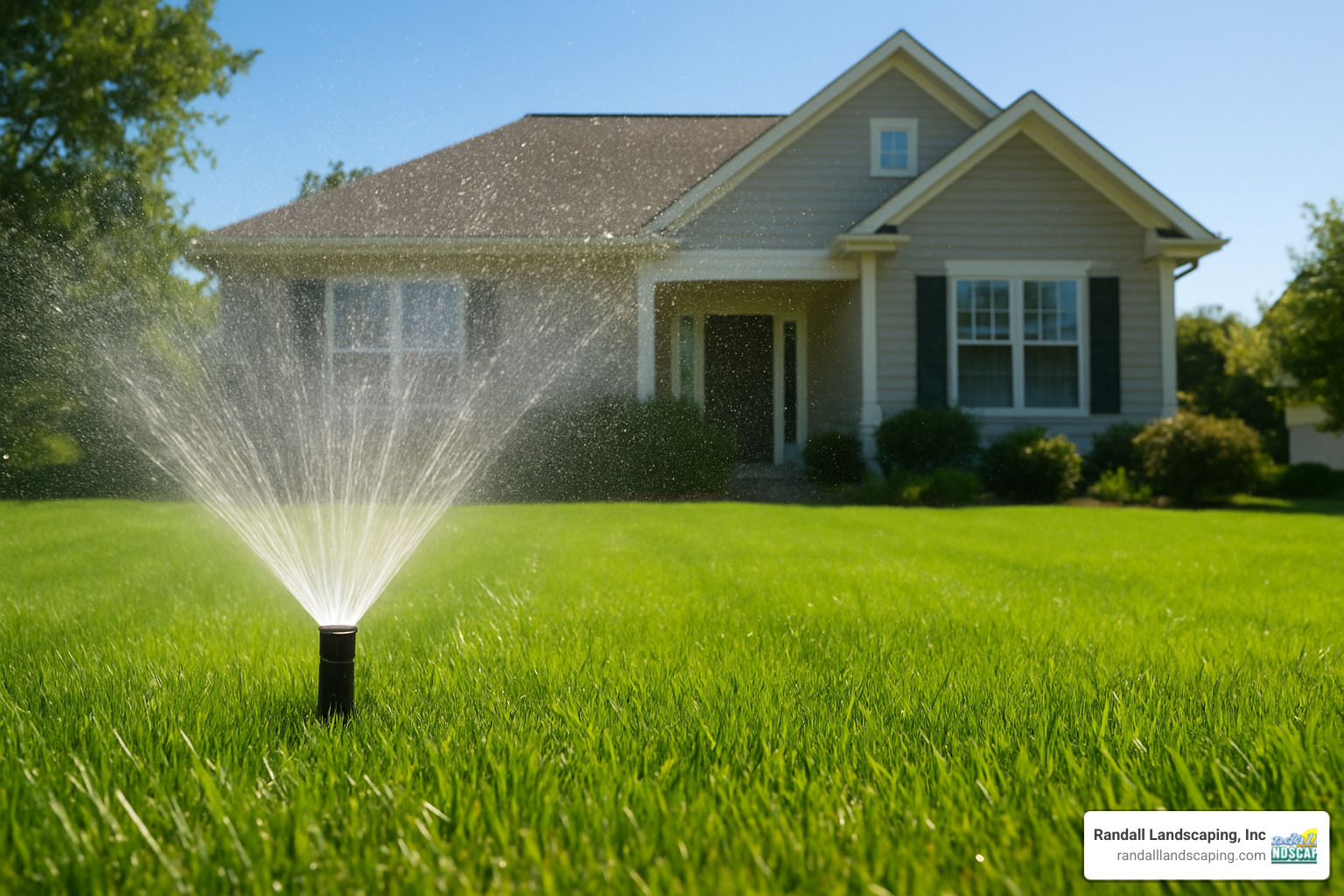
Professional sprinkler installation eliminates this guesswork through engineered precision. The key is something called head-to-head coverage – each sprinkler’s spray pattern overlaps perfectly with its neighbors, creating uniform water distribution across your entire lawn. No more dry patches, no more swampy spots.
But here’s the real game-changer: vacation mode. Two-week trip you’ve been putting off because you couldn’t bear to come home to a dead lawn? With automated scheduling, your system keeps everything green while you’re sipping drinks on a beach somewhere.
Professional systems deliver water in the early morning when evaporation is minimal and plants can actually absorb what they need. Your hose? It waters whenever you remember to turn it on, often during the heat of the day when half the water evaporates before reaching the roots.
Environmental & Financial Upside
Smart irrigation systems are like having a weather-savvy gardener who never takes a day off. Modern moisture sensors detect when Mother Nature has already done the watering for you, automatically delaying cycles after rain. No more watching your sprinklers run during a thunderstorm.
The numbers tell the story: smart sprinkler systems save homeowners an average of 8,800 gallons of water annually. In our area, that translates to real savings on your water bill and meaningful water conservation during those inevitable summer droughts.
Many local municipalities recognize the environmental benefits and offer utility rebates for installing water-efficient irrigation systems. It’s their way of saying “thanks for being part of the solution.”
These systems also help you stay compliant with drought restrictions that seem to pop up every few summers. When manual watering gets restricted, your automated system can adjust schedules to work within local guidelines while keeping your landscape healthy.
Overview of automatic irrigation systems provides additional technical details on how these systems maximize both water efficiency and landscape health.
The bottom line? Professional sprinkler installation isn’t just about convenience – it’s about working smarter, not harder, while boosting your property value and doing right by the environment.
Anatomy & Design: Components, Yard Factors, Smart Tech & Costs
A professional sprinkler installation is like building a custom irrigation network under your lawn. While it might look like just sprinkler heads popping up from the ground, there’s actually a sophisticated system working behind the scenes to deliver the right amount of water to the right places at the right time.
Key System Components Explained
The heart of any irrigation system starts with zone valves that act like traffic controllers for your water flow. Your front lawn doesn’t need the same watering schedule as your vegetable garden, so these valves let different areas operate independently. It’s this kind of customization that makes professional systems so much smarter than dragging a hose around.
Pipes and manifolds form the highway system that carries water throughout your property. These underground PVC or polyethylene pipes stay hidden but do the heavy lifting of getting water where it needs to go. Manifolds group multiple valves together in one spot, making future maintenance much easier for both you and your service technician.
Swing joints might sound technical, but they’re basically flexible connections between the underground pipes and sprinkler heads. Think of them as shock absorbers that prevent damage when the ground shifts or someone accidentally steps on a sprinkler head. Trust us, these little components save a lot of headaches down the road.
The controller serves as the brain of your system, and modern versions are remarkably smart. Today’s controllers offer WiFi connectivity, weather integration, and smartphone control. You can adjust your watering schedule from the beach in Florida while your lawn back home stays perfectly green.
Every professional sprinkler installation needs a backflow preventer – it’s required by most local codes and prevents irrigation water from contaminating your home’s drinking water supply. We also strongly recommend installing a master valve because, as irrigation experts note, it “can prove invaluable in preventing major water loss” if a leak develops. Overview of master valves explains why this component is crucial for system protection.
Designing for Your Yard
Here’s where professional design really shines – we account for factors that most homeowners never consider. Soil type makes a huge difference in how your system should operate. Clay soil absorbs water slowly and needs longer, less frequent watering cycles. Sandy soil drains quickly and requires shorter, more frequent sessions.
Slope and microclimates create different watering needs across your property. That shady spot under your maple tree needs different treatment than the sunny area by your driveway. Professional systems create separate zones that address these variations automatically.
Your home’s water pressure determines how many sprinkler heads can operate at once. We measure this during design to ensure every zone gets adequate pressure for proper coverage. There’s nothing worse than a sprinkler system that dribbles instead of sprays.
Head-to-head coverage is an engineering principle that ensures uniform watering by overlapping spray patterns from adjacent sprinklers. This eliminates those brown strips you see with poorly designed systems.
Modern systems include impressive smart features: rain sensors that pause watering during storms, soil moisture sensors that detect when watering is actually needed, weather-based controllers that adjust schedules based on local conditions, WiFi connectivity for remote monitoring, and integration with home automation systems. It’s like having a personal lawn care expert working 24/7.
What Will It Cost?
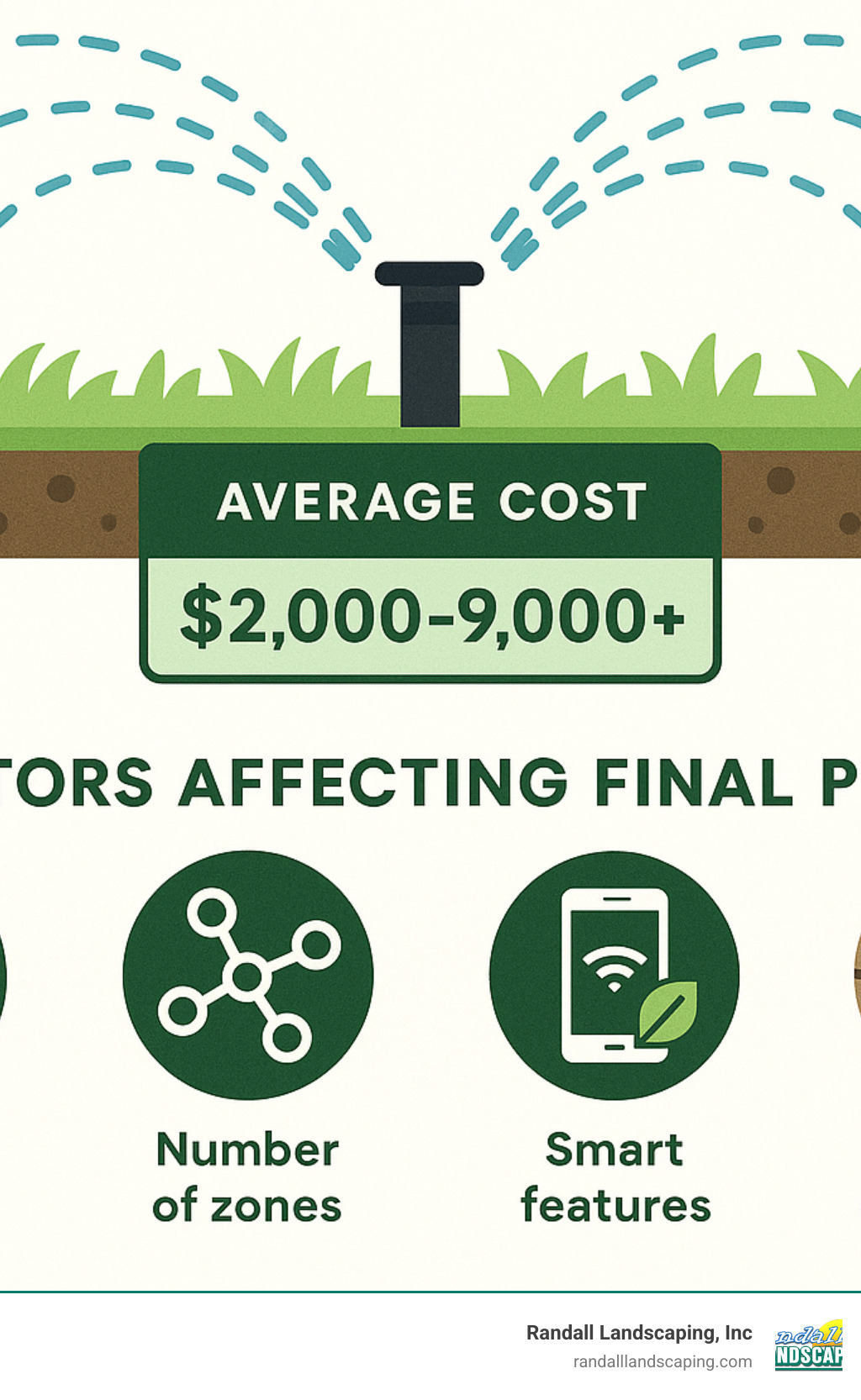
The investment for professional sprinkler installation varies significantly based on your property’s unique needs. Based on internet research, average costs range from $2,000 to $9,000 or more, depending on factors like property size, system complexity, and regional requirements. These are average costs based on internet data and not actual costs for Randall Landscaping.
Property size and complexity obviously affect cost – a simple front lawn installation costs less than a multi-zone system covering several acres. The number of zones required depends on your landscape’s different watering needs. Smart features and controller types can add to the investment but often pay for themselves through water savings.
Local permit requirements vary by municipality, and soil conditions can affect installation complexity. Rocky soil or areas with lots of tree roots require more careful trenching work.
Most professional installers offer warranties ranging from 3-5 years on new installations, giving you confidence that your investment is protected. Many companies also provide financing options to spread the cost over time, making professional installation accessible without requiring a large upfront payment.
The key is viewing this as a long-term investment in your property’s value and your own quality of life. When you factor in the time savings, water efficiency, and improved lawn health, professional installation often pays for itself within a few years.
Professional Sprinkler Installation Process & Timeline
Getting a professional sprinkler installation isn’t as simple as showing up and digging holes. There’s actually a detailed process that separates the pros from weekend warriors with shovels. This systematic approach is exactly why professional installations work so much better than DIY attempts.
The whole project typically takes 1-3 days for most residential properties, though Mother Nature sometimes has her own timeline in mind. We’ve learned that rushing through any step usually means fixing problems later, so we stick to our proven process.
Step-By-Step Walk-Through
Site Survey comes first, and this isn’t a casual stroll around your yard. We’re out there with measuring tools, checking slopes, noting where your prize roses are planted, and figuring out why that one corner of your lawn always stays soggy. Every property has its quirks, and finding them early saves headaches later.
Blueprint Design turns all those measurements into an actual plan. Think of it as the GPS for your irrigation system – every pipe route, sprinkler location, and zone boundary gets mapped out. This blueprint becomes our bible during installation.
Permits and 811 Utility Locates handle the boring-but-crucial paperwork. We deal with city permits while 811 comes out to mark where your gas, electric, and water lines are buried. Nobody wants to hit a gas line while digging trenches, trust us on that one.
Materials Staging means all the pipes, fittings, sprinkler heads, and controllers get delivered before we break ground. It’s like setting up all your ingredients before cooking dinner – everything needs to be ready when you need it.
Trenching is where the real work begins. We dig trenches 6-12 inches deep to install the underground piping network. Some situations call for trenchless methods, which sounds fancy but basically means we can install pipes without tearing up your entire yard.
Pipe Layout and Connection follows the blueprint exactly. Every joint gets properly cemented or clamped because nobody wants to dig up their lawn in two years to fix a leak that could have been prevented.
Valve Installation puts the zone controls in accessible valve boxes. We group them in manifolds whenever possible, making future maintenance much easier for everyone involved.
Controller Wiring connects each valve to the main controller with low-voltage wires. All connections get waterproofed because electricity and water make terrible roommates.
Controller Setup and Programming turns your new hardware into an actual working system. We program initial watering schedules based on what your specific landscape needs, not some generic factory settings.
Pressure Testing happens before we bury anything permanently. We test every zone, check for leaks, and make sure each sprinkler head gets proper pressure. Finding problems now beats finding them after everything’s buried.
Final Adjustments fine-tune each sprinkler head for perfect coverage and spray patterns. This step separates professional installations from “close enough” DIY jobs.
Backfill and Cleanup restores your property to its original condition, minus the new irrigation system. Excess soil gets hauled away, and disturbed areas get restored to match your existing landscaping.
Permits, Local Codes & Safety
The paperwork side of professional sprinkler installation often surprises homeowners, but it’s there for good reasons. We handle all the bureaucratic stuff that trips up DIY projects.
Backflow Prevention isn’t optional in most areas. These devices prevent irrigation water from contaminating your home’s drinking water supply, and most municipalities require annual inspections. We make sure your system meets all local requirements from day one.
Watering Restrictions vary by location and season. We program controllers to automatically comply with local watering restrictions and drought ordinances, so you don’t accidentally water on the wrong days.
Environmental Rules keep getting more specific as water conservation becomes increasingly important. Professional installers stay current with these regulations, while DIY installers often don’t even know they exist.
Electrical Codes govern controller installation since these devices need proper outdoor electrical connections. This includes proper grounding and GFCI protection – not the kind of thing you want to guess about.
How Pros Protect Existing Landscaping
The biggest fear most homeowners have about irrigation installation is watching their beautiful landscaping get destroyed in the process. We get it – you’ve spent years getting your yard just right.
Turf Preservation means we carefully lift sod sections instead of just churning through them with a trenching machine. With proper technique, you’ll barely notice where trenches were dug once the grass settles back in.
Precise Trenching uses specialized equipment that creates clean, narrow cuts rather than wide excavations that look like someone was digging for buried treasure.
Tree Root Protection requires experience and knowledge. We know how to work around tree roots without damaging them or compromising tree health. Those big oaks didn’t get that way by accident, and we’re not about to hurt them now.
Cleanup Guarantee means complete restoration of all disturbed areas. We don’t consider the job finished until your property looks better than when we started.
| Aspect | DIY Installation | Professional Installation |
|---|---|---|
| Design | Basic layout, often inadequate coverage | Engineered design with head-to-head coverage |
| Permits | Homeowner responsibility, often overlooked | Handled by contractor |
| Timeline | Weekends over months | 1-3 days |
| Warranty | None | 3-5 years typical |
| Code Compliance | Hit or miss | Guaranteed |
| Equipment | Rent or buy tools | Professional grade included |
| Mistakes | Costly to fix | Avoided through experience |
DIY vs Professional: Preparation, Contractor Questions, Maintenance & FAQs
The decision between tackling sprinkler installation yourself or hiring professionals often comes down to understanding what’s really involved. We’ve seen plenty of weekend warriors start with confidence, only to call us halfway through when they realize they’re in over their heads.
Preparing Your Property
Smart preparation makes any irrigation project go smoother, whether you’re doing it yourself or bringing in the pros. Think of it as setting the stage for success.
Flag your sprinkler heads by walking your property with spray paint or small flags. Mark spots where you think coverage makes sense. This exercise helps you visualize the project scope and gives contractors a starting point for design discussions.
Clear debris from areas where trenching will happen. Move garden hoses, tools, kids’ toys, and anything else that might get in the way. Professional crews appreciate this courtesy, and it can save you money on labor costs.
Access your water main needs to be clear and accessible. The irrigation system connects to your home’s main water line, so make sure contractors can reach this area easily. Sometimes this means trimming bushes or moving stored items.
Document your existing landscaping with photos, especially areas where you’re worried about damage. This creates a record of how things looked before work began.
Questions to Ask Before You Hire
Not every contractor who claims to install sprinklers actually knows what they’re doing. We’ve fixed plenty of systems installed by well-meaning but inexperienced crews. Here’s how to separate the pros from the pretenders:
Licensing and insurance should be your first question: “Are you licensed for irrigation work in our area, and can I see proof of liability insurance?” Don’t take their word for it – ask to see documentation. This protects you if something goes wrong during installation.
Timeline expectations matter for planning: “How long will this project take, and what might cause delays?” Weather, permit processing, and soil conditions can all affect timing. Good contractors give realistic estimates, not overly optimistic ones.
References from recent work tell the real story: “Can you provide contact information for three recent local projects?” Actually call these references and ask about work quality, cleanup, and whether they’d hire the contractor again.
Warranties and guarantees show confidence in the work: “What warranty do you provide on installation and components?” Professional professional sprinkler installation should come with substantial warranty coverage.
Permit handling separates professionals from amateurs: “Do you handle all permit applications and inspections?” This should be included in professional service, not an extra charge.
Common Post-Install Care
One of the best parts about professional sprinkler installation is how little ongoing work it requires compared to the time you’ll save. But like any mechanical system, it needs some seasonal attention.
Seasonal blowouts are essential in our New England climate. Every fall, the system needs to be drained to prevent freeze damage. Most contractors offer this service for around $85 annually – a small price to pay for protecting your investment.
Spring startup brings your system back to life each year. This involves turning water back on, checking for any winter damage, and adjusting sprinkler heads that may have shifted. It’s also when we test pressure and make sure everything still works properly.
Controller updates keep smart systems running smoothly. Modern WiFi-enabled controllers sometimes receive firmware updates that improve functionality. Many of these happen automatically, but occasionally you might need to manually update the system.
Zone audits help you catch problems early. Walk your property periodically to make sure each zone waters its intended area. Plants grow, landscapes change, and sometimes sprinkler heads need adjustment to maintain proper coverage.
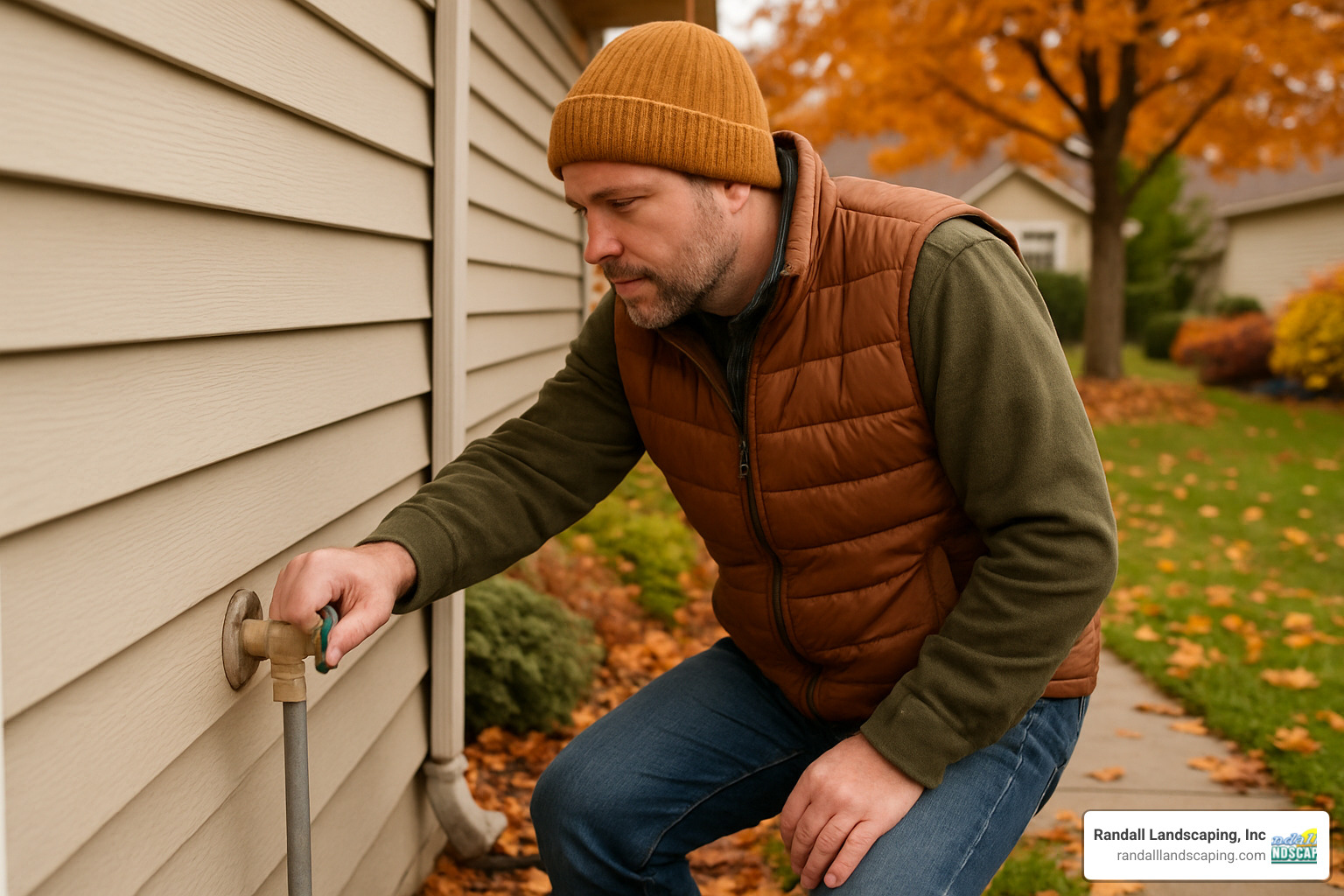
Our Landscape Maintenance Services include seasonal irrigation system care to keep your investment running smoothly year after year.
Frequently Asked Questions about Professional Sprinkler Installation
How long does a professional job take?
Most residential professional sprinkler installation projects wrap up in 1-3 days, depending on your property size and how complex the system needs to be. A typical suburban lawn with 4-6 zones usually takes about 2 days from start to finish.
Several factors can extend the timeline beyond the average. Large properties requiring more zones naturally take longer. Rocky soil or clay that’s tough to dig can slow trenching work. Complex landscaping where we need to work carefully around established plants requires extra time and attention.
Weather delays are probably the most common timeline disruptor. We can’t install electrical components in the rain, and muddy conditions make trenching messy and difficult. Permit processing time varies by municipality, though most residential projects don’t face long delays.
What kind of warranty is typical?
Professional installations typically include warranties ranging from 3-5 years on new sprinkler systems. This coverage usually includes installation workmanship, major component failures, electrical connections and wiring, plus valve and controller defects.
The warranty gives you peace of mind that if something goes wrong with the installation or major components fail prematurely, you’re covered for repair or replacement. Some contractors also offer extended warranties or maintenance packages that include annual service calls.
That warranties typically don’t cover damage from freezing (if you skip winterization), lawn mower strikes on sprinkler heads, or normal wear and tear on components like seals and gaskets.
How do I know when my old system needs replacing?
Systems installed 5-10 years ago often show performance issues that signal it’s time for replacement or major upgrades. The most obvious sign is brown spots appearing despite proper timer settings – this usually means coverage has become uneven over time.
Significantly reduced water pressure in some zones often indicates pipe problems or valve failures. When repairs become frequent and costly, replacement usually makes more financial sense than continuing to patch an aging system.
Missing modern water-saving features like rain sensors, soil moisture detection, or smart controllers means you’re probably wasting water and money. If your existing system lacks these features or shows multiple zones with poor coverage, upgrading to a modern professional sprinkler installation often pays for itself through water savings and improved lawn health.
Conclusion
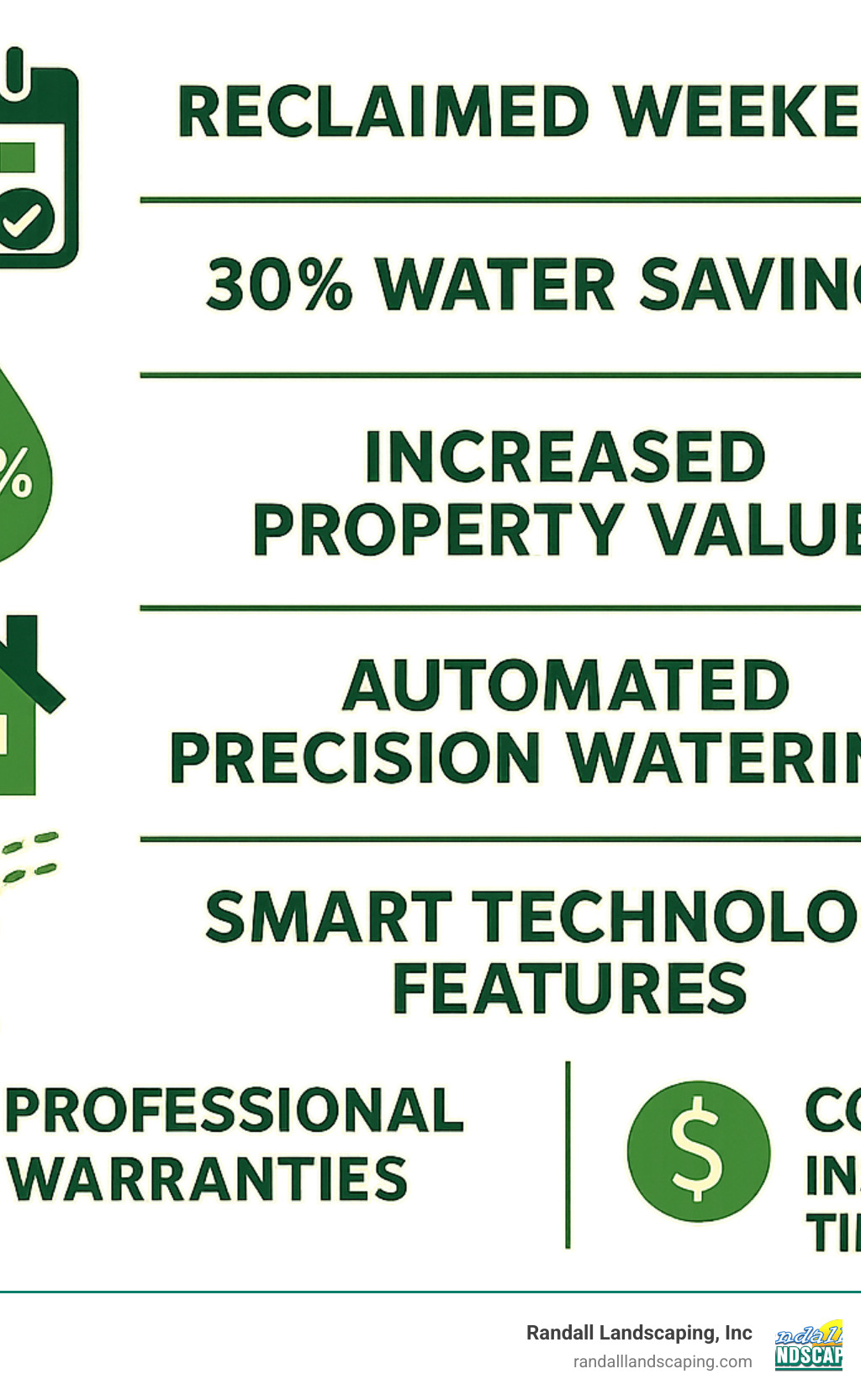
Frustration we talked about at the beginning? The endless evenings spent dragging hoses around your yard, watching your water bill climb while brown patches still appeared despite your best efforts? Professional sprinkler installation eliminates all of that.
The math is pretty compelling when you think about it. You’ll reclaim 20-40 hours every year – that’s an entire work week you get back to spend with family, pursue hobbies, or simply relax in your beautiful yard instead of maintaining it. The 30% water savings means your system pays for itself over time while doing a better job than you ever could with a garden hose.
But beyond the numbers, there’s something deeply satisfying about having a landscape that takes care of itself. No more rushing home from vacation because you’re worried about your lawn. No more guilt about forgetting to water the flower beds. No more playing weather roulette, wondering if that storm will be enough or if you still need to drag out the sprinkler.
Smart technology has transformed irrigation from simple timers to systems that think for themselves. When it rains, your system knows to pause. When temperatures spike, it adjusts accordingly. When you’re traveling, everything keeps running smoothly without you.
At Randall Landscaping, Inc., we’ve watched countless homeowners in Andover, Salem, Windham, and throughout the Merrimack Valley and Southern New Hampshire make this transition. The relief on their faces when they realize they’re truly done with manual watering is something we never get tired of seeing.
Our commitment to quality work and 100% reliability means your irrigation system becomes one less thing to worry about, not another source of stress. We design it right, install it right, and stand behind our work with comprehensive warranties.
The real value of professional sprinkler installation isn’t just in the water savings or increased property value – though both are significant. It’s in the peace of mind that comes from knowing your landscape will look great whether you’re home or away, whether it’s been a dry week or a wet month.
If you’re ready to upgrade your entire outdoor space, our new lawn installation services pair perfectly with professional irrigation systems. Together, they create landscapes that are both stunning and virtually maintenance-free.
The choice really comes down to this: keep spending your precious free time and hard-earned money on inefficient watering methods that deliver inconsistent results, or invest in a professional system that works smarter, not harder. Your future self – the one enjoying weekend mornings on the deck instead of wrestling with sprinklers – will thank you for making the smart choice.