

Why Quality Sandstone Retaining Wall Builders Make All the Difference
Finding qualified sandstone retaining wall builders can transform a sloping yard into a beautiful, functional outdoor space. When searching for a contractor, look for licensed and insured professionals with a strong portfolio of sandstone projects, positive local reviews, and experience with drainage and local building codes.
Key services should include site assessment, proper foundation and drainage installation, quality material sourcing, and professional construction. The difference between a wall that lasts decades versus one that fails in a few years often comes down to proper construction and drainage. A correctly built natural stone retaining wall can last 50-200 years, making your choice of builder a critical investment.
Whether you’re managing soil erosion, creating flat areas, or enhancing your landscape, the right contractor ensures your project has both beauty and structural integrity for generations. I’m Tommy Randall, owner of Randall Landscaping, and since 2006, my team has worked with expert sandstone retaining wall builders to deliver quality hardscape projects in Massachusetts and New Hampshire that stand the test of time.
The Foundation of a Great Landscape: What is a Retaining Wall?
A retaining wall is a structure built to hold back soil and rock, changing a sloped yard into a usable space. Unlike a simple garden wall, a retaining wall is engineered to withstand significant pressure from the earth behind it. This makes it essential for managing slopes, preventing soil erosion, and creating level ground for patios or gardens.
At Randall Landscaping, we view retaining walls as a cornerstone of smart landscape design. They provide vital structural support while enhancing the beauty and practicality of your outdoor space. They are a perfect solution for challenging terrains, allowing us to sculpt your land to fit your vision.
More info about Hardscaping Services
Primary Purposes of a Retaining Wall
A retaining wall serves several important functions:
- Stopping Soil Erosion: On sloped properties, water runoff can wash away valuable topsoil, creating ruts and instability. A well-built retaining wall holds the soil firmly in place, protecting your landscape and home foundation.
- Creating Usable Flat Areas: Retaining walls can transform a steep hillside into a level lawn, garden, or patio through terracing. This technique uses a series of walls to create flat levels, maximizing your property’s potential and opening up new outdoor living spaces.
- Supporting Structures: A retaining wall provides crucial support for driveways, paths, or raised patios built along a slope. It ensures these structures remain stable and safe over time.
- Managing Water Drainage: Retaining walls can be designed to guide water flow, preventing pooling and foundation damage. When combined with a proper drainage system, they relieve water pressure, which is vital for the wall’s long-term strength.
More info about Patio Design and Construction
Aesthetic and Functional Integration
Beyond their practical uses, retaining walls are powerful design elements that can boost your home’s curb appeal and functionality. They can seamlessly blend into your landscape, becoming a beautiful highlight.
- Landscape Feature: A well-designed retaining wall adds texture, color, and visual interest, turning a plain slope into a captivating backdrop.
- Defining Outdoor “Rooms”: Retaining walls can create distinct zones in your yard, such as separating a patio from a garden or defining a dining space.
- Built-in Seating: Lower retaining walls can double as permanent seating around a patio or fire pit, adding functionality and elegance.
- Raised Garden Beds: Retaining walls are perfect for creating raised garden beds, which adds a layered look and can improve plant drainage.
- Improving Curb Appeal: An expertly built retaining wall significantly boosts your home’s curb appeal and property value, showcasing a commitment to quality landscaping in the Merrimack Valley and Southern New Hampshire.
More info about Hardscape Landscapers
The Timeless Appeal of Natural Stone: Why Choose Sandstone?
While there are many material options for retaining walls, natural stone, especially sandstone, offers a unique blend of strength and beauty. It provides timeless design, long-term value, and a connection to the natural environment.
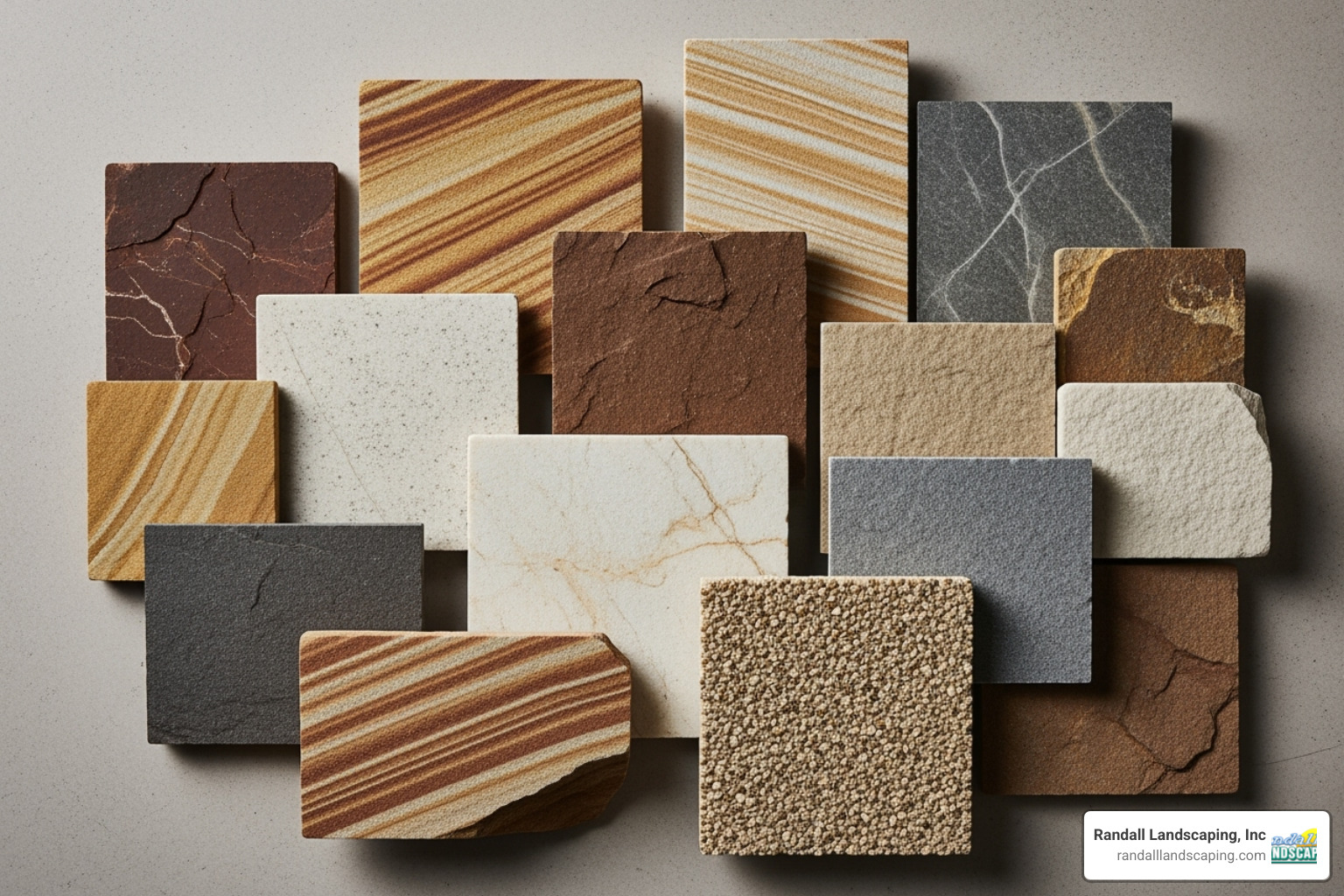
Sandstone comes in a stunning range of earthy colors—from warm browns and reds to soft creams and grays—with varied textures from smooth to rustic. This natural variation ensures your wall is one-of-a-kind.
Beyond its appearance, sandstone is incredibly durable and weather-resistant. Formed under immense pressure, it’s well-suited for outdoor structures. A well-built natural stone retaining wall is a legacy investment that can last for 50 to 200 years.
Key Benefits of a Sandstone Wall
Choosing sandstone for your retaining wall offers numerous advantages:
- Amazing Longevity: When properly installed by skilled sandstone retaining wall builders, these walls can last 50 to 200 years. This far surpasses materials like timber, which may need replacement in 10-20 years.
- Timeless Aesthetic: Sandstone’s organic beauty and natural colors blend seamlessly with any landscape, from rustic to modern, adding a sense of permanence and elegance.
- Boosts Property Value: A high-quality sandstone wall is a significant upgrade that can increase your home’s value. Its durability and appearance are highly desirable to potential buyers.
- Low Maintenance: Sandstone requires minimal upkeep. It doesn’t rot, warp, or attract pests like timber, and it doesn’t need painting or staining. Occasional cleaning is usually all that’s required.
- Eco-Friendly Material: As a natural and abundant resource, responsibly sourced sandstone has a lower environmental impact than many manufactured materials.
- Design Flexibility: Sandstone can be cut into uniform blocks for a formal look or used as irregular stones for a rustic feel, allowing our sandstone retaining wall builders to customize the design to your style.
[TABLE] comparing Sandstone vs. Concrete Blocks vs. Timber
To help you see just how sandstone stacks up, here’s a quick comparison with two other popular retaining wall materials: concrete blocks and timber.
| Material | Lifespan (Years) | Average Cost (per sq ft) | Maintenance | Aesthetic | Installation Difficulty |
|---|---|---|---|---|---|
| Sandstone | 50-200 | $50 – $150 | Low | Natural, timeless, varied colors/textures | High (requires skilled masons) |
| Concrete Blocks | 50-100 | $20 – $80 | Low | Uniform, can mimic stone, versatile | Moderate (modular, interlocking) |
| Timber | 10-20 | $10 – $40 | High (rot, pests, warp) | Rustic, can look weathered/worn | Low (can be DIY-friendly for small walls) |
Please note: The costs listed above are average costs based on internet data and are not actual costs for Randall Landscaping. Material prices can fluctuate significantly based on region, quality, and project complexity.
Budgeting for Beauty: What Does a Sandstone Retaining Wall Cost?
Understanding the cost of a sandstone retaining wall is a key step for homeowners. While a precise quote requires a site visit, we can outline the general investment.
These are average costs based on internet data and not actual costs for Randall Landscaping. Every project is unique.
Generally, sandstone retaining walls cost between $50 to $150 per square foot, with some high-end projects reaching $200 per square foot. This range reflects the quality of the stone, design complexity, and site conditions. The total cost is a combination of labor costs, material costs, and project complexity, including site preparation and drainage. The expertise required for natural stone is a significant factor in the investment.
[For more context on material pricing trends, see this [scientific research on concrete pricing](https://floorcritics.com/concrete-vs-hardwood-flooring)]
More info about Retaining Walls
Factors That Influence the Final Price
Several key factors shape the final cost:
- Wall Dimensions: The height and length of the wall directly impact material and labor needs. Taller walls (often over 3-4 feet) may also require engineering and permits.
- Site Accessibility: Difficult access for equipment and materials, such as on steep slopes or in tight spaces, increases labor costs.
- Soil Conditions: Unstable or poor soil may require deeper foundations or extra stabilization measures, adding to the cost.
- Excavation: The amount of earth that needs to be moved and disposed of will affect the price.
- Drainage Complexity: While essential, the extent of the drainage system (gravel backfill, pipes, etc.) varies based on site needs.
- Material Sourcing: Transportation costs for sandstone can vary depending on the distance from the quarry to your property.
- Permit Fees: The cost of municipal permits and any required engineering plans will be part of the total investment.
Understanding the Investment
While the upfront cost of a sandstone wall may be higher than timber, it’s a long-term investment. A timber wall might need replacement in 10-20 years, creating recurring costs. In contrast, a properly built sandstone wall can last 50-200 years with minimal maintenance.
The return on investment is significant. A sandstone wall boosts curb appeal and market value, signaling a quality, permanent improvement to potential buyers. The low maintenance requirements also save money over time. Factoring in longevity and increased property value, sandstone is often the most cost-effective choice in the long run.
More info about Hardscape Companies
How to Hire the Best Sandstone Retaining Wall Builders for Your Project
Choosing the right sandstone retaining wall builders is the most critical decision for your project’s success. A retaining wall is a structural element requiring correct design and construction for safety and longevity. It’s essential to vet contractors thoroughly.
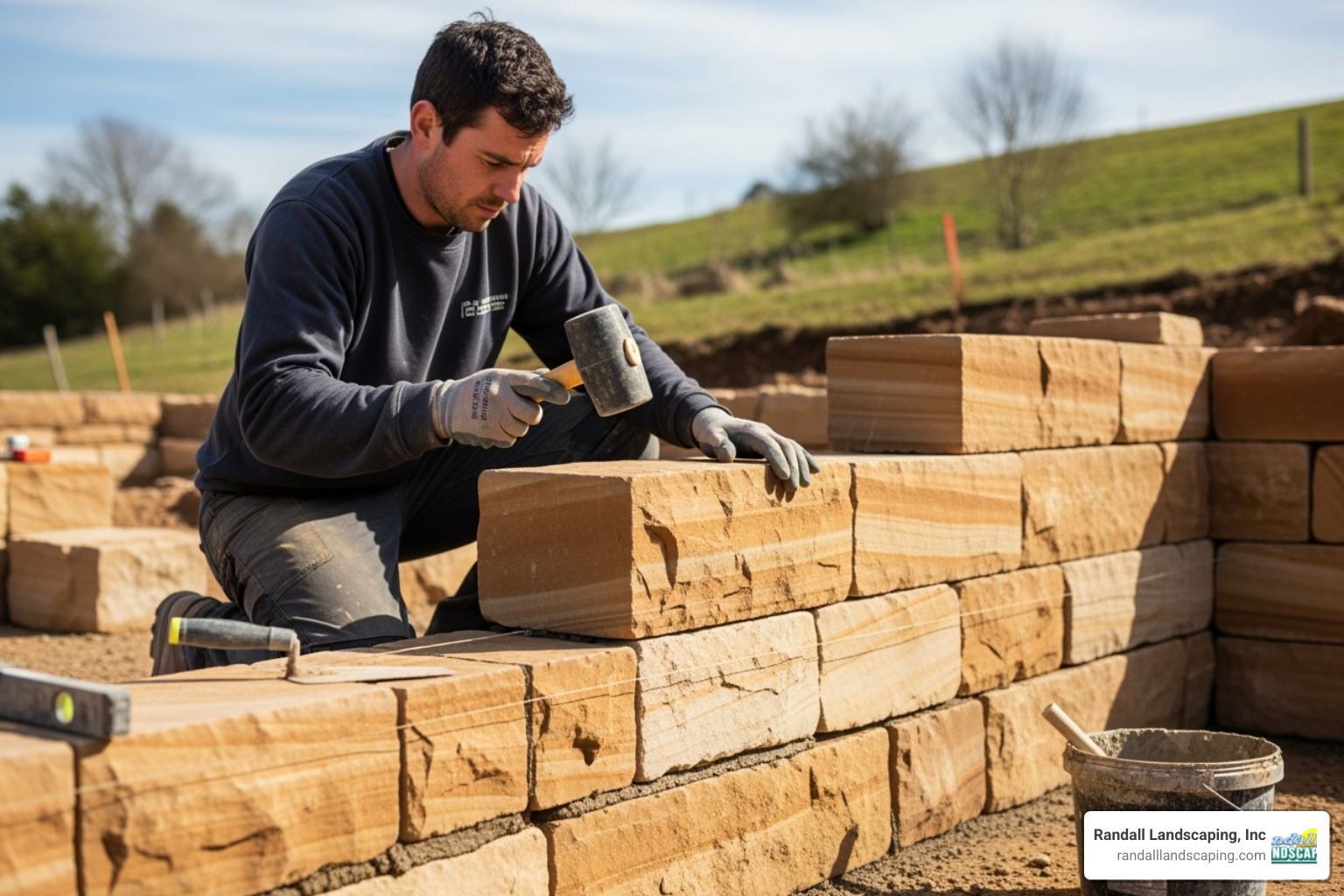
Finding local experts with proven experience in natural stone, specifically sandstone, is key. This material requires a specialized skill set that general contractors may not have. The craftsmanship in laying each stone is what creates a durable and beautiful wall.
What to Look for in Reputable Sandstone Retaining Wall Builders
Here is what to look for in a potential contractor:
- License and Insurance: This is non-negotiable. Verify the contractor is licensed for your area (MA or NH) and has full liability and worker’s compensation insurance to protect you.
- Portfolio of Sandstone Projects: A strong portfolio demonstrates experience and quality. Ask to see photos and, if possible, visit completed projects.
- Specific Sandstone Experience: Ask about their experience with sandstone, as it requires different techniques than other materials.
- Reviews and References: Check online reviews and ask for references from past clients with similar projects.
- Clear Communication: A professional contractor should be responsive, explain processes clearly, and listen to your concerns.
- Written Contract: Insist on a detailed contract that outlines the scope of work, materials, timeline, payment schedule, and warranty.
- Knowledge of Drainage and Engineering: The builder must understand proper drainage solutions and when engineering is required for taller walls.
- Warranties: A reputable contractor will offer a warranty on their workmanship.
At Randall Landscaping, Inc., our USP is quality work and 100% reliability, focusing on customer satisfaction. We strive to embody these qualities in every project, ensuring our clients in Merrimack, Nashua, Bedford, and surrounding communities receive the best possible service and results.
Key Questions to Ask Your Sandstone Retaining Wall Builders
Before hiring, ask these essential questions to gauge a contractor’s qualifications:
- “How long have you been building sandstone retaining walls specifically?”
- “Can you provide a detailed drainage plan for my project?”
- “What is your projected timeline for completion, from start to finish?”
- “Do you offer a warranty or guarantee on your workmanship?”
- “Who is responsible for obtaining necessary permits and ensuring compliance with local building codes?”
- “Do you use subcontractors, and if so, how do you vet them?”
- “What is your payment schedule, and what are the milestones for payments?”
- “Can you show me examples of your previous sandstone retaining wall projects, and provide references?”
By asking these questions, you’ll gain confidence in your chosen sandstone retaining wall builders and ensure your project is in capable hands.
Engineering for Endurance: Design, Drainage, and Longevity
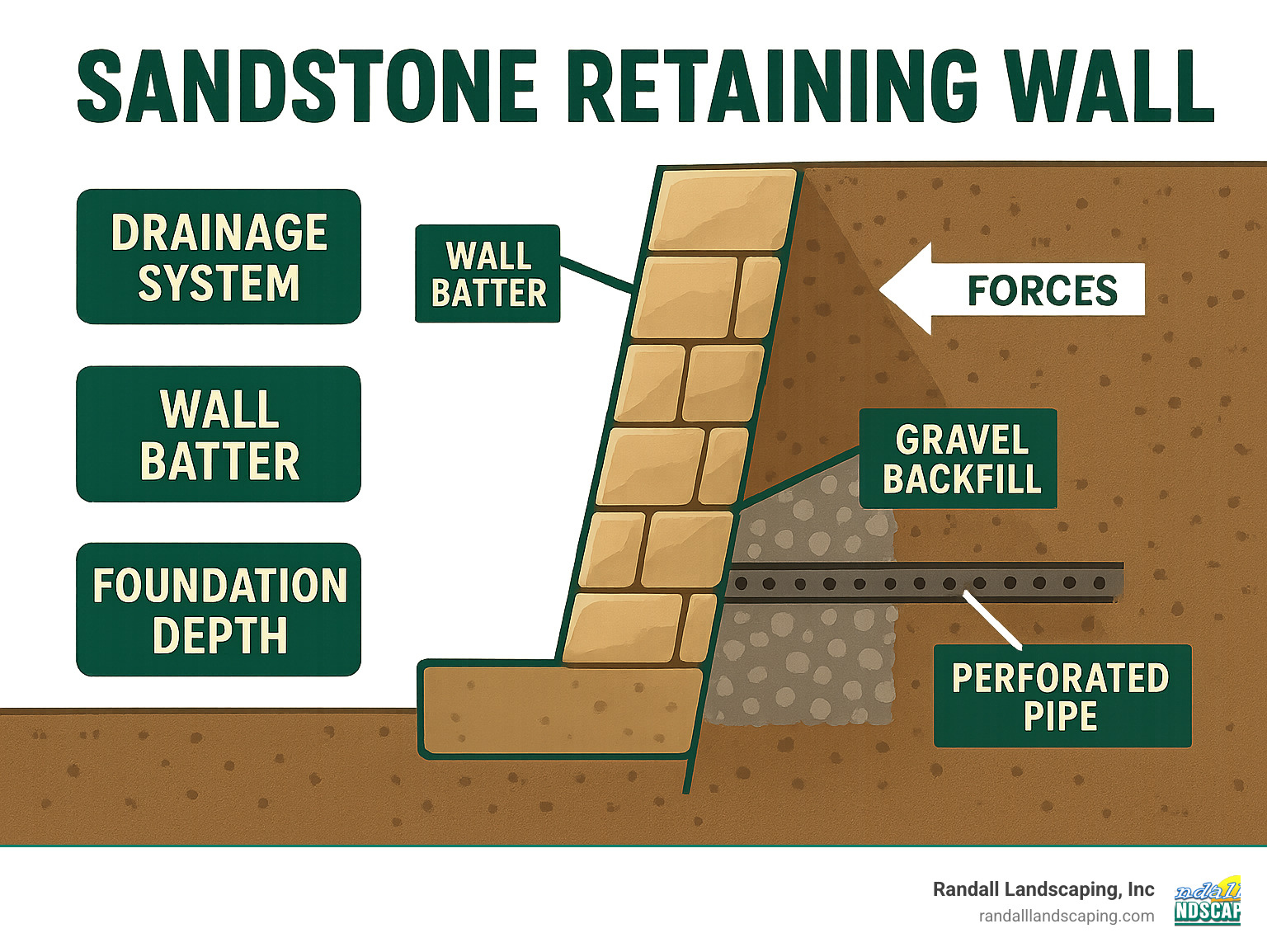
A beautiful sandstone retaining wall is more than just stacked stone; it’s an engineered structure designed to withstand the forces of nature. The primary challenge is hydrostatic pressure—the force of water-saturated soil—which can cause a wall to bow, crack, or collapse.
A solid foundation is crucial. A compacted gravel base distributes the wall’s weight and provides stability. For taller or more challenging walls, our sandstone retaining wall builders may use geogrid reinforcement. This mesh material is layered in the soil behind the wall, adding strength and tying the structure to the earth for long-term endurance.
More info about Retaining Walls Tewksbury MA
The Critical Role of Drainage
The single most important factor for a long-lasting retaining wall is drainage. Waterlogged soil creates immense hydrostatic pressure, which is the primary cause of wall failure.
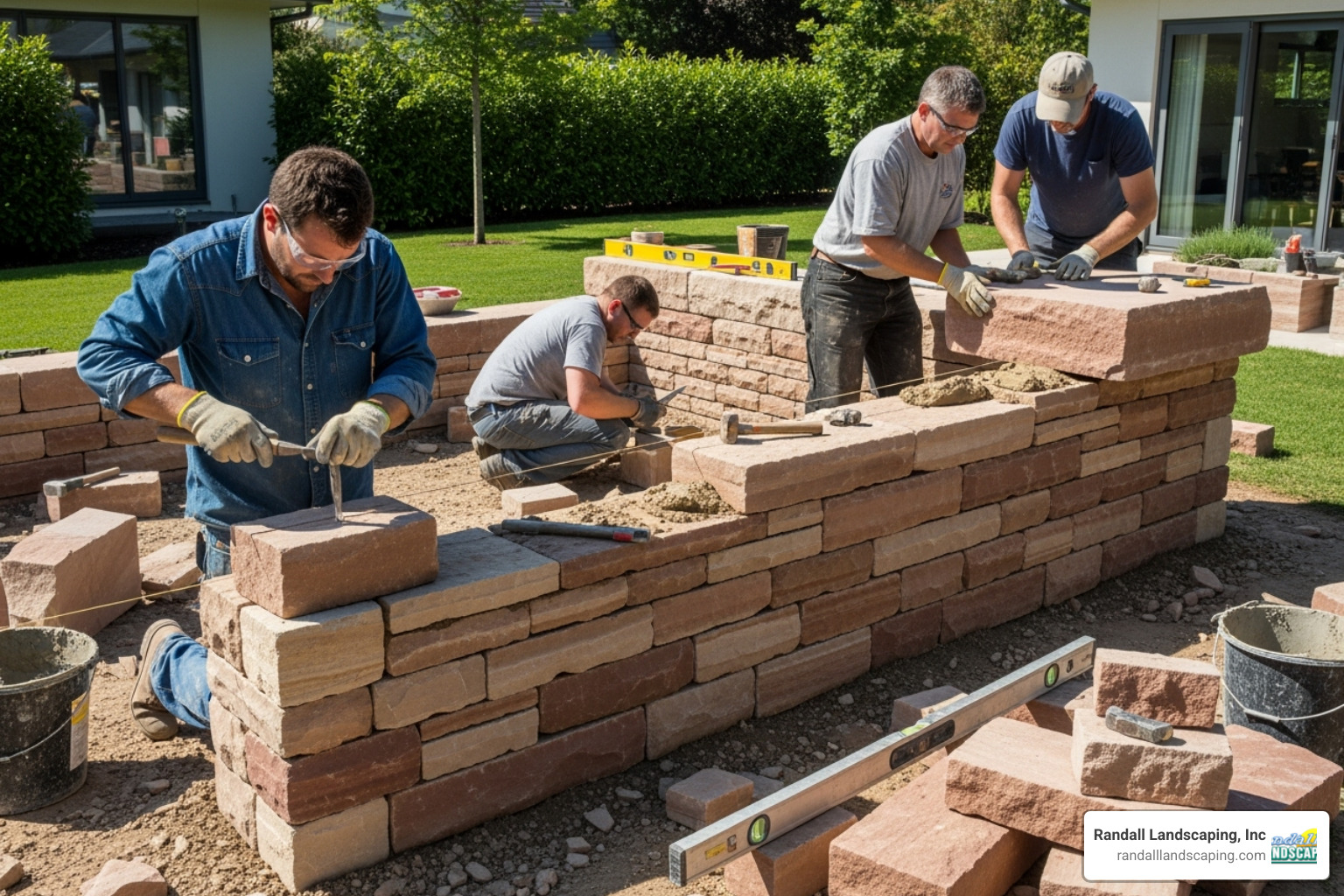
Our expert sandstone retaining wall builders install a multi-part drainage system to mitigate this pressure:
- Gravel Backfill: A layer of gravel is placed directly behind the wall to allow water to drain freely instead of saturating the soil.
- Perforated Pipe: At the base of the gravel, a perforated pipe (or French drain) collects water and channels it away from the wall’s foundation.
- Weep Holes: Small openings in the wall itself allow trapped water to escape.
- Filter Fabric: This fabric separates the soil from the gravel, preventing clogs and ensuring the system functions for decades.
This system is an unseen but critical component that minimizes pressure and prevents costly failures.
Permits and Local Building Codes
Adhering to permits and local building codes is a critical first step. Most municipalities have regulations for retaining walls, particularly concerning height (often over 2-4 feet), which may require review by a structural engineer. These rules ensure the wall is safe and properly designed for local conditions.
Our team at Randall Landscaping is familiar with permitting across the Merrimack Valley and Southern New Hampshire, including towns like Amesbury, Andover, Salem, and Windham. We guide you through the process, ensuring compliance with wall height regulations, engineering requirements, property line setbacks, and utility line locations. Following these rules is essential for safety, performance, and protecting your investment.
Lifespan and Maintenance for a Sandstone Wall
A key benefit of sandstone is its incredible lifespan of 50 to 200 years, making it a generational investment. Once built, a sandstone wall is wonderfully low maintenance, as it naturally resists rot, pests, and weather.
To ensure its longevity, we recommend simple care:
- Periodic Inspection: Check the wall annually for any signs of shifting or cracking, especially after major storms or freeze-thaw cycles.
- Cleaning: Remove any moss or algae from damp areas with a stiff brush and water to maintain its appearance.
- Check Drainage: Ensure weep holes and other drainage outlets are clear of debris to prevent water pressure buildup.
- Monitor Surrounding Soil: Address any erosion near the wall’s base to keep the structure stable.
With minimal care, your sandstone wall will provide beauty and stability for decades.
Conclusion
In summary, sandstone retaining walls are more than just structural barriers; they are key design elements that prevent erosion, create usable space, and boost property value. Sandstone, in particular, offers best longevity and a timeless aesthetic.
The success of your project hinges on choosing the right sandstone retaining wall builders. This work demands specialized expertise in engineering, drainage, and craftsmanship. While the initial investment may be higher, the long-term value, low maintenance, and generational lifespan of a sandstone wall make it a wise choice.
At Randall Landscaping, Inc., we are committed to quality work and 100% reliability. Our team ensures your sandstone retaining wall is structurally sound, built to last, and a stunning addition to your property. We proudly serve the Merrimack Valley and Southern New Hampshire, including communities like Amesbury, Andover, Atkinson, Boxford, Dracut, Georgetown, North Andover, North Reading, Pelham, Salem, Windham, Methuen, Lawrence, and Plaistow.
Ready to transform your landscape? Contact us for your retaining wall project today, and let our expert sandstone retaining wall builders help you build a lasting legacy.