
Why Underground Water Sprinkler System Cost Matters for Your Property Investment
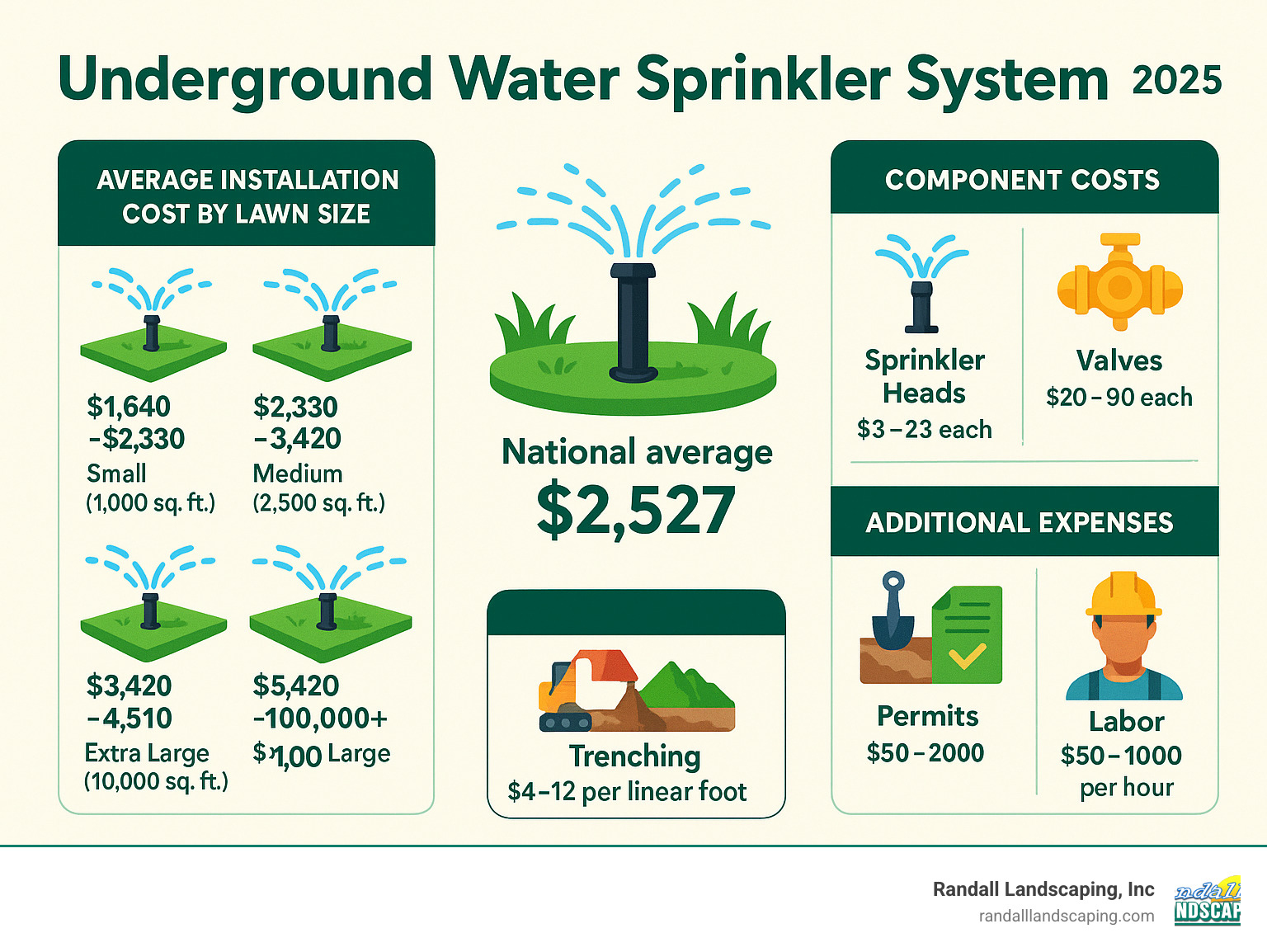
The underground water sprinkler system cost typically ranges from $1,640 to $3,566 for most homeowners, with larger properties potentially reaching $10,000 or more. Here’s what you need to know:
Quick Cost Breakdown:
- Average total cost: $2,527 (national average)
- Cost per square foot: $0.20 to $1.00
- Cost per zone: $500 to $1,000
- Labor costs: $50 to $100 per hour
- Trenching: $4 to $12 per linear foot
- Permits: $35 to $200
Note: These are average costs based on internet data and not actual costs for Randall Landscaping.
Understanding these costs upfront helps you budget properly and avoid surprises during installation. The investment often pays for itself through water savings, increased home value (86% ROI), and the convenience of automated lawn care.
As Tommy Randall, owner of Randall Landscaping with nearly two decades of experience, I’ve helped countless homeowners steer underground water sprinkler system cost considerations throughout Massachusetts and New Hampshire.
Underground water sprinkler system cost basics:
- garden water irrigation system installation
- professional sod installation
- professional sod installation near me
Underground Water Sprinkler System Cost: National Averages & Ranges
Planning for an underground water sprinkler system cost feels a bit like budgeting for a car – there’s a wide range depending on what you need. Nationally, most homeowners invest between $1,640 and $3,566 for a complete system, with the sweet spot landing around $2,527. Basic DIY installations can come in under $1,000, while elaborate systems can easily hit $10,000 or more.
The per-square-foot pricing typically runs from $0.20 to $1.00, but this can be misleading. Smaller yards often pay more per square foot because certain costs – like permits, backflow prevention, and trenching – stay the same regardless of lawn size.
Zone-based pricing makes more sense for most homeowners. Each irrigation zone typically costs $500 to $1,000 to install. Most residential properties need between 3 to 7 zones for proper coverage.
Don’t forget about additional expenses: permits ($35 to $200), trenching ($4 to $12 per linear foot), backflow prevention device ($250 to $550), and smart controllers ($100 to $300).
These are average costs based on internet data and not actual costs for Randall Landscaping.
Our Professional Sprinkler System Installation service includes detailed site assessment and transparent pricing.
| Lawn Size | Square Footage | Typical Zones | Cost Range |
|---|---|---|---|
| ⅛ Acre | 5,445 sq ft | 2-3 zones | $1,090 – $5,445 |
| ¼ Acre | 10,890 sq ft | 3-5 zones | $1,740 – $10,890 |
| ½ Acre | 21,780 sq ft | 5-7 zones | $4,360 – $21,780 |
| 1 Acre | 43,560 sq ft | 7-10 zones | $8,700 – $43,560 |
Average Underground Water Sprinkler System Cost by Lawn Size
The underground water sprinkler system cost scales with property size, but larger properties often benefit from economies of scale.
For ⅛ acre properties (5,445 square feet), expect $1,090 to $5,445 total, with most installations falling between $1,800 and $3,000. These typically need 2 to 3 zones.
Quarter-acre properties (10,890 square feet) represent the most common size. Expect $1,740 to $10,890, with typical installations running $2,500 to $4,600. You’ll need 3 to 5 zones.
Half-acre properties require $4,360 to $21,780, with most quality installations falling between $4,920 and $7,800. These typically require 5 to 7 zones.
Full-acre properties range from $8,700 to over $43,560, with most installations between $9,840 and $12,600, requiring 7 to 10 zones.
The return on investment remains strong across all sizes. Professional systems can add 7% to 15% to your home’s value, with an expected ROI of about 86%.
These are average costs based on internet data and not actual costs for Randall Landscaping.
Underground Water Sprinkler System Cost Per Component
Sprinkler heads range from $2.50 to $40 each. Basic fixed spray heads cost $2.50 to $15, pop-up spray heads run $5 to $20, and gear-driven rotors cost $15 to $40. Most residential systems need 15 to 30 sprinkler heads.
Valves and controls include zone valves ($25 to $75 each), backflow prevention device ($250 to $550), and controllers ranging from basic units ($60 to $150) to smart controllers ($100 to $300).
Additional components include pipes and fittings ($200 to $800), rain sensors ($25 to $75), and soil moisture sensors ($50 to $150).
Professional-grade components can last 20+ years with proper maintenance, making them a better long-term investment.
These are average costs based on internet data and not actual costs for Randall Landscaping.
What Drives Underground Sprinkler Pricing? Soil To Smart Tech
Several factors determine your underground water sprinkler system cost. Understanding these variables helps you prepare for realistic pricing conversations.
Lawn size and shape form the foundation of pricing. A simple rectangular lot costs far less than an irregular property with multiple garden beds and mature trees.
Soil conditions significantly impact costs. Sandy loam that’s easy to dig keeps trenching reasonable, while rocky ledge common in New Hampshire can double excavation time. Clay-heavy soils may need drainage improvements.
Property slope adds complexity. Sloped yards need pressure-compensating sprinkler heads and often require soil moisture sensors to prevent runoff, typically adding $170 to $530.
Water pressure and flow rate determine equipment needs. Low pressure requires booster pumps, while excessive pressure needs reducing valves.
Smart technology integration represents the biggest advancement in efficiency. Weather-based controllers, soil moisture sensors, and smartphone connectivity add $100 to $500 but can save over 7,000 gallons annually. Scientific research on water efficiency shows smart controllers reduce outdoor water use by 15% to 50%.
Trenching & Backflow Requirements
Trenching often represents the largest variable in underground water sprinkler system cost calculations. At $4 to $12 per linear foot, soil conditions dramatically impact your final bill.
Standard installations need 8 to 12 inches of depth, but freeze-prone areas require 12 to 18 inches. Most residential properties need 300 to 800 linear feet of trenching, translating to $1,200 to $9,600 in excavation costs.
Backflow prevention devices aren’t optional – they’re required by local codes at $250 to $550 installed, plus annual testing by certified technicians ($75 to $125 per year).
These are average costs based on internet data and not actual costs for Randall Landscaping.
Labor: What the Pros Charge
Professional installation labor typically accounts for 50% to 60% of total underground water sprinkler system cost. General irrigation installation runs $50 to $100 per hour, while licensed plumbing connections cost $75 to $150 per hour.
A typical residential installation requires 8 to 16 labor hours, resulting in $400 to $1,600 in labor costs. Complex installations can require 20+ hours.
Seasonal demand impacts pricing. Spring brings premium rates, while fall installations often cost less.
These are average costs based on internet data and not actual costs for Randall Landscaping.
Our Garden Water Irrigation System Installation service includes comprehensive planning and professional installation.
Underground vs. Aboveground vs. Drip: Cost & Value Face-Off
When weighing irrigation options, the underground water sprinkler system cost might seem steep, but the upfront investment tells only part of the story.
An underground system for a typical ¼ acre property runs $1,740 to $3,400 to install, providing 15 to 25 years of reliable service with minimal visual impact. Water efficiency ranges from good to excellent.
Aboveground systems cost $425 to $625 in materials but typically last only 3 to 8 years. You’ll spend countless hours setting up and moving equipment, and they’re always visible.
Drip irrigation costs $450 to $650 for the same area and offers incredible water efficiency. However, it works great for garden beds but struggles with lawn coverage.
These are average costs based on internet data and not actual costs for Randall Landscaping.
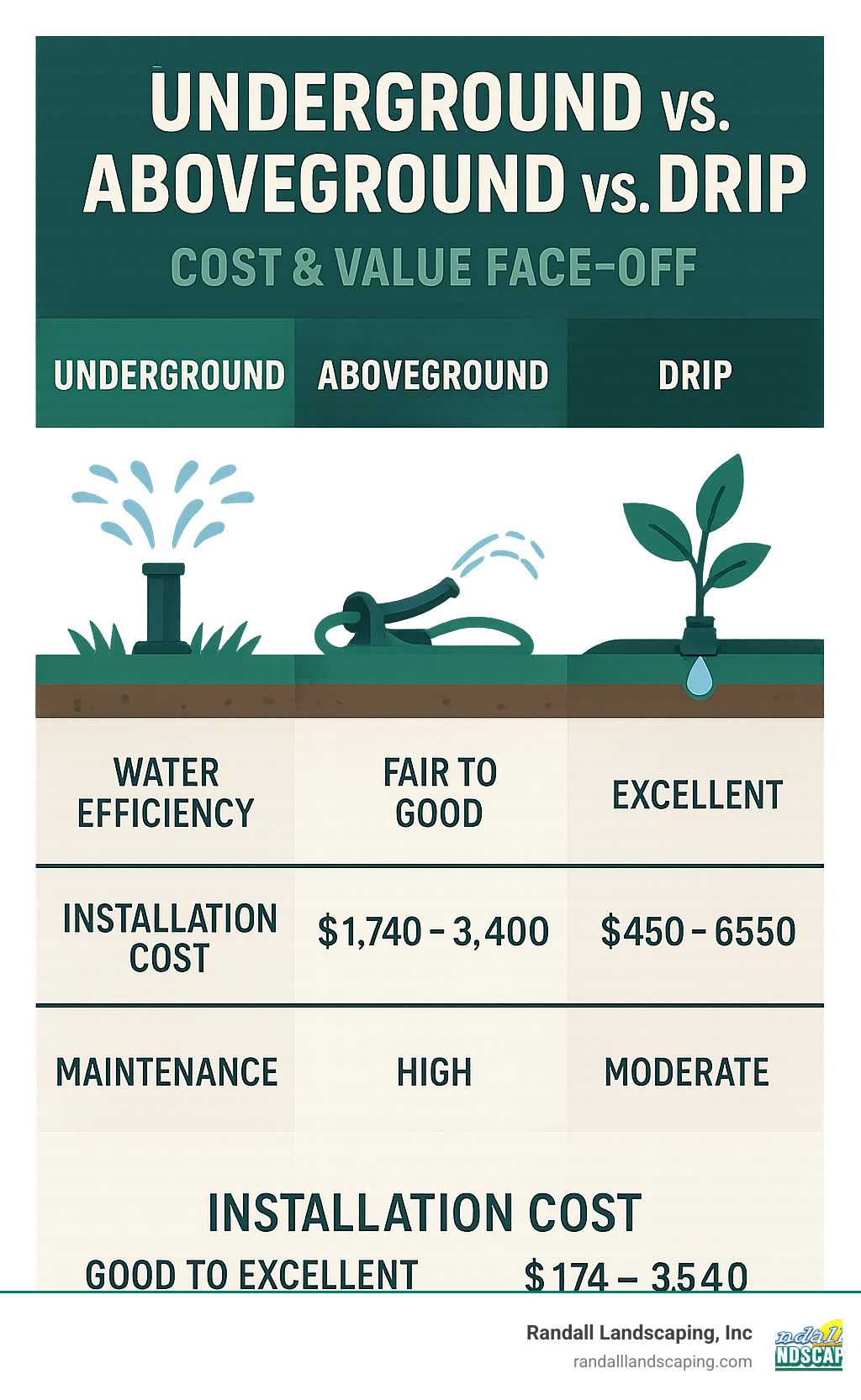
Annual operating costs: Underground systems cost $200 to $400 yearly. Aboveground systems seem cheaper at $150 to $300 but don’t account for your time. Drip irrigation wins efficiency at $100 to $250 annually.
Pros & Cons of Each Irrigation Style
Underground systems offer ultimate convenience and property value improvement. They’re invisible and automated with no hose dragging. They increase home value significantly but require higher upfront cost and professional installation.
Aboveground systems work for renters or tight budgets. They’re easy to install and portable but require constant maintenance and storage.
Drip irrigation excels at water conservation for vegetable gardens and flower beds. It reduces weeds and works well on slopes but isn’t practical for lawns.
For most homeowners, underground systems provide the best long-term value despite higher initial investment.
Installation Options & Labor: DIY Savings or Professional Precision?
The choice between DIY and professional installation dramatically affects your underground water sprinkler system cost and peace of mind.
DIY kits typically run $1,500 to $2,000 for materials, plus $200 to $400 for tool rental and $35 to $200 for permits. Total: $1,735 to $2,600 if everything goes smoothly.
Professional installation ranges from $2,527 to $5,500 for a complete system. We complete most installations in 1 to 3 days, while DIY projects stretch across 2 to 5 weekends.
These are average costs based on internet data and not actual costs for Randall Landscaping.
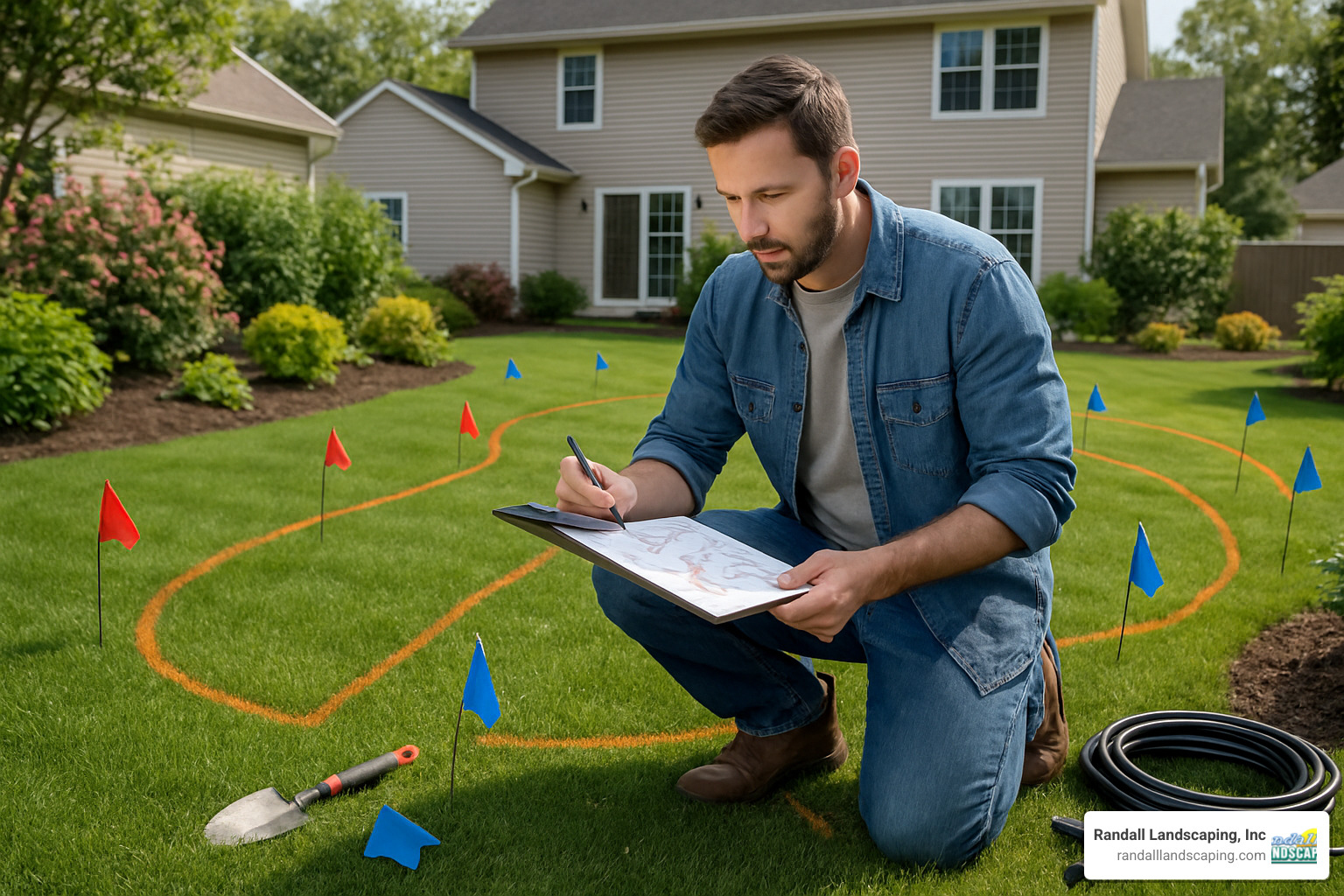
DIY gets tricky in New England’s rocky soil. You’ll need to locate utilities safely, calculate hydraulic pressure correctly, and steer local codes. The backflow preventer installation often requires a licensed plumber anyway.
DIY can work for simple, single-zone systems on easy terrain. For complex installations, our landscape design services integrate irrigation with your overall landscape vision.
How Much Can You Save Going DIY?
Potential savings look attractive – $800 to $2,900 if everything goes perfectly. You’ll avoid $400 to $1,600 in labor costs and $200 to $600 in material markup.
However, tool rental adds $200 to $400, utility location runs $100 to $300, and correcting mistakes can cost $500 to $2,000 or more. Time investment: 20 to 40 hours of weekends.
Risk factors include hitting utility lines (potentially $1,000+ damage), improper trenching depth, and code violations requiring complete rework.
Sweat equity works best for simple systems on forgiving terrain. Complex installations typically benefit from professional expertise and warranties.
Timeline: How Long Does Installation Take?
Professional installation follows a predictable schedule: Design and planning (3 to 7 days), permit approval (5 to 14 days), installation (1 to 3 days), and testing (half day). Total: 2 to 4 weeks.
DIY projects stretch much longer: Learning and planning (1 to 2 weeks), permits (1 to 3 weeks), installation (3 to 7 weekend days), testing (1 to 3 days). Total: 6 to 12 weeks.
Seasonal timing affects both cost and timeline. Spring faces high demand, while fall often proceeds more quickly.
Living with Your System: Maintenance, Upgrades, Water Bills & Home Value
Once installed, understanding ongoing underground water sprinkler system cost helps you budget for 15 to 25 years of reliable service.
Annual maintenance costs are reasonable: Spring startup ($75 to $125), fall winterization ($60 to $125), and mid-season tune-up ($50 to $100). Total annual maintenance: $185 to $350.
These are average costs based on internet data and not actual costs for Randall Landscaping.
Common repairs: Sprinkler head replacements ($25 to $75 each), valve repairs ($75 to $200), controller replacements ($150 to $400), and pipe repairs ($100 to $300). Annual backflow testing runs $75 to $125.
Water bills increase during peak season. A typical system uses 15,000 to 25,000 gallons monthly during summer. At New Hampshire’s average rates of $4 to $6 per 1,000 gallons, expect monthly increases of $60 to $150.
The real benefit comes from home value appreciation. Professional systems provide immediate property value increases of 7% to 15% and expected cost recovery of 83% to 86%.
Smart controller upgrades can save over 7,000 gallons annually, reducing water costs by $28 to $42 per year.
Our Professional Sprinkler System installations include detailed maintenance schedules.
Best Practices for Maintenance & Winterizing
Spring startup involves slowly turning on water supply, checking for winter damage, testing all zones, and adjusting shifted heads.
Summer maintenance includes monthly inspections, cleaning clogged nozzles, adjusting heads around growing plants, and monitoring for leaks.
Fall winterization requires shutting off water supply, draining lines with compressed air, insulating above-ground components, and documenting needed repairs.
Professional blow-out service costs $60 to $125 but prevents costly freeze damage.
Expanding or Reconfiguring an Existing System
Adding new zones typically costs $500 to $1,300 per zone. You might need a controller upgrade ($100 to $300) and additional trenching ($4 to $12 per linear foot).
Reconfiguration costs: Moving sprinkler heads ($50 to $150 each), rerouting pipes ($200 to $800), zone consolidation ($300 to $700).
These are average costs based on internet data and not actual costs for Randall Landscaping.
The key is discussing long-term landscape plans during initial design to accommodate future changes cost-effectively.
Frequently Asked Questions about Underground Water Sprinkler System Cost
Do I need a permit for an underground sprinkler system?
Yes, you’ll need a permit for most underground irrigation installations. The underground water sprinkler system cost includes permit fees ranging from $35 to $200, depending on your municipality.
The permit process covers backflow prevention device installation, connection to municipal water supply, and final system inspection. Most areas also require annual backflow testing by a certified technician ($75 to $125 yearly).
These are average costs based on internet data and not actual costs for Randall Landscaping.
In our service area covering communities like Methuen, Lawrence, and Plaistow, permit requirements vary by town. We handle all permitting paperwork as part of our professional installation service.
How many sprinkler heads will my yard need?
The number of sprinkler heads directly impacts your underground water sprinkler system cost. Most residential systems need 15 to 30 heads, but this varies by property size and complexity.
Coverage areas vary by head type: Fixed spray heads cover 8 to 15 feet radius, perfect for smaller areas. Pop-up spray heads offer similar coverage but stay hidden. Rotary nozzles reach 15 to 30 feet, while gear-driven rotors cover 25 to 50 feet radius.
We design each zone with proper overlap coverage – heads overlap by about 50% to ensure uniform watering and prevent brown spots.
Does an underground system really add resale value?
Absolutely. Professional underground irrigation systems provide excellent returns on investment, with an expected ROI of 83% to 86%. Many properties see immediate value increases of 7% to 15%.
The value comes from convenience and time savings, consistent lawn health, and reduced water waste. Properties with irrigation systems typically spend less time on market and attract more serious buyers.
These are average costs based on internet data and not actual costs for Randall Landscaping.
The key is professional installation and proper maintenance. DIY or poorly maintained systems don’t provide the same benefits.
Conclusion
Planning your underground water sprinkler system cost doesn’t have to feel overwhelming when you understand what drives pricing and value. With installations typically ranging from $1,640 to $3,566 for most homeowners, and complex systems reaching $10,000 or more, the investment makes sense when you consider the long-term benefits of convenience, water savings, and increased property value.
Remember: These are average costs based on internet data and not actual costs for Randall Landscaping.
Here’s what I’ve learned after nearly two decades of installing irrigation systems throughout the Merrimack Valley and Southern New Hampshire: every property tells a different story. The rocky soil in parts of New Hampshire, the clay conditions we find in some Massachusetts communities, and the unique challenges of our freeze-thaw cycles all impact both installation costs and long-term performance.
At Randall Landscaping, Inc., we’ve built our reputation on quality work and 100% reliability because we understand these local conditions. Whether we’re working in Amesbury’s sandy soil or dealing with Pelham’s challenging terrain, our experience helps us design systems that perform reliably year after year.
The numbers we’ve discussed reflect real-world variability – your actual costs depend on factors like your property’s size and shape, soil conditions, local permit requirements, and the level of automation you choose. Smart technology upgrades can save over 7,000 gallons annually, while proper winterization protects your investment through our harsh New England winters.
What really matters is getting the design right from the start. Professional installation typically provides better long-term value than DIY because we account for hydraulic calculations, local codes, and future landscape changes during the planning phase. We’ve seen too many DIY attempts that required expensive corrections later.
Your irrigation system should work seamlessly for 15 to 25 years with proper maintenance. The 83% to 86% ROI that quality systems provide makes this investment particularly attractive for homeowners planning to stay in their properties or those looking to maximize resale value.
For a custom estimate that reflects your specific property conditions and goals, we invite you to Contact Us for a comprehensive consultation. We’ll assess your landscape, discuss your preferences, and provide a detailed proposal that fits your budget while ensuring optimal performance for decades to come.
Investing in quality irrigation isn’t just about convenience – it’s about protecting your landscape investment and enjoying the peace of mind that comes with automated, efficient watering. With proper planning and professional installation, your system will improve both your daily life and your property’s long-term value.