
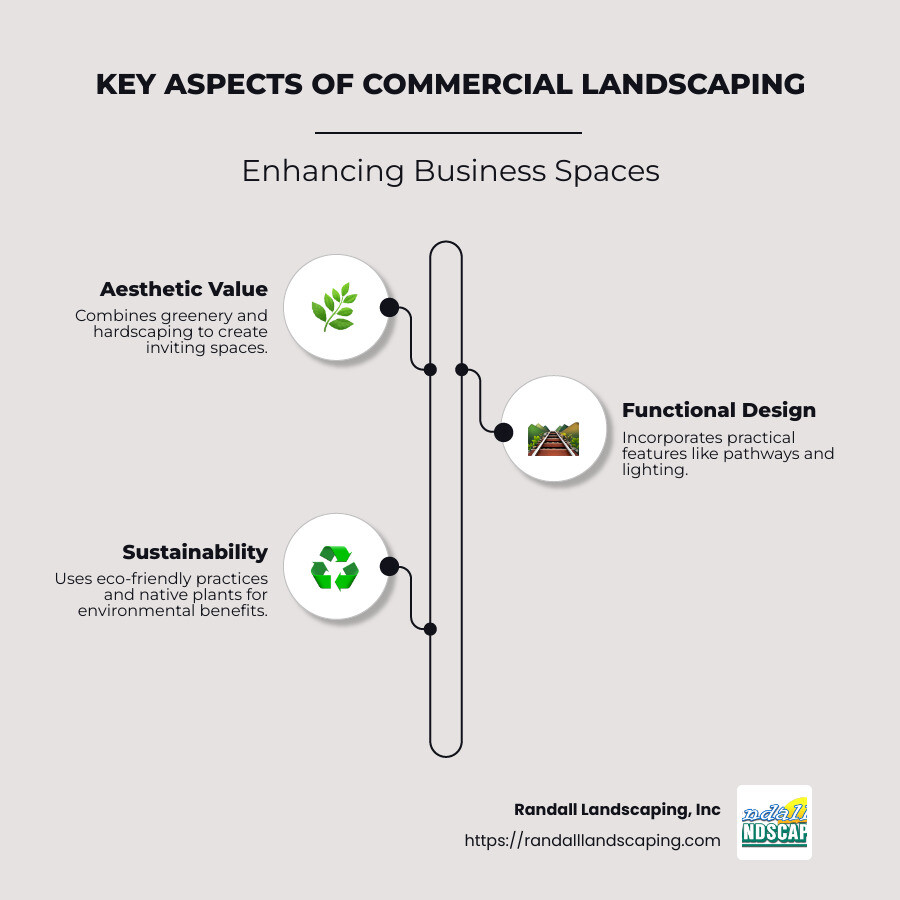
What is commercial landscaping? It’s the art and science of designing and maintaining outdoor spaces for businesses. This doesn’t only make a location look good but also improves its value and functionality. Here are the key points:
- Aesthetic Value: Combines greenery with hardscaping to create inviting spaces.
- Functional Design: Offers practical features like pathways and lighting.
- Sustainability: Incorporates eco-friendly practices and native plants.
Crafting a compelling outdoor environment isn’t just about aesthetics. It’s about making a memorable first impression that speaks to your brand’s identity and values. More importantly, a professionally landscaped property can significantly increase business value, attract customers, and boost employee morale.
I’m Tommy Randall, founder of Randall Landscaping, Inc. Since 2006, I’ve dedicated my career to changing outdoor spaces, ensuring they impress and function at their best. My expertise allows me to answer any questions about what is commercial landscaping and how it can benefit your business. Stay with us as we dig deeper into the pivotal aspects of commercial landscaping.
Handy what is commercial landscaping terms:
– commercial landscape maintenance services
– commercial lawn care
– how to get commercial landscaping contracts
What is Commercial Landscaping?
Key Components of Commercial Landscaping
When it comes to commercial landscaping, there are four main components: planning, design, installation, and maintenance. Each plays a critical role in creating outdoor spaces that are not only beautiful but also functional and sustainable.
Planning and Design
The journey begins with planning and design. A commercial landscape designer crafts layouts that align with a business’s goals and brand identity. This phase is crucial as it transforms commercial landscape ideas into actionable plans. Key elements include:
- Aesthetic Appeal: Incorporating vibrant greenery such as trees, shrubs, and flowers to create inviting environments.
- Functional Design: Adding pathways, patios, and lighting to improve usability and safety.
- Sustainability: Choosing eco-friendly materials and native plants to reduce environmental impact.
Installation
Once the design is set, the next step is installation. This involves bringing the vision to life by placing natural or artificial turf, setting up irrigation systems, and constructing hardscapes like walkways and retaining walls.
- Eco-friendly Options: Artificial grass is popular for its low maintenance and water-saving benefits.
- Hardscaping: Adds structure and character, complementing the natural elements.
Maintenance
Maintenance is the final piece, ensuring the landscape remains a valuable asset. This includes regular tasks like pruning, mowing, and seasonal adjustments. Proper maintenance helps sustain the landscape’s vibrancy and functionality over time.
- Seasonality: Each season requires specific care, from winter cutbacks to spring fertilization.
- Routine Upkeep: Keeps landscapes looking their best, attracting clients and boosting employee satisfaction.
Functionality and Aesthetic Appeal
Beyond looks, a well-designed commercial landscape serves practical purposes. It improves building access, highlights architectural features, and defines clear walkways. These elements together create a welcoming and efficient environment.
- First Impressions: A stunning landscape can set a business apart, making a lasting impression on clients and visitors.
- Eco-friendly Values: Reflecting sustainability efforts through landscaping can align with a company’s values and attract eco-conscious clients.
Incorporating these components ensures that commercial landscaping not only beautifies a space but also supports a business’s operational needs and sustainability goals.
Differences Between Commercial and Residential Landscaping
Equipment and Tools
When comparing commercial landscaping to residential, one of the most noticeable differences is the equipment used. Commercial landscapers often rely on heavy-duty machinery. These include large mowers, tractors, and specialized equipment designed for extensive and complex landscapes. This machinery can tackle vast areas efficiently and handle challenging tasks like trimming tall trees or clearing large debris.
In contrast, residential landscaping typically uses precision tools. These are lighter, more compact, and perfect for smaller, more detailed work like shaping shrubs or maintaining flower beds. Homeowners often prefer these tools for their ease of use in tighter spaces.
Scope and Scale
The scope and scale of commercial landscaping projects are significantly larger than residential ones. Commercial properties often feature expansive lawns, gardens, and additional elements like parking lots, walkways, and outdoor seating areas. Maintaining these spaces requires more time, resources, and expertise.
Commercial landscapes are designed to be both functional and aesthetically pleasing. They often include complex features such as water installations, lighting systems, and intricate hardscapes. These elements not only improve the visual appeal but also serve practical purposes, like improving safety and accessibility.
Regulations
Another critical difference is the regulatory requirements. Commercial landscape services often face more stringent regulations. These may involve zoning laws, stormwater management, and environmental compliance. Commercial landscapers must be knowledgeable about these regulations to ensure that properties meet all necessary guidelines.
Residential landscaping, while still requiring permits and adherence to local codes, typically involves fewer regulatory problems. This is because residential projects are usually smaller in scale and impact compared to their commercial counterparts.
By understanding these differences, businesses can better appreciate the unique challenges and requirements of commercial landscaping, ensuring they choose the right services to meet their needs.
Benefits of Investing in Commercial Landscaping
Economic and Aesthetic Impact
Investing in commercial landscaping goes beyond just making a property look good. It’s a smart business move that can boost your bottom line in multiple ways.
Property Value
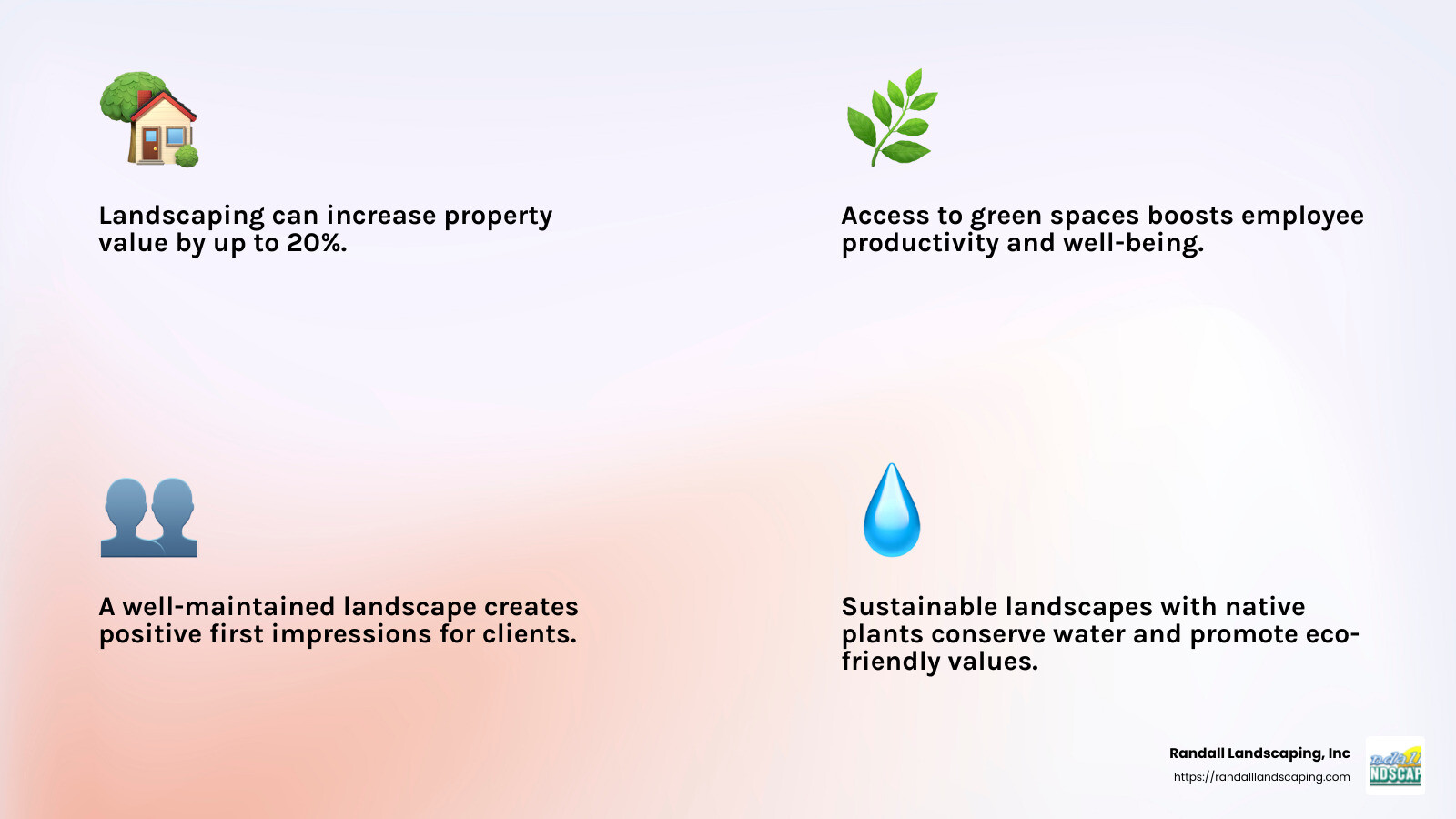
Well-maintained landscapes can significantly increase property values. According to industry experts, properties with attractive landscaping can see a 20% increase in value. This is because a beautiful landscape not only improves curb appeal but also signals to potential buyers that the property is well-cared for.
Worker Productivity
A well-designed outdoor space can also boost employee productivity. Studies have shown that access to green spaces can reduce stress and improve mental well-being. This, in turn, leads to happier and more productive employees who are more likely to stay with the company.
Client Attraction
First impressions matter, and your landscape is often the first thing clients see. A professionally landscaped property can create a positive impression, suggesting that the business is successful and pays attention to detail. This can be crucial in attracting new clients and retaining existing ones.
Eco-Friendly Values
Incorporating sustainable practices into your landscape design not only benefits the environment but also improves your brand image. Many businesses are now opting for eco-friendly solutions like native plants and water-efficient irrigation systems. These practices reduce environmental impact and resonate with clients who value sustainability.
Positive Impressions
A stunning landscape can transform the way people perceive your business. Whether it’s through vibrant greenery, strategic lighting, or innovative hardscapes, a well-designed landscape can make your property stand out. This helps in establishing your brand’s identity and can set you apart from competitors.
By investing in professional commercial landscaping, businesses can enjoy a range of economic and aesthetic benefits that contribute to long-term success.
Choosing the Right Commercial Landscaper
Selecting a commercial landscaper is a crucial decision that can impact the appearance and functionality of your property. Here are some important considerations to keep in mind:
Communication
Effective communication is key to a successful landscaping project. Your landscaper should be proactive in reaching out with updates, plans, and any potential issues. Regular check-ins, whether through email or phone calls, ensure that both parties are on the same page. A landscaper who communicates well can help you avoid misunderstandings and keep the project on track.
Transparency
Transparency in pricing and services is essential. Look for a landscaper who provides clear and detailed invoices so you know exactly where your money is going. This includes a breakdown of costs for materials, labor, and any additional services. Knowing these details helps you budget effectively and avoid unexpected charges.
Experience
Experience matters when choosing a landscaper. An experienced landscaper will have a portfolio of past projects that demonstrate their capability and style. Review their work to see if it aligns with your vision for your property. Experienced landscapers are also better equipped to handle challenges and provide creative solutions.
Contract Terms
Before signing a contract, review the terms and conditions carefully. A well-written contract should outline the scope of work, timelines, and payment schedules. It should also include provisions for handling disputes or changes to the project. Taking the time to understand the contract can prevent headaches later on.
Insurance
Make sure your landscaper carries comprehensive insurance coverage. This protects you from liability in case of accidents or damage during the project. Verify that the insurance is current and adequate for the size and scope of your project.
Long-Term Relationship
Consider building a long-term relationship with your landscaper. A landscaper who understands your property and business needs can provide ongoing maintenance and updates. This continuity helps keep your landscape in top condition and can save you money in the long run.
Choosing the right commercial landscaper involves more than just picking a company based on cost. By focusing on communication, transparency, experience, and other key factors, you can ensure a successful landscaping project that improves your property and supports your business goals.
Frequently Asked Questions about Commercial Landscaping
What is a commercial landscaper?
A commercial landscaper is a professional who specializes in the planning, designing, and maintenance of outdoor spaces for businesses and commercial properties. Unlike residential landscapers, commercial landscapers deal with larger and more complex landscapes, which often include features like parking lots, walkways, and outdoor seating areas. Their goal is to create an inviting and functional environment that improves the aesthetic appeal of a business while also serving practical needs.
Commercial landscapers offer a variety of services, including:
-
Planning and Design: They work with businesses to develop a landscaping plan that aligns with the company’s brand and budget.
-
Installation: This includes planting trees, shrubs, and flowers, as well as installing hardscape elements like patios and retaining walls.
-
Maintenance: Regular upkeep such as mowing, trimming, and seasonal clean-ups to ensure the landscape remains attractive and healthy.
How much do you charge for commercial landscaping?
The cost of commercial landscaping can vary widely based on several factors, including the size of the property, the complexity of the design, and the specific services required. On average, commercial landscaping services can range from $5,000 to $50,000 or more for large-scale projects. Pricing is often calculated per square foot, with typical rates falling between $5 and $20 per square foot.
These are average costs based on internet data and not actual costs for Randall Landscaping. Costs can increase significantly for properties requiring extensive hardscaping or specialized installations. Always request a detailed estimate that breaks down the costs for labor, materials, and any additional services.
What is the highest paying landscaping job?
In the landscaping industry, certain positions command higher salaries due to the level of expertise and responsibility involved. Some of the highest paying jobs include:
-
Landscape Architect: These professionals design outdoor spaces and often work on large projects. Their average salary can range from $60,000 to over $100,000 annually, depending on experience and location.
-
Project Manager: Responsible for overseeing landscaping projects from start to finish, project managers can earn between $50,000 and $90,000 per year.
-
Landscape Designer: With a focus on creating aesthetic and functional designs, landscape designers earn an average salary of $45,000 to $80,000.
These roles require a combination of education, experience, and skill, making them some of the most lucrative positions in the landscaping field.
Conclusion
At Randall Landscaping, Inc., we take pride in delivering quality work and ensuring customer satisfaction. Our commitment goes beyond just providing landscaping services; we aim to create outdoor spaces that truly reflect the vision and values of your business.
Our team understands that a well-maintained landscape is more than just an aesthetic improvement. It’s an investment in your property’s value, a boost to employee morale, and a magnet for attracting clients. We focus on every detail, from the initial design to the final maintenance, ensuring that each project meets our high standards.
Why Choose Us?
-
Expertise: With years of experience in the Merrimack Valley and Southern New Hampshire, we know the local landscape and climate. This allows us to tailor our services to meet the specific needs of your property.
-
Reliability: We are committed to being dependable partners. Our clients trust us to deliver on time and within budget, every time.
-
Comprehensive Services: From landscape design and installation to commercial snow plowing, we offer a full range of services to keep your property looking its best all year round.
-
Customer-Centric Approach: We believe in open communication and transparency. Our team works closely with you to understand your needs and preferences, ensuring that the final result aligns with your expectations.
At the end of the day, our goal is to exceed your expectations and build long-lasting relationships. Whether you’re looking to improve your curb appeal or create a peaceful outdoor retreat for your employees, Randall Landscaping, Inc. is here to help you every step of the way.
Ready to transform your commercial property? Contact us today to get started!