
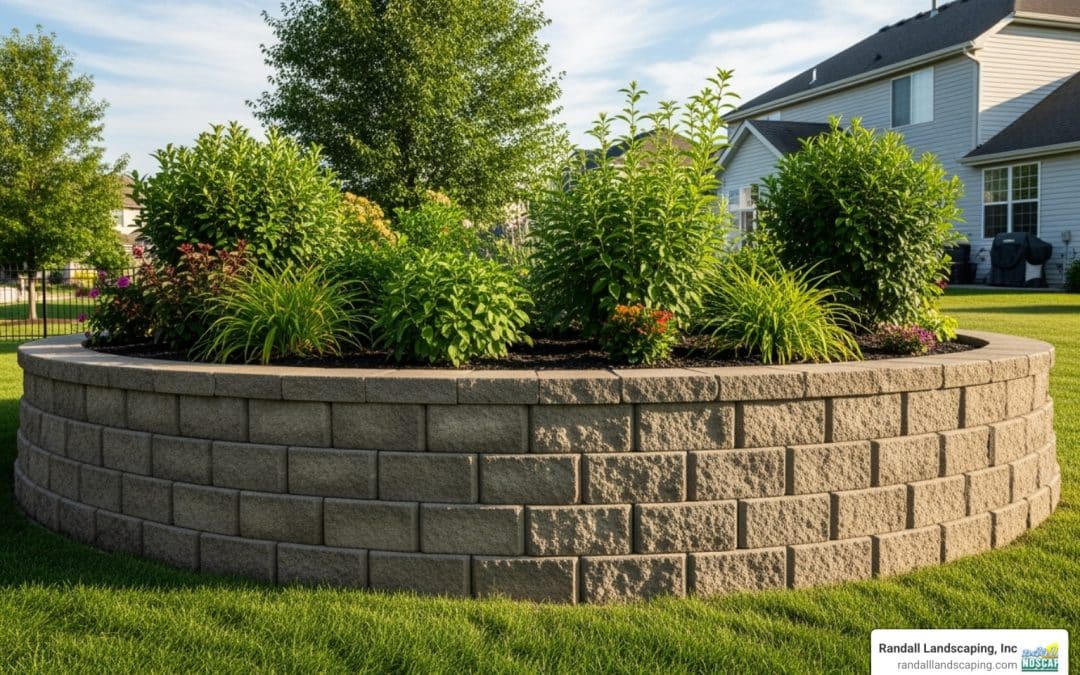
The Foundation of Functional Landscaping
Residential retaining walls are structural barriers designed to hold back soil and create level, usable spaces on sloped properties. Whether you’re dealing with erosion, trying to maximize your outdoor living space, or want to improve your property’s curb appeal, these engineered structures offer both practical solutions and aesthetic appeal.
What residential retaining walls do for your property:
- Structural Support – Hold back soil pressure and prevent sliding or erosion
- Create Usable Space – Transform steep slopes into functional patios, gardens, or play areas
- Prevent Soil Erosion – Protect your landscape from water damage and soil loss
- Improve Property Value – Add functional space and visual appeal to increase home value
- Improve Drainage – Help manage water runoff and prevent flooding issues
- Design Flexibility – Available in multiple materials and styles to match any landscape
As research shows, “A four-foot-high, 15-foot-long wall could be holding back as much as 20 tons of saturated soil,” highlighting just how critical proper design and construction are for these hardworking landscape features.
I’m Tommy Randall, owner of Randall Landscaping. Since 2006, my team and I have designed and installed hundreds of residential retaining walls throughout Massachusetts and New Hampshire, turning challenging slopes into beautiful, functional outdoor spaces.
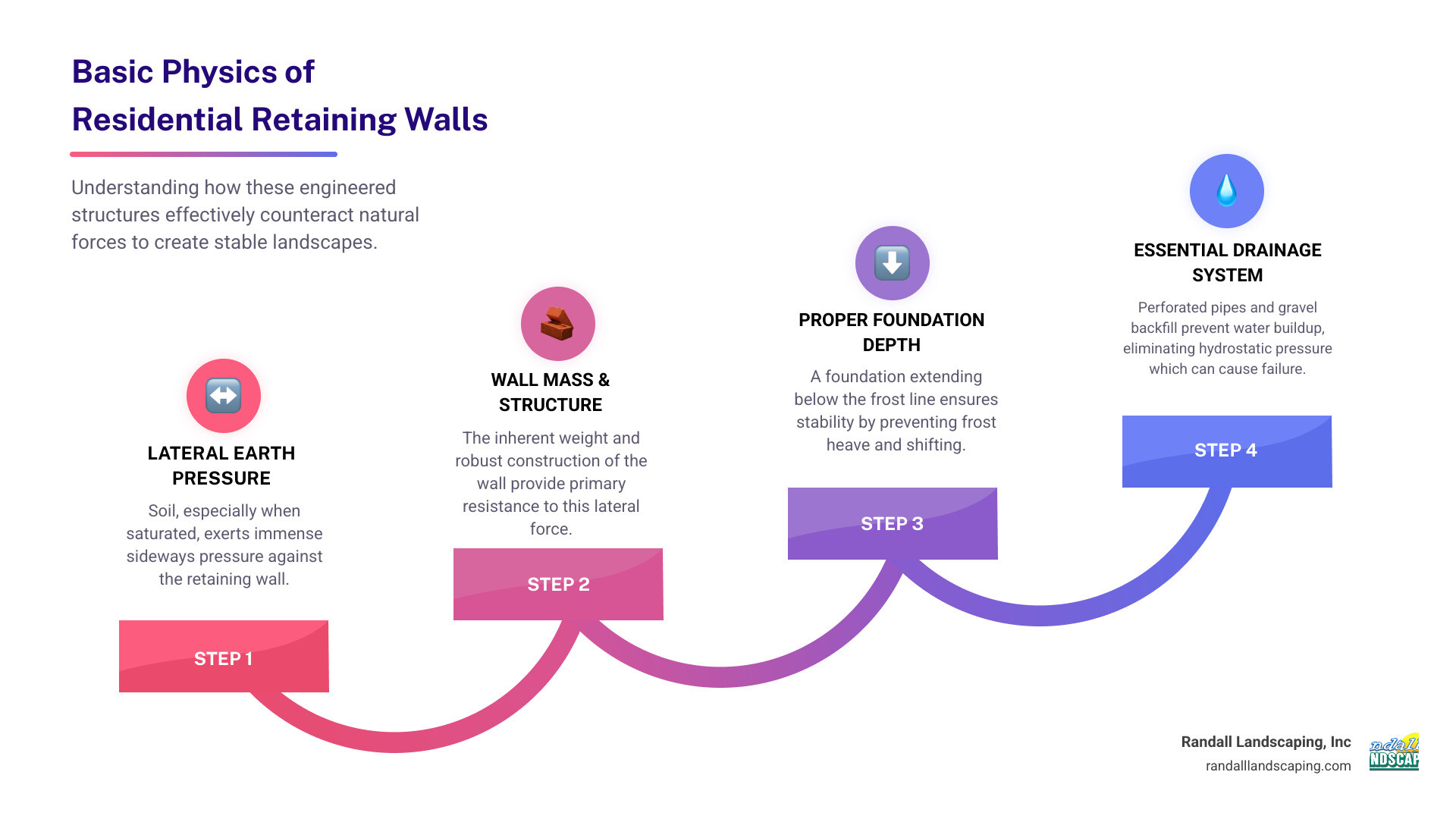
Common residential retaining walls vocab:
Types of Retaining Walls and Common Materials
Choosing the right residential retaining wall involves selecting a system and material that fits your property’s slope, your needs, and your aesthetic goals. It’s a functional addition that should complement your home and landscape.
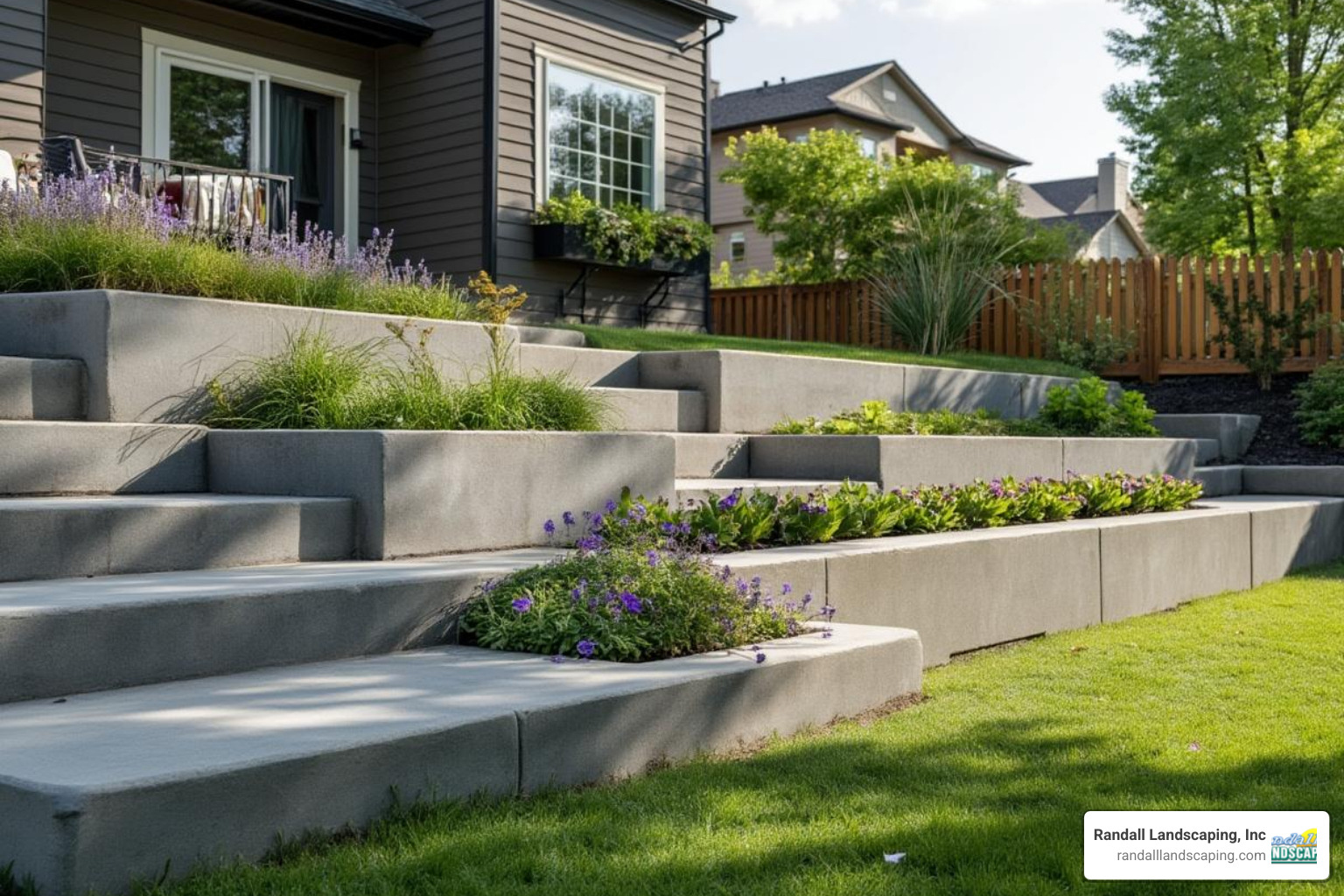
Four Main Wall Systems for Your Home
Retaining walls are engineered structures that use physics to hold back soil. Understanding the four main types helps us choose the best fit for your property.
- Gravity Walls: Use their own heavy weight and mass to hold back soil. They are typically wider at the base and are best for shorter heights (under 4 feet) on gentle slopes, making them perfect for garden walls or decorative borders.
- Cantilever Walls: Feature a vertical wall connected to a horizontal base that uses the soil’s own weight for support. This allows for greater heights (up to 25 feet) and makes them best for moderate to steep slopes and taller projects, like supporting a driveway.
- Sheet Piling Walls: Involve driving thin, interlocking sheets of steel, vinyl, or wood into the ground to form a barrier. They are best for soft soils, very tight spaces, or erosion control along a pond or stream.
- Anchored Walls: Use strong cables or rods driven deep into the soil or rock behind the wall for maximum stability. This system is best for very steep slopes, extremely tall walls, or projects facing extreme pressure.
Common Materials for Residential Retaining Walls
The material you choose plays a huge role in your wall’s look, cost, and longevity. We work with a variety of excellent materials, each with unique benefits.
| Material Type | Cost (per square face foot installed)* | Lifespan | Maintenance | Aesthetic Variety |
|---|---|---|---|---|
| Interlocking Concrete Blocks | Average: $45-$270+ (can be higher for complex designs/materials) | 50-100+ years | Low; occasional cleaning, check for shifting | Wide range of colors, textures (tumbled, stacked stone, chiseled), and shapes; can create curves. |
| Poured Concrete | Average: $30-$100 (can be higher for finishes/reinforcement) | 50-100+ years | Low; can be veneered or painted; minor crack repair. | Smooth, industrial look; can be stamped, colored, or veneered with stone/brick for varied aesthetics. |
| Natural Stone | Average: $20-$100+ (can be significantly higher for labor-intensive work) | 100+ years | Low; occasional cleaning; highly durable. | Rustic, timeless appeal; irregular shapes, colors, and textures; blends naturally with landscapes. |
| Treated Timber (Railroad Ties) | Average: $15-$50 (can be lower for simple designs) | 20-40 years | Moderate; can rot, warp, or attract insects; requires periodic inspection and potential replacement of sections. | Natural, rustic look; straight lines; can be stained. |
Please note: These are average costs based on internet data and not actual costs for Randall Landscaping. Actual costs for your project will vary based on design complexity, site conditions, material availability, and labor rates in your specific area (like Amesbury, Andover, or Salem, NH).
- Interlocking Concrete Blocks: Popular for their versatility, durability, and ease of installation. Available in many colors and textures that mimic natural stone, they can be used to create straight or curved walls.
- Poured Concrete: A strong, robust choice ideal for taller applications. While industrial in its raw state, it can be stamped, colored, or veneered with stone or brick for a custom look.
- Natural Stone: Offers a timeless, rustic charm that blends seamlessly with any landscape. While labor costs for skilled masonry can be higher, the result is a premium, long-lasting wall. Find more info about sandstone retaining walls on our site.
- Treated Timber: A budget-friendly option that creates a natural, rustic look. It’s less durable than masonry and requires proper drainage and anchoring to prevent rot and shifting.
Essential Design and Planning for Residential Retaining Walls
A successful residential retaining wall requires thoughtful planning and precise execution. Our process begins with a comprehensive site assessment to ensure your wall is beautiful, functional, and built to last.
A thorough site assessment is key. We evaluate soil type, drainage patterns, and any surcharge loads (extra weight from driveways or patios) that will affect the wall’s design. Proper drainage planning is the most critical step to prevent wall failure. We also ensure all plans adhere to local building codes, a crucial step for long-term success as noted by resources like Oregon State University Extension’s guide on building a landscape retaining wall.
Key Design and Aesthetic Considerations
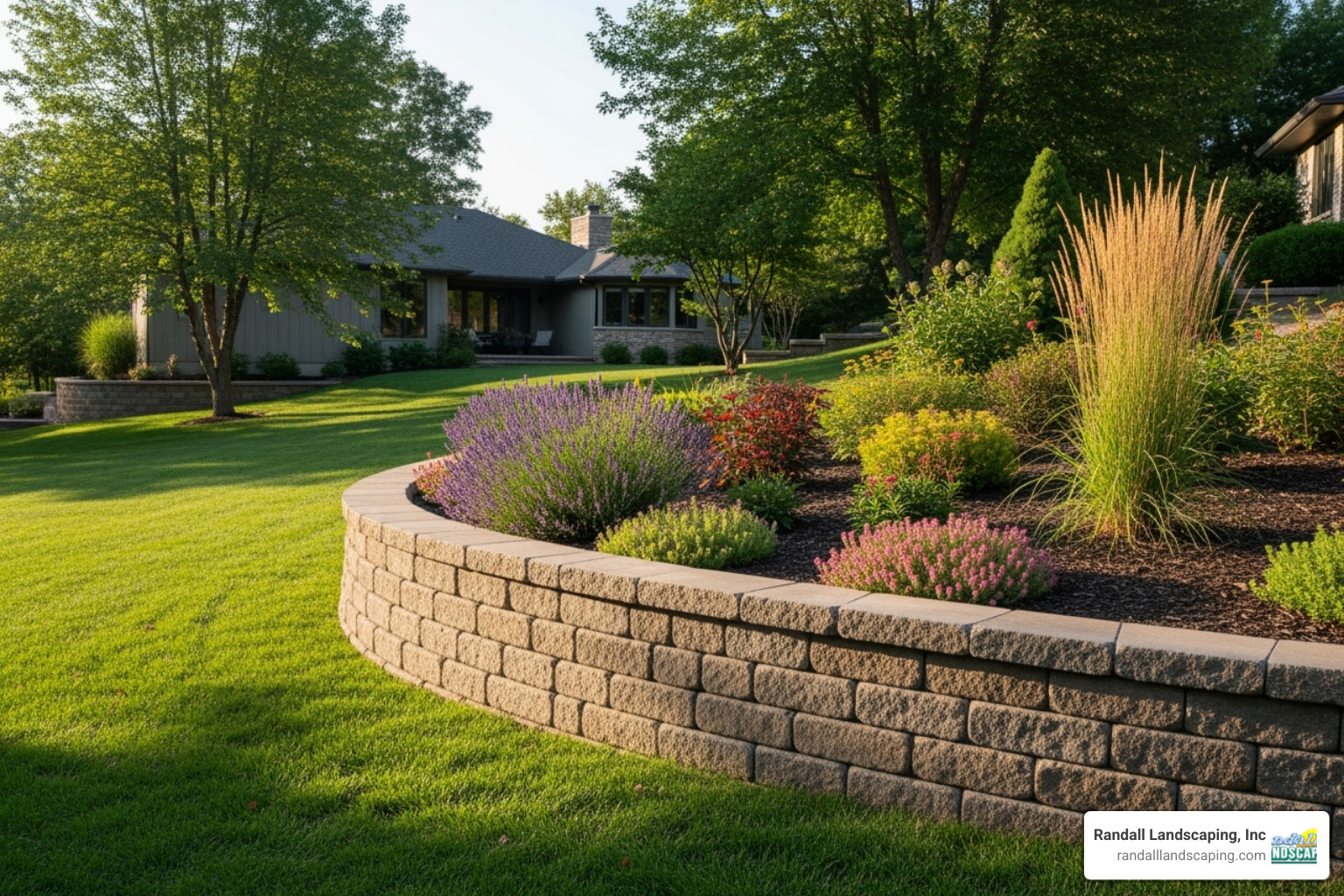
Your residential retaining wall should be a design feature, not just a utility. We consider wall height and length, often recommending terraced walls for steep slopes. This approach reduces pressure and creates usable garden or patio space. Curved walls can soften a landscape and guide the eye, while integrated features like built-in seating, planters, and stairs add functionality and style. Explore our landscape wall construction portfolio for inspiration.
Do You Need a Building Permit?
This is a common question from homeowners in Andover, Pelham, and other towns we serve. Most municipalities require building permits for walls over 3-4 feet high (measured from the base). Permits may also be needed for shorter walls that support a surcharge (like a driveway), are close to property lines, or alter drainage.
When a permit is required, engineering calculations from a licensed professional are typically necessary to ensure safety. This is an essential step, as even a modest wall holds back immense pressure. We guide homeowners through this process, leveraging our experience with local regulations throughout the Merrimack Valley and Southern New Hampshire. For homeowners in our Massachusetts service areas, you can find more info about retaining walls in Andover MA on our website.
Building a Wall That Lasts: The Keys to Structural Integrity
A beautiful residential retaining wall is useless if it isn’t structurally sound. The keys to longevity are a solid foundation, proper drainage, and correct backfill and compaction. As experts at This Old House explain when engineering a Retaining Wall, poor drainage is the primary cause of wall failure.
The Critical Role of the Foundation and Base
A stable foundation is non-negotiable. We begin with trench excavation, digging deep enough to bury the first course of blocks and accommodate a 4-6 inch compacted gravel base. This base acts as a leveling pad and is crucial for drainage. In our New England climate, the base must extend below the local frost line depth to prevent heaving. The first course installation must be perfectly level, as any error here will be magnified as the wall rises.
Mastering Drainage to Prevent Failure
Water pressure (hydrostatic pressure) is the enemy of retaining walls. Our drainage strategy includes using clean gravel backfill behind the wall to allow water to flow down freely, installing a perforated drain pipe at the base to collect and channel water away, adding weep holes in the wall face where necessary, and grading the landscape to direct surface water away from the wall.
Common Failure Points and How to Avoid Them
Knowing the warning signs of failure can save you from costly repairs. Look for bulging, significant cracking, leaning, or obvious water damage (like seepage or erosion). These issues are almost always caused by one of the following preventable mistakes:
- Poor drainage: The #1 cause of failure. Saturated soil is heavy and exerts immense pressure.
- Inadequate foundation: A base that isn’t deep, level, and compacted will lead to shifting and settling.
- Wrong materials or design: The wall must be engineered for the specific height and load it will bear.
- Improper backfill: Using native soil instead of free-draining gravel traps water against the wall, and failing to compact it in layers creates instability.
DIY vs. Hiring a Professional Contractor
Many homeowners consider building a residential retaining wall themselves. While some small projects are suitable for a DIY approach, most require professional expertise to ensure safety and longevity. Understanding the scope, skills, and tools required is key to making the right decision. For most projects, it’s best to find professional retaining wall construction contractors.
When is a DIY Retaining Wall a Good Idea?
A DIY approach can work for simple projects, but it’s crucial to be realistic. Consider DIY only if:
- The wall is short (under 3 feet) and primarily decorative.
- The slope is gentle with no significant surcharge loads (like a driveway or patio).
- The design is simple and straight, using interlocking blocks.
- You have experience with excavation, precise leveling, and heavy lifting, and own the right tools like a plate compactor.
For anything more complex, professional help is the safest bet to avoid costly failures.
Understanding the Costs of Residential Retaining Walls
Several factors influence the final cost of a residential retaining wall. Understanding them will help you budget for your project.
Key Cost Factors:
- Materials Cost: Natural stone is typically more expensive than concrete blocks or timber.
- Labor Cost: This is often the largest expense, covering skilled excavation, base preparation, and installation.
- Site Accessibility & Complexity: Difficult-to-access sites or complex designs (curves, tiers, stairs) increase labor time and cost.
- Wall Size: Taller and longer walls require more materials, labor, and often, engineering plans and permits.
- Demolition: Removing an existing wall adds to the project cost.
Price Disclaimer:
Please remember that these are average costs based on internet data and and not actual costs for Randall Landscaping. Actual costs for your project will vary based on design complexity, site conditions, material availability, and labor rates in your specific area (like Amesbury, Andover, or Salem, NH).
Average Cost Range:
While costs vary widely, national data shows a typical range of $2,000-$8,000 for a professionally installed wall. On a per-linear-foot basis, you might expect costs from $114-$350+, with complex projects potentially reaching $159-$500+ per linear foot. We are committed to providing a clear, detailed estimate for your specific project, ensuring you understand your investment.
Frequently Asked Questions about Retaining Walls
We often hear similar questions from homeowners in our service areas, from Atkinson to Windham. Here are some of the most common ones we get, with straightforward answers.
How long does a properly built retaining wall last?
A wall’s lifespan depends on its material and installation quality. With proper construction, expect the following:
- Treated Timber: 20-40 years.
- Concrete (Blocks or Poured): 50-100+ years.
- Natural Stone: 100+ years, often becoming a permanent landscape feature.
Proper installation with excellent drainage is the most critical factor for longevity.
Can I build a fence on top of my retaining wall?
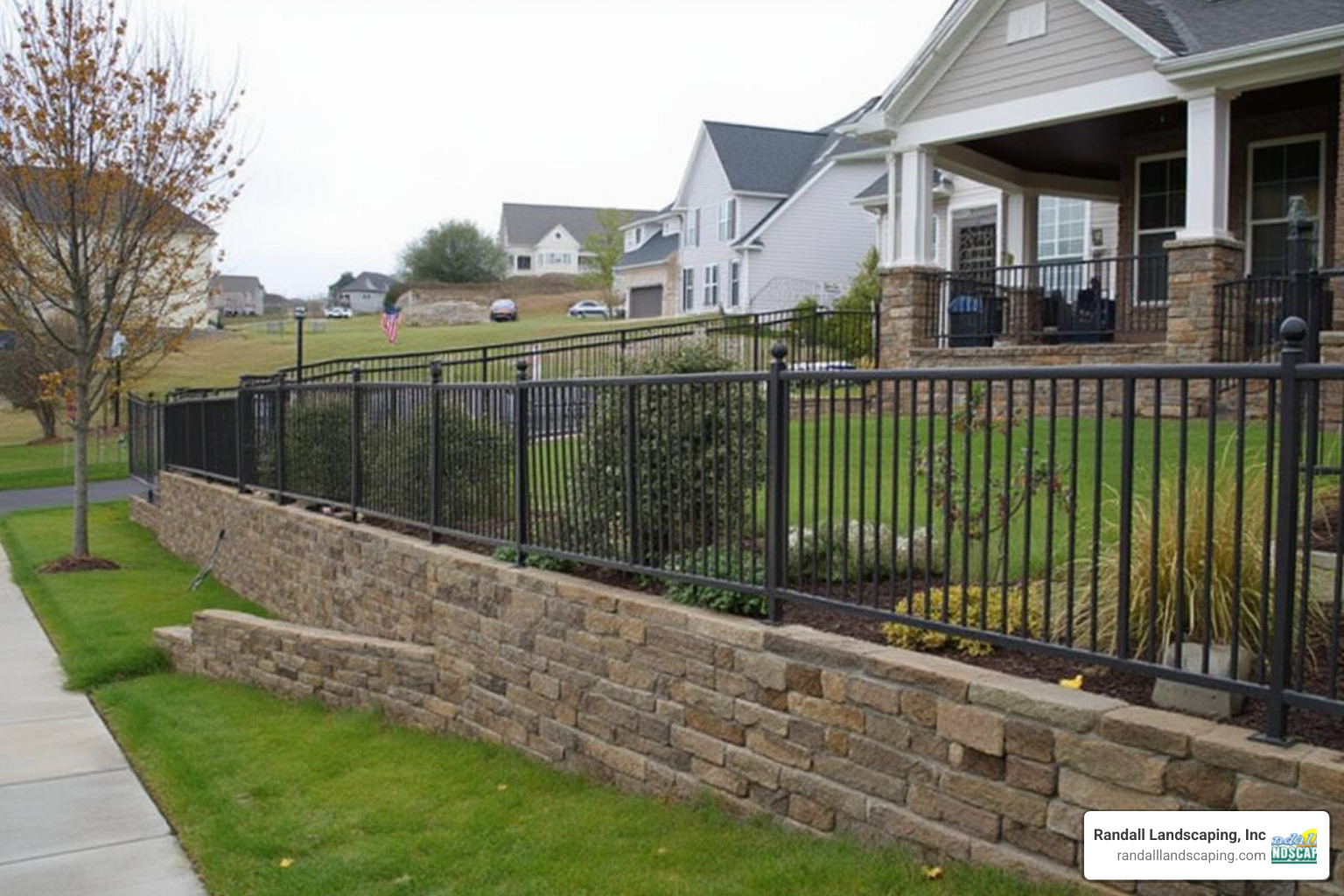
Yes, but it requires careful planning. A fence adds a “surcharge load” (extra weight and wind force) that the wall must be engineered to support. This must be part of the initial design, may affect permit requirements, and should always be handled by a professional to ensure the wall’s stability and safety.
How do I maintain my new retaining wall?
Our residential retaining walls are low-maintenance, but a few simple steps will ensure they last for decades:
- Inspect Regularly: Annually and after major storms, check for leaning, new cracks, or erosion at the base.
- Clear Drainage: Keep weep holes and drain pipe outlets free of leaves, soil, and other debris. This is the most important maintenance task you can perform.
- Manage Vegetation: Avoid planting large trees or shrubs with invasive root systems too close to the wall.
- Seal Minor Cracks: Use masonry caulk on small hairline cracks in concrete or mortar to keep water out and prevent them from growing.
Conclusion: Transform Your Landscape with a Functional and Beautiful Wall
As we’ve seen, residential retaining walls are more than just structural necessities. They prevent erosion, create valuable and usable space, and add significant curb appeal and value to your home. A well-designed wall transforms a challenging slope into a beautiful and functional landscape feature.
Here at Randall Landscaping, Inc., we love changing yards with well-built residential retaining walls. With nearly two decades of experience serving the Merrimack Valley and Southern New Hampshire, we have a reputation for quality and reliability. We know the local conditions and what it takes to build a wall that lasts for decades in communities from Amesbury to Salem, NH.
Don’t let a sloped yard limit your outdoor enjoyment. Our team works closely with you from initial ideas to the final touches to bring your vision to life. Ready to open up your property’s potential? Get a professional consultation for your retaining wall project today, and let’s build something beautiful together.