Why Efficient Garden Watering Matters
A garden irrigation system is the key to a thriving landscape without spending hours dragging hoses. These automated solutions deliver the right amount of water directly to your plants, saving time and promoting healthier growth.
What you need to know about garden irrigation systems:
- Drip systems deliver water slowly to plant roots, reducing water use by up to 60%.
- Sprinkler systems cover large lawn areas efficiently.
- Both types can be automated with timers for hands-free operation.
- Professional installation typically ranges from $500 to $5,000+ (with complex systems reaching $15,000+), while DIY kits cost $30 to $300 (advanced kits up to $900+) based on average internet data.
- Water savings and improved plant health often offset the initial investment.
Many homeowners struggle to keep up with watering, especially during hot New England summers. An irrigation system solves this by delivering consistent moisture where plants need it. Drip systems can increase crop yields significantly, and automated sprinklers ensure your lawn is cared for even when you’re on vacation.
I’m Tommy Randall, owner of Randall Landscaping, Inc., and I’ve been designing and installing garden irrigation systems throughout Massachusetts and New Hampshire since 2006. My team has helped hundreds of homeowners transform watering from a chore into an efficient, automated process.
Simple guide to garden irrigation system terms:
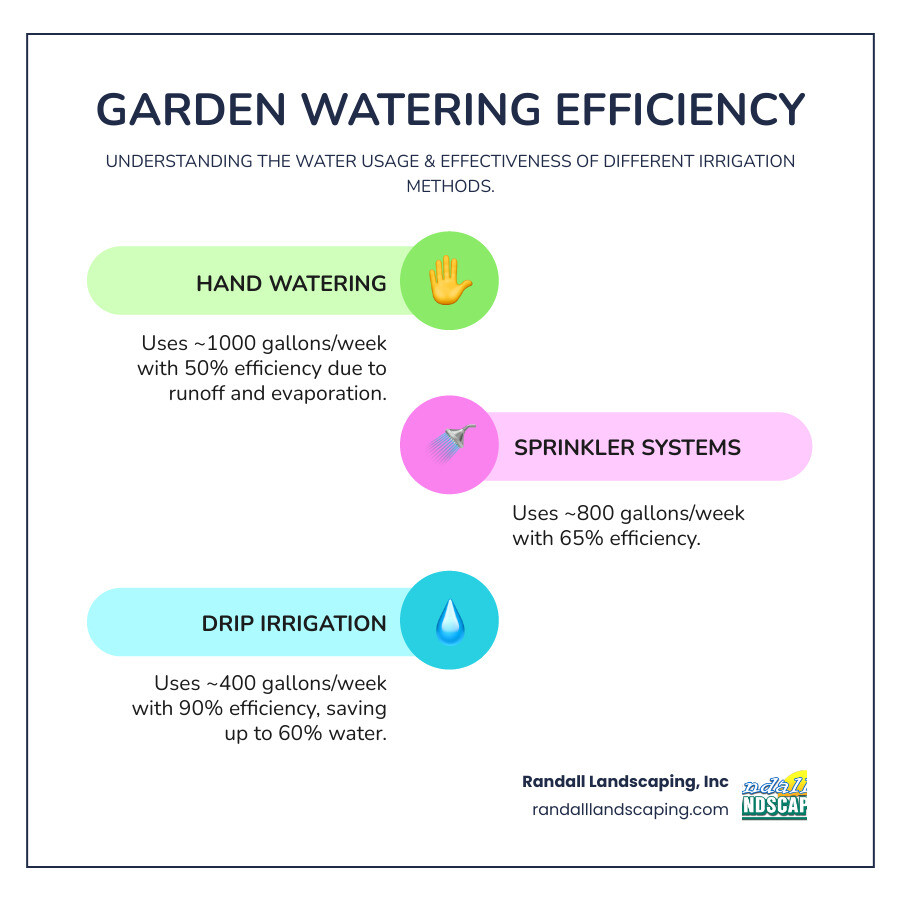
Beyond saving time, an efficient garden irrigation system is a champion of water conservation. Traditional methods like hand watering lead to significant waste from runoff and evaporation. A well-designed system, especially drip irrigation, can reduce water consumption by up to 60%, benefiting both the environment and your water bill.
Understanding the Types of Garden Irrigation Systems
Choosing the right garden irrigation system comes down to your plants’ needs and how you want to manage your watering routine. Most homeowners I work with in the Merrimack Valley care about four things: water waste, upfront cost, best use, and maintenance.
- Water efficiency impacts your water bill and the environment. Drip systems lead with 90%+ efficiency, while sprinklers are around 65% efficient—still respectable for large lawns.
- Cost considerations vary. Based on average internet data, simple DIY drip kits start around $30 to $300 (advanced kits up to $900+), while sprinkler kits run $100 to $500. Professional installation of a complete garden irrigation system averages $500 to $5,000+, with complex systems sometimes reaching $15,000 or more.
- Best applications depend on your landscape. Drip irrigation is perfect for gardens, raised beds, and containers. Sprinklers are best for large lawns and dense groundcover.
- Maintenance requirements for drip systems include flushing lines and checking for clogs. Sprinklers need head adjustments and winterization to prevent freeze damage in our New England climate.
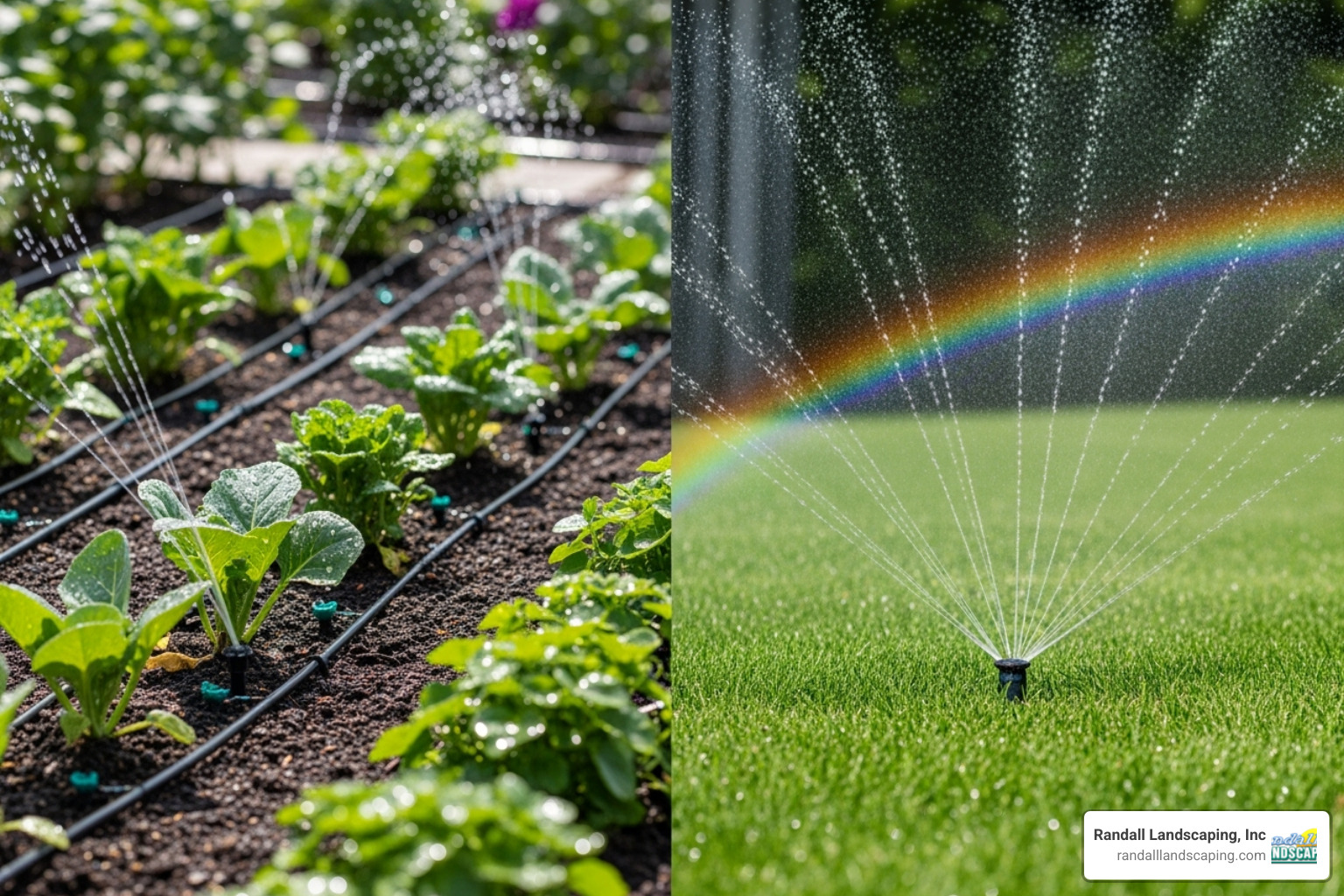
Here’s how the two main systems compare:
| Feature | Drip Irrigation | Sprinkler Systems |
|---|---|---|
| Water Efficiency | High (90%+) | Medium (65%) |
| Initial Cost (DIY) | $30 – $300+ | $100 – $500+ |
| Best Use | Gardens, beds, containers | Lawns, large areas |
| Maintenance | Filter cleaning, clog prevention | Head adjustment, winterization |
Drip Irrigation
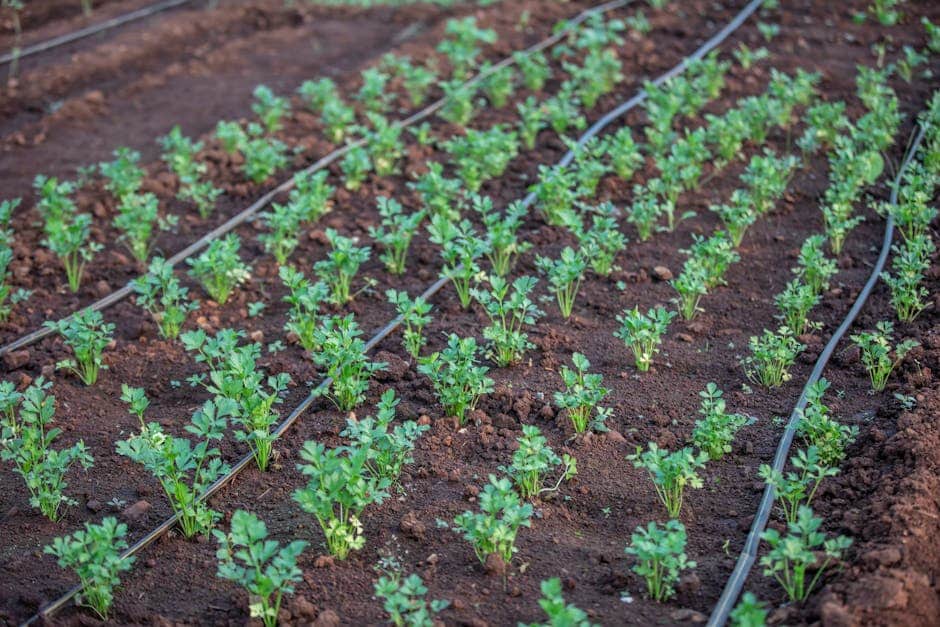
Drip irrigation is a precision tool that delivers moisture directly to each plant’s root zone through a network of tubes and emitters. This targeted watering approach means water isn’t wasted on pathways or foliage, which reduces weed growth and prevents fungal diseases. Because water drips slowly at the root zone, almost none is lost to evaporation or wind, achieving high efficiency of 90% or more. These systems are highly customizable and expandable, making them perfect for any garden layout. For broader coverage, we can incorporate drip irrigation misters for dense plantings.
Sprinkler and Spray Systems
For large area coverage, nothing beats a well-designed sprinkler system. These systems use overhead watering to mimic natural rainfall, making them ideal for maintaining lush, green lawns in communities like Amesbury and Andover. Sprinklers are the most practical choice for lawns and groundcover, providing uniform moisture across the entire surface. Modern systems feature pop-up heads that retract when not in use and rotor heads for larger zones. Proper design is key to avoiding dry spots and water waste, which is why many homeowners learn about professional sprinkler installation. Many of our clients use a hybrid system: drip for gardens and sprinklers for lawns.
Deep Dive into Drip Irrigation: The Water-Wise Choice
Drip irrigation is the smartest choice for water conservation and optimal plant care. It’s a garden irrigation system that works smarter, not harder. Research from MIT shows a properly installed drip system can cut water use by up to 60% compared to sprinklers and increase crop yields by up to 90%. You can review the scientific research on drip irrigation efficiency for more details.
Drip irrigation prevents water waste from evaporation and runoff. It also keeps foliage dry by delivering moisture directly to the root zone, which helps prevent fungal diseases.
How a Drip Garden Irrigation System Works
A drip garden irrigation system uses a low-pressure approach, releasing water slowly and steadily through emitters near each plant. This slow-drip method allows water to seep deep into the soil, encouraging stronger, more drought-resistant roots. This targeted delivery also protects soil structure and keeps leaves dry, preventing the damp conditions that fungi love.
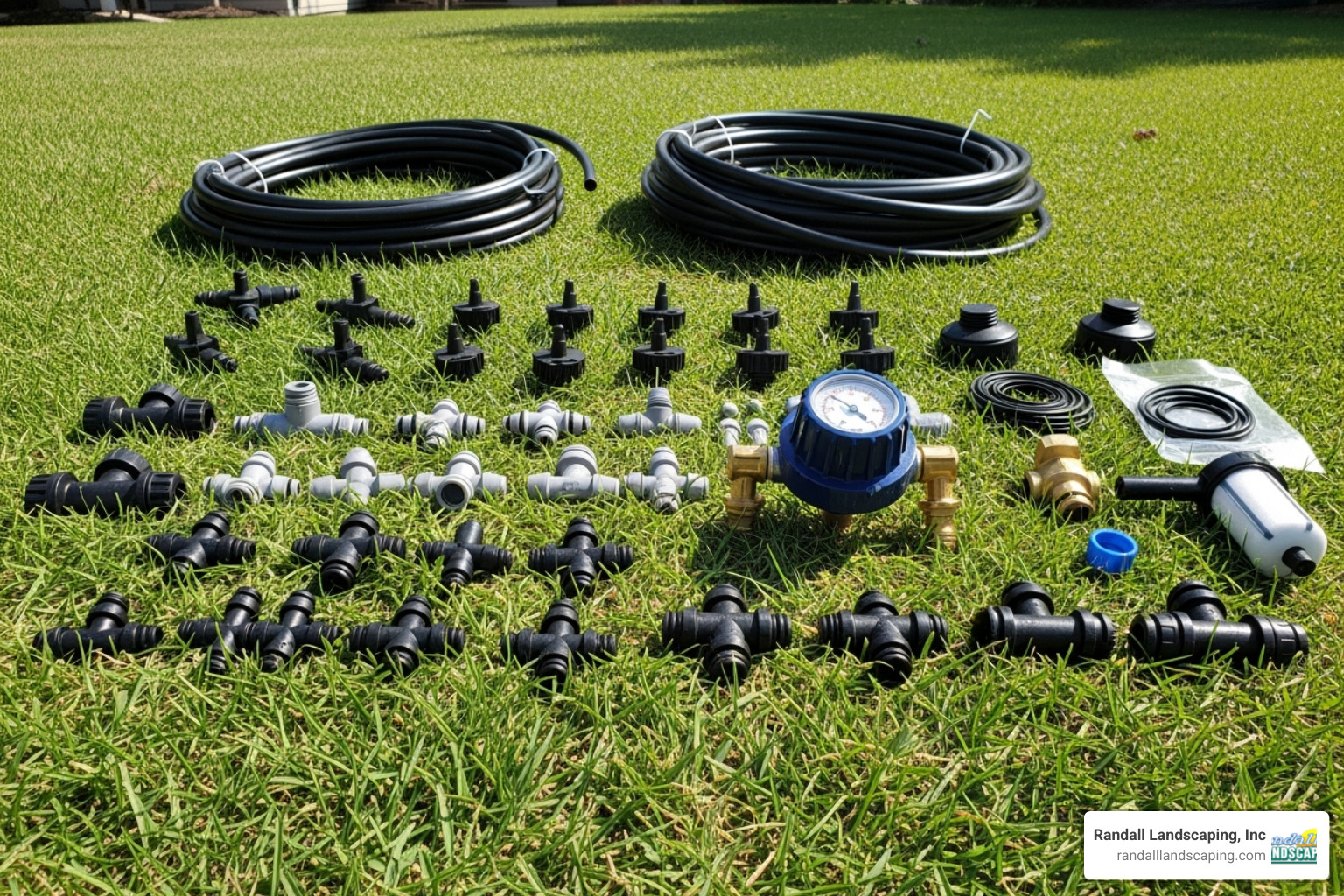
Key Components of a Drip System
A functional drip system includes several key parts:
- Backflow Preventer: Protects your home’s drinking water supply (required by code).
- Pressure Regulator: Reduces household water pressure to the low levels (15-30 PSI) that drip systems require.
- Filter: Catches sediment to prevent emitters from clogging.
- Tubing Adapter & Main Line Tubing: Connects the system to your water source and distributes water throughout the garden.
- Emitters and Drippers: Release water at controlled rates (e.g., 0.5-2 gallons per hour).
- Micro-sprayers: Provide wider coverage for dense plantings.
- Fittings, End Caps, and Stakes: Allow for customization and secure the tubing in place.
The Unbeatable Benefits of Drip Irrigation
Having installed hundreds of drip systems in Methuen, Lawrence, and nearby towns, I’ve seen their transformative benefits firsthand:
- Water Savings: Reduces water use by up to 60% compared to traditional methods.
- Improved Plant Health: Consistent moisture promotes stronger roots and more vigorous growth.
- Increased Crop Yield: Production can improve dramatically, meaning more vegetables for your table.
- Time Savings: Automation handles the watering for you, even when you’re away.
- Flexibility: Systems are easy to expand or modify as your garden changes.
Choosing the Right System for Your Garden

Picking the perfect garden irrigation system means matching it to your garden and lifestyle. After years of helping homeowners in North Andover and Plaistow, I’ve learned to start with these key factors:
- Garden size and layout: A compact container garden has different needs than a half-acre plot.
- Plant types and water needs: Grouping plants with similar water needs (e.g., separating drought-loving lavender from thirsty hydrangeas) makes irrigation more efficient.
- Soil type and slope: Sandy soil needs shorter, more frequent watering than clay soil. Slopes require careful planning to prevent runoff.
- Budget considerations: We discuss upfront costs versus long-term savings on water bills.
- Water source and pressure: Municipal water, wells, and rainwater systems all have different characteristics that affect design.
Drip Irrigation vs. Sprinkler Systems: A Head-to-Head Comparison
- Precision: Drip irrigation is highly precise, delivering water to the root zone. Sprinklers cover broad areas, which is better for lawns.
- Installation: DIY drip systems are manageable weekend projects. Inground sprinklers typically require professional installation due to trenching and complex connections.
- Durability: Quality drip components last 10-15 years with care. Inground sprinkler systems can last 15-20 years or more with proper maintenance.
- Clogging Risk: Drip emitters can clog without a filter, while sprinkler heads are less prone to blockage.
- Cost: Based on internet data, DIY drip kits range from $30-$300 (up to $900+ for advanced kits). Professional inground sprinkler installation averages $500-$5,000+, with complex systems reaching $15,000 or more.
When to Choose a Sprinkler or Spray System
While drip irrigation is excellent, sprinklers are the right choice for:
- Large lawns: They provide the even coverage needed to keep large turf areas green.
- Dense groundcover: The rain-like spray is ideal for plants growing in a uniform mat.
- New seed germination: A fine mist keeps soil damp without washing away seeds.
- Cooling plants in extreme heat: An overhead spray can lower ambient temperatures on hot days.
For these applications, explore professional sprinkler systems to ensure optimal performance.
Matching the System to Your Specific Garden Type
- Raised beds & Container gardens: Drip irrigation is perfect, allowing for precise watering of each plant.
- Large vegetable plots: Drip tape or tubing running along rows is incredibly efficient and boosts yields.
- Flower beds: A combination of drip lines for perennials and micro-sprayers for annuals often works best.
- Lawns: Inground sprinkler systems are the undisputed champion for maintaining healthy turf. Find an inground sprinkler system near me to connect with local experts.
Smart Watering, Maintenance, and DIY for Your Garden Irrigation System
Installing a garden irrigation system is the first step. Using it wisely and maintaining it are key to a vibrant garden. For those who enjoy hands-on projects, there are also great DIY options.
Determining How Often and How Much to Water
Finding the watering sweet spot is simple with these tips:
- The Finger Test: Stick your finger 2-3 inches into the soil. If it feels dry, it’s time to water. If it’s moist, hold off.
- Water in the Early Morning: Watering between 5 AM and 9 AM reduces evaporation and allows leaves to dry, preventing fungal disease.
- Water Deeply and Infrequently: This encourages deep, resilient root growth, making plants more drought-tolerant.
- Adjust for Weather: Plants in Amesbury and Andover need more water during a July heatwave than in cool September weather.
- Watch for Signs: Wilting or yellowing leaves and stunted growth are cries for help.
DIY-Friendly Garden Irrigation System Options
Creating your own garden irrigation system can be a satisfying and budget-friendly project.
- Starter Kits: These all-in-one packages are perfect for beginners with small gardens or a few raised beds.
- Modular Drip Kits: These allow you to customize and expand your system as your garden grows.
- Assembling from Components: For the adventurous, building a system from individual parts offers complete control and potential savings.
- PVC Pipe Systems: A popular DIY solution that is durable, affordable, and versatile for creating custom setups.
Even a simple battery-operated timer attached to your faucet can automate a basic DIY system, saving you time and effort.
Maintenance, Troubleshooting, and System Costs
Regular care keeps your garden irrigation system performing its best.
- Annual Flushing: At the start of the season, remove end caps and flush the lines to clear out debris.
- Filter & Emitter Checks: Clean your filter monthly and inspect emitters for clogs.
- Leak Inspection: Regularly walk your system while it’s running to spot and fix leaks early.
- Winterizing: This is essential in New Hampshire and Massachusetts. Shut off the water, drain all pipes, and use an air compressor to blow out any remaining water from inground systems to prevent freeze damage. Store timers and filters indoors.
To further conserve water, use mulch to reduce evaporation and amend soil with compost to improve water retention.
Regarding costs, please note these are averages based on internet data, not actual costs for Randall Landscaping. A basic DIY drip irrigation kit typically ranges from $30 to $300, with advanced kits reaching $900+. Professional garden irrigation system installation averages $500 to $5,000+, with complex systems potentially reaching $15,000+. A professional system often pays for itself through water savings and healthier plants. You can understand the cost of a garden irrigation system in more detail on our site.
Frequently Asked Questions about Garden Irrigation
Can I automate my garden irrigation system?
Yes, and automation is one of the biggest benefits of a modern garden irrigation system. Options range from simple to sophisticated:
- Hose-end timers are affordable devices that attach to your faucet to control watering times and duration.
- Multi-zone smart controllers manage different garden areas independently. Many connect to weather sensors that automatically adjust watering based on local rainfall and temperature, so you never water in a storm.
- Smartphone app control offers the ultimate convenience, allowing you to adjust your watering schedule from anywhere. This feature provides tremendous peace of mind, especially when you’re on vacation.
Is an irrigation system better than watering by hand?
Yes, for most gardens, a garden irrigation system offers significant advantages over hand watering.
- Consistency: An automated system delivers a precise amount of water on a regular schedule, which plants love.
- Efficiency & Water Savings: A well-designed drip system delivers water directly to the roots with minimal waste, often cutting water use by 30-60% compared to hand watering.
- Time Savings: You get back the time you would have spent dragging hoses around the yard.
- Deeper Root Growth: Programmed, deep watering encourages strong roots, creating more resilient and drought-tolerant plants that can better withstand our hot New England summers.
How do I winterize my irrigation system to prevent freeze damage?
Winterizing your garden irrigation system is absolutely essential in our Massachusetts and New Hampshire climate to prevent costly damage from frozen pipes. The process involves a few key steps:
- Shut off the water source at the main valve for your irrigation system.
- Drain all water from pipes, hoses, and above-ground components.
- Blow out the lines with an air compressor. This is critical for inground systems to force out any trapped water that could freeze and crack pipes. Due to the risk of damaging the system with incorrect pressure, this step is often best left to a professional.
- Disconnect and store vulnerable components like timers and filters indoors, away from freezing temperatures.
We offer professional winterization services for homeowners in Atkinson, Pelham, and our entire service area to ensure your system is protected and ready for spring.
Achieve a Healthier Garden with the Right Irrigation
I’ve learned over two decades in landscaping that the right garden irrigation system transforms how gardens grow. It’s not just about convenience; it’s about creating an environment where plants thrive, water is used wisely, and you can enjoy your outdoor space without worry.
Throughout this guide, we’ve seen how drip irrigation can reduce water usage by up to 60% and how a well-designed system promotes healthier, more resilient plants. Choosing the right system is key. A container garden has different needs than a sprawling lawn in Andover or a vegetable plot in North Reading. Matching the system to your landscape open ups these benefits.
The long-term value is clear. Our clients report lower water bills, more free time, and peace of mind knowing their gardens are cared for, even when they’re away. Most importantly, they see more vibrant plants that better withstand dry spells.
I understand that planning an irrigation system can feel overwhelming. That’s why we’re here. For expert advice and a flawless setup, the team at Randall Landscaping, Inc. provides top-quality installation services throughout the Merrimack Valley and Southern New Hampshire. We’ve served communities like Boxford, Haverhill, and Londonderry since 2006.
Our commitment to quality work and 100% reliability means we’ll design a system that fits your landscape perfectly and ensure you know how to get the most from it.
Ready to transform your watering routine? Contact us for a professional garden sprinkler system installation today. Let’s create the thriving, healthy landscape you’ve been dreaming of.