
Why Professional Landscape Irrigation Services Are Worth It
Landscape irrigation services cover everything your lawn and garden need to stay healthy, green, and water-efficient — without you lifting a finger.
Here’s a quick overview of what these services typically include:
| Service | What It Does |
|---|---|
| System design & installation | Custom layout matched to your property |
| Spring startup | Activates and tests the system after winter |
| Winterization / blowout | Protects pipes from freeze damage |
| Repairs & upgrades | Fixes leaks, heads, valves, and wiring |
| Smart controller installation | Automates watering based on weather data |
| Seasonal maintenance | Keeps the system running efficiently year-round |
| Backflow testing | Ensures water supply stays uncontaminated |
| Water audits | Identifies waste and reduces utility costs |
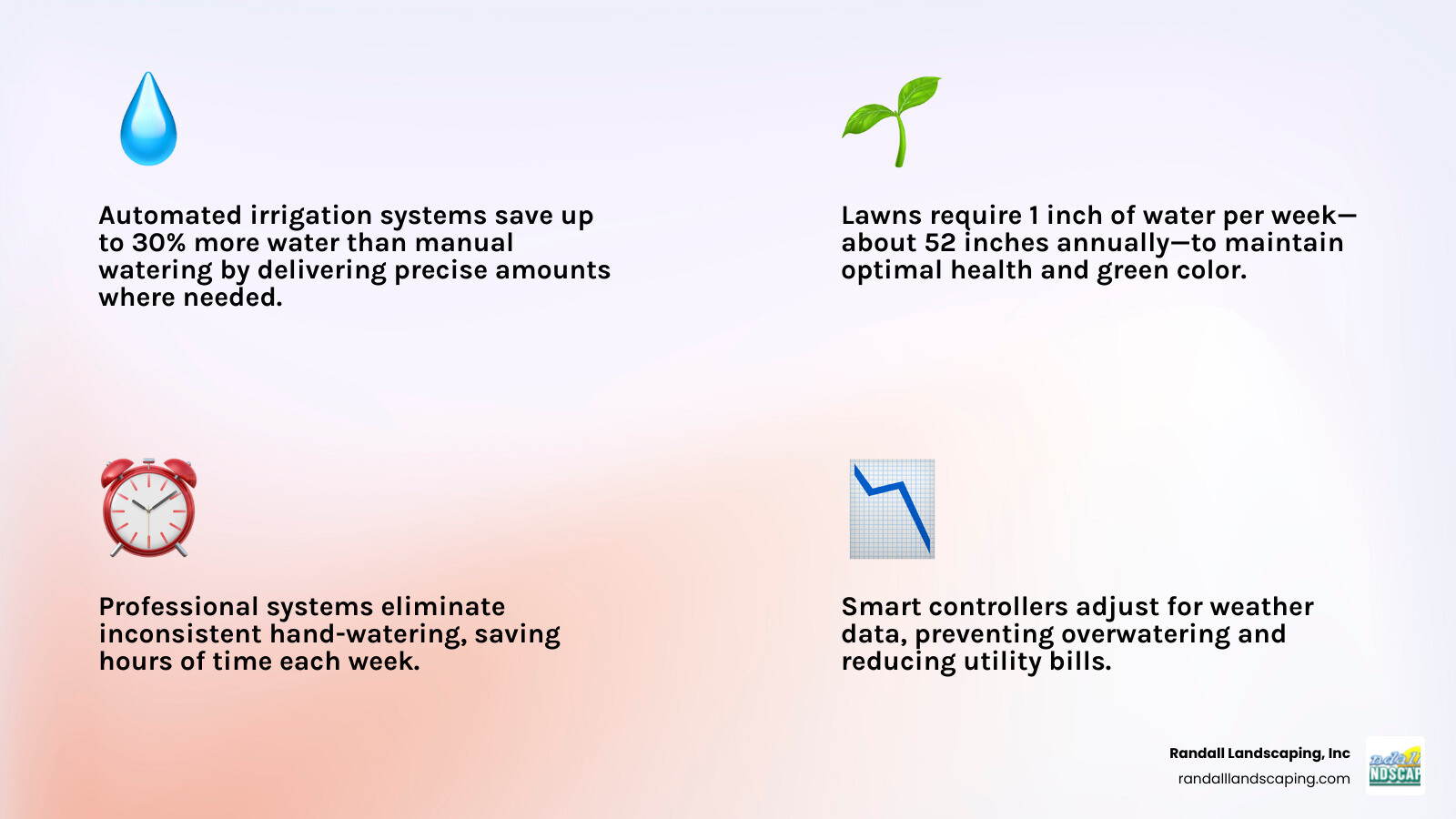
Your lawn needs about 1 inch of water per week to stay healthy. In many parts of New England, rainfall alone won’t cover that — especially during dry summers. A professionally installed and maintained irrigation system fills that gap automatically, saving you time and keeping your landscape looking its best. According to the UMass Extension Turf Program, consistent moisture is key to preventing pest issues and heat stress.
Manual watering is inconsistent, time-consuming, and easy to neglect. A properly designed irrigation system removes the guesswork, delivers water where and when it’s needed, and can actually reduce water usage by up to 30% compared to hand-watering.
I’m Tommy Randall, owner of Randall Landscaping, Inc., and since 2006 I’ve been designing and maintaining landscape irrigation services for homeowners across Massachusetts and Southern New Hampshire. In this guide, I’ll walk you through everything you need to know to make smart decisions about your irrigation system.
Landscape irrigation services terms made easy:
Understanding the Core Types of Landscape Irrigation Services
When we talk about Landscape irrigation services, we aren’t just talking about a few plastic heads stuck in the ground. Modern irrigation is a blend of hydraulic engineering and horticultural science. Every property in the Merrimack Valley, from the historic yards in Andover to the sprawling estates in Windham, has unique needs based on soil type, slope, and plant variety.
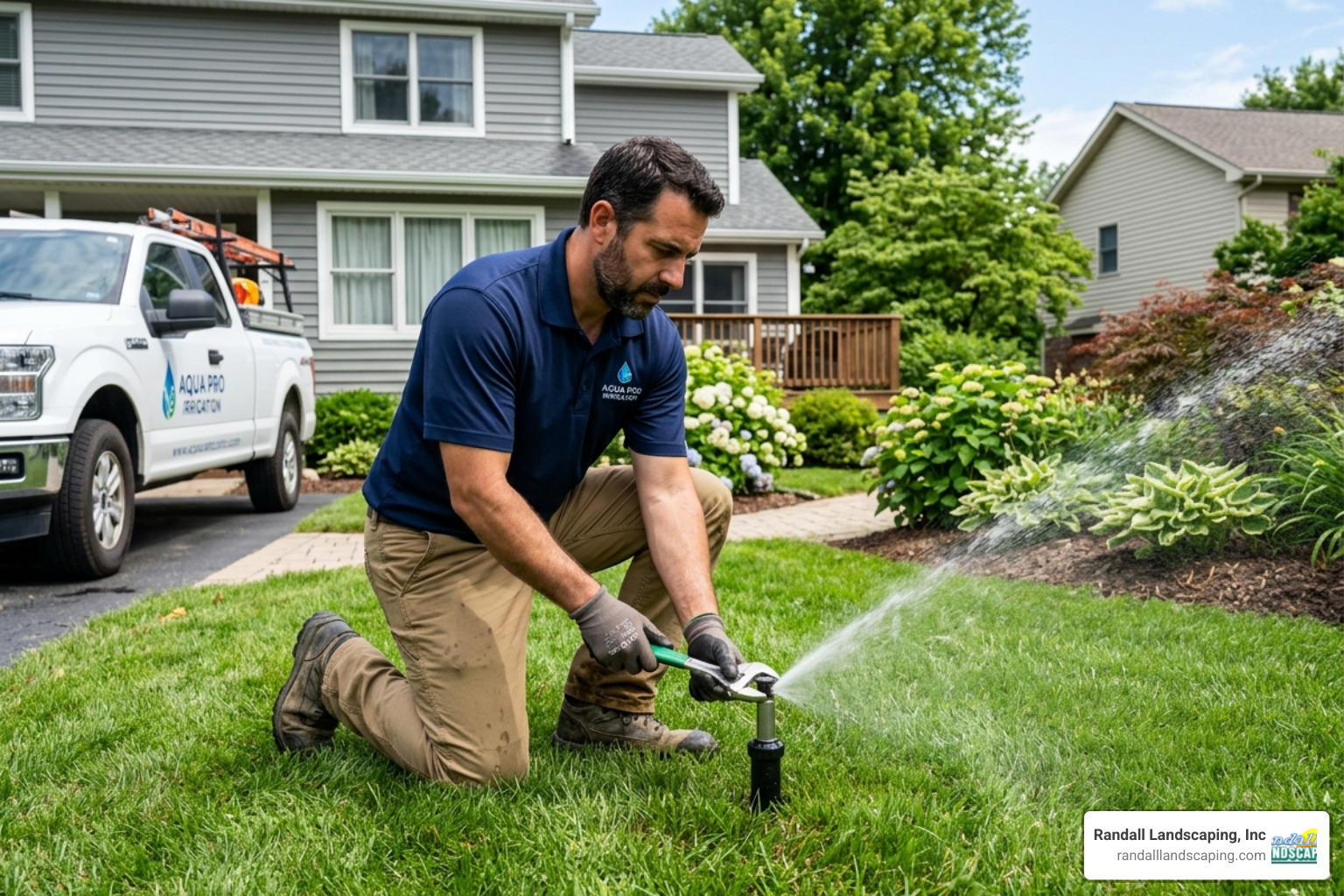
Choosing the right system is the first step toward a lush landscape. There are three primary methods we use to keep your property hydrated:
- Sprinkler Systems: The most common choice for lawns, using various heads to mimic natural rainfall.
- Drip Irrigation: A precision method that delivers water slowly and directly to the roots.
- Surface Irrigation: Often used in larger agricultural contexts but sometimes adapted for specific ground-cover needs.
To make these systems truly “set it and forget it,” we often integrate a Garden Irrigation System with Timer or advanced smart controllers that adjust based on real-time weather data.
Traditional Sprinkler Systems
The Professional Sprinkler System remains the gold standard for residential and commercial turf. These systems are incredibly versatile. We can use “rotors” for large, open areas of grass, which can throw water up to 30 feet or more. For tighter spaces, we use “spray heads” that provide a consistent mist over a fixed area.
The secret to a great sprinkler system is “head-to-head coverage.” This means the water from one sprinkler head should reach all the way to the next one. This prevents those annoying dry brown spots that make your lawn look like a patchwork quilt.
Precision Drip Irrigation
If you have delicate flower beds, vegetable gardens, or prized shrubs, a Drip Irrigation Mister or emitter system is your best friend. Unlike sprinklers, which can lose water to evaporation or wind, drip systems deliver water directly to the root zone.
This method is the ultimate in water conservation. By keeping the foliage dry, you also reduce the risk of fungal diseases that thrive on wet leaves. It’s an efficient way to ensure your garden thrives without wasting a drop.
Essential Landscape Irrigation Services for Year-Round Health
A great irrigation system isn’t just “one and done.” It requires professional oversight to ensure it stays efficient. Our Landscape irrigation services include comprehensive audits where we check for leaks, clogged nozzles, and “pressure balancing.” If your water pressure is too high, your sprinklers will “mist,” and the water will just blow away. If it’s too low, the heads won’t pop up correctly.
We also handle critical safety tasks like backflow testing. This ensures that the water in your irrigation lines never flows back into your clean drinking water supply—a vital requirement in many of the towns we serve, like Dracut and North Reading.
Professional Landscape Irrigation Services: Installation and Design
The difference between a DIY kit and Professional Sprinkler Installation is in the details. When we design a system, we look at your property’s “hydro-zones.” This means we group plants with similar water needs together. Your thirsty fescue lawn shouldn’t be on the same zone as your drought-tolerant succulents.
During a Professional Sprinkler System Installation, we use commercial-grade materials that are built to withstand the tough New England climate. We often use “trench-less” pipe pulling technology, which allows us to install the lines underground with minimal disruption to your existing grass.
Seasonal Maintenance and Repairs
In the Merrimack Valley and Southern New Hampshire, the seasons dictate our Irrigation Maintenance and Repair schedule.
- Spring Startup: In April, we slowly charge the system with water, check every head for damage from snowplows or frost, and program your Garden Irrigation System Timer for the upcoming growing season.
- Mid-Season Check: As the heat of July hits, we often return to adjust run times and ensure the system is keeping up with the demand.
- Fall Winterization: This is non-negotiable. We use high-volume air compressors to perform “blowouts,” removing every drop of water from the pipes before they freeze and burst during a cold Pelham or Atkinson winter.
Maximizing Efficiency with Smart Technology and Water Conservation
We are living in the golden age of smart watering. By 2026, the technology has reached a point where your lawn can practically talk to your smartphone.
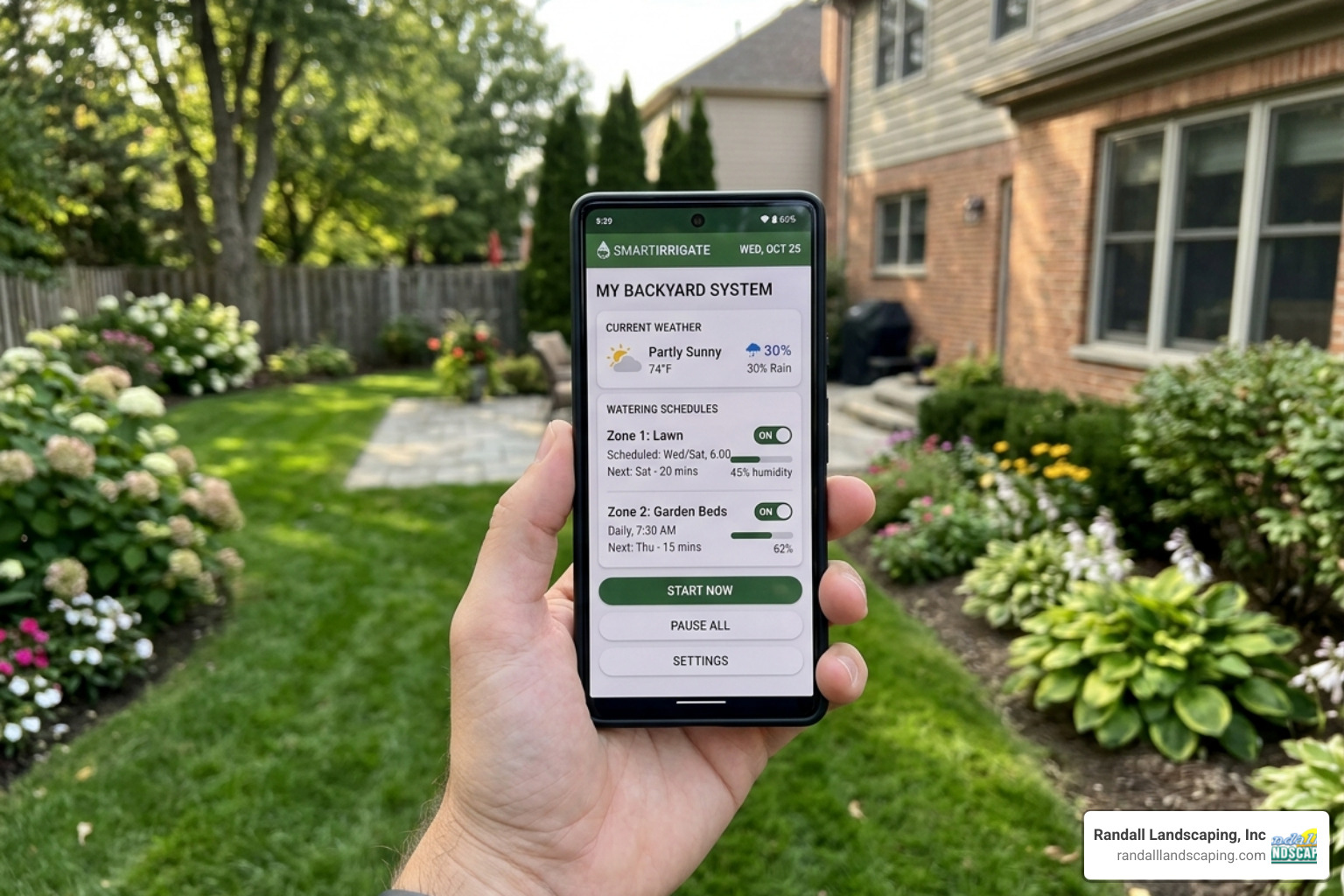
Smart controllers use “EvapoTranspiration” (ET) data. This is a fancy way of saying the system calculates how much moisture is leaving your soil based on local temperature, wind, and humidity. It then replaces exactly that amount. According to industry research, customers using this advanced technology can see 60% less water usage compared to traditional “dumb” timers.
Furthermore, many local water departments offer 30% rebate eligibility for homeowners who install EPA WaterSense certified smart controllers. It’s a win-win: you save money on your utility bill and help conserve our local water resources. Check out our Garden Irrigation System Guide 2025 for more on these tech upgrades.
Advanced Landscape Irrigation Services and Sustainability
Sustainability is at the heart of our Landscape irrigation services. Beyond smart controllers, we utilize precision nozzles that produce larger water droplets, which are less likely to be carried away by the wind. We also install soil moisture sensors that act like a “kill switch”—if the ground is already wet from a heavy rainstorm in Georgetown or Boxford, the system won’t turn on, preventing wasteful overwatering.
Recognizing Signs Your System Needs Professional Attention
Sometimes, your irrigation system tries to tell you it’s struggling. If you notice any of the following, it’s time to search for an Inground Sprinkler System Near Me:
- Soggy Patches: If one area of your lawn feels like a swamp, you likely have a leaking pipe or a valve that won’t close.
- Hissing Sounds: This often indicates a cracked head or a leak near the valve box.
- Dry Patches: Usually caused by a clogged nozzle or a head that has been knocked out of alignment.
- Sky-High Water Bills: If your bill jumps unexpectedly, you might have an underground leak that hasn’t reached the surface yet.
- Low Pressure: If your “fountains” have turned into “bubbles,” there’s a blockage or a major leak somewhere in the line.
The Investment: Costs of Landscape Irrigation Services
We know that budget is always a consideration. While every property is different, we can look at some industry averages to give you a ballpark idea of what to expect.
Note: The figures in the table below are average costs based on internet data as of April 2026 and are not actual costs for Randall Landscaping, Inc. Every project requires a custom quote based on specific site conditions.
| Service Category | Average Low-End Cost | Average High-End Cost |
|---|---|---|
| New System Installation | $2,500 | $12,500+ |
| Major System Repair | $150 | $950+ |
| Seasonal Maintenance (Start/Stop) | $100 | $500+ |
| Smart Controller Upgrade | $200 | $800+ |
Average Costs for Installation and Maintenance
When looking at the Cost of Garden Irrigation System or the Average Cost of Inground Sprinkler System, the high end of the range usually accounts for large properties, complex zones, or the use of premium smart technology.
For example, a Underground Water Sprinkler System Cost for a small residential lot in Methuen will be significantly lower than a multi-acre commercial site in Lawrence. The key is to view this as an investment in your property’s value. A healthy, green lawn can increase home value by up to 15%, far outweighing the initial setup cost.
Frequently Asked Questions about Landscape Irrigation
How often should my irrigation system be inspected?
We recommend a professional inspection at least 3 to 4 times per season (typically March through October). While the system is running, we perform visual checks of every single head to ensure they are popping up, rotating correctly, and not spraying your siding or the sidewalk. Monthly checks are ideal to catch small leaks before they become big bills.
Why is professional winterization necessary?
In our region, the frost line can go deep. If water stays in your PVC or poly pipes, it will expand as it freezes, causing the pipes to shatter. Professional winterization involves using a high-volume air compressor to “blow out” the lines. This is the only way to ensure your investment is protected from the brutal New Hampshire and Massachusetts winters.
How much water does my lawn actually need?
Most New England turf grass needs exactly 1 inch of water per week. Over a full year, that’s about 52 inches. Our local rainfall rarely hits that mark consistently, especially during the “brown-out” periods of late summer. A professional system bridges that gap, ensuring your grass never goes into a stress-induced dormancy.
Conclusion
At Randall Landscaping, Inc., we take pride in providing the highest quality Landscape irrigation services across the Merrimack Valley and Southern New Hampshire. Whether you are in Amesbury, Salem, or Plaistow, our mission is to provide 100% reliability and quality work that lets you enjoy your weekends instead of dragging a hose around.
From the initial Professional Sprinkler System Installation to the final winter blowout of the year, we are here to ensure your landscape stays thriving. Don’t let your lawn suffer through another dry spell. Reach out to us today, and let’s get your property on the path to automated, efficient health.
Ready to stop worrying about the weather? Contact Randall Landscaping, Inc. today for a custom irrigation quote!