
Why Automate Your Garden Watering?
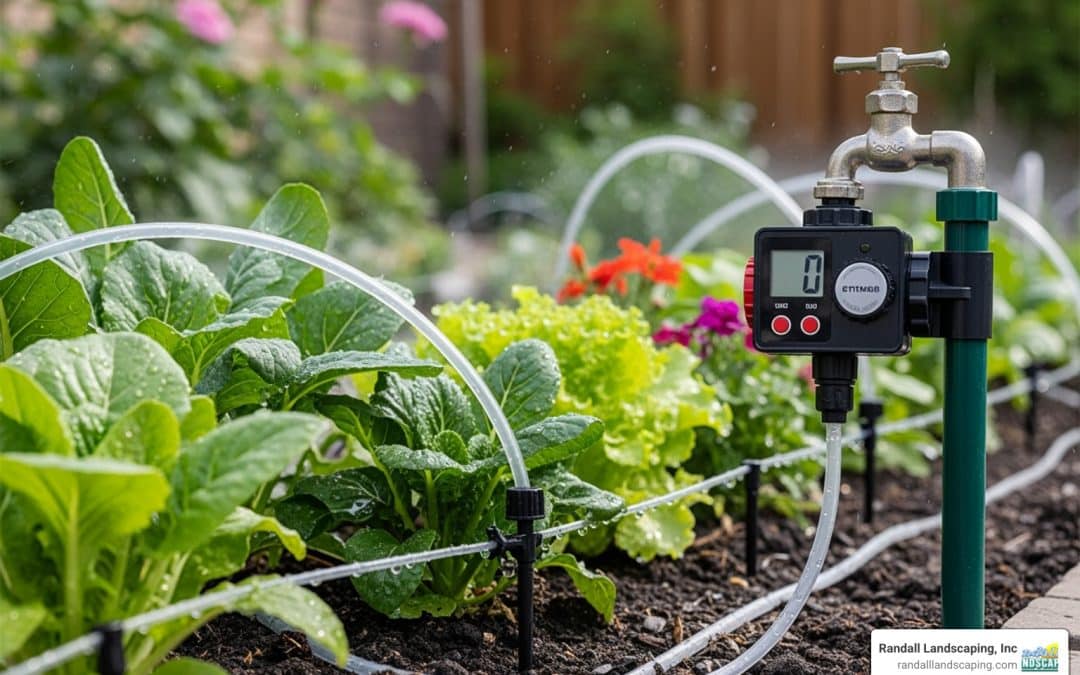
A garden irrigation system with timer transforms the way you care for your landscape, eliminating the guesswork and daily hassle of manual watering. Whether you’re tending to vegetable beds, flower gardens, or maintaining a pristine lawn, automated watering delivers consistent moisture exactly when your plants need it.
Quick Answer: Best Garden Irrigation Systems with Timer
- Drip Irrigation Kits: Perfect for garden beds and precise plant watering
- Sprinkler Timer Systems: Ideal for lawns and larger coverage areas
- Soaker Hose Systems: Great for raised beds and vegetable gardens
- Smart Controllers: Wi-Fi enabled timers with weather integration
- Battery-Powered Timers: Simple, affordable options for basic automation
The benefits are clear. Research shows that automated irrigation systems can reduce water usage by up to 70% compared to traditional sprinklers by delivering water directly to plant roots. Your water bill drops significantly while your plants thrive with consistent, targeted watering.
Beyond water savings, these systems offer unparalleled convenience. No more dragging heavy hoses or worrying about forgetting to turn off the sprinkler. Set your schedule once, and your garden gets watered automatically—even when you’re on vacation.
The system pays for itself through:
- Lower water bills from precise, efficient watering
- Healthier plants that require less replacement
- Time savings worth hundreds of dollars annually
- Increased property value from improved landscaping
I’m Tommy Randall, owner of Randall Landscaping Business, and I’ve been installing and maintaining garden irrigation systems with timer controls throughout Massachusetts and New Hampshire since 2006. Over nearly two decades, I’ve seen how the right automated watering system transforms both the health of landscapes and the lives of busy homeowners who want beautiful gardens without the daily maintenance burden.
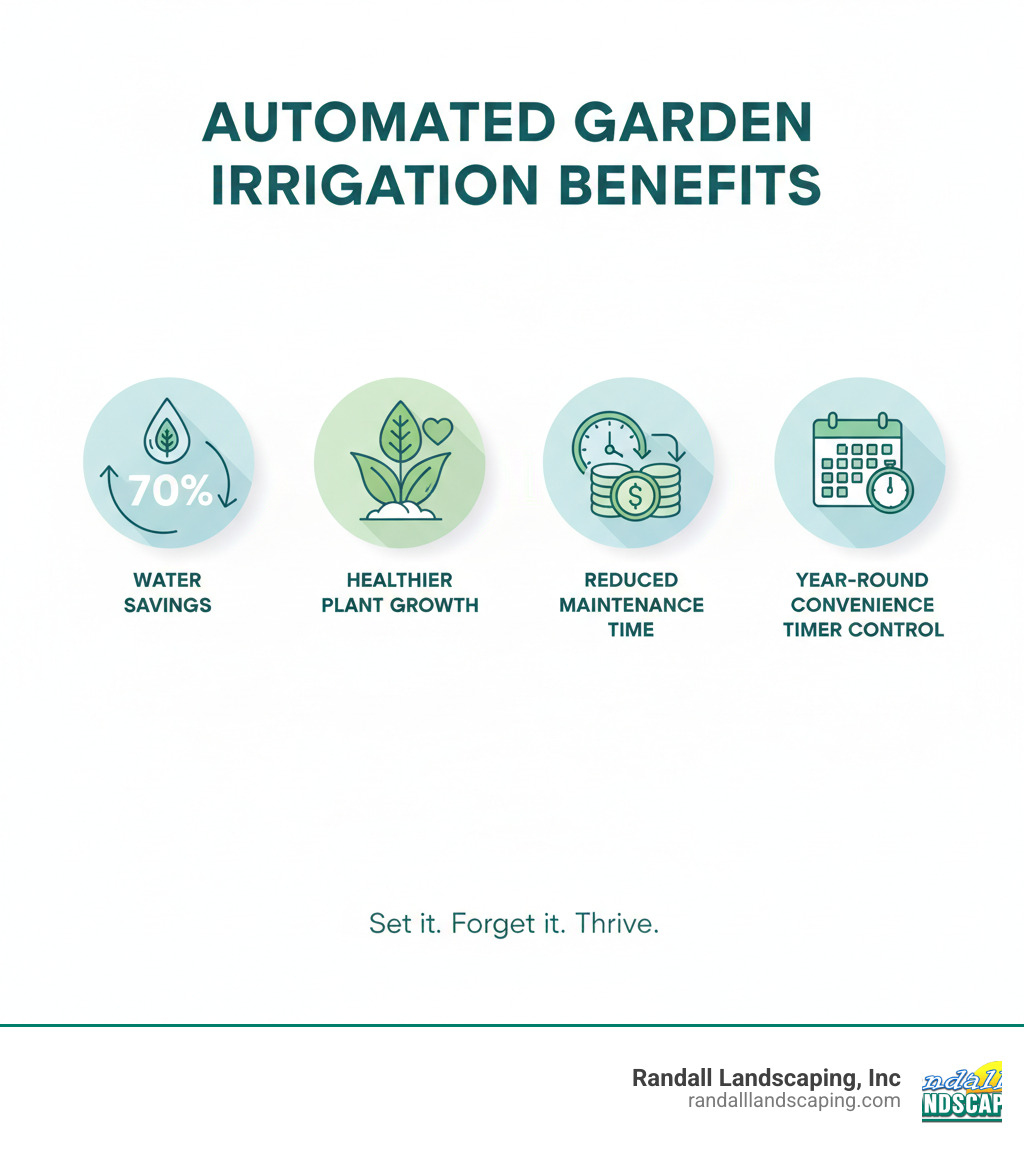
A well-designed garden irrigation system with timer is not just about convenience; it’s about optimizing water usage, promoting robust plant growth, and saving you time and money. Let’s explore the essential components for setting up your own automated watering oasis.
Understanding the Core Components of an Irrigation System
Setting up a successful garden irrigation system with timer requires understanding its basic parts. After installing hundreds of these systems across New England, I can tell you that knowing these components will save you headaches down the road.
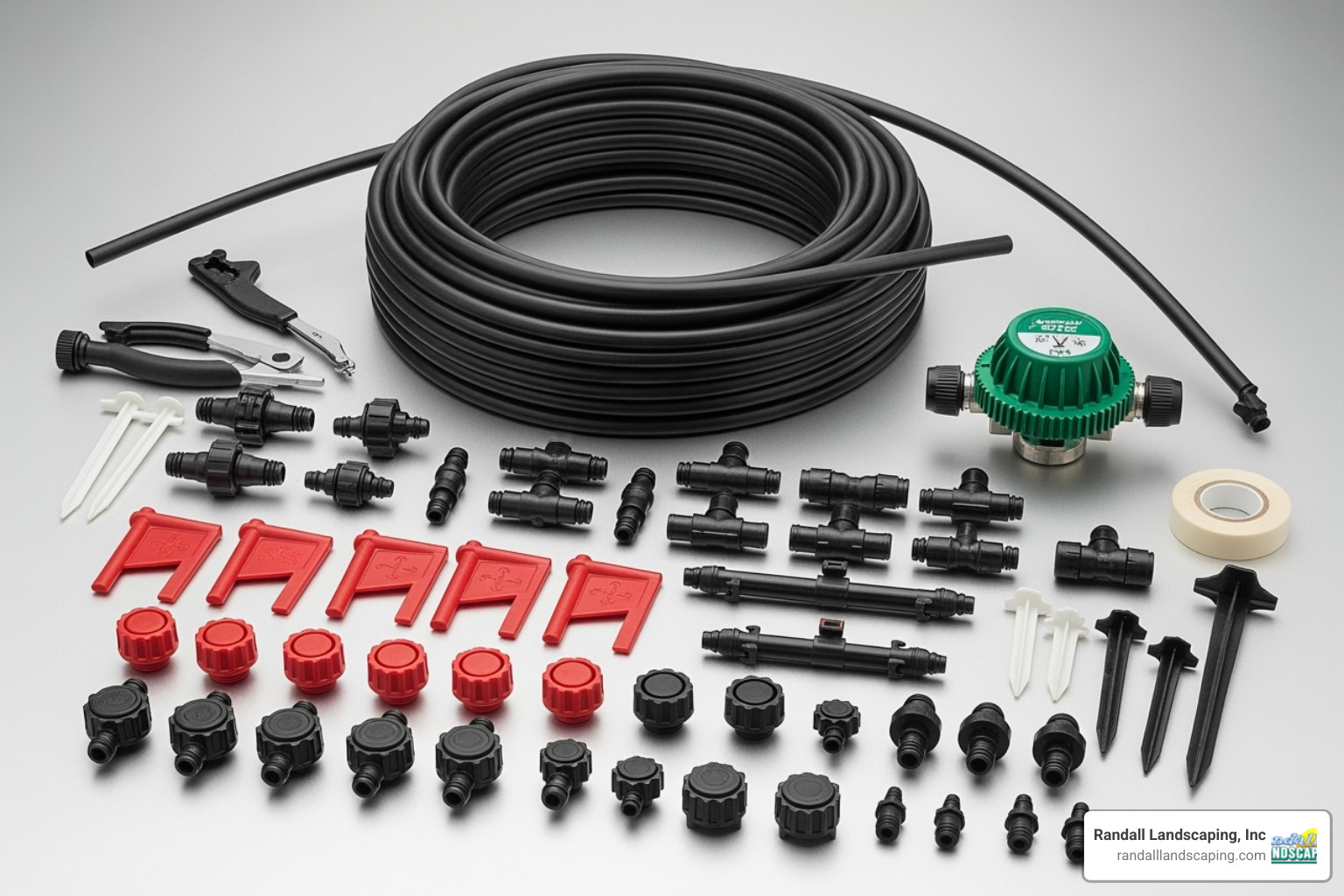
The timer is the brain, controlling when and how long to water. Valves direct the flow to different zones, while tubing and pipes act as the delivery network. At the end of the line, emitters or sprinkler heads apply water to your plants. A crucial safety component is the backflow preventer, which stops irrigation water from contaminating your home’s drinking water and is required by code in most areas.
For drip systems, a pressure regulator protects delicate parts from high pressure, and a filter stops debris from clogging emitters. Many drip irrigation kits bundle these components, simplifying your purchase.
The Brains of the Operation: Types of Irrigation Timers
Your timer choice dictates the level of automation and intelligence your system will have.
Mechanical timers are the simplest: twist a dial for a set watering time. They are affordable but require manual activation for each use.
Digital electronic timers offer significant automation. These battery-powered units connect to a faucet and allow you to program start times, frequency, and duration. Many include a rain delay function to pause watering after a storm without losing your schedule.
Smart timers with Wi-Fi and Bluetooth connectivity are the most advanced. They connect to your smartphone for remote control and integrate with weather data to automatically skip watering when rain is forecast, saving water and money. Some also track usage and send alerts for potential leaks.
In-ground irrigation controllers are robust, hard-wired units for managing numerous zones in a permanent, whole-property system. They require more complex installation but are essential for large landscapes.
The Delivery Network: Compatible Irrigation Systems
Your delivery system should match your garden’s needs for maximum efficiency and plant health.
Drip irrigation systems deliver water slowly and directly to plant roots through a network of tubes and emitters. This method is highly efficient, reducing water use by up to 70% compared to sprinklers. It’s ideal for vegetable gardens, flower beds, and containers, as it keeps foliage dry and reduces fungal disease. The main drawback is that emitters can clog without proper filtration.
Sprinkler systems spray water over larger areas, making them perfect for lawns. While simple to set up, they are less water-efficient due to evaporation and overspray.
Soaker hoses are porous hoses that weep water along their entire length. They are a good, low-cost option for vegetable rows and raised beds, offering a balance between drip and sprinkler systems, though they can be less precise.
For homeowners interested in exploring different watering approaches for their specific landscape needs, more info about garden water systems can help you understand which combination might work best for your property’s unique layout and plant selection.
How to Choose the Perfect Garden Irrigation System with Timer
Finding the right garden irrigation system with timer means pairing your garden’s needs with a system that complements them. After helping hundreds of homeowners across the Merrimack Valley, I’ve learned that success starts with understanding exactly what you’re working with.
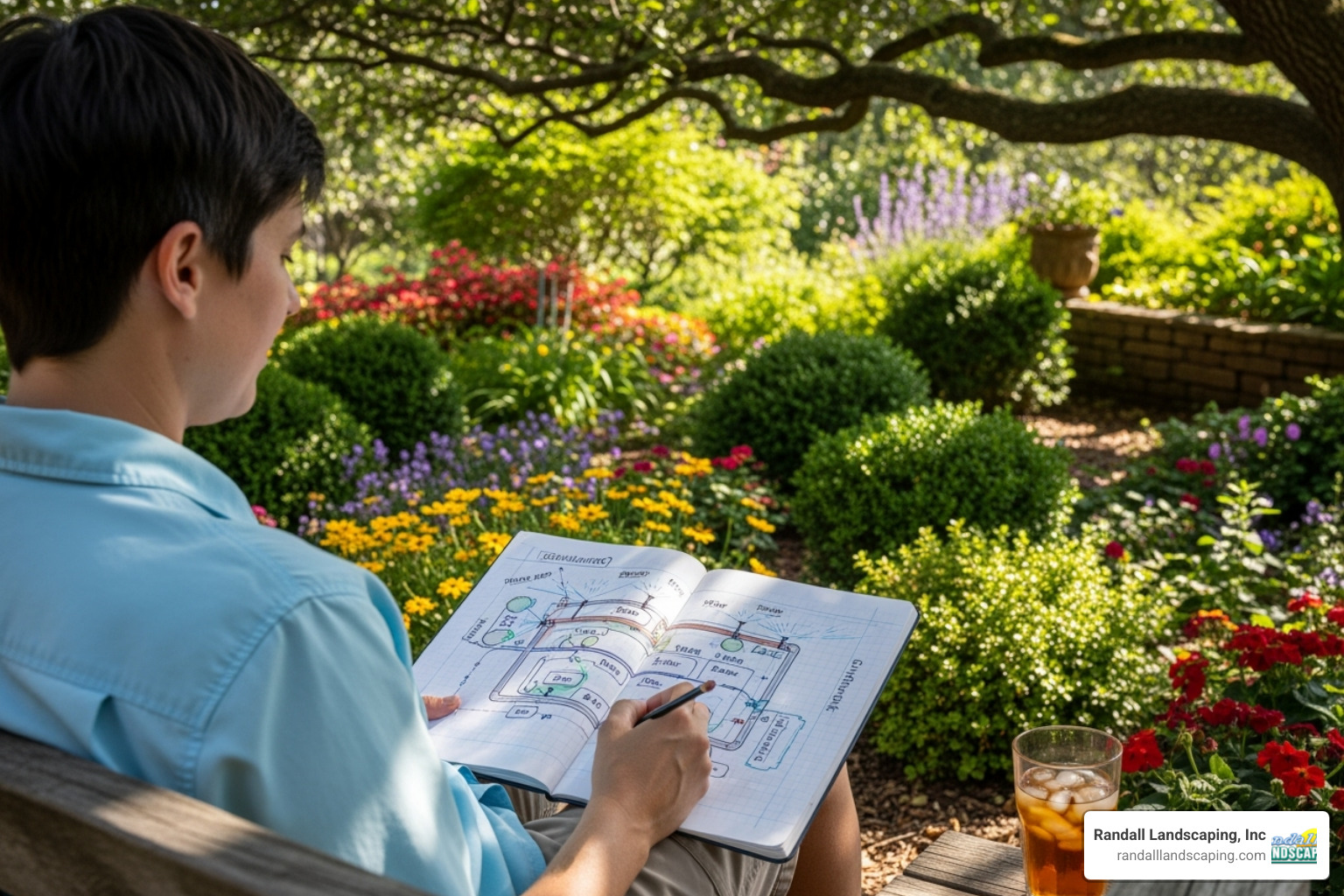
There’s a solution for every garden, and the key is matching your system’s capabilities to your garden’s demands.
Assessing Your Garden’s Unique Needs
- Garden size and complexity: A small herb garden may only need a single-zone timer, while a property with lawns, vegetable beds, and flower gardens requires a multi-zone timer for independent scheduling.
- Your plant mix: Group plants with similar water needs (e.g., thirsty vegetables vs. drought-tolerant perennials) into the same zones to ensure each gets the right amount of water.
- Soil type: Sandy soils drain quickly and need shorter, more frequent watering. Clay soils hold moisture longer and benefit from slow, deep, less frequent watering.
- Sun and shade patterns: Sunny areas dry out faster and need more water than shaded spots. A multi-zone system can account for these microclimates.
- Water pressure and source location: Your home’s water pressure dictates how many sprinkler heads or emitters can run on a single zone. Low pressure may require creating more zones with fewer outlets each.
Key Timer Features to Look For in a garden irrigation system with timer
Focus on timer features that will make your life easier while keeping your plants healthy.
- Multiple zone capability: Essential for properties with diverse planting areas. Timers can handle two to eight or more zones, allowing custom schedules for each.
- Flexible scheduling options: Look for multiple start times per day, adjustable run times, and varied frequency settings (e.g., every other day, specific days of the week).
- Rain delay functionality: A valuable water-saving feature that lets you pause the watering schedule for 24-72 hours after rainfall. This is great for conserving water and lowering your utility bills.
- Manual override capabilities: Allows you to run a zone on-demand without disrupting the main program, perfect for watering new plants or testing the system.
- Weather resistance and durability: Outdoor timers must be built to withstand heat, rain, and freeze-thaw cycles. Look for sturdy, weatherproof construction.
For those ready to tackle installation themselves, a helpful DIY guide provides step-by-step instructions for setting up various irrigation systems with timers, making the process manageable even for beginners.
Installation and Maintenance Essentials
Setting up your garden irrigation system with timer can be a manageable weekend project, though professional installation is a smart choice for complex layouts. Proper setup and care are key to a long-lasting, reliable system.
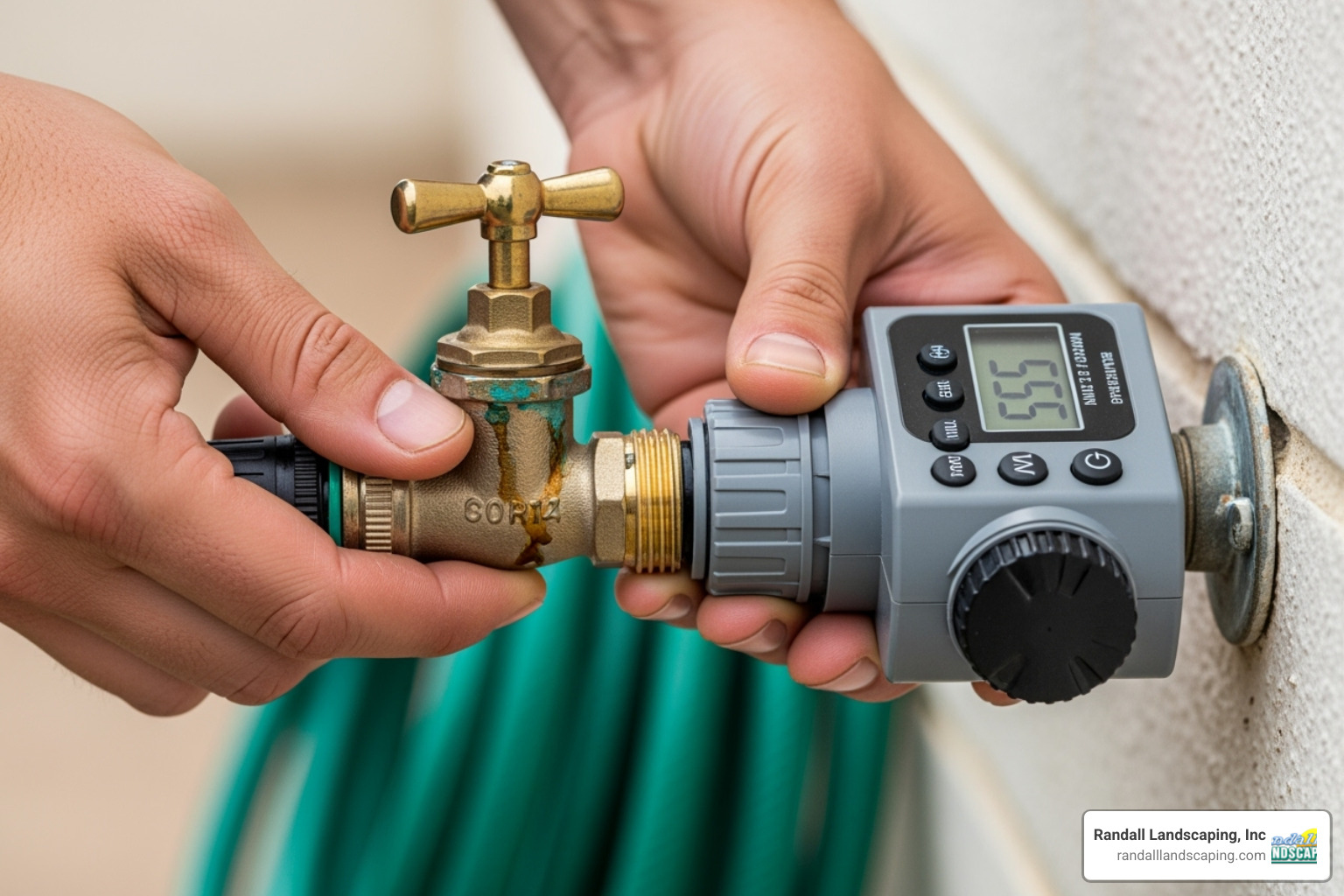
Modern irrigation kits make it possible for most homeowners to tackle a basic installation, but calling professionals for complex setups is often the best investment for your garden’s long-term health.
A Step-by-Step Guide to Installation
- Plan your layout: Sketch your garden, marking the water source, plant locations, and tubing paths. A good plan prevents mistakes.
- Gather supplies: Collect your timer, backflow preventer, tubing, fittings, and emitters or sprinkler heads before you start.
- Connect the timer: Attach the backflow preventer to your spigot first for safety, then connect the timer. Ensure all connections are snug.
- Lay the tubing: Run the main supply line from the timer to your garden areas. Branch off with smaller distribution tubing for drip systems, weaving it between plants.
- Install emitters/sprinklers: Place drip emitters at the base of plants for root-zone watering. Position sprinklers for overlapping, head-to-head coverage to ensure no dry spots.
- Test the system: Run each zone and check for leaks, clogged emitters, or misaligned sprinklers. Make adjustments as needed.
- Program your timer: Set a schedule based on your plants’ needs, considering soil type and sun exposure.
For complex properties, professional sprinkler system installation ensures optimal design and performance, preventing common DIY issues related to water pressure and drainage.
Keeping Your System in Top Shape: Maintenance Tips
Regular maintenance ensures your garden irrigation system with timer works reliably for years.
- Clean filters: Monthly, check and clean the filter in your system to prevent debris from clogging emitters.
- Check for clogs and leaks: Periodically run the system and walk the lines. Look for clogged emitters, weak sprinkler streams, or unexplained soggy spots.
- Adjust sprinkler heads: As plants grow, they can block spray patterns. Readjust heads to ensure water goes where it’s needed.
- Replace batteries: For battery-powered timers, replace the batteries at the start of each season to avoid failure during a heatwave.
- Seasonal care: Winterization is essential in New England. Before the first freeze in areas like Windham or Methuen, drain all water from the system to prevent pipes and components from cracking. In the spring, turn the system on slowly, check for damage, and reprogram your timer for the new season.
Frequently Asked Questions about Garden Irrigation Timers
Over nearly two decades of installing and maintaining irrigation systems, we’ve heard just about every question you can imagine about garden irrigation systems with timers. Here are the answers to the most common concerns.
How do I troubleshoot a timer that won’t turn on?
Most timer issues have simple fixes that don’t require a service call.
- Start with the power source: This solves most problems. For battery-powered timers, check that the batteries are fresh and correctly inserted. For wired controllers, ensure it’s plugged in and check for a tripped circuit breaker.
- Ensure all connections are secure: The timer must be firmly attached to the spigot. For in-ground systems, check that all wire connections are tight.
- Consult your manual: Review the manual for specific error codes or troubleshooting steps.
If water flows when you bypass the timer but not through it, the timer is likely the issue. If no water flows at all, check your main water supply or a shut-off valve.
Can I override the schedule to water manually?
Yes, nearly all modern timers allow you to override the schedule for manual watering. This is useful for watering new plants or testing the system.
Most timers include a manual override or “Water Now” function. Look for a button labeled “Manual” or a similar term on the control panel. You can typically set it to run for a specific duration.
Smart timers make this even easier, allowing you to trigger manual watering from a smartphone app.
The manual override is temporary. Once the cycle finishes, the timer will revert to its regular programmed schedule.
How much does a garden irrigation system with a timer cost?
The cost of a garden irrigation system with a timer varies widely based on complexity and features.
- Simple Solutions: A basic mechanical or digital hose-end timer can cost between $20 and $50. These are ideal for a single watering zone.
- DIY Kits: Drip irrigation or soaker hose kits with timers for small to medium gardens typically range from $50 to $200.
- Smart Timers: Wi-Fi or Bluetooth-enabled timers generally cost between $70 and $300, offering remote control and weather-based adjustments.
- Professionally Installed Systems: Comprehensive in-ground systems are a larger investment. Average costs can range from $1,500 for a simple layout to over $5,000 for complex, multi-zone installations on large properties, depending on size, number of zones, and components.
Please note these are average costs based on industry data and do not reflect the pricing of Randall Landscaping, Inc. Every property is unique, and we provide detailed quotes based on your specific landscape. For more insight into professional installation costs, you can explore information about professionally installed inground systems.
Conclusion: Take Control of Your Garden’s Health
Investing in a garden irrigation system with timer transforms your relationship with your landscape. No more rushing outside with the hose after a long day at work, no more forgetting to turn off the sprinkler and flooding your driveway, and no more brown patches that mysteriously appear while you’re on vacation.
The science is clear: automated irrigation systems reduce water usage by up to 70% compared to manual watering methods. Your plants receive consistent, targeted moisture that promotes deeper root growth and healthier foliage. Meanwhile, your water bills drop significantly, and you reclaim hours each week that were once spent dragging hoses around your property.
The convenience factor alone makes these systems worthwhile. Picture this: you’re enjoying your morning coffee while your vegetable garden gets its perfect dose of water automatically. Your flower beds stay vibrant through summer heat waves, and your lawn maintains that golf-course green without you lifting a finger.
Whether you start small with a simple hose-end timer for your raised beds or invest in a comprehensive multi-zone system for your entire property, the benefits compound over time. We’ve watched homeowners in Lawrence, Haverhill, and Salem find the joy of effortless gardening through smart irrigation choices.
The technology keeps improving too. Smart timers now integrate weather forecasts, automatically skipping watering cycles when rain is expected. Some models track your water usage and send alerts to your phone if they detect leaks or unusual consumption patterns.
For those ready to take the next step beyond DIY solutions, a professional garden sprinkler system installation ensures optimal coverage and long-term reliability. Our team at Randall Landscaping, Inc. designs custom systems that work seamlessly with your landscape’s unique characteristics, from sloped areas that need pressure compensation to shaded zones that require different watering schedules.
Your garden deserves consistent care, and you deserve to enjoy it without the daily chore of manual watering. A well-chosen garden irrigation system with timer delivers both, creating the lush, thriving landscape you’ve always wanted with the convenience that fits your busy life.