

Why the Foundation of Your Walkway Matters
The base for flagstone walkway construction determines whether your stone path will last for decades or crack within a few years. A proper foundation prevents settling, eliminates frost heave damage, and keeps your walkway level and safe.
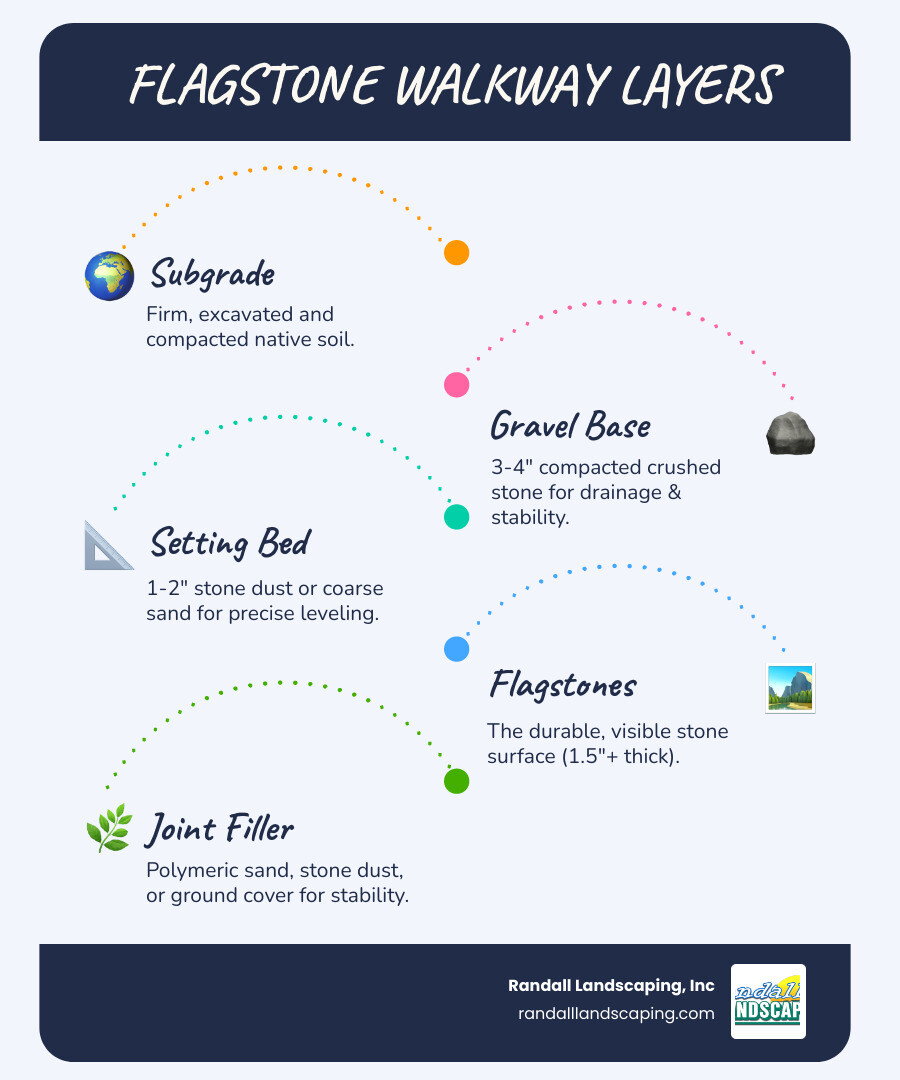
Essential Base Requirements for Flagstone Walkways:
- Excavation depth: 6-7 inches plus flagstone thickness
- Gravel base: 3-4 inches of compacted crushed stone or road base
- Setting bed: 1-2 inches of stone dust, decomposed granite, or coarse sand
- Drainage: Slight slope away from structures to prevent water pooling
- Compaction: Each layer must be thoroughly tamped for stability
Flagstone walkways can last several decades when built on the right foundation, but shortcuts in base preparation lead to expensive repairs. As one landscaping professional noted, “Anything mortared needs to be on a slab. Otherwise, a good gravel base with the flagging set in stonedust is more than adequate.”
I’m Tommy Randall, owner of Randall Landscaping, and I’ve been installing durable hardscapes throughout Massachusetts and New Hampshire since 2006. I’ve learned that the most beautiful flagstone means nothing without a properly prepared base for flagstone walkway construction—it’s the foundation that determines whether your investment thrives or fails.
Quick look at base for flagstone walkway:
Choosing Your Base: A Comparison of Common Materials
Selecting the right base for flagstone walkway construction determines its longevity. With nearly two decades of experience installing walkways in the Merrimack Valley and Southern New Hampshire, I’ve seen what works in our challenging climate. Here’s a comparison of the three main options to help you choose.
The Professional’s Choice: Compacted Gravel and Stone Dust
For my own walkway, I would use compacted gravel with a stone dust setting bed. This “dry-set” method has proven itself over decades of New England winters.
Crushed stone, road base, or paver base forms the backbone of this system. These engineered materials contain a mix of stone sizes and fine particles that lock together when compacted, creating a rock-solid foundation that still allows for drainage. I recommend 3/4″ processed gravel for the main base layer. In warmer climates, 4 inches is fine, but in New Hampshire, I use 4-5 inches for extra insurance against frost heave.
Excellent drainage is a key advantage. Water flows through this base instead of pooling, freezing, and expanding (frost heave). Your walkway stays level while others crack. Stone dust or screenings on top creates a smooth leveling layer, allowing you to set irregular flagstones perfectly while maintaining good drainage.
This system flexes with our freeze-thaw cycles instead of fighting them. While rigid materials crack, this base moves just enough to stay intact. For detailed guidance, see our approach to installing a stone walk on a crushed stone base.
The Sand Setting Bed Option
Sand has a reputation as an easy DIY option because it’s cheap and easy to level. Coarse sand excels as a leveling agent, making minor adjustments simple during installation.
However, sand alone lacks structural integrity. Without a crushed gravel base underneath, sand can shift and wash out over time, especially with heavy rain and foot traffic. I’ve seen many sand-only paths turn into roller coasters after just a few seasons.
Professionals use sand only as a thin setting layer on top of compacted gravel, never as the primary base. This provides the strength of gravel with the fine-tuning ability of sand.
The Rigid Option: Mortar on a Concrete Slab
For maximum strength, the “wet-set” method involves flagstones mortared onto a concrete slab. This creates a virtually indestructible surface where stones will never shift and weeds cannot grow.
But this strength comes with trade-offs. It’s the most expensive and least DIY-friendly option. The biggest challenge in our climate is rigidity. Concrete doesn’t bend, so when moisture freezes underneath the slab, the expanding force can crack the concrete or the flagstone. Proper surface drainage is also critical since water cannot escape through the base.
While mortared walkways offer permanence, the climate realities of our region make flexible gravel bases the smarter choice for most projects. Explore our hardscaping services for more information on various options.
Comparing Walkway Base Materials
| Feature | Gravel & Stone Dust | Sand Only | Mortar on Concrete |
|---|---|---|---|
| Durability | Excellent | Fair | Excellent |
| Drainage | Excellent | Good | Poor |
| DIY-Friendly | High | High | Low |
| Cost | $$ | $ | $$$$ |
| Climate | Best for all, especially freeze-thaw | Best for warm, dry climates | Best for warm climates |
The winner for most base for flagstone walkway projects in our area is compacted gravel with stone dust. It offers the perfect balance of durability, drainage, cost, and climate compatibility.
Step-by-Step Guide to Building the Perfect Base for a Flagstone Walkway
Let’s walk through building a sturdy base for flagstone walkway using the recommended method: a compacted gravel and stone dust base. This is the approach we’ve perfected over years of creating landscapes in places like Dracut, Georgetown, and North Andover. Each layer builds upon the last, creating a foundation that will support your flagstone for decades.
Step 1: Excavation and Site Prep
Proper excavation is where most DIY projects succeed or fail. It’s not glamorous, but it’s critical for a walkway that won’t settle or crack.

Calculate your excavation depth: The rule is to dig 6 inches plus the thickness of your flagstone. For typical 1-2 inch flagstones, you’ll excavate 7-8 inches total. This allows for a 3-4 inch gravel base and a 1-2 inch setting bed.
Remove all topsoil until you reach stable subgrade soil. Organic matter decomposes and settles, creating uneven spots in your path.
Create proper drainage by building a slight slope of about 1/4 inch per foot away from your house or other structures. This prevents water from pooling and causing erosion or ice hazards.
Compact the subgrade soil with a hand tamper or plate compactor. This creates a firm foundation that won’t compress further under the weight of your walkway.
Step 2: Installing the Gravel Base
This layer is the backbone of your base for flagstone walkway, providing the stability and drainage needed for long-term performance.

Spread 3-4 inches of crushed stone (like 3/4″ process gravel) evenly across the excavated area. Quality base material contains a mix of stone sizes that lock together when compacted.
Compact in layers for the best results. Spread and compact the gravel in 2-inch lifts to ensure the entire base is dense and stable.
Level as you go using a long level and straight edge. A perfectly level and sloped base will save you hours of frustration when laying the flagstone.
Step 3: Adding the Setting Bed
The setting bed is the final leveling layer that allows you to set each stone perfectly. It transforms your rough gravel base into a smooth, workable surface.
Apply a 1-2 inch layer of your chosen material over the compacted gravel. Stone dust, decomposed granite, or coarse sand all work, but we prefer stone dust. It’s fine enough for irregular stones yet compacts well and resists washing out.
Screed for a perfectly level surface by laying two parallel pipes on the gravel and dragging a straight 2×4 across them. This technique creates a uniform depth and maintains your drainage slope.
Step 4: Laying the Flagstone and Filling Joints
Now you can place your flagstones and watch the walkway come to life. All your careful prep work will pay off here.
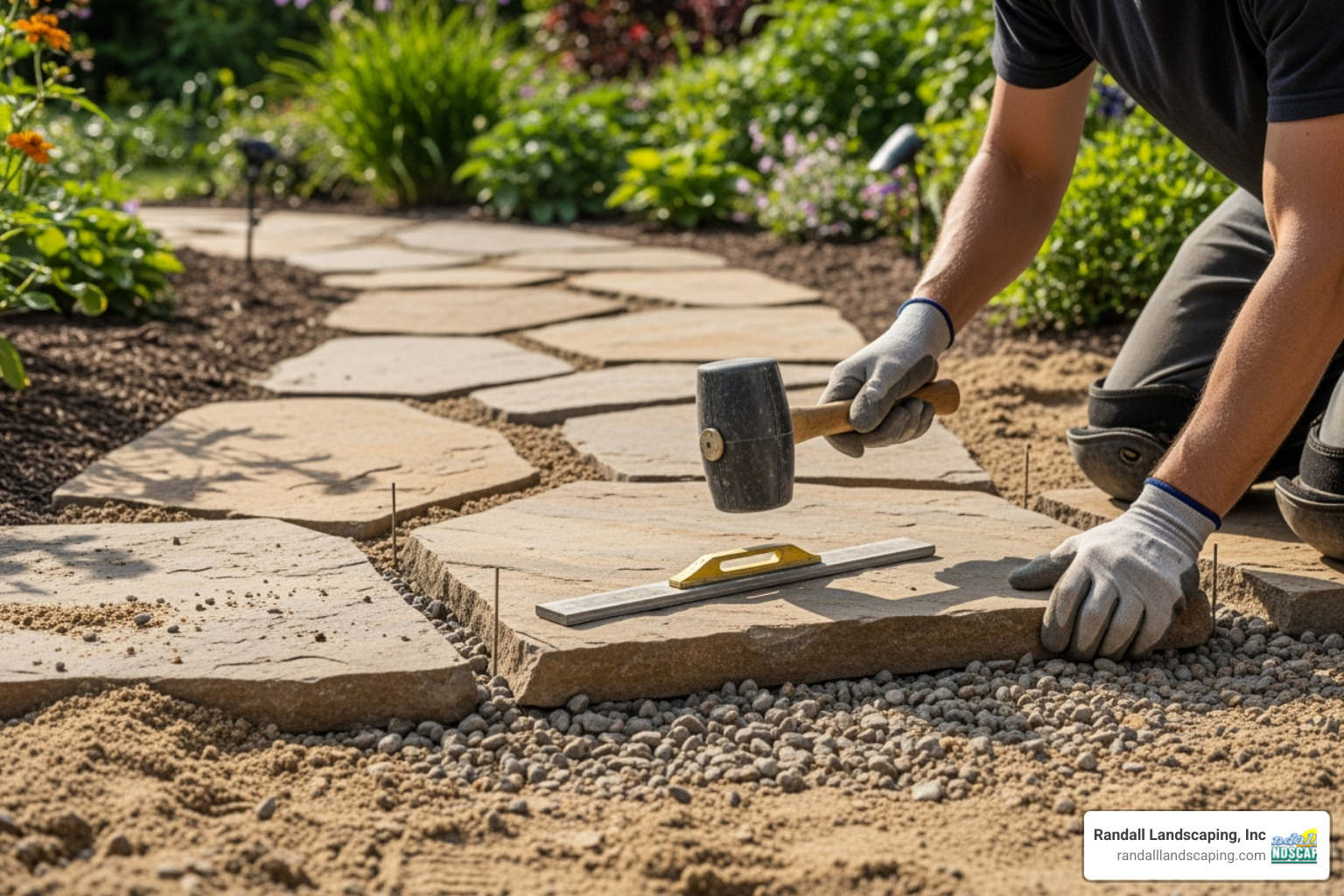
Choose flagstones at least 1.5 inches thick for walkways to prevent cracking under foot traffic. Set each stone carefully onto the screeded bed, fitting them together like puzzle pieces.
Level each stone with a rubber mallet, checking with a level to ensure it’s stable and even with its neighbors. Add or remove setting material underneath as needed.
Maintain consistent joint spacing of about 1 inch. For filling, polymeric sand creates a durable, low-maintenance finish that hardens to lock stones in place and resist weeds. Stone dust offers a more natural look. You can also fill wider joints with soil and plant ground covers like creeping thyme for a cottage garden feel, though this requires more maintenance.
Patience is key. Take the time to position each stone correctly, and your base for flagstone walkway will reward you with a beautiful, stable surface for years.
Advanced Tips and Common Mistakes to Avoid
After nearly two decades of building walkways in the Merrimack Valley and Southern New Hampshire, I’ve seen what works and what leads to costly repairs. Here is some hard-earned wisdom to help you avoid common pitfalls.
How Climate and Soil Affect Your Base
New England’s freeze-thaw cycles are relentless. When water in the soil freezes, it expands with enough force to heave your stones—the mechanism behind frost heave.
This is why we recommend a deeper base in cold climates—typically 4 to 6 inches of compacted gravel. This extra depth provides more insulation and drainage capacity. Your native soil type also matters. Clay soil holds water, increasing the risk of frost heave. When working with heavy clay, we lay geotextile fabric on the compacted subgrade before adding gravel. This separator prevents clay from mixing with and clogging the drainage layer. According to the University of New Hampshire Extension, landscape fabrics can be effective in separating soil from aggregate in hardscapes. Sandy soil, on the other hand, drains well and is more forgiving.
Regardless of soil type, proper drainage is critical. This includes a permeable gravel base and a walkway slope of 1/4 inch per foot to shed surface water.
Key Considerations for Your Base for a Flagstone Walkway
Execution details separate amateur work from professional results. Avoid these common mistakes:
- Poor Compaction: Every layer—subgrade, each lift of gravel, and the setting bed—must be thoroughly compacted. Skipping this is like building on quicksand.
- Insufficient Depth: The most common DIY mistake is not digging deep enough. You need 6-7 inches of excavation plus your stone’s thickness for long-term stability.
- Improper Slope: A perfectly level walkway will pool water, creating a slippery and dangerous surface in winter. Always maintain a slight slope for drainage.
- Wrong Materials: Don’t use pea gravel for a base; its rounded stones won’t lock together like angular crushed stone. Stick with proper base materials and use stone dust, decomposed granite, or polymeric sand for joints.
- Uneven Flagstones: Natural stone varies in thickness. Be patient and adjust the setting bed material under each piece to achieve a level surface.
For homeowners interested in other hardscape projects, our custom paver patios use many of the same foundation principles.
What Does a Flagstone Walkway Cost?
The cost varies dramatically based on your choices. The biggest factor is DIY versus professional installation. A DIY project primarily involves material and equipment rental costs, which could range from $500 to $1,000 for a typical walkway.
Flagstone itself is the main material expense, with online data showing prices from $10 to $40+ per square foot depending on type and quality. Base materials like crushed stone and stone dust are relatively inexpensive.
Professional installation costs, based on available industry data, typically range from $10 to $60+ per square foot for a complete installation. Dry-set installations generally cost less than mortared ones.
Please note: These are industry average costs based on available data and do not reflect specific pricing from Randall Landscaping, Inc. For an accurate quote for your specific project, please contact us directly.
Factors affecting final cost include:
- Walkway size
- Flagstone type
- Site accessibility
- Design complexity (curves, patterns)
- Soil conditions
Frequently Asked Questions about Flagstone Walkway Bases
Homeowners often have questions about the base for flagstone walkway construction. Getting this right is the difference between a path that lasts decades and one that fails after the first winter. Here are answers to the most common questions I hear.
How deep should the base for a flagstone walkway be?
Your total excavation depth should be 6-7 inches plus the thickness of your flagstone (a 1.5-inch minimum is recommended). This allows for a 3-4 inch compacted gravel base for stability and a 1-2 inch setting bed of stone dust or sand. This depth is essential in our climate to prevent settling and frost heave.
Can I just use sand for a flagstone walkway base?
I strongly advise against using only sand for your primary base. Sand lacks the structural integrity of crushed gravel and can shift or wash out over time. A compacted gravel base provides superior stability and drainage. Sand works best as a thin (1-2 inch) leveling layer on top of a solid gravel foundation.
What is the best material to fill the joints between flagstones?
The best choice depends on your desired look and maintenance level.
- Polymeric sand is the most durable, low-maintenance option. It hardens to lock stones in place, resisting weeds and insects.
- Stone dust or decomposed granite offers a more natural, softer look and compacts well.
- Soil and ground cover (like creeping thyme) can be used in wider joints for a living pathway, but this requires more upkeep.
Avoid using pea gravel for joints, as the round stones are easily kicked out.
Get a Flawless Flagstone Walkway That Lasts for Decades
A beautiful flagstone walkway is the result of careful planning and expert execution that starts deep underground with the base for flagstone walkway construction. The difference between a path that lasts for decades and one that fails in a few seasons comes down to what lies beneath the surface.
The foundation is everything. Proper excavation depth, thorough compaction, and the right materials for your climate are critical for long-term success. Shortcuts in base preparation inevitably lead to expensive repairs.
This guide has walked through the proven methods that create lasting results, from excavation to joint filling. These are the same techniques we’ve refined over nearly two decades of building durable hardscapes throughout Massachusetts and New Hampshire.
If you’re tackling this as a DIY project, you now have the knowledge to build a base that will stand the test of time. Take your time with each step, especially compaction.
For homeowners in the Merrimack Valley or Southern New Hampshire who prefer the peace of mind that comes with professional installation, we’re here to help. At Randall Landscaping, Inc., we’ve built our reputation on quality work and reliability. We ensure every walkway installation is built on solid ground.
Your beautiful flagstone walkway is waiting. With the right foundation, it will welcome you home for decades to come.