

Why Professional Brick Walkway Installation Makes All the Difference
Brick walkway contractors transform ordinary entrances into stunning, durable pathways that can last over 100 years. Hiring the right professional is crucial for a successful project.
Key Benefits of Professional Installation:
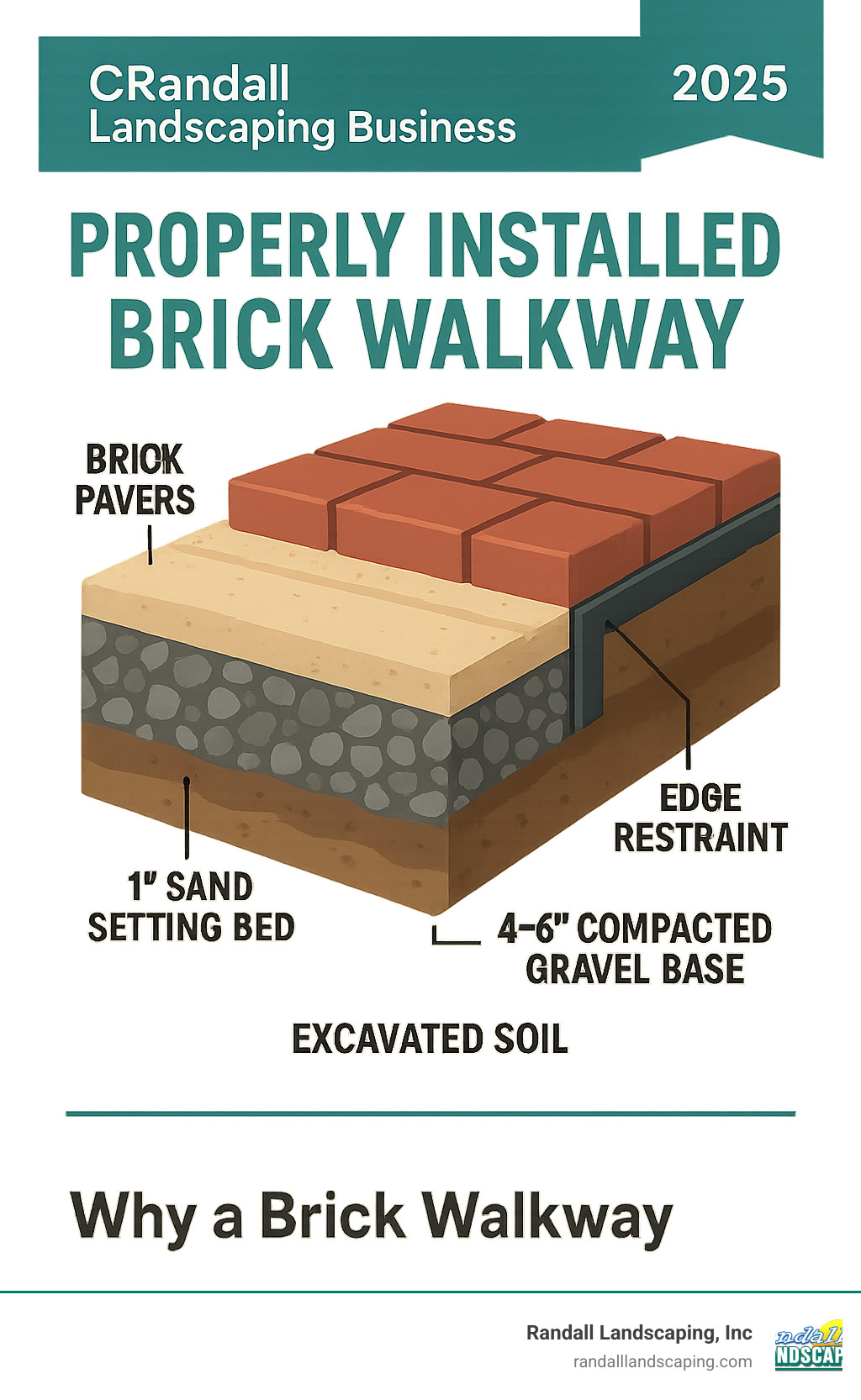
- Proper foundation: 4-6 inch compacted gravel base with a 1-inch sand layer.
- Expert drainage: Prevents water damage and frost heave.
- Quality materials: Clay brick pavers designed for outdoor use.
- Professional warranty: 5+ year workmanship guarantees.
- Cost range: $15-45 per square foot for quality installation.
When hiring, look for licensed and insured contractors with a portfolio of local projects, detailed written contracts, and recent references. A brick walkway is more than just laying bricks; it’s about creating a foundation that withstands New England’s freeze-thaw cycles while adding timeless beauty.
A poorly installed walkway can settle, crack, or cause drainage problems that damage your home’s foundation. Professional installation costs, based on internet averages, range from $1,200 to $4,800 for a typical 80-square-foot walkway, but the investment pays off with decades of worry-free use.
I’m Tommy Randall, owner of Randall Landscaping Business. Since 2006, my team and I have been installing quality hardscapes throughout Massachusetts and New Hampshire, seeing how proper techniques create walkways that last for generations.
Why a Brick Walkway is a Superior Investment
While concrete cracks and stains over time, a brick walkway remains as charming as the day it was installed. This is the difference between an expense and an investment. Experienced brick walkway contractors know that brick consistently outperforms other materials in durability, beauty, and long-term value.
Brick walkways offer unique advantages. Unlike poured concrete, individual bricks can be replaced, saving homeowners thousands in repair costs over the years. Brick also naturally resists slipping and comes in a wide variety of colors and textures to complement any home style. This timeless character not only adds a welcoming feel but also increases your property value.
Once properly installed, brick walkways require little more than occasional sweeping. Compared to concrete’s ongoing patching and sealing, the low maintenance and long-term cost savings are clear. You can explore more info about our hardscaping services to see how brick integrates with other landscape features.
The Best Durability and Lifespan
A properly installed brick walkway can last over 100 years, far surpassing concrete’s typical 25-50 year lifespan. This incredible longevity is achieved with high-quality clay bricks and expert installation.
Brick excels in New England’s brutal freeze-thaw cycles. The secret is a carefully prepared foundation—a 4-6 inch compacted gravel base with a precise sand setting bed. This allows the walkway to flex with ground movement instead of cracking under pressure. Maintenance is simple: occasional sweeping, weed pulling, and adding fresh joint sand every few years. For winter deicing, use calcium chloride instead of rock salt to protect your bricks.
To see how brick walkways connect with other hardscapes, check out more info about patio design.
The DIY Dilemma vs. Professional Payoff
DIY videos make walkway installation look easy, but they don’t show the consequences of an improperly compacted base or poor drainage. The table below highlights the key differences.
| Feature/Aspect | DIY Installation | Professional Installation |
|---|---|---|
| Time Commitment | 40-50 hours for standard projects; weekends disappear | 2-6 days with specialized teams; you get your weekends back |
| Expertise Required | Steep learning curve for grading, drainage, compaction techniques | Years of experience handling local climate and soil conditions |
| Tools & Equipment | Expensive rentals: plate compactor, masonry saw, levels | Commercial-grade equipment included in service |
| Foundation Quality | High risk of settling, poor drainage, frost heave | Guaranteed proper base depth and compaction |
| Average Cost | $700-$2,100 (materials + tool rentals) – internet averages | $1,200-$4,800 (complete installation) – internet averages |
| Quality Results | Uneven surfaces, shifting pavers, drainage issues common | Professional finish with precise cuts and consistent patterns |
| Warranty Coverage | You’re on your own if problems arise | 5+ year workmanship warranty standard |
| Permit Handling | Research and handle all local regulations yourself | Contractor manages permits and ensures compliance |
The hidden costs of DIY, from tool rentals to your own time, add up quickly. We’ve fixed many DIY projects where the repair cost exceeded the initial price of a professional installation.
Professional brick walkway contractors bring irreplaceable value through expertise, proper equipment, and knowledge of local soil and weather conditions. Our work includes warranties for peace of mind and a quality finish that lasts for decades, evident in perfectly straight edges, consistent joints, and proper drainage slopes.
The Anatomy of a Quality Brick Walkway Installation
What you see in a brick walkway is beautiful, but its longevity depends on the unseen foundation. After nearly two decades of installing walkways in the Merrimack Valley and Southern New Hampshire, I know that site preparation is everything. A shortcut on the foundation leads to a walkway that shifts, settles, or cracks.
A quality walkway is an engineered system designed to handle New England’s weather, from heavy rains to freeze-thaw cycles. What lies beneath the surface determines if your walkway will last for decades or become a constant headache. That’s why we focus on getting every layer right. Homeowners can learn about our local expertise at walkway installation in North Andover, MA and walkway installation in Salem, NH.
Step 1: Site Preparation and Foundation
This is where experienced brick walkway contractors prove their worth. It’s demanding work that requires precision and heavy machinery.

We begin by excavating 6 to 8 inches deep to prevent frost heave and settling. Next, we establish proper grading for drainage, creating a subtle slope (about 1 inch per 8 feet) to direct water away from your home’s foundation—a critical step many DIY projects miss.
The subgrade is compacted to create a firm base. Then, we install a 4 to 6-inch gravel base, compacted in lifts to provide drainage and distribute weight. Finally, a 1-inch sand setting bed is added, creating the perfect, stable surface for laying the bricks.
Step 2: Laying the Bricks and Finishing Touches
This stage requires true craftsmanship. Precise brick laying ensures every brick is perfectly aligned and level. For curves and edges, bricks are cut with specialized saws for clean, professional lines.
Edge restraints are critical for locking the walkway in place. We use durable plastic, metal, or concrete restraints to prevent the walkway from spreading over time. The final step is sweeping polymeric sand into the joints. This sand hardens when wet, locking bricks together and preventing weed growth. We then compact the final surface to ensure everything is settled and stable.
For complementary features, see our retaining walls services.
Step 3: Ensuring Proper Drainage and Stability
In New England, proper drainage is not optional. It’s the key to a walkway that lasts for decades, withstanding heavy rains and harsh winters.
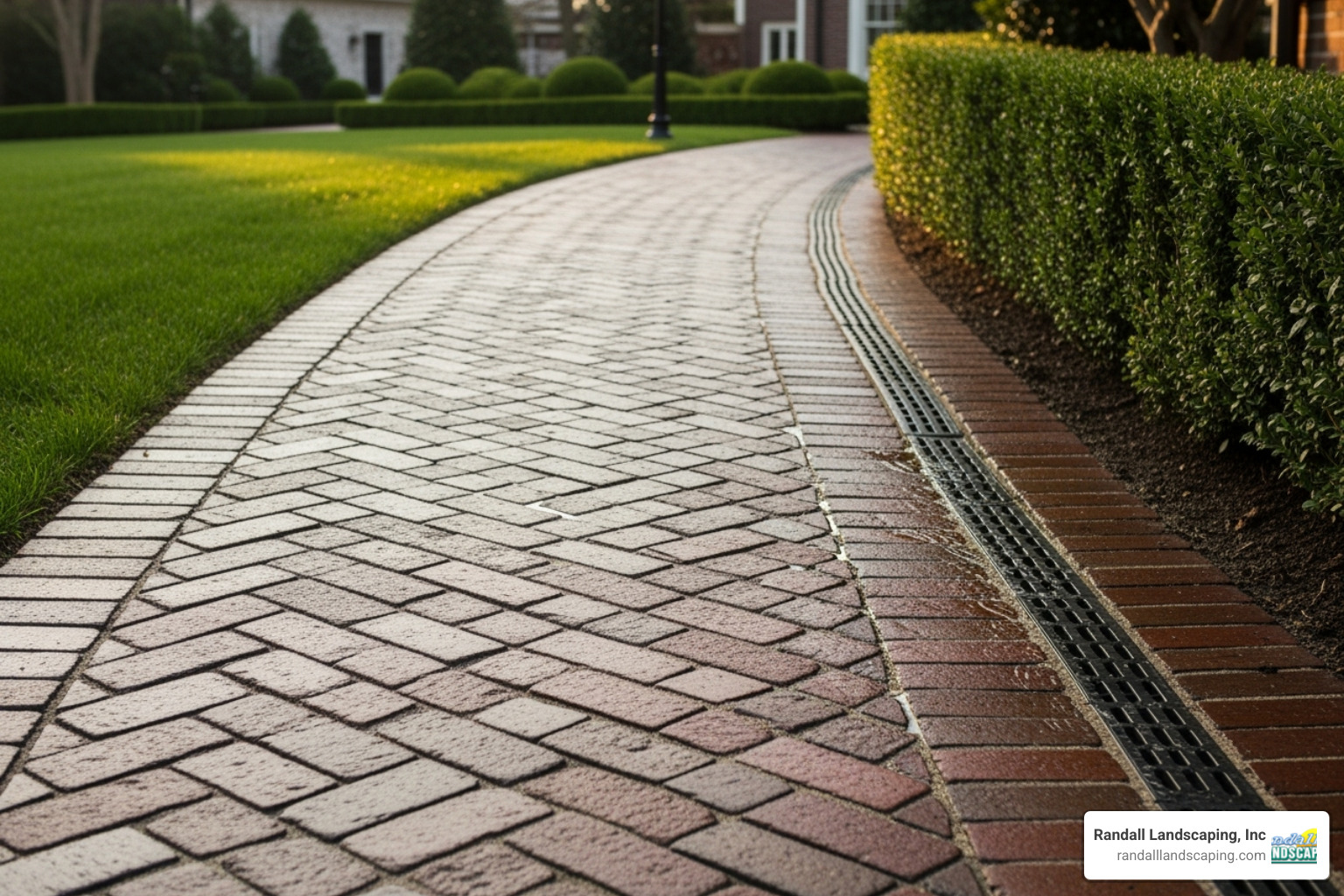
The subtle slope built into the foundation is essential for directing water away from your home, preventing pooling and protecting your foundation from damage caused by freeze-thaw cycles.
For challenging properties, we can install advanced solutions like French drains or use permeable pavers, which allow rainwater to filter directly into the ground. This eco-friendly approach prevents runoff and recharges the local water table. All our drainage planning follows industry standards from the NCMA, ensuring your investment is engineered for long-term performance.
Decoding the Costs and Designs for Your Project
When planning a brick walkway, the first question is often about cost. The final price depends on many factors, so while we can’t share Randall Landscaping’s specific pricing, we can provide an overview based on industry data to help you budget. These are internet averages, and your project cost may vary. For ideas on other hardscaping features, explore more info about driveway pavers or our services for walkway installation in Georgetown, MA.
How Design Patterns and Materials Affect the Price
The pattern you choose impacts both the look and the cost, as it affects the labor and skill required.
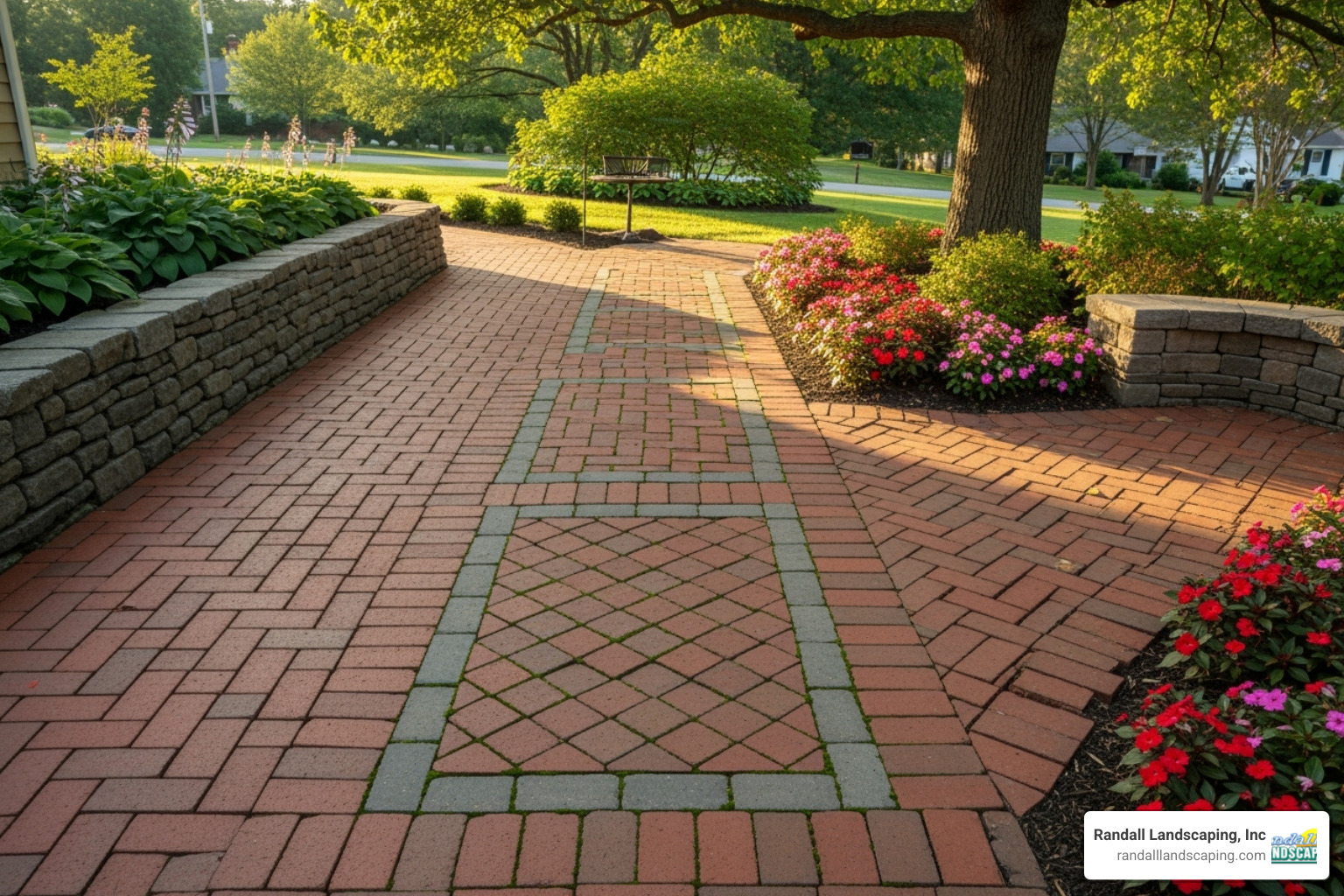
- Running Bond: A simple, classic pattern with offset rows. It’s efficient to install and the most cost-effective option.
- Basketweave: Bricks are arranged in alternating pairs, creating a textured, woven look. This pattern is moderately complex and priced accordingly.
- Herringbone: A stunning pattern with bricks laid in “V” shapes. Its interlocking nature provides superior stability but requires significant cutting and skill, increasing costs by 15-30%.
Finishing touches like soldier course borders add elegance but also increase material and labor costs. The brick itself is a major factor. Clay bricks offer rich, classic colors but cost more than versatile, budget-friendly concrete pavers. Specialty colors or finishes can increase material costs by 25-100% or more.
Estimating Costs with Brick Walkway Contractors
Based on internet data, professional brick walkway installation typically runs $15-$45+ per square foot. Complex projects with premium materials or difficult site conditions can exceed this, sometimes reaching $75+ per square foot.
For a standard 80 sq. ft. walkway, average internet pricing suggests a range of $1,200 to $3,600. High-end projects with intricate designs could reach $6,000 or more.
Factors that increase costs include:
- Size and Complexity: Larger walkways and intricate patterns cost more.
- Excavation: Deep excavation or special drainage solutions add to the price.
- Material Choice: Premium bricks or pavers increase the budget.
- Site Access: Difficult access requires more manual labor.
- Demolition: Removing an existing walkway adds to the cost.
To avoid surprises, get a detailed, written quote from reputable brick walkway contractors that breaks down all costs for materials, labor, and site prep.
Modern Innovations in Walkway Design
Brick walkways are evolving with innovations that blend classic beauty with modern function.
- Permeable Pavers: These eco-friendly options allow rainwater to filter through the surface, preventing runoff and recharging groundwater.
- Heated Walkway Systems: An increasingly practical luxury, these systems automatically melt snow and ice, enhancing safety for just pennies a day in winter.
- Integrated Lighting: Low-voltage LED lights can be built into the walkway, providing safe, ambient illumination.
- Reclaimed Brick: Salvaged from old buildings, these bricks offer authentic character and a one-of-a-kind look.
Your Vetting Checklist: How to Hire the Best Brick Walkway Contractors
Finding the right brick walkway contractors is the most important step of your project. A true craftsperson ensures your walkway will last for decades, while a poor choice can lead to problems within a year. This checklist will help you make a smart investment in your home. For more guidance, see our information on walkway installation in Andover, MA.
Essential Credentials and Reputation
Start with these non-negotiable checks to identify legitimate professionals.
- License and Insurance: Verify the contractor is licensed and carries general liability and workers’ compensation insurance. Ask for certificates directly from their insurance provider to ensure you’re protected.
- Online Reviews: Check the Better Business Bureau (BBB) and Google Reviews. Look for a consistent 4.5-star rating or higher and read comments about communication, timeliness, and quality.
- Portfolio Review: Ask to see a portfolio of recent, similar brick walkway projects. A quality contractor will be proud to show their work. Look for clean lines, consistent patterns, and proper drainage.
- Recent References: Contact at least three recent clients. Ask about their overall experience, scheduling, and how the contractor handled any challenges.
What to Look for in a Contract and Warranty
A detailed contract is your protection. Never sign anything until you understand every detail.
- Detailed Scope of Work: The contract should specify everything: excavation depth, base materials, brick pattern, edge restraint type, and jointing sand.
- Cost Breakdown: Insist on an itemized quote showing costs for materials, labor, equipment, and disposal. A single “total project cost” can be a red flag.
- Material Specifications: The contract must list the exact brick type, manufacturer, and color to prevent substitutions with cheaper materials.
- Timeline and Payment Schedule: The schedule should be realistic and fair. A typical payment schedule involves no more than 30% upfront, with further payments tied to project milestones.
- Warranty Details: A quality contractor will offer a minimum 5-year workmanship warranty covering issues like settling or shifting. Understand what is covered, what voids the warranty, and how to make a claim.
A professional contractor will welcome your diligence. Take your time, ask questions, and trust a contractor who is transparent and confident in their work.
Frequently Asked Questions about Brick Walkways
Homeowners often have similar questions when planning a brick walkway. Here are answers to the most common ones, based on our years of experience installing walkways in the Merrimack Valley and Southern New Hampshire.
How long does a typical brick walkway installation take?
Most professional brick walkway contractors can complete a standard residential walkway in 2 to 3 days. This timeline covers excavation, foundation work, brick laying, and finishing touches. More complex projects with intricate patterns or extensive drainage work might take 4 to 6 days. Specialized hardscaping teams are often faster than general landscapers due to their focused expertise and equipment. While weather can cause delays, experienced contractors plan for this and maintain clear communication.
Are permits required for a new brick walkway?
This is a common concern, but the good news is that most residential walkways do not require a permit. If you are replacing an existing path or creating a new one on your property that doesn’t connect to a public sidewalk, you are usually in the clear.
However, permits are generally needed if your walkway connects to a public sidewalk, is in a historic district, or is governed by an HOA with specific rules. An experienced contractor handles this for you. We research local codes and manage the application process, ensuring your project is compliant and saving you the headache.
What is the best time of year to install a brick walkway?
While spring and summer are popular, an industry secret is that late fall and early winter can be an ideal time for brick walkway installation. Contractors are less busy during the off-season, which can lead to better pricing and faster project completion.
Cooler weather is also beneficial for the installation process itself. The foundation compacts well, and materials cure more gradually, often leading to a stronger, more durable result. As long as the ground isn’t frozen, the off-season presents a great opportunity to get a high-quality installation while maximizing your budget.
Conclusion
A brick walkway is more than just a path; it’s an investment in your home’s beauty, durability, and value that can last for over a century. Unlike concrete or asphalt, a properly installed brick walkway withstands New England’s harsh weather with minimal maintenance, saving you time and money over the years.
However, the success of your investment hinges entirely on the quality of the installation. The complexities of excavation, base preparation, and drainage are what separate a walkway that lasts a lifetime from one that fails in a few years. A DIY project can easily turn into a costly mistake if the foundation isn’t perfect.
When you hire experienced brick walkway contractors, you’re buying decades of expertise, professional-grade equipment, and the peace of mind that comes with a solid warranty. At Randall Landscaping, Inc., we’ve been building beautiful, reliable hardscapes in the Merrimack Valley and Southern New Hampshire since 2006. Our commitment is to quality work that becomes a lasting part of your home’s story.
Your home’s entrance sets the first impression. Why not make it extraordinary?
Ready to create a walkway that welcomes you home for decades to come? Transform your home’s entrance with our expert Walkway Installation Services and let’s build something beautiful together.