Why Sustainable Landscape Solutions Are Worth Your Attention
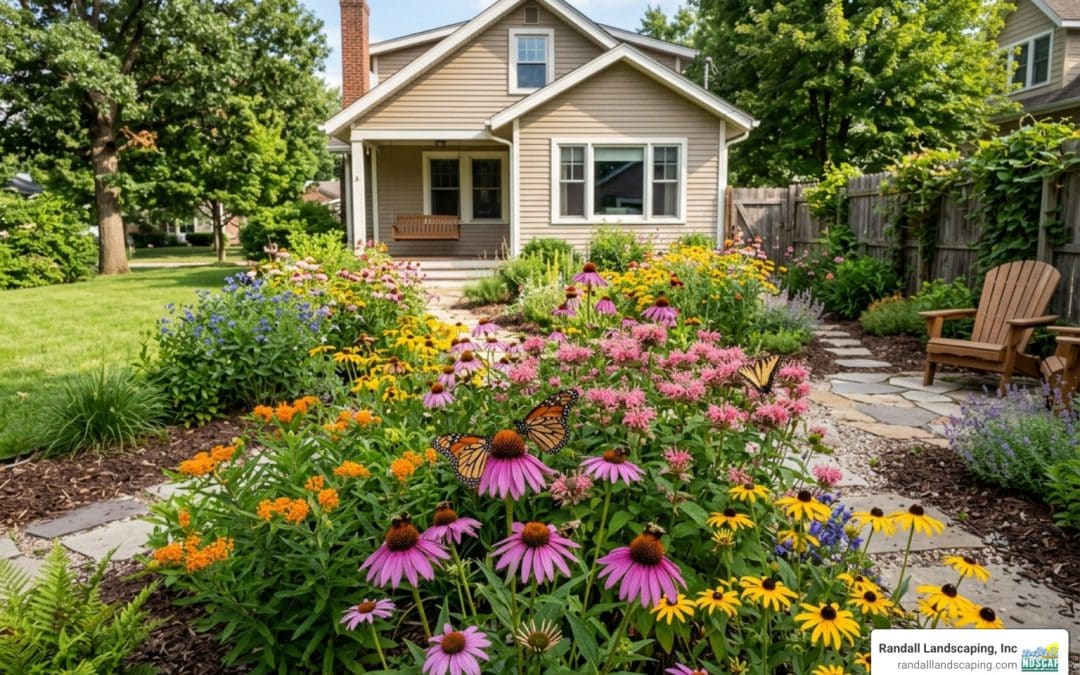
Sustainable landscape solutions are eco-friendly landscaping approaches that work with nature instead of against it — using native plants, smarter water management, and healthier soils to create beautiful outdoor spaces that cost less to maintain over time.
Here’s a quick look at the most impactful sustainable landscaping options for homeowners:
| Solution | What It Does | Best For |
|---|---|---|
| Native plant gardens | Supports pollinators, reduces watering | Front/back yard beds |
| Rain gardens | Filters runoff, recharges groundwater | Low-lying yard areas |
| Permeable pavers | Reduces stormwater runoff | Driveways, walkways |
| Organic mulch | Improves soil health, controls weeds | All planting beds |
| No-mow meadows | Cuts maintenance costs, boosts biodiversity | Large open lawn areas |
These aren’t just good for the planet. They’re good for your wallet. Research from the American Society of Landscape Architects shows nature-based solutions can cost up to 30% less to build and 25% less to maintain than conventional landscaping approaches.
Traditional lawns demand constant mowing, fertilizing, and watering — often with chemical inputs that degrade soil and pollute local waterways. Sustainable alternatives flip that script. Native plants are adapted to your local climate, meaning they need less water, fewer pesticides, and far less hands-on care once established.
The shift is already happening at scale. Michigan State University, for example, is converting 21 acres of standard turf into native pollinator gardens — funded simply by redirecting one year’s worth of existing maintenance costs. That’s a powerful proof of concept for any property owner.
I’m Tommy Randall, owner of Randall Landscaping, Inc., and over my nearly 20 years transforming outdoor spaces across Massachusetts and New Hampshire, I’ve seen how sustainable landscape solutions deliver lasting results that traditional approaches simply can’t match. In this guide, I’ll walk you through the best eco-friendly products and techniques to help you make the smartest investment in your property.
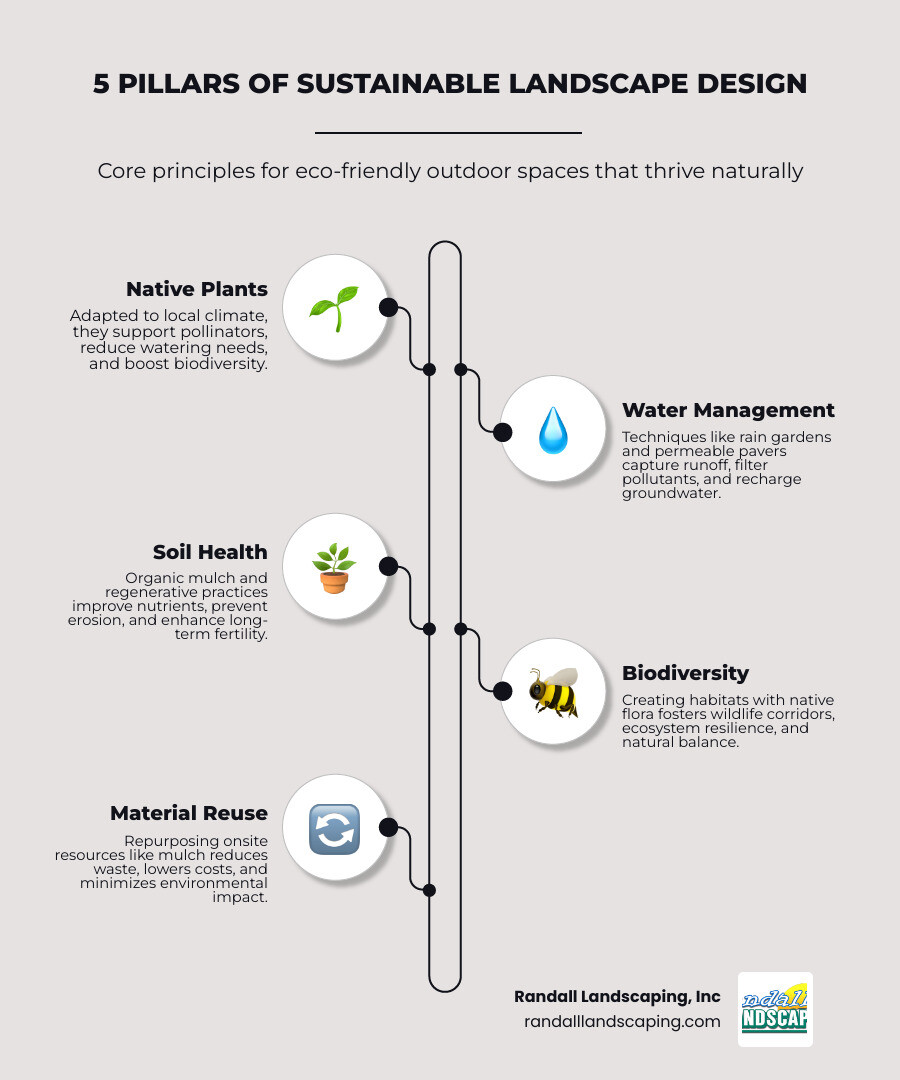
Sustainable landscape solutions vocab explained:
Core Principles of Sustainable Landscape Solutions
When we talk about sustainable landscape solutions, we aren’t just talking about planting a few extra flowers. We are talking about a fundamental shift in how we view our outdoor spaces. For decades, the goal of landscaping was “control”—controlling the grass height, controlling the “pests,” and controlling where the water went. Today, as we move through May 2026, the focus has shifted toward harmony and resilience.
The core principles of this movement are rooted in Scientific research on regenerative landscape design, which suggests that we need to view our yards as living systems. Instead of treating your soil like dirt, we treat it like a biological engine. Instead of fighting local wildlife, we invite the “good guys” (like pollinators) to do the work for us.
By following sustainable garden practices, we focus on three main pillars:
- Native Plants: Selecting species that have thrived in the Merrimack Valley for thousands of years.
- Soil Health: Using organic matter to build a self-sustaining nutrient cycle.
- Water Management: Keeping every drop of rain on your property where it can feed your plants instead of flooding the storm drains.
Why Choose Sustainable Landscape Solutions for Your Home?
You might be wondering, “Tommy, my lawn looks fine. Why change now?” The answer lies in long-term resilience. Traditional landscapes are fragile; if you stop watering or fertilizing for two weeks in July, the whole system collapses.
Sustainable landscape solutions are built to last. By choosing a sustainable landscape design, you are creating a yard that can handle the unpredictable weather we’ve been seeing lately in Southern NH—from torrential spring rains to late-summer droughts.
In May 2026, the trend is moving toward “working landscapes.” These are spaces that provide ecosystem services—like filtering air, cooling your home through strategic shade, and providing a sanctuary for local birds and bees. Plus, they look incredible. A yard filled with diverse textures and colors is far more visually interesting than a flat, green rectangle.
Enhancing Biodiversity with Native Habitats
Here is a startling statistic: humans have doubled the amount of nitrogen and phosphorus flowing through global ecosystems, largely due to our demands for energy and food (and that includes the fertilizers we put on our lawns). This imbalance creates “dead zones” in our water and kills off the beneficial insects we need.
To fix this, experts suggest that working landscapes need at least 20% native habitat to support local biodiversity. This is known as the “20% rule.” By dedicating just a fifth of your property to native plantings, you create a wildlife corridor that allows species to move, eat, and reproduce.
This isn’t just about saving the whales; it’s about saving the local bluebirds in Windham and the monarchs in Andover. When we implement a strategy for scaling sustainable landscape solutions, we aren’t just working on one yard; we are helping to stitch back together a fractured local environment.
Top Eco-Friendly Products and Techniques for Your Property
Creating an eco-friendly property doesn’t mean you have to sacrifice the “clean” look of professional landscaping. It just means using better materials. From the driveway to the back fence, every square inch of your property is an opportunity to implement sustainable landscape solutions.

One of our favorite techniques at Randall Landscaping is “soft armoring.” Instead of using hard, concrete walls that can crack and cause drainage issues, we use native plants and natural stone to stabilize slopes and shorelines. This mimics nature’s way of preventing erosion and actually gets stronger over time as root systems take hold.
Managing Stormwater with Rain Gardens
Stormwater runoff is a major issue in the Merrimack Valley. When rain hits a traditional roof or driveway, it picks up oil, salt, and chemicals before rushing into our local streams. Sustainable landscape solutions like rain gardens act as a natural filter.
A rain garden is a shallow depression planted with deep-rooted native plants. It’s designed to “catch” runoff, allowing it to soak into the ground slowly. This process:
- Reduces the volume of water entering storm drains.
- Filters out pollutants through the soil and plant roots.
- Recharges our local groundwater (especially important for those of us on well water!).
If you’re interested in upgrading your hardscape as well, we highly recommend looking into permeable paver installation tips. Permeable pavers allow water to flow through the joints of the stones and into the ground below, effectively turning your driveway into a giant sponge.
Sustainable Mulching and Soil Health
Soil is the foundation of everything. If your soil is dead, your plants will be on life support. One of the easiest sustainable landscape solutions to implement is high-quality mulching.
We are big believers in the pros of organic mulch for thriving gardens. Unlike dyed, synthetic mulches that can contain contaminants, eco-friendly mulch options like natural bark or composted wood chips break down over time, feeding the soil and supporting a healthy community of earthworms and microbes.
| Landscape Feature | Traditional Approach | Sustainable Solution |
|---|---|---|
| Lawn | High-mow turf with chemical fertilizer | No-mow fescue or native clover mix |
| Driveway | Standard asphalt (impermeable) | Permeable pavers |
| Beds | Exotic ornamentals with dyed mulch | Native perennials with organic bark mulch |
| Pest Control | Scheduled chemical sprays | Integrated Pest Management (IPM) |
The Environmental and Economic Benefits of Regenerative Design
We often talk about “sustainability,” which means keeping things the same. But “regenerative” design goes a step further—it means making things better. A regenerative landscape design framework aims to restore the ecological functions that have been lost to development.
In places like the Chesapeake Bay, regenerative approaches have significantly reduced the amount of nitrogen and phosphorus entering the water, proving that what we do in our backyards has a direct impact on the health of our larger region. By sequestering carbon in our soils and reducing our reliance on gas-powered equipment, we are actively fighting climate change right from our own porches.
Cost Savings and Maintenance Efficiency
Let’s talk money. Many people assume sustainable landscape solutions are more expensive. While some features (like permeable pavers) have a higher upfront cost, the long-term ROI is undeniable.
Take the “no-mow” meadow as an example. Traditional lawn maintenance for large properties can cost thousands of dollars annually. By converting just a portion of that grass into a native meadow, you eliminate the need for weekly mowing, expensive fertilizers, and constant irrigation.
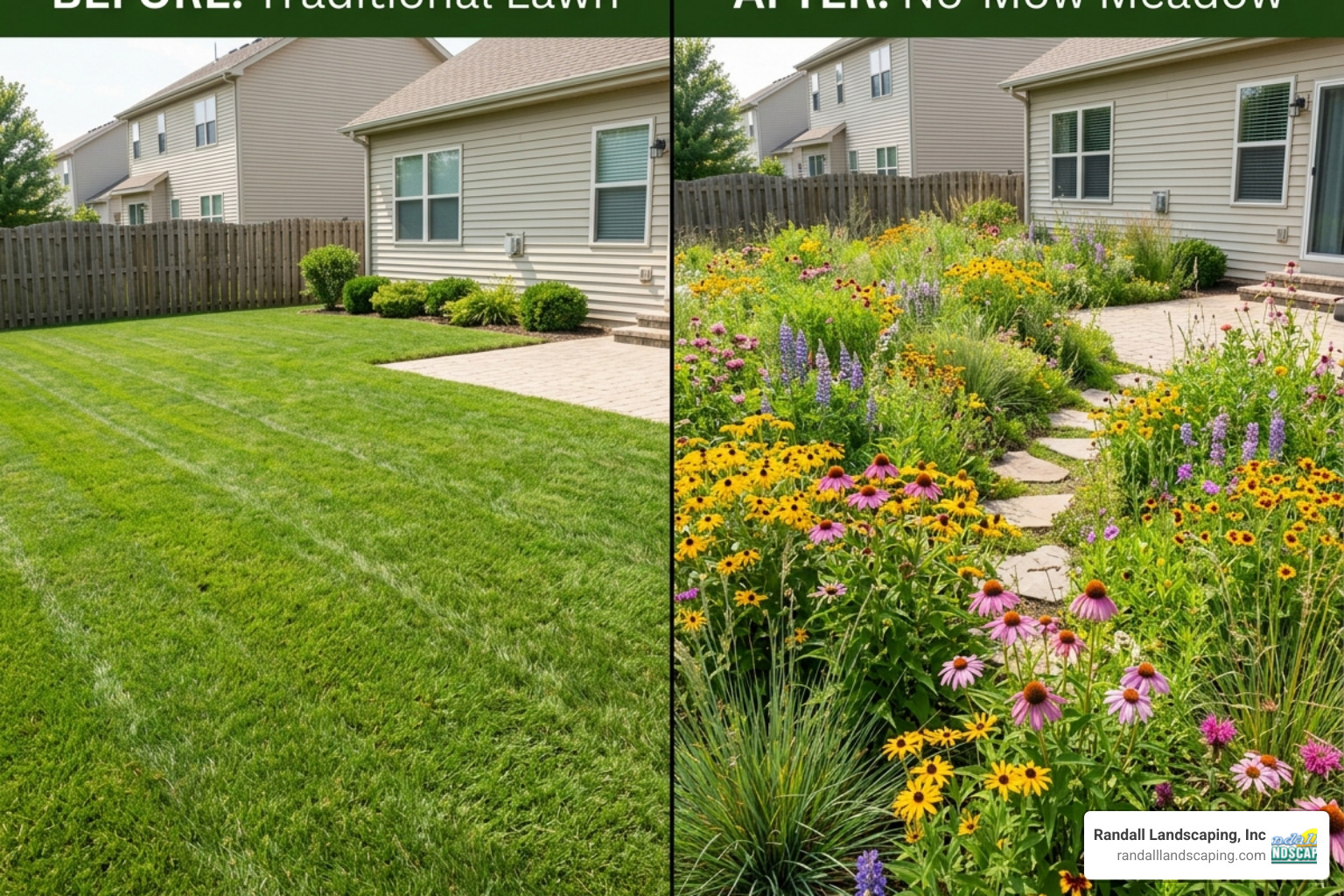
As we saw with the MSU study, reallocating just one year of traditional maintenance funds can often cover the entire cost of installing a native garden. After that, your maintenance costs drop off a cliff. You move from “mowing and blowing” every week to “weeding and checking” a few times a season.
Improving Community Well-being
Sustainable landscapes don’t just help the bugs; they help the people. Studies have shown that access to biodiverse green spaces reduces stress and improves mental health. In urban areas like Lawrence or Methuen, adding green infrastructure like living roofs or urban forests helps reduce the “heat island effect,” making our neighborhoods cooler and more comfortable in the summer.
There is also a social advantage. When you have a beautiful, native-filled yard, you become a hub for the neighborhood. You’ll find people stopping by to ask about the flowers or watch the butterflies. It’s a way of building community while building a better planet.
Practical Steps to Implement Sustainable Landscape Solutions
Ready to dig in? Implementing sustainable landscape solutions works best when you have a plan. You don’t have to tear up your entire yard this weekend. In fact, we often recommend a phased approach.
Start by getting a professional site assessment. We look at the “lay of the land”—where does the sun hit? Where does the water pool? What is the current state of your soil? Understanding your property’s mulch environmental impact and existing plant health is the first step toward a smarter design.
Getting Started with Sustainable Landscape Solutions
- Soil Testing: Before you plant a single thing, find out what your soil needs. This prevents over-fertilizing and ensures your new plants have the right pH to thrive.
- Invasive Species Removal: You can’t build a native paradise if it’s being choked out by bittersweet or burning bush. We help identify and remove these “bullies” to make room for the good stuff.
- Local Expert Partnerships: Partnering with a team like Randall Landscaping ensures you aren’t guessing. We know which plants thrive in Boxford and which ones will struggle in Dracut.
- Financing Options: Many sustainable upgrades, like drainage improvements or energy-saving tree placements, can be part of a larger property investment plan.
Regional Adaptation and Climate Resilience
In our corner of the world—the Merrimack Valley and Southern NH—we have unique challenges. Our winters are tough, and our soil can vary from sandy to heavy clay. Sustainable landscape solutions here must be “winter hardy.”
For May 2026, we are focusing on planting schedules that take advantage of our wet springs to get root systems established before the summer heat. We select trees and shrubs that can handle the weight of heavy New England snow without breaking, ensuring your investment stays beautiful for decades, not just seasons.
Frequently Asked Questions about Eco-Friendly Landscaping
What is the difference between sustainable and traditional landscaping?
Traditional landscaping often relies on “inputs”—you have to keep adding water, fertilizer, and labor to keep it looking good. It often uses exotic plants that don’t support local wildlife. Sustainable landscape solutions rely on “systems.” They use native plants that are self-sufficient and organic practices that build soil health over time, reducing the need for outside chemicals and constant maintenance.
How much do sustainable landscape solutions cost?
Note: These are average costs based on internet data and not actual costs for Randall Landscaping.
The cost varies wildly depending on the size of your property and the complexity of the project. However, here are some broad ranges you might see:
- Native Garden Installation: $2,000 – $10,000+ (depending on plant maturity and soil prep)
- Permeable Paver Driveway: $15 – $60 per square foot (compared to $7–$15 for standard asphalt)
- Rain Garden Setup: $1,000 – $5,000+ (includes excavation and specialized plantings)
While the initial setup for a rain garden or native bed might be higher than a flat patch of sod, you are “buying back” your time and money by eliminating the need for weekly maintenance and chemical treatments.
Can sustainable landscaping increase my property value?
Absolutely. Modern home buyers are increasingly eco-conscious. A yard that features a beautiful patio design surrounded by low-maintenance native plants is a huge selling point. Buyers love the idea of lower utility bills (thanks to water conservation) and a yard they can actually enjoy instead of spending every Saturday morning behind a lawnmower.
Conclusion
At Randall Landscaping, Inc., we believe that your yard is more than just a patch of grass—it’s an opportunity to make a positive impact on the world. Whether you are in Andover, Salem, or anywhere in the Merrimack Valley, we are here to help you transition to sustainable landscape solutions that reflect your values and enhance your lifestyle.
Our commitment to quality work and 100% reliability means you can trust us to handle everything from the initial design to the final planting. We take pride in creating outdoor spaces that are not only beautiful but also resilient and environmentally responsible.
Ready to take the first step towards a greener property? Whether you’re looking for eco-friendly mulch options or a full-scale regenerative redesign, we’ve got you covered.
Let’s grow something better together. Contact us today to request an estimate and start rooting for the planet!