Why Retaining Wall Issues Require Immediate Attention
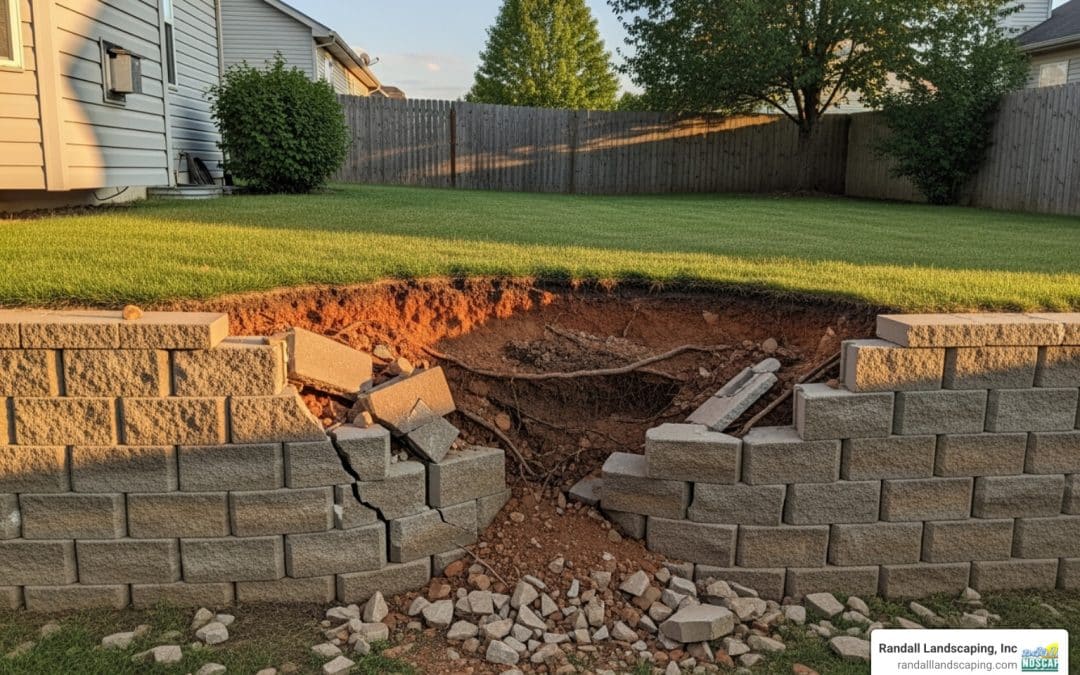
Retaining wall repair is a critical maintenance task that prevents costly property damage. These structures hold back soil and prevent erosion, but their failure can have severe consequences. When waterlogged soil creates hydrostatic pressure, even well-built walls can bow, crack, or collapse.
Quick Answer for Retaining Wall Repair:
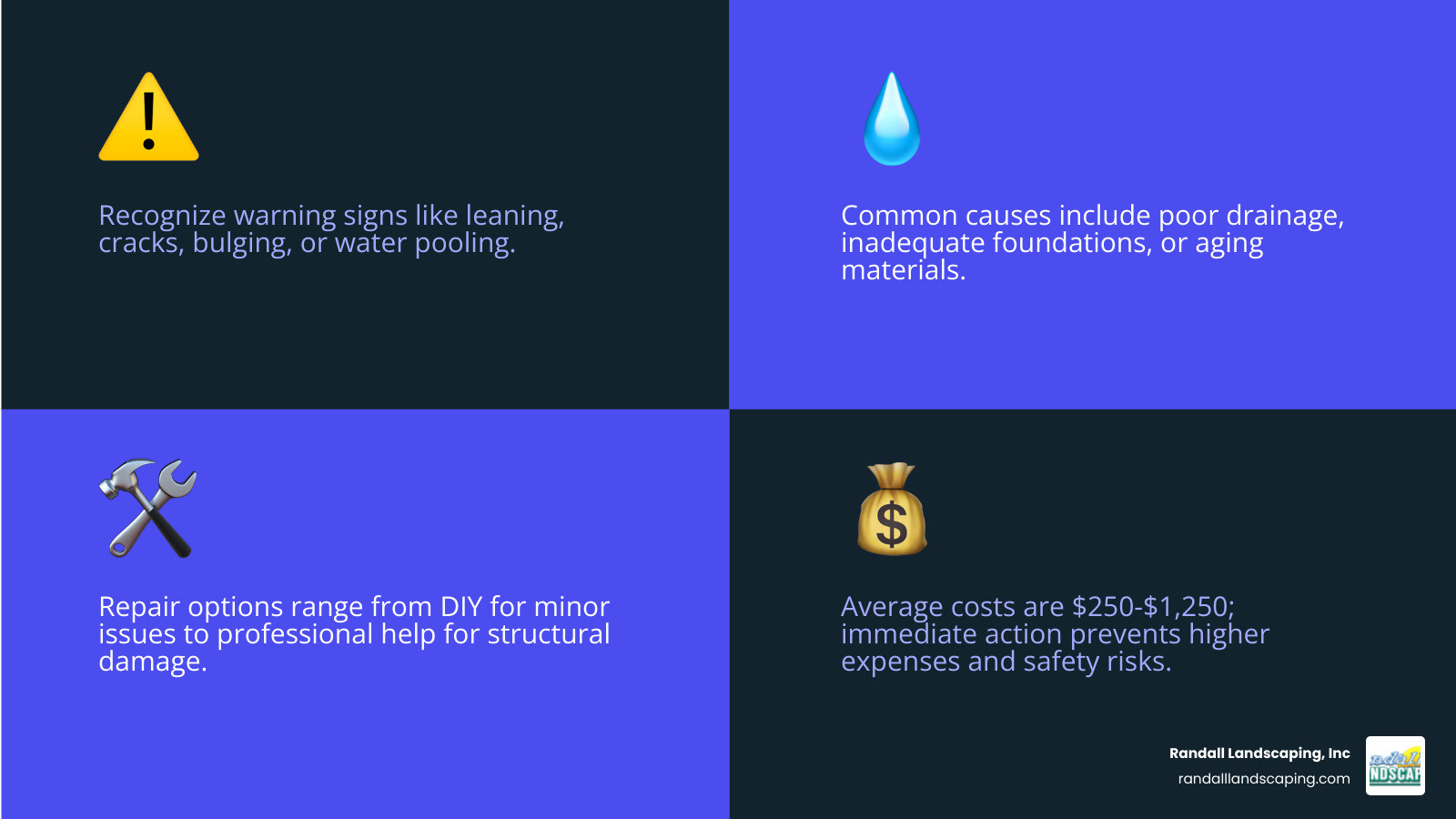
- Warning Signs: Leaning, cracks, bulging, water pooling, or crumbling materials
- Common Causes: Poor drainage, inadequate foundation, soil pressure, or aging materials
- Repair Options: DIY fixes for minor issues, professional repair for structural problems
- Average Costs: $250-$1,250 for repairs, $200-$5,000+ depending on damage extent
- When to Act: Immediately upon noticing signs – delays increase costs and safety risks
The national average cost for retaining wall repair ranges from $250 to $1,250, but major reconstruction can reach $5,000 or more. Catching problems early is the key to avoiding the higher end of these costs and ensuring the safety of your property.
As Tommy Randall, owner of Randall Landscaping Business, I’ve been helping Massachusetts and New Hampshire homeowners with retaining wall repair and construction since 2006. Over nearly two decades, I’ve seen how proper diagnosis and timely intervention can extend a wall’s life and protect your property investment.
Identifying the Need for Repair: Common Signs and Causes
The key to successful retaining wall repair is catching problems early. Overlooking subtle warning signs can turn a simple fix into a major safety hazard and a significant expense. Recognizing these signs is your wall’s way of asking for help—the sooner you listen, the easier and cheaper the repair will be.
Telltale Signs Your Retaining Wall is Failing
When inspecting a retaining wall, I look for specific red flags that indicate underlying problems:
- Leaning or tilting: A wall should be straight. Any lean away from the soil it’s holding back indicates it’s losing the battle against immense pressure.
- Bulging or bowing: A bulge in a straight wall face often means internal reinforcement is failing.
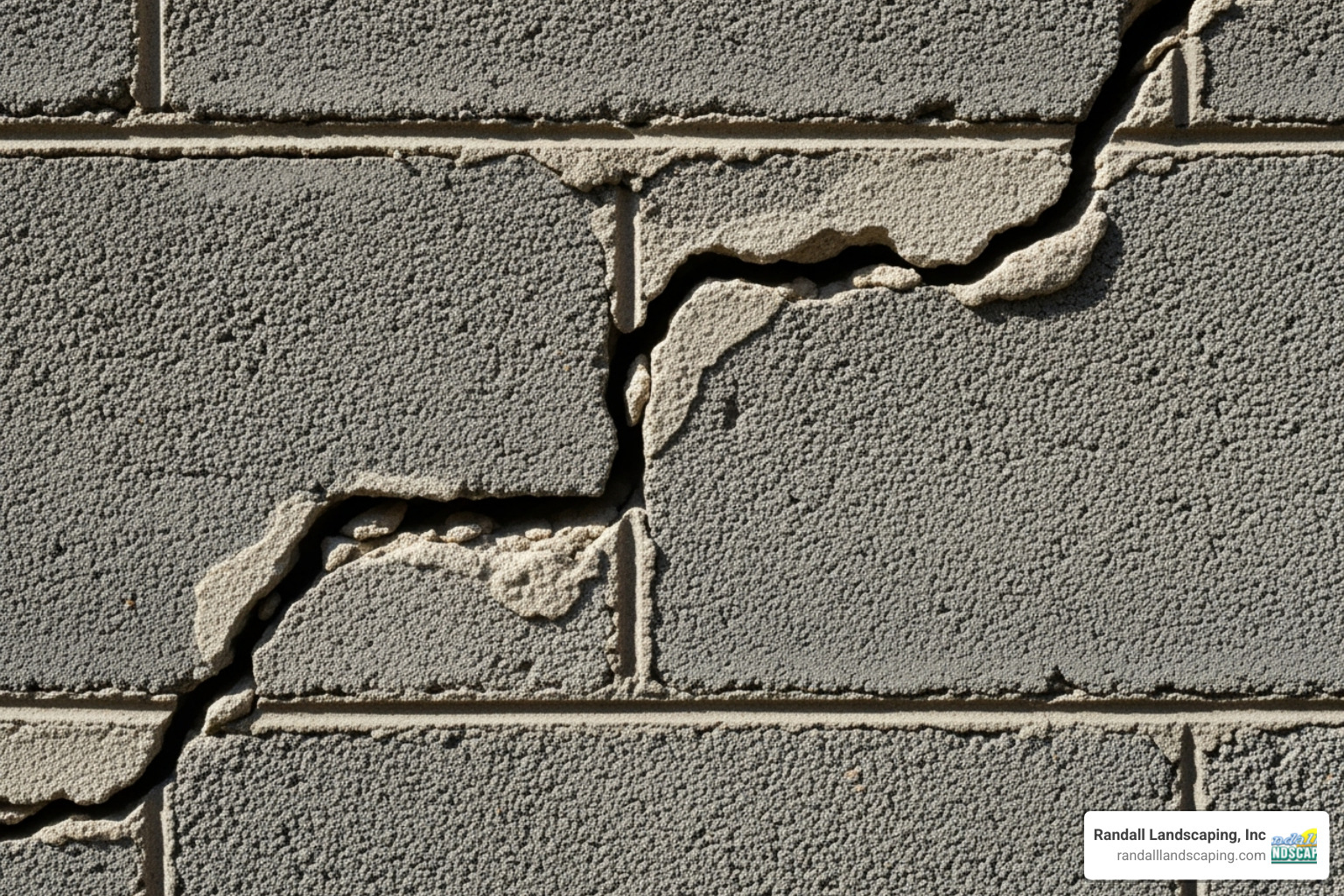
- Cracks: Vertical or horizontal cracks signal structural weakness. Stair-step cracks in block or brick walls often point to foundation settlement or significant soil movement. These are not just cosmetic issues.
- Crumbling material: Whether it’s concrete spalling from freeze-thaw cycles or deteriorating mortar, crumbling materials compromise the entire structure’s integrity.
- Rotting wood: For timber walls, rot is a critical failure. Wood loses its strength rapidly once decay sets in.
- Gaps between the wall and soil: This suggests the supportive backfill is washing away or settling, removing crucial stability.
- Excessive water: While some seepage is normal, water pooling behind the wall or weeping through its face indicates a failed drainage system and dangerous hydrostatic pressure buildup.
The Root Causes of Retaining Wall Damage
Most failures I see trace back to a handful of preventable causes:
- Poor drainage: This is the villain in about 80% of wall failures. Trapped water creates immense hydrostatic pressure that can push a wall over.
- Inadequate foundation: A wall needs a solid, properly-sized footing to handle its load. Skimping here guarantees future problems.
- Improper backfill: Using regular soil or sand instead of angular gravel creates a water trap, increasing pressure on the wall.
- Heavy weight (surcharge): Parking cars, placing sheds, or piling soil near the top of the wall adds stress it wasn’t designed to handle.
- Erosion and roots: Soil erosion can undermine a wall’s foundation, while invasive tree roots can slowly push it out of alignment.
- Original poor construction: Many walls are doomed from day one due to shortcuts like missing reinforcement, poor compaction, or ignoring basic engineering principles.
For insights into how retaining walls should be built to avoid these problems, check out our guide on quality wall construction.
Understanding Different Retaining Walls and Their Repair Needs
Not all retaining walls are created equal. Understanding your wall’s material is crucial for effective retaining wall repair, as each type has unique failure patterns and requires specific repair strategies.
Concrete & Cinder Block Walls
These workhorse walls are built to last, but their problems are often dramatic.
- Common Issues: Cracking from soil pressure or freeze-thaw cycles, spalling (surface flaking) from moisture, and leaning or bowing due to foundation or drainage failure.
- Repair Methods: Minor cracks can be sealed with epoxy injections. However, significant structural issues require professional intervention, which may involve underpinning the foundation or installing reinforcement systems like carbon fiber straps or tiebacks.
For new construction ideas, you can explore residential wall options.
Natural Stone & Sandstone Walls
Stone walls offer timeless charm but require periodic maintenance.
- Common Issues: The primary enemy is mortar deterioration in mortared walls, which leaves stones loose. In dry-stack walls, stones can shift and become displaced due to soil pressure and poor drainage, causing sections to bulge.
- Repair Methods: The main technique for mortared walls is repointing (or tuckpointing)—replacing old mortar with a compatible new mixture. For displaced stones in any stone wall, the repair involves resetting them and, critically, improving the drainage system behind the wall to prevent future movement.
Stone walls offer incredible versatility. You can see examples of sandstone walls to get a sense of the possibilities.
Timber & Wood Walls
Wooden walls are often budget-friendly but have a shorter lifespan.
- Common Issues: Wood rot is the main problem, as constant contact with moist soil leads to decay. This is often accompanied by insect damage from termites or carpenter ants. Leaning can also occur if support posts or tie-backs deteriorate.
- Repair Methods: Retaining wall repair for timber often involves replacing individual rotten sections. The most critical part of any repair is improving the drainage to keep the wood as dry as possible, which dramatically slows the decay process.
Segmental Block & Gabion Walls
These modern systems use engineered interlocking blocks (segmental) or wire cages filled with stone (gabion).
- Common Issues: Segmental walls can suffer from block shifting or base course failure if the foundation is inadequate. Bulging can occur if the geogrid reinforcement in the soil behind the wall fails. For gabion walls, the wire baskets can corrode, and the stone fill can settle.
- Repair Methods: Minor block issues may allow for re-stacking, but base failures require a partial rebuild. Geogrid problems involve significant excavation. For gabion walls, damaged mesh can be mended, but widespread corrosion requires replacing entire basket sections.
Gabion walls offer unique benefits. To better understand these structures, learn about gabion walls.
The Retaining Wall Repair Process: DIY vs. Professional
When your retaining wall shows signs of trouble, you face a crucial decision: tackle the repair yourself or call in the experts? The choice impacts your budget, safety, and the long-term stability of your property.
DIY Retaining Wall Repair: When and How to Tackle Small Jobs
A DIY approach can be practical for localized, minor problems on shorter walls (under 3-4 feet tall). This includes issues like a few shifted blocks, minor surface crumbling, or a small patch of rot in a timber wall. However, if your wall is leaning significantly, has widespread cracks, or shows signs of structural failure, it’s professional territory.
Before you start, gather the right tools and materials.
- Essential Tools:
- Shovel and wheelbarrow
- Long level and tape measure
- Tamper for compaction
- Sledgehammer
- Heavy-duty gloves and safety glasses
- Essential Materials:
- Matching blocks or stones
- 3/4-inch angular gravel for backfill (critical for drainage)
- Landscape fabric
- Perforated drain pipe
The basic repair process involves excavating the damaged section and soil, checking and leveling the base foundation (adding and compacting new crushed stone if needed), and then rebuilding the wall course by course. As you build, backfill with angular gravel and compact it in layers.
A small DIY retaining wall repair might cost $100 to $200 in materials, but without a solid understanding of soil mechanics, even small projects can fail.
Safety First: Critical Considerations
Safety is non-negotiable. A failing wall holds back thousands of pounds of soil and can collapse suddenly.
- Risk of Collapse: Never underestimate the weight of the soil. A failing wall is a serious hazard.
- Heavy Materials: Blocks can weigh 60-80 pounds each. Lift with your legs and get help when needed.
- Excavation Safety: Never work in a trench deeper than your waist unless it’s properly shored. Always call 811 before you dig to locate underground utilities.
- Permit Requirements: Many towns require permits for retaining wall work, especially for walls over 3-5 feet tall. Check with your local building department. For guidance on professional standards, resources like Professional wall inspections can be valuable.
When to Call a Professional Contractor
Some retaining wall repair jobs are clearly beyond DIY capabilities. Call a professional for:
- Major structural failure: Significant leaning (more than an inch per foot of height), bulging, or extensive cracking.
- Tall walls: Any wall over 4 feet tall involves immense forces and typically requires an engineered solution.
- Complex drainage issues: Persistent water problems that indicate a systemic failure.
- Poured concrete walls: Repairs often require knowledge of concrete chemistry and structural engineering.
- Lack of time, tools, or expertise: It’s often more expensive to fix a failed DIY repair than to hire a professional from the start.
When you’re ready to hire a professional, our guide on Hiring a qualified builder can help you find the right contractor.
Advanced Solutions and Cost Analysis for Retaining Wall Repair
For serious signs of distress, it’s time to look beyond quick fixes. Understanding the full range of repair solutions and their costs helps you make smart decisions that protect your property.
Understanding the Costs of Retaining Wall Repair
Disclaimer: All costs listed are national averages based on internet data and are not actual prices for Randall Landscaping. Your specific project costs will vary based on location, materials, complexity, and the extent of damage.
The national average for retaining wall repair typically runs between $250 and $1,250, but the range is wide. A minor fix might cost $200, while major reconstruction can exceed $5,000.
- Cost by Material (Average Repair):
- Wood/Timber: $200 – $1,100
- Concrete/Block: $250 – $1,250
- Stone: $300 – $1,600
- Cost by Problem:
- Leaning/Bowing: $250 – $1,500+
- Crack Repair: $150 – $400
- Drainage Installation: $70 – $90 per square foot
Factors like wall height, site access, and local labor rates ($50-$200/hr) also significantly influence the final price. For more detailed breakdowns, you can explore additional More on repair costs.
The Critical Role of Proper Drainage
Drainage is the #1 factor in retaining wall longevity. Poor drainage creates hydrostatic pressure—a relentless force from waterlogged soil that pushes walls to their breaking point.
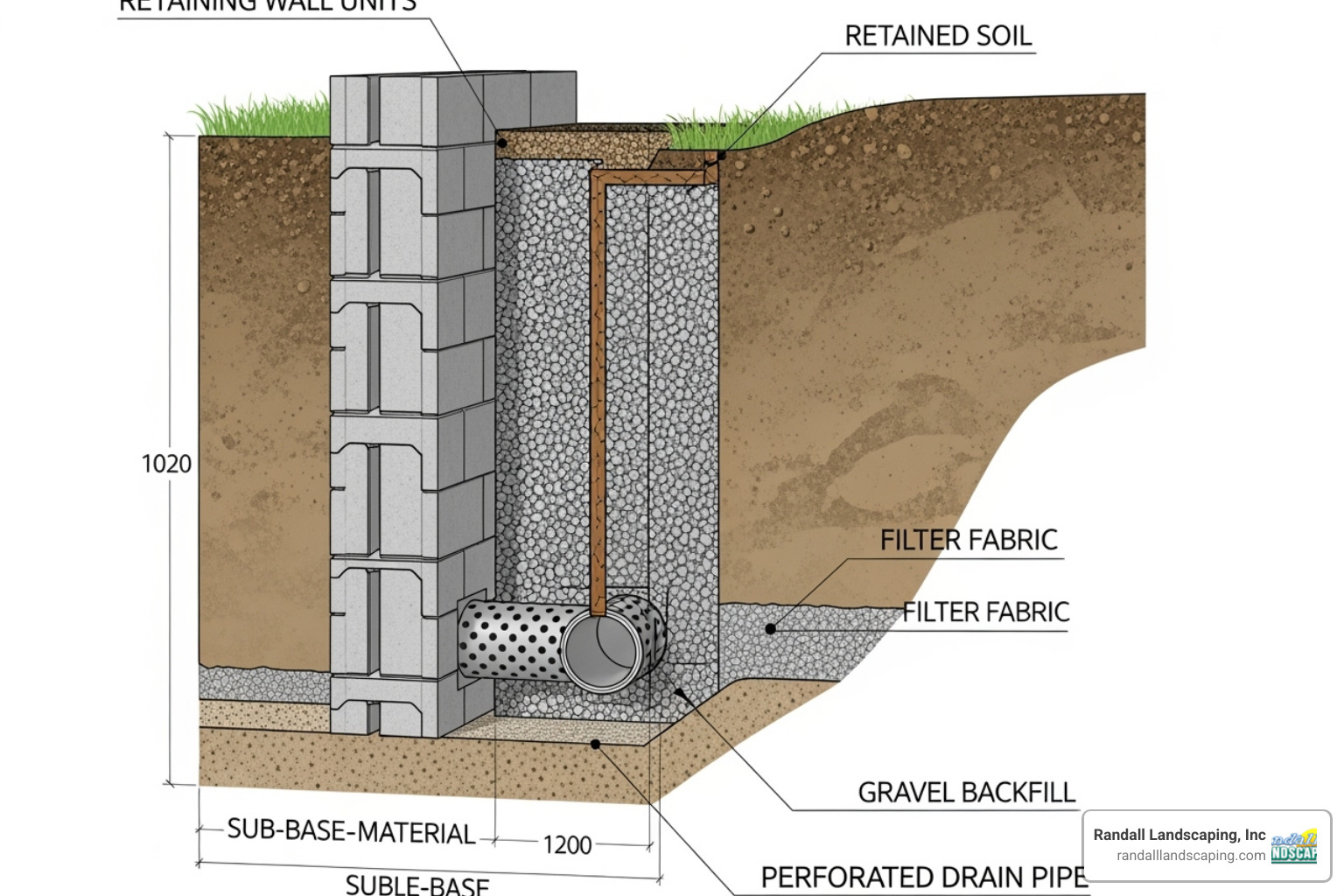
A proper system includes a perforated drain pipe at the base, a backfill of clean 3/4-inch angular gravel, and filter fabric to prevent clogging. The ground surface above should also slope away from the wall. Investing in proper drainage during a repair is the difference between a fix that lasts decades and one that fails again in a few years. Our team specializes in these solutions; learn more about our Expert landscape wall construction.
Repair vs. Replace: Making the Right Financial Decision
Sometimes, replacing a wall is smarter than repairing it.
- Repair makes sense for localized problems like a few displaced blocks or minor cracks, where the underlying structure is sound.
- Replacement is the better choice for widespread failure, a compromised foundation, or when repair costs exceed 50% of the replacement cost. A new, properly engineered wall can last 50-100 years.
The average replacement cost is $70 to $125+ per linear foot (national average), but this investment eliminates the recurring expense and worry of a fundamentally flawed wall. Ready to explore your options? Get a quote for a new wall.
Advanced Repair: Anchoring and Tiebacks
For severely leaning or bowing walls that are otherwise structurally sound, advanced anchoring systems can be a cost-effective solution short of full replacement.
- Helical Tiebacks: These are giant steel screws driven deep into stable soil behind the wall. A bracket connects the tieback to the wall, allowing it to be pulled back into a vertical position and permanently secured.
- Wall Anchors: This system uses an earth anchor placed in the soil 10-20 feet behind the wall, connected by a steel rod to a plate on the wall’s face. It can also be tightened to straighten and stabilize the wall.
Both methods create deep anchor points to resist soil pressure. They are less disruptive than a full rebuild and are especially valuable when a wall is near driveways or mature landscaping. These advanced anchoring systems provide a reliable solution for walls showing significant structural stress.
Frequently Asked Questions about Retaining Wall Repair
Homeowners in the Merrimack Valley and Southern New Hampshire often ask the same questions about retaining wall repair. Here are the answers to the most common concerns.
Can a leaning retaining wall be fixed?
Yes, in most cases. The solution depends on the severity of the lean.
For minor leaning (less than an inch or two per foot of height), the fix often involves excavating the section, repairing the base, and re-stacking the material correctly. This addresses underlying issues like poor drainage or minor settlement.
For severe leaning, especially in concrete or block walls, professionals use advanced anchoring systems. Helical tiebacks or wall anchors are installed deep into the stable soil behind the wall to physically pull it back into alignment and secure it, often avoiding the cost and disruption of a full rebuild.
What is the best backfill for a retaining wall?
The best and only correct material is 3/4-inch angular gravel or crushed stone. Its angular shape creates voids that allow water to drain freely, preventing the buildup of hydrostatic pressure. It also compacts well, providing stable support.
Never use soil, sand, or rounded pea gravel as backfill. These materials act like a sponge, holding water and becoming heavy and expansive when wet, which is a primary cause of wall failure. We always use geotextile fabric to separate the gravel from the surrounding soil, preventing the drainage system from clogging over time.
How long does a retaining wall last?
The lifespan depends heavily on the material and, most importantly, the quality of construction.
- Timber Walls: 20-30 years. Wood is susceptible to rot and insects.
- Segmental Block Walls: 50-75 years. These offer excellent durability when installed correctly.
- Concrete Walls (Poured or Block): 50-100+ years. Properly reinforced concrete is incredibly durable.
- Natural Stone Walls: 75-100+ years. These can last for generations with proper maintenance.
The most critical factor is proper drainage and a solid foundation. A wall built with the best materials will still fail prematurely if water cannot escape from behind it. Regular inspections and prompt retaining wall repair for small issues will help any wall reach its maximum lifespan.
Your Partner for Lasting Retaining Wall Solutions
A failing retaining wall is more than an eyesore; it’s a safety hazard that can threaten your property, landscaping, and even your home’s foundation. The good news is that early action makes all the difference. Spotting a slight lean or a small crack allows you to address the root cause quickly, saving you thousands of dollars and preventing a major failure.
While a DIY approach can work for minor issues on short walls (under 4 feet), significant structural problems require professional expertise. Your safety and property value are too important to risk on a major retaining wall repair.
Here in the Merrimack Valley and Southern New Hampshire, our climate’s freeze-thaw cycles and heavy rains are tough on landscape structures. At Randall Landscaping, Inc., we specialize in building and repairing walls that are designed to withstand these local challenges. Our reputation is built on quality work and 100% reliability.
Our team has the knowledge to diagnose the true cause of your wall’s failure—not just patch the symptoms. Whether it’s a hidden drainage problem or a faulty foundation, we implement repairs that are built to last.
Don’t wait for a small crack to become a major collapse. If your retaining wall shows any signs of distress, we are here to help. Our experts will restore your wall’s strength and functionality, giving you peace of mind.
Contact us today for a professional retaining wall repair assessment. We provide lasting solutions to protect your property.