
Why Build a Freestanding Cinder Block Wall?
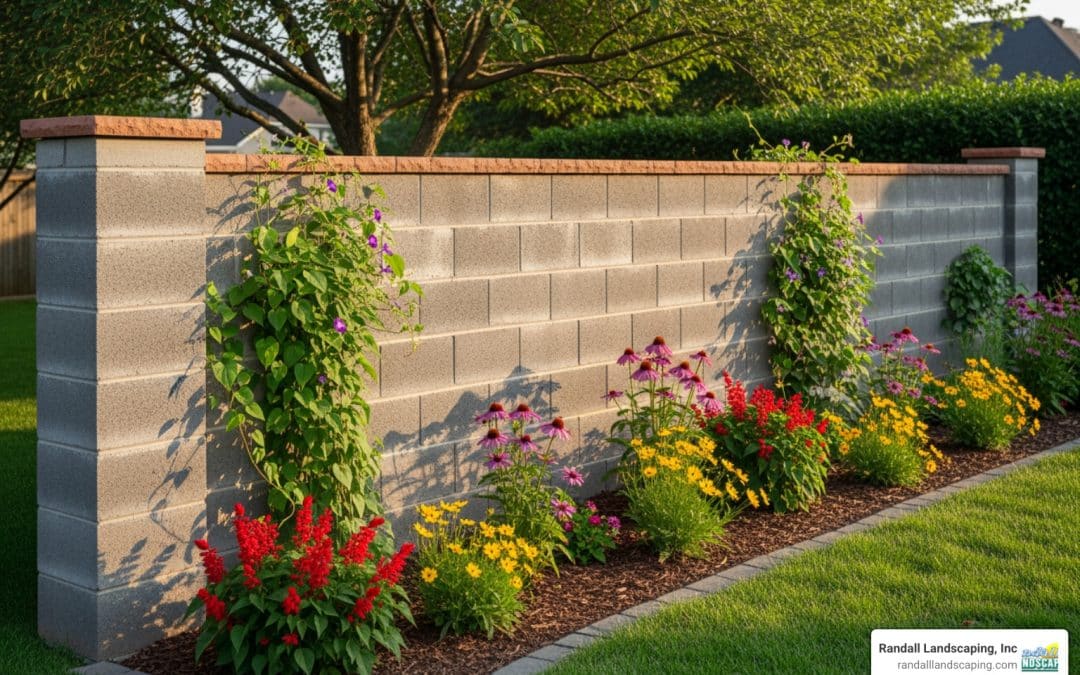
A freestanding cinder block wall is a durable, versatile structure offering privacy, soundproofing, and visual appeal. Unlike retaining walls that hold back soil, these walls stand independently as boundaries, garden enclosures, or decorative features.
Quick Overview: What You Need to Know
- Purpose: Privacy screens, property boundaries, garden walls, and aesthetic features
- Durability: Can last up to 80 years with proper maintenance
- Strength: At least 1,900 PSI compressive strength
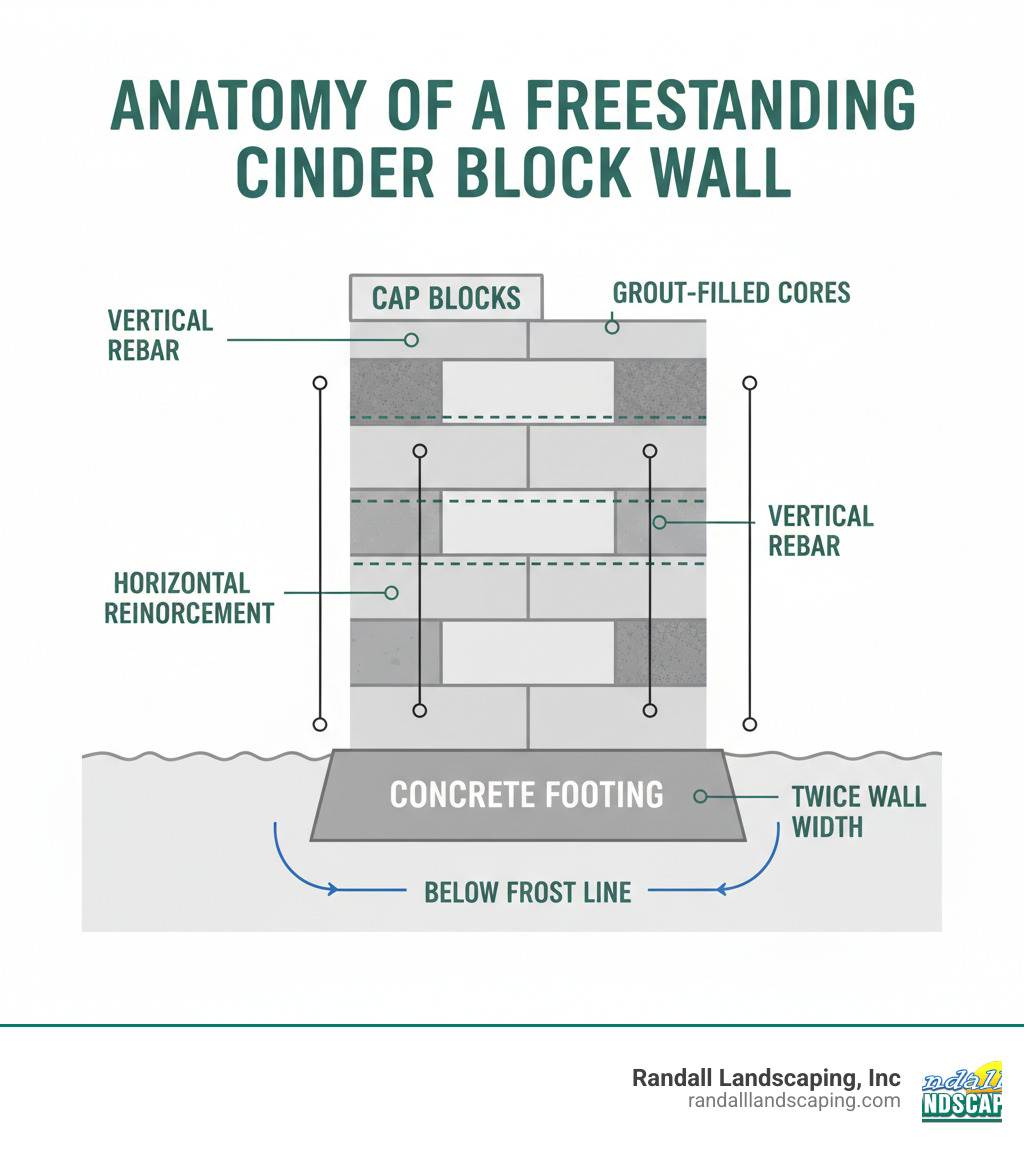
- Foundation Required: Yes—concrete footing at least twice the wall width, below frost line
- Skill Level: Advanced DIY (10-20 hours for a 3×16-foot wall)
- Average Cost: $200-$1,200+ for a 10×6-foot wall (materials and labor vary widely)
Key benefits of a cinder block wall include:
Durability – Made from concrete and aggregate, cinder blocks are weather-resistant and long-lasting, capable of withstanding harsh New England weather for decades.
Privacy – A solid wall effectively screens patios, gardens, or hot tubs from view, ensuring seclusion for outdoor relaxation.
Soundproofing – The dense mass of concrete blocks dampens noise from streets or neighbors, creating a quieter outdoor space.
Versatility – These walls can define property lines, enclose utility units, create raised garden beds, or frame outdoor living areas.
I’m Tommy Randall, owner of Randall Landscaping. Since 2006, my team has built freestanding cinder block walls and hardscapes across Massachusetts and New Hampshire. We’ve learned that success hinges on proper planning and attention to detail—especially the foundation.
Planning Your Project: Before You Lay the First Block
As I tell every homeowner at Randall Landscaping, the most important work on a freestanding cinder block wall happens before you touch a single block. Rushing the planning stage leads to costly mistakes, like rebuilding a leaning or cracked wall.
Project Design
First, define your wall’s purpose. A 2-foot decorative garden border requires a different approach than a 6-foot privacy screen.
- Site Selection: Choose a relatively level site. While freestanding walls don’t hold back soil, a sloped area requires more excavation and a stepped footing.
- Wall Height: In our New England climate, taller walls face more wind and frost pressure. Walls over 4 feet often require more substantial reinforcement and may need professional engineering. DIY walls over 6 feet are generally not recommended.
- Wall Length: Longer walls are exponentially harder to keep straight and level. A 30-foot wall requires far more precise layout work than a 10-foot one.
Local Building Codes and Permit Requirements
Always call your local building department before digging. Rules on permits and setbacks (distance from property lines) vary by town. A permit may be required for walls over 4 feet. A quick call prevents costly tear-downs.
The frost line is critical in our climate. Your footing must be below this depth (typically 48 inches or more in our area) to prevent frost heave, which can crack your foundation. Your local code will specify the exact requirement.
For more on wall construction, see our guide on Landscape Wall Construction.
Understanding Cinder Block Basics
While technically “concrete masonry units” (CMUs), most people still call them cinder blocks. Modern blocks are stronger and more uniform than older versions.
- Standard Dimensions: Nominal size is 8x8x16 inches, but the actual size is slightly smaller (e.g., 7⅝” x 7⅝” x 15⅝”) to accommodate a ⅜-inch mortar joint. This is crucial for calculating materials. See the Typical Sizes and Shapes of Concrete Masonry Units guide for details.
- Compressive Strength: Quality blocks have a strength of at least 1,900 PSI. When reinforced with rebar and grout, the wall becomes incredibly strong.
- Block Types: You’ll use three main types: Stretcher blocks for the main wall, Corner blocks for clean corners, and Cap blocks to finish the top and protect the cores from weather.
Essential Tools and Materials for a Freestanding Cinder Block Wall
Gather all your tools and materials before you begin to avoid interruptions.
- Safety Gear: Prioritize safety with heavy-duty gloves, safety glasses, a dust mask, and sturdy boots. Wet concrete is caustic and can burn skin.
- Masonry Tools: You’ll need a mason’s trowel, a 4-foot level, a rubber mallet, a chalk snap line, a measuring tape, string line with stakes, a masonry brush, and a concave jointer. A circular saw with a masonry blade is ideal for cuts.
- Mixing Equipment: A wheelbarrow or mortar mixer, a mortar pan, and a shovel or hoe are necessary for mixing.
- Materials: Your list will include cinder blocks (a 10×6-foot wall needs about 75 blocks), Type S or N mortar mix (one 80-lb bag lays ~12-14 blocks), rebar, high-strength concrete mix for the footing, and gravel.
The Step-by-Step Guide to Building a Freestanding Cinder Block Wall
Building a freestanding cinder block wall is a rewarding but physically demanding project. It’s an advanced skill level DIY task that requires patience and precision. A 3×16-foot wall can take 10-20 hours over several days, accounting for concrete curing time. For a visual guide, this video is helpful: How to Build a Straight Freestanding Concrete Block Wall.
Step 1: Prepare the Foundation and Footing
A wall is only as good as its foundation. This step is critical for longevity, especially in New England’s freeze-thaw climate.
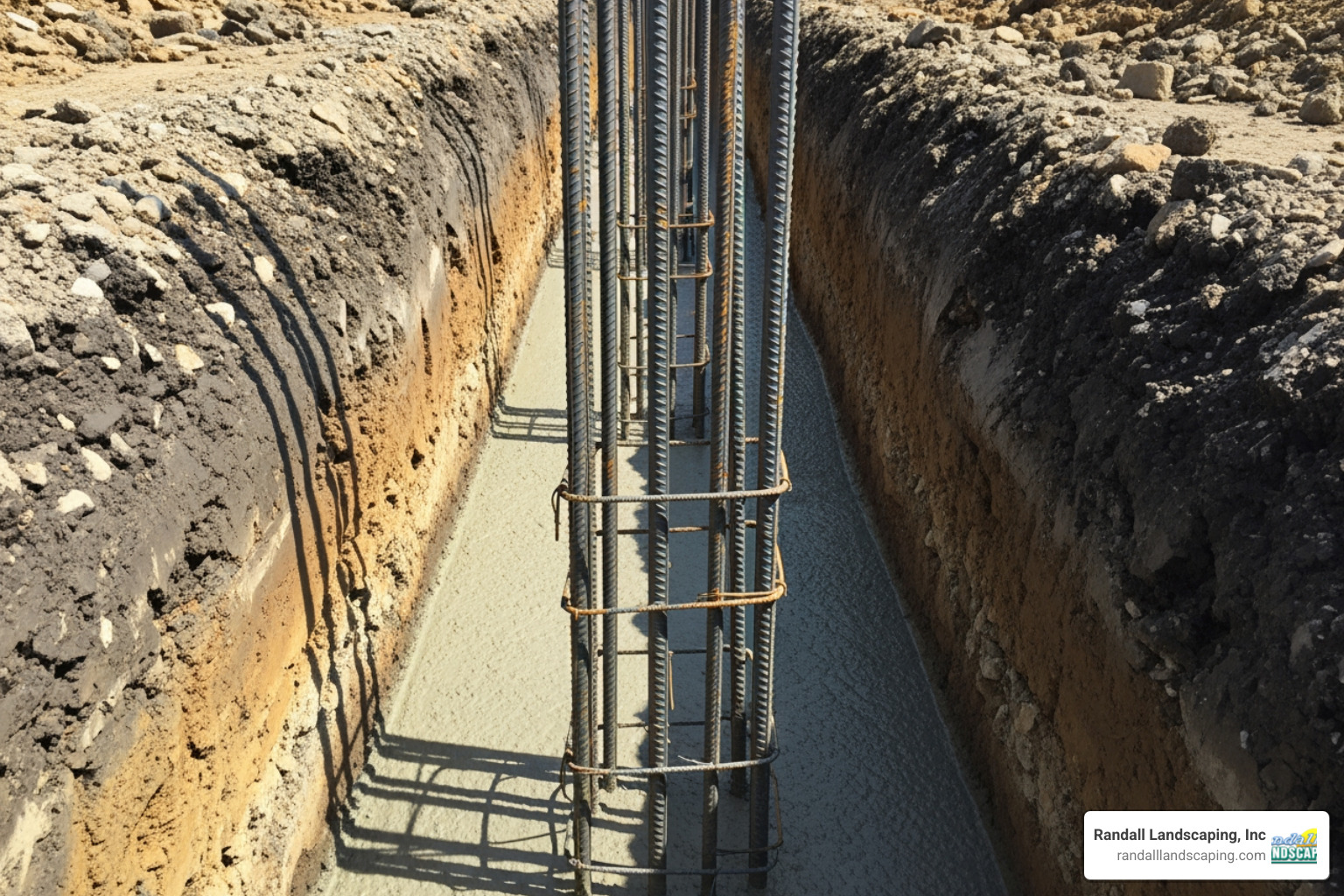
- Excavate the Trench: Mark your wall’s outline with stakes and string. Crucially, call 811 (Dig Safe) at least 72 hours before you dig to locate utility lines. Dig a trench at least twice the wall’s width (e.g., 16 inches wide for an 8-inch block). The depth must extend below the local frost line, often 3-4 feet in our region, to prevent frost heave. Level the trench bottom and add a 3-4 inch layer of compacted gravel for a stable, well-drained base.
- Pour the Concrete Footing: Mix and pour concrete to create a footing at least 6-8 inches thick. Smooth and level the surface with a float.
- Install Vertical Rebar: While the concrete is wet, insert vertical rebar rods into the footing every 4 feet and at each end/corner. Ensure they are plumb (perfectly vertical) before the concrete sets.
- Cure the Footing: Allow the concrete to cure for at least 48 hours, though a full week is ideal for maximum strength. Do not rush this step.
Step 2: Laying the First Course of Your Freestanding Cinder Block Wall
The first course is critical; mistakes here will be amplified as you build. Take your time.
- Dry Layout: Perform a dry layout first: place the blocks on the cured footing without mortar, using ⅜-inch plywood scraps to simulate joints. This helps you check your layout and plan for cuts. Mark the final position with a chalk line.
- Mix Mortar: Mix mortar to a firm, peanut butter-like consistency. An 80-lb bag typically lays 12-14 blocks.
- Set Corner Blocks: Moisten the footing, then spread a 1-inch thick mortar bed. Set the corner/end blocks first, tapping them with a rubber mallet until they are perfectly level and plumb. This is your most important alignment.
- Run a Mason’s Line: Stretch a tight mason’s line between the top edges of the corner blocks. This line is your guide for a straight course.
- Fill in the Course: To fill in the course, “butter” the end of each new block with mortar before pressing it into the bed and against the previous block. Maintain a consistent ⅜-inch joint and check for level against your mason’s line frequently. Slide blocks over vertical rebar as needed.
Step 3: Building Subsequent Courses
With the first course set, you can build upward using a steady rhythm.
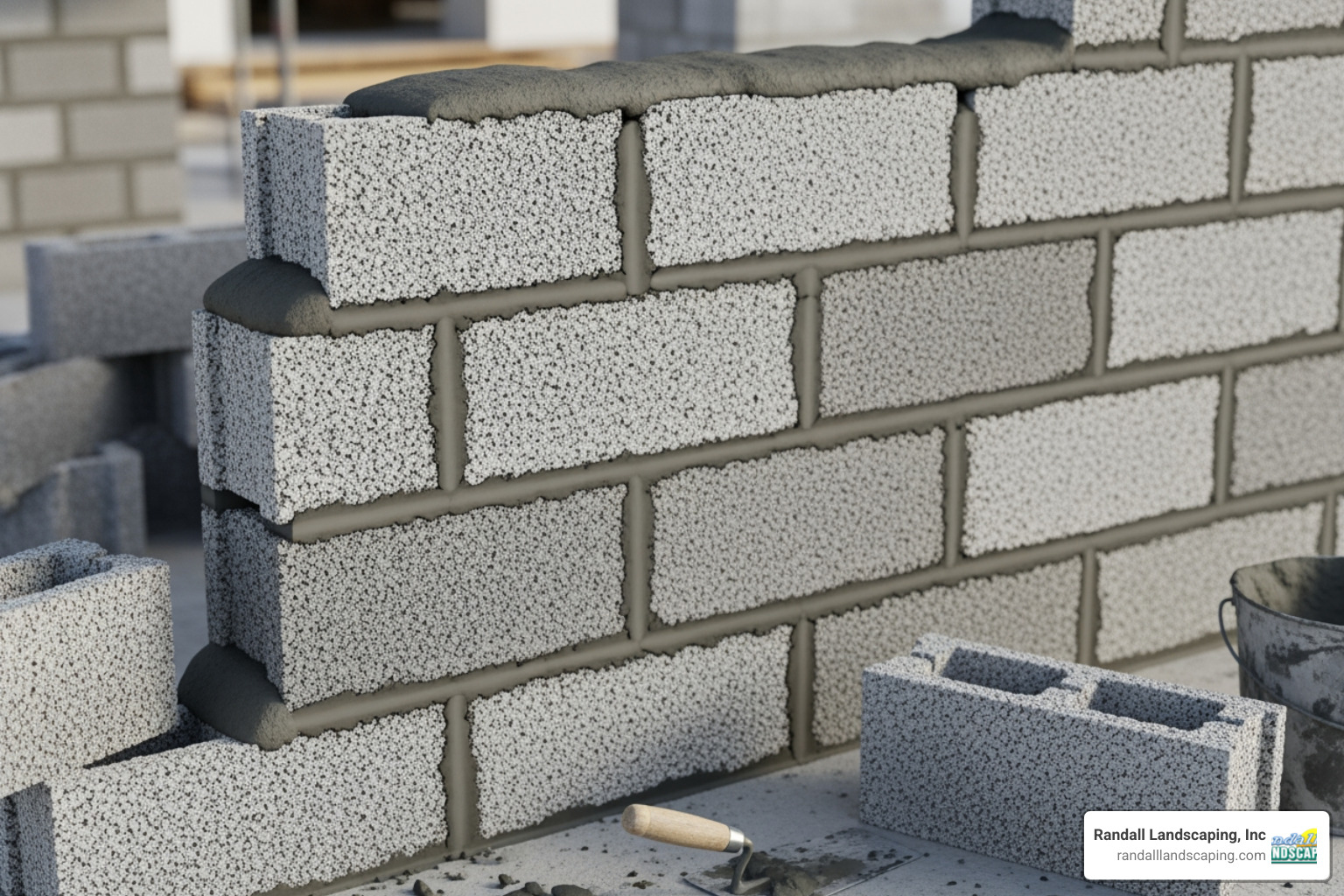
- Stagger Joints: For strength, use a “running bond” pattern by staggering the joints. Each vertical joint should be centered on the block below it. Start every other course with a half-block.
- Lay Blocks: Apply mortar to both the course below (bed joint) and the end of the new block (head joint). Set the block, aligning it with the mason’s line (move the line up for each course). Constantly check that your blocks are level and plumb.
- Add Reinforcement: For walls over 4 feet tall, add horizontal reinforcement (ladder mesh) into the mortar joints every few courses to prevent cracking.
- Fill Cores with Grout: Every 2-3 feet of height, fill the hollow cores containing vertical rebar with grout or concrete. This creates reinforced columns, dramatically increasing the wall’s strength.
Step 4: Finishing the Top of the Wall
Cap blocks provide a finished look and protect the wall’s cores from weather.
- Install Cap Blocks: Apply a full mortar bed on the final course and set the solid cap blocks, ensuring they are level. Caps can be set flush or with a slight overhang for a more substantial look.
- Strike the Joints: When the mortar is firm but still workable (“thumbprint hard”), use a concave jointer to smooth and compress all the joints. This compacts the mortar and helps shed water, improving durability.
Stand back and admire your work! For more on professional hardscaping, visit our Hardscaping/Retaining Walls page.
Finishing, Maintenance, and Cost Considerations
A well-built freestanding cinder block wall is a long-term investment. With proper care, these walls can last up to 80 years, thanks to the high strength of cinder blocks (at least 1,900 PSI).
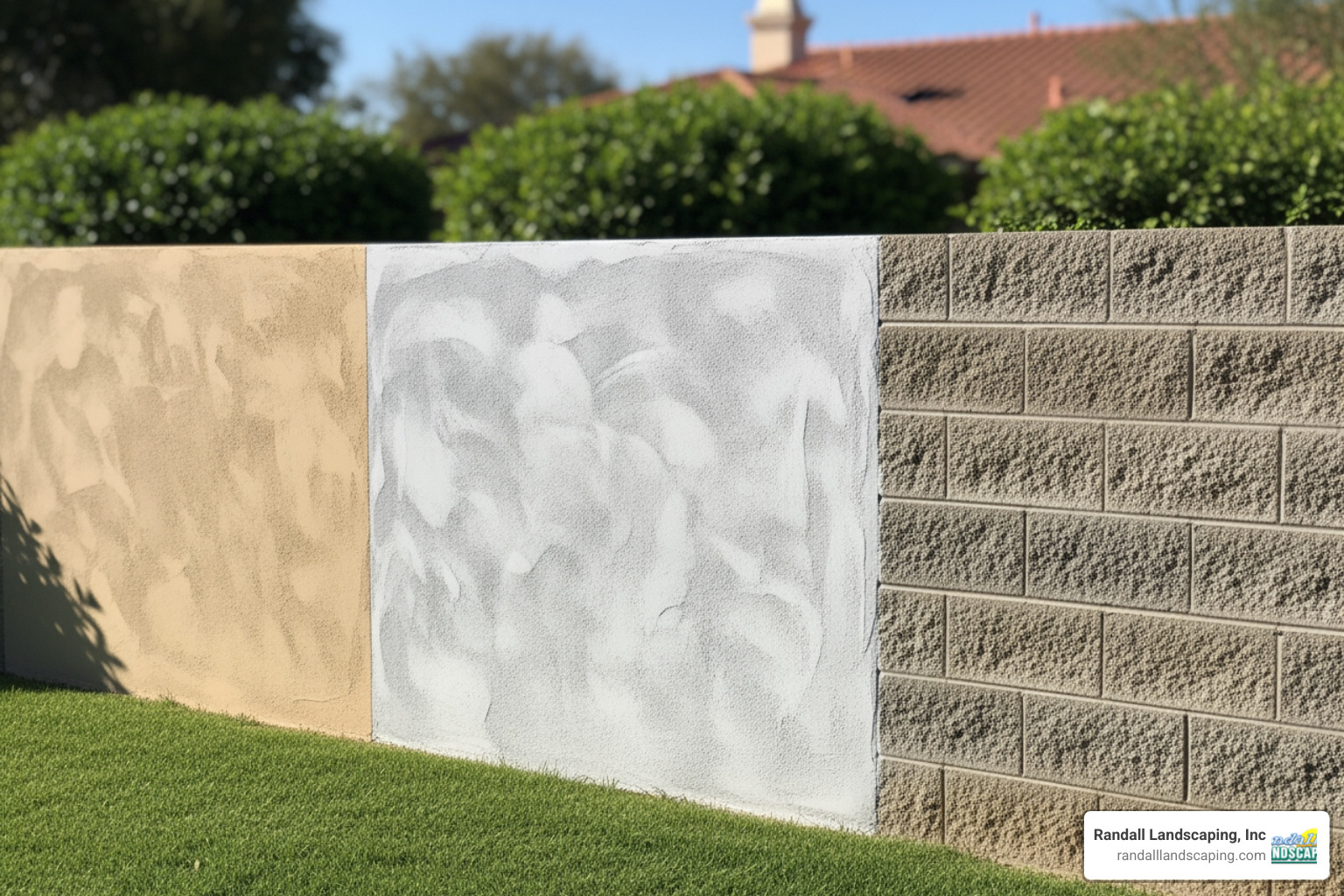
Aesthetic Finishes for Your Wall
You don’t have to settle for plain gray. Consider these finishes:
- Painting: A cost-effective way to match your home’s décor. Use a breathable, exterior-grade masonry paint.
- Sealing: A clear sealer protects against moisture and staining while preserving the natural look. See aesthetic options for walls for ideas.
- Stucco: Provides a smooth or textured finish that can be tinted to any color, completely changing the wall’s appearance.
- Veneer: Applying thin stone or brick over the blocks gives a classic, high-end look with the strength of a block core.
Maintenance and Common Issues
Cinder block walls are low-maintenance but benefit from occasional attention.
- Regular Inspection: Annually check for cracks, crumbling mortar, or shifting.
- Cleaning: Periodically clean with a stiff brush and mild detergent. Use a power washer on a low setting to avoid damaging mortar.
- Resealing: Reapply a masonry sealer every few years to maintain protection.
- Mortar Cracks: Small hairline cracks are normal. Address larger cracks by repointing (chipping out old mortar and applying new). If you see major issues, it may be time to repair retaining walls.
- Efflorescence: This harmless white powder is caused by salts leaching from the masonry. It can be cleaned with a stiff brush and a diluted acid cleaner (use with caution).
A Note on Retaining Soil: Drainage and Backfilling
It’s vital to know that a freestanding cinder block wall is not a retaining wall. A freestanding wall supports its own weight, while a retaining wall is engineered to hold back soil and manage hydrostatic (water) pressure. Retaining walls require extensive drainage systems like weep holes and perforated pipes, which freestanding walls typically do not. However, ensuring good drainage away from your freestanding wall’s footing is still crucial to prevent water damage, especially in our freeze-thaw climate. When backfilling the trench, use well-draining material like gravel and compact it in layers. For projects that do retain soil, specialized solutions like helical anchors retaining wall are often necessary.
Cost of a Cinder Block Wall: What to Expect
The cost of a freestanding cinder block wall varies based on size, location, and finishes. All prices mentioned here are averages based on internet sources and do not reflect actual costs for Randall Landscaping. For a custom quote, please contact us directly.
- Material Costs: Cinder blocks average $2-$3 per unit but can reach $8+ for specialty types. An 80-lb bag of mortar ($8-$30) lays about 12-14 blocks. Don’t forget costs for rebar, footing concrete, and gravel.
- Labor Costs: Hiring a professional mason is a significant cost, reflecting the skill and precision needed for a durable wall.
- Overall Project Cost: A 10×6-foot wall can range from $200 to $1,200+, with complex designs or premium finishes like stone veneer pushing costs to $3,000 or significantly higher.
Here’s a general comparison with other hardscaping walls:
| Wall Type | Average Cost (per linear foot, installed) | Key Benefits |
|---|---|---|
| Cinder Block Wall | $20 – $60+ | Durable, strong, customizable finish, cost-effective |
| Natural Stone Wall | $80 – $240+ | Premium aesthetic, unique, long-lasting |
| Modular Block Wall | $40 – $120+ | Interlocking, various styles, often mortar-free |
For a full overview of wall repair, see our complete retaining wall repair guide.
Frequently Asked Questions about Cinder Block Walls
Does a freestanding cinder block wall need a foundation?
Yes, a foundation is non-negotiable. A freestanding cinder block wall requires a poured concrete footing at least twice the wall’s width (e.g., a 16-inch wide footing for an 8-inch wall). This footing distributes the wall’s weight for stability and must extend below the frost line (often 3-4 feet deep in New England) to prevent damage from frost heave. Without a proper footing, the wall will shift, crack, and fail.
How strong is a cinder block wall?
A properly built cinder block wall is incredibly strong. Individual blocks have a high compressive strength of at least 1,900 pounds per square inch (PSI). When combined into a wall system with a concrete footing, vertical rebar, and grout-filled cores, the structure becomes exceptionally durable and resistant to pressure. Reinforcement is key; while a short garden border might be unreinforced, any wall of significant height needs this steel “skeleton” to provide strength and longevity. For more on the process, see this guide from wikiHow on How to Build a Cinder Block Wall (with Pictures).
Can I build a cinder block wall myself?
Yes, but it’s an advanced DIY project, not a casual weekend task. The work is physically demanding, involving heavy lifting and mixing concrete. Precision is critical—an unlevel first course will result in a crooked wall. A short, simple garden wall is feasible for a skilled DIYer. However, for walls over 4 feet tall, complex designs, or if you have any structural concerns, hiring a professional is the safest bet. Mistakes at this scale are difficult and expensive to fix. Our Retaining Walls Builders Hiring Guide can help you find a qualified pro.
Conclusion: Is This a DIY Project or Time to Call a Pro?
Building a freestanding cinder block wall is a rewarding project, but it’s important to be realistic about its demands. Before you start, honestly assess the project’s scope.
Consider the project’s complexity, height, and time commitment. A simple, low garden wall is a manageable DIY challenge. However, walls over 4 feet tall, curved designs, or projects on a tight timeline often require professional expertise due to structural demands and local building codes.
In the Merrimack Valley and Southern New Hampshire, our harsh freeze-thaw cycles demand professional know-how. An improperly built wall may look fine initially but can quickly fail due to frost heave and water damage. Professionals understand local conditions and build walls to last.
Hiring a professional is an investment in guaranteed quality and reliability. You get an experienced team with the right tools to ensure your wall is built correctly and will withstand decades of New England weather—and you get your weekends back!
At Randall Landscaping, we’ve been building hardscape features since 2006 throughout Amesbury, Andover, Atkinson, Boxford, Dracut, Georgetown, North Andover, North Reading, Pelham, Salem, Windham, Methuen, and Lawrence. Our team understands the technical requirements and aesthetic possibilities for your freestanding cinder block wall. We deliver quality work with 100% reliability, ensuring your project is done right, on time, and built to last.
For expert hardscaping and retaining wall construction, contact us today!