
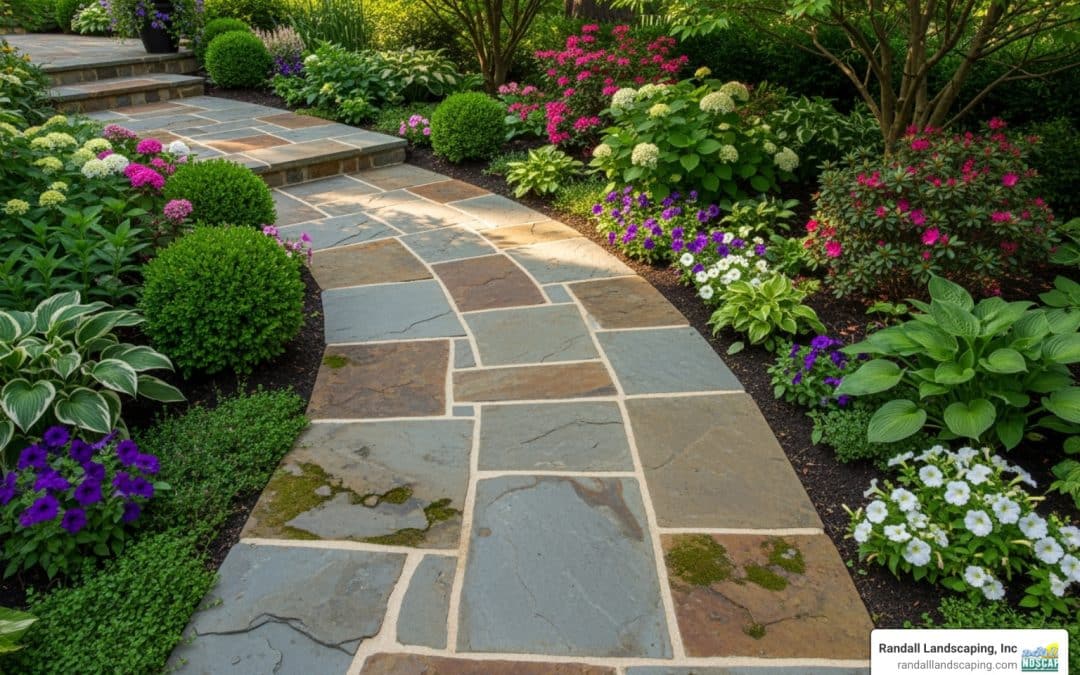
Why Flagstone Walkways Transform Your Property’s Appeal
How to install a flagstone walkway with mortar is a rewarding hardscaping project that creates a durable, professional-looking path to your home. The mortar-set method offers superior stability and longevity compared to dry-laid alternatives.
Quick Overview: Mortar-Set Flagstone Installation
- Excavate 8+ inches deep for proper base depth
- Install base with 4 inches compacted gravel + 4-inch concrete slab
- Apply mortar in 1-inch bed, working in small sections
- Set stones with rubber mallet, maintaining 3/4-inch joints
- Grout joints and allow 3-4 days curing time
Mortared flagstone walkways cost between $20-$60 per square foot installed (based on internet data averages, not Randall Landscaping pricing). While more expensive than dry-laid methods, the investment pays off through decades of maintenance-free durability.
The research shows that “mortared flagstone installations offer years of maintenance-free use” and provide better weed prevention than sand-based alternatives. Unlike dry-laid walkways that can shift with freeze-thaw cycles, mortar-set installations create a permanent, stable surface that handles New England’s harsh weather conditions.
I’m Tommy Randall, and I’ve been installing flagstone walkways with mortar for nearly two decades at Randall Landscaping. My experience has taught me that proper base preparation and attention to drainage details make the difference between a walkway that lasts 5 years versus 50 years.
Know your how to install a flagstone walkway with mortar terms:
- how to install a bluestone walkway
- how to install crushed gravel walkway
- decomposed granite walkway installation
Why Choose a Mortar-Set Flagstone Walkway?
When you’re planning how to install a flagstone walkway with mortar, you’re making a smart choice for long-term durability. Here in the Merrimack Valley and Southern New Hampshire, our harsh freeze-thaw cycles can wreak havoc on walkways that aren’t built to last.
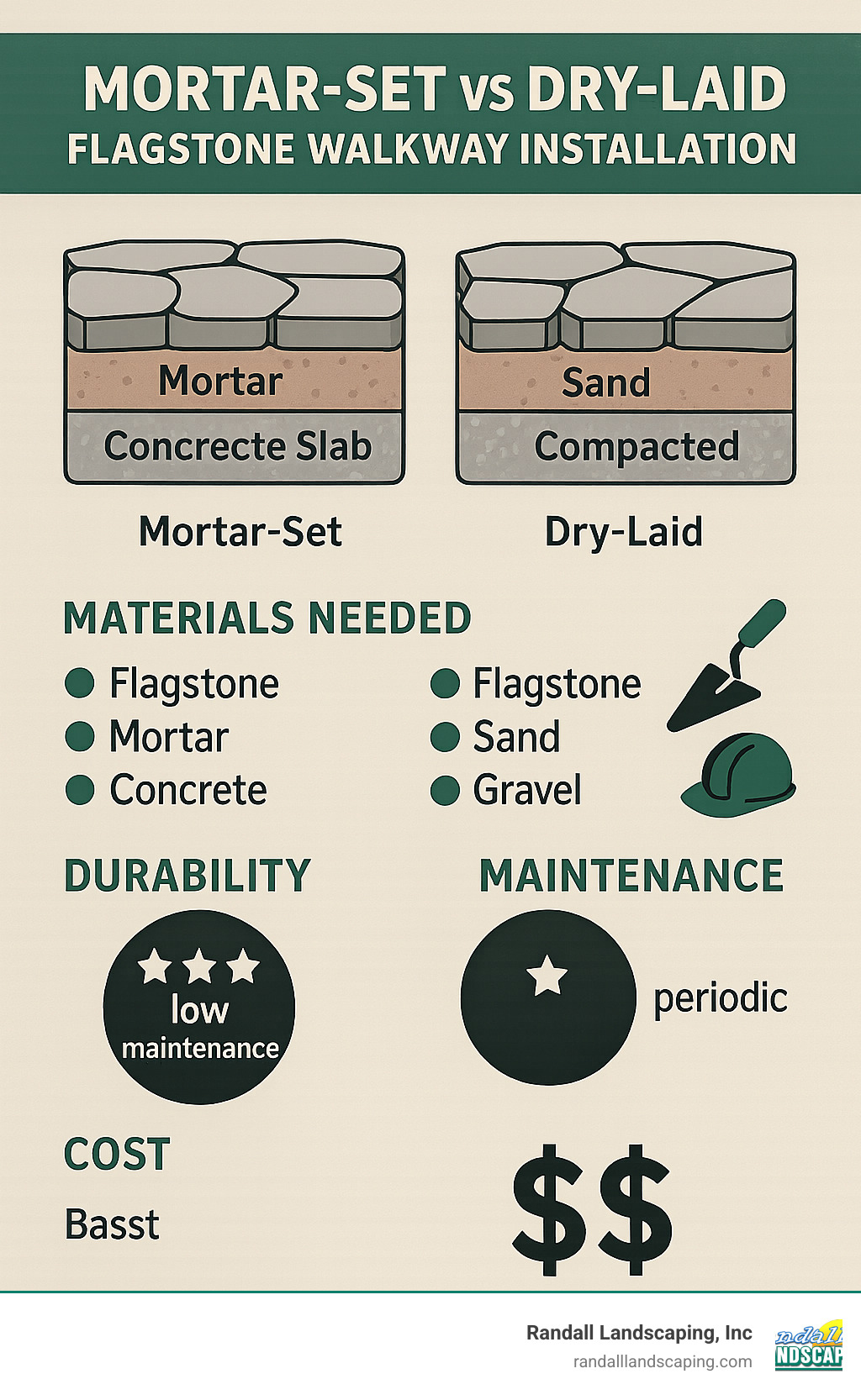
The biggest advantage of a mortar-set flagstone walkway is its rock-solid permanence. Unlike dry-laid alternatives that use sand or polymeric sand between joints, mortar creates an unbreakable bond. Your stones won’t shift during winter’s freeze-thaw cycles, and you won’t be pulling weeds from between the stones come spring.
Think of it this way: a dry-laid walkway is like a puzzle held together with hope, while a mortar-set walkway is like that same puzzle glued permanently in place. The mortar method gives you years of maintenance-free use and creates that formal, polished look that really makes your home’s entrance shine.
| Feature | Mortar-Set Walkway | Dry-Laid Walkway |
|---|---|---|
| Durability | Excellent; permanent, rigid surface; resists shifting and cracking. | Good; can be prone to shifting, settling, and weed growth over time. |
| Maintenance | Low; prevents weed growth in joints completely. | Moderate to High; requires refilling joints with sand; prone to weeds. |
| Cost | Higher upfront cost (average $15-$60 per sq ft installed, based on internet data). | Lower upfront cost (average $8-$25 per sq ft installed, based on internet data). |
| Installation | Intermediate to Advanced; requires concrete work, precise mortar application. | Beginner to Intermediate; simpler base, less precise setting. |
| Aesthetic | Formal, clean, polished look; consistent joint lines. | Natural, rustic, informal look; can accommodate irregular stone shapes. |
The weed prevention alone makes mortar-set worth considering. With dry-laid methods, even polymeric sand eventually allows weeds to sprout through. Mortar completely seals those joints, creating a solid surface that stays clean year after year.
The upfront investment is higher, but you’re looking at decades of reliable service versus having to redo sections of a dry-laid walkway every few years. Some of my mortar-set walkways from the 1990s still look fantastic today – that’s the kind of longevity you get with proper installation.
If you prefer the natural look of grass joints or want a more rustic feel, dry-laid might suit your style better. But for maximum durability and that crisp, formal appearance, mortar-set is hard to beat.
More info about hardscaping options.
Essential Tools and Materials for Your Project
Before diving into how to install a flagstone walkway with mortar, let’s talk about getting properly equipped. Think of this like prepping for a camping trip – you don’t want to find you’re missing the tent stakes when it’s getting dark!
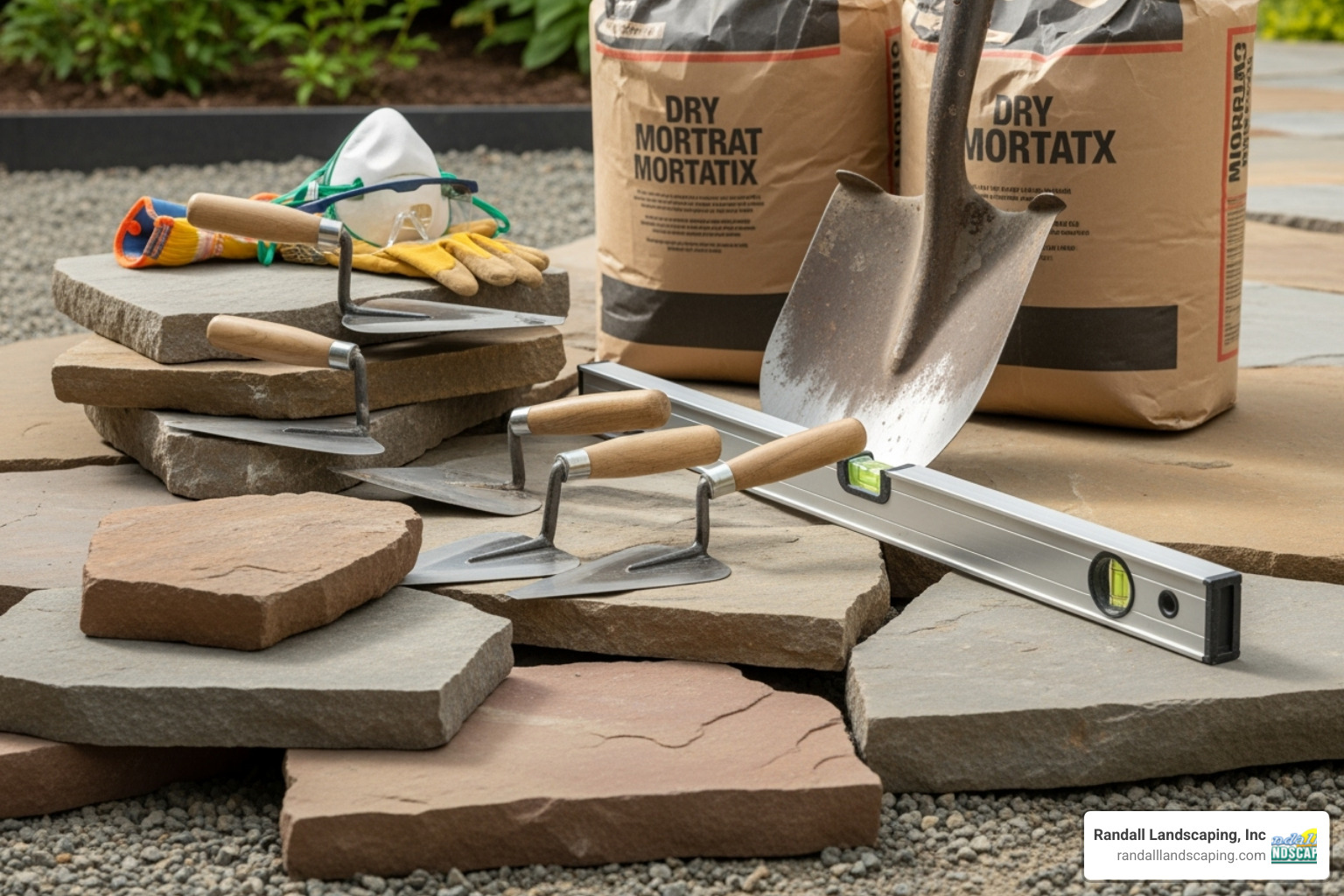
Having everything ready before you start makes the difference between a smooth project and a frustrating weekend. Trust me, there’s nothing worse than having your mortar start setting while you’re running to the hardware store for a missing tool.
Materials List
Flagstone is your star player here. You’ll want pieces between 1 to 2 inches thick for walkways. Thicker stones work better for high-traffic areas, but they’re also heavier and more expensive. Order about 5 percent extra – stones have a way of breaking at the worst possible moment.
Your crushed gravel base needs to be 3/4-inch minus or processed gravel. This isn’t just any old gravel – the mix of sizes helps everything lock together when compacted. Skip the stone dust for this layer since it holds water and can cause frost problems in our New England winters.
Concrete mix forms your 4-inch foundation slab. You can buy pre-mixed bags for smaller projects, but mixing your own becomes more economical for longer walkways. Type S mortar provides the strong bond between your stones and concrete – it’s specifically designed for this kind of masonry work.
Don’t forget mason’s sand for mixing mortar and forming lumber (2x6s work great) to create your concrete forms. Rebar might seem optional, but I always recommend it. That steel reinforcement prevents cracks and makes your walkway bomb-proof against freeze-thaw cycles.
More info about patio design and construction.
Tools You’ll Need
Your shovel and pick maddock handle the dirty work of excavation. A wheelbarrow becomes your best friend for moving materials – your back will thank you later. For compacting that crucial base layer, a hand tamper works fine for smaller walkways, but a plate compactor speeds things up considerably.
A 4-foot level ensures everything stays properly sloped for drainage. Your trowel and rubber mallet work together to set stones perfectly in the mortar bed. When stones need custom shaping, an angle grinder with a diamond blade makes clean, precise cuts that a brick hammer and chisel just can’t match.
Grout floats pack mortar into joints professionally, while 5-gallon buckets handle mixing and cleanup duties. Keep plenty of sponges handy – cleaning excess mortar quickly prevents permanent stains on your beautiful stones.
Safety gear isn’t negotiable. Protective knee pads save your joints during long installation days. Safety glasses and gloves protect against flying chips and harsh mortar. String lines and stakes help lay out perfect curves and straight lines.
The right tools make how to install a flagstone walkway with mortar feel manageable instead of overwhelming. Gather everything first, and you’ll be amazed how smoothly the actual installation goes.
Step-by-Step Guide: How to Install a Flagstone Walkway with Mortar
Now comes the exciting part – changing your vision into reality! Installing a mortar-set flagstone walkway is like building a puzzle, except this one will welcome guests to your home for decades to come. Each step builds on the last, so take your time and enjoy the process.
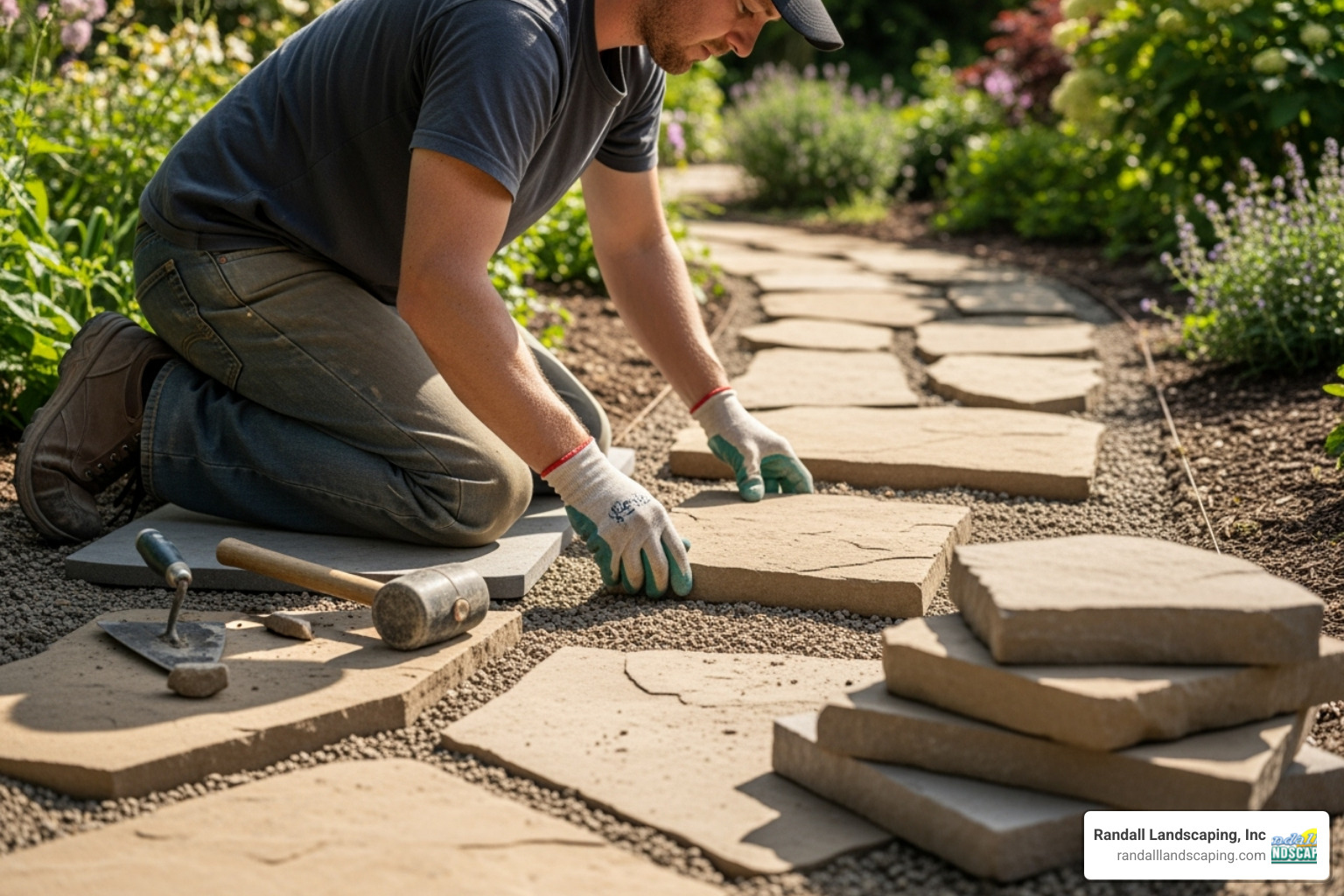
Step 1: Excavation and Base Preparation
Here’s where we lay the groundwork – literally – for your walkway’s success. I can’t stress enough how crucial this foundation work is. Skip corners here, and you’ll pay for it later with cracks and settling.
Start by marking out your walkway’s exact path using stakes and string line. A comfortable width for most walkways is about 3 feet, though you can adjust based on your needs. Want a formal look? Keep those lines straight and consistent. Prefer something more natural? Let a garden hose guide your curves.
Excavation depth is critical – we need to dig deep enough for all our layers. Think of it like making a layer cake. You’ll need room for 4 inches of compacted gravel, a 4-inch concrete slab, 1 inch of mortar, and your flagstones. That means digging at least 8 inches deep, sometimes more depending on your stone thickness.
Don’t forget about drainage slope – this is your secret weapon against water damage. Build in a gentle 1/4-inch drop per foot to keep water moving away from your walkway. Trust me, standing water is your walkway’s worst enemy.
Once you’ve excavated, spread that 4-inch layer of crushed gravel evenly across the area. Here’s where patience pays off: compact this base thoroughly using a reliable hand tamper or plate compactor. Work in 2-inch layers, dampening the gravel slightly to help it pack down tight. A well-compacted base prevents future headaches with settling and shifting.
For homeowners who’d rather skip the heavy lifting, our team at Randall Landscaping handles professional walkway installation throughout the Merrimack Valley and Southern New Hampshire.
Step 2: Pouring the Concrete Foundation
This concrete slab is what transforms your walkway from “pretty good” to “built to last a lifetime.” Think of it as the backbone of your entire project.
Set up your forming lumber first – those 2×6 boards will contain your concrete pour. Secure them with stakes and double-check that they’re level (or properly sloped for drainage). Getting this right now saves you frustration later.
When you pour your concrete, work methodically to distribute it evenly within the forms. If you’re using rebar reinforcement (which I highly recommend), lift it into position as you pour. This steel skeleton dramatically increases your concrete’s strength and prevents cracking.
Screed the surface using a straight 2×4, dragging it across your forms to remove excess concrete and create an even surface. Don’t worry about making it perfectly smooth – you actually want a slightly rough float finish that gives your mortar something to grip onto. A light pass with a coarse broom creates the perfect texture.
Now comes the hardest part: waiting. Allow 24-48 hours minimum for curing before moving to the next step. I know it’s tempting to rush, but concrete gains strength over time. For the best results, wait 3-4 days if weather permits.
Step 3: How to Prepare and Apply the Mortar Bed
This mortar bed is where the magic happens – it’s the glue that bonds your beautiful flagstones to that solid concrete foundation. Getting the consistency right is key to success.
Mix your Type S mortar to a fairly stiff consistency. If you’re mixing from scratch, use about one part cement to two-and-a-half parts sand, adding water gradually. The mortar should hold its shape when troweled but still be workable – think of thick cake frosting rather than soup.
Here’s a pro tip I’ve learned over the years: work in small sections. Mortar doesn’t wait around – it starts setting whether you’re ready or not. Apply only as much as you can cover with stones in 15-20 minutes. This keeps your mortar fresh and workable.
Apply about a 1-inch thick mortar bed using your trowel, spreading it evenly across your working section. You can screed this layer too if you want extra precision, but don’t spend too much time perfecting it – you’ll adjust for level when setting the stones.
Step 4: Setting and Shaping the Flagstones
This is where your walkway starts looking like the vision you had in mind. It’s puzzle-solving time, and honestly, it’s one of my favorite parts of the whole process.
Before you start setting stones in mortar, lay them out dry first. This “stone layout puzzle” lets you find the perfect arrangement without the pressure of working mortar. Look for pleasing patterns and aim for consistent 3/4-inch joint spacing. Avoid long continuous lines between stones – they look unnatural and can create weak spots.
Clean each stone before setting it. A quick rinse and scrub removes dirt and debris that could interfere with bonding. For an extra-strong connection, brush a thin cement slurry (cement mixed with water to paint consistency) on the stone’s back just before placing it.
Setting stones requires a gentle but firm touch. Place each stone carefully into the mortar bed, then use your rubber mallet to tap it into position. Never slide stones once they touch the mortar – this breaks the bond you’re trying to create. Use your 4-foot level constantly, checking each stone against its neighbors and maintaining that crucial drainage slope.
Cutting flagstone is inevitable, and you have options. For rough breaks and natural-looking edges, score the stone with a brick chisel and hammer, then snap it over a pipe or another stone. When you need precise cuts, an angle grinder with diamond blade gives you clean, professional results. Always wear safety glasses and gloves when cutting – stone chips fly everywhere.
Keep those joint widths consistent as you work. That 3/4-inch spacing gives you room for proper grouting while maintaining the natural flagstone look. Consistency here makes the difference between “DIY project” and “professional installation.”
Check out our ideas for custom paver patios if you’re planning additional hardscaping projects to complement your new walkway.
Finishing Touches: Grouting, Curing, and Maintenance
You’re in the home stretch now! This is where your how to install a flagstone walkway with mortar project really comes together. The grouting phase transforms individual stones into a unified, professional-looking walkway that’ll make your neighbors stop and admire your handiwork.

How to Grout a Flagstone Walkway Installed with Mortar
Think of grouting as the final brushstroke on a masterpiece. This step seals your joints against water penetration and gives your walkway that clean, finished appearance that separates amateur work from professional results.
Start by mixing a fresh batch of mortar specifically for grouting. This grout mix should be slightly looser than your setting mortar but still firm enough to hold its shape when you press it into the joints. Some homeowners like adding color additives to match or complement their flagstone – it’s a nice touch that can really make the walkway pop.
You have several options for applying the grout. A grout float works wonderfully for pushing mortar deep into the joints, ensuring complete coverage. Some folks prefer a grout bag (think pastry bag for masonry) for more precise application, especially with irregular joint widths. Whatever tool you choose, the key is packing joints fully without leaving any air pockets.
Here’s where timing becomes critical: clean excess mortar immediately after grouting each small section. Don’t let it sit and harden on your beautiful flagstones! Use a damp sponge (not dripping wet) to gently wipe away any mortar smears from the stone surface. Rinse your sponge frequently in clean water to prevent spreading mortar around.
The damp sponge technique prevents that chalky white haze that can permanently stain your flagstone if left to cure. If you do end up with some haze despite your best efforts, don’t panic – a mild acid wash can remove it after curing, but always test on a hidden area first.
For homeowners who want that perfect, professional finish without the learning curve, our team at Randall Landscaping provides expert patio paver installation services and handles every detail of flagstone projects throughout the Merrimack Valley.
Curing Times and Long-Term Care
Patience pays off big time during the curing process. I know it’s tempting to show off your new walkway right away, but proper curing is what separates a walkway that lasts 5 years from one that lasts 50 years.
Your mortar needs a minimum of 3-4 days to set properly before anyone walks on it. During this time, keep pets, kids, and that enthusiastic neighbor who wants to inspect your work off the walkway. The mortar continues gaining strength over the next 28 days, reaching full strength after about a month.
Consider sealing your flagstone once everything has cured. While not absolutely necessary, a quality stone sealant provides excellent protection against our harsh New England winters. The sealant protects both the flagstone and grout from water penetration, freeze-thaw damage, and staining. Apply it with a roller in thin, even coats according to the manufacturer’s instructions.
Long-term maintenance is surprisingly simple. Regular sweeping removes debris that could cause staining or wear over time. Periodically inspect for cracks in the mortar joints – catching small issues early prevents bigger problems down the road.
One important warning: avoid de-icing salts at all costs. Rock salt and similar chemicals can seriously damage both flagstone and mortar, causing pitting, discoloration, and premature deterioration. Sand or specialized ice-melt products designed for natural stone are much safer alternatives for winter maintenance.
With proper installation and minimal maintenance, your mortar-set flagstone walkway will provide decades of beauty and functionality – a true investment in your home’s curb appeal and your daily enjoyment.
Common Mistakes to Avoid During Installation
After nearly two decades of installing flagstone walkways, I’ve seen just about every mistake you can imagine. The good news? Most of these pitfalls are completely avoidable once you know what to watch out for. Learning how to install a flagstone walkway with mortar successfully means understanding where things commonly go wrong.
The biggest mistake I see homeowners make is improper base depth. I can’t tell you how many times someone has called us to fix a walkway that’s cracking or settling because they only excavated 4 or 5 inches deep. Your walkway needs a solid foundation to last decades, and that means at least 8 inches of excavation for the full base system. Skimping here is like building a house on sand – it might look good initially, but problems will surface quickly.
Forgetting drainage slope is another classic error that causes major headaches down the road. Without that critical 1/4-inch per foot slope, water pools on your beautiful new walkway. This leads to slippery surfaces in winter, unsightly staining, and worst of all, freeze-thaw damage that can crack your mortar joints. Water always wins in the end if you don’t give it somewhere to go.
Many DIYers struggle with inconsistent joint spacing because they think “natural” means “random.” While flagstone does offer a wonderfully organic look, wildly varying joint widths – some 1/4-inch, others 2 inches – creates an amateurish appearance. Even with irregular stones, aim for that consistent 3/4-inch spacing we discussed earlier.
Here’s a mistake that catches people off guard: mortar drying too quickly. Enthusiasm gets the better of folks, and they spread mortar over a large area, thinking they’ll work faster. Then reality hits – especially on a warm day – and suddenly they’re trying to set stones in mortar that’s already stiffening up. Work in small sections, about what you can cover in 15-20 minutes.
Not cleaning stones before setting seems like a small detail, but dirt or dust on the back of your flagstones prevents proper bonding. I’ve pulled up stones years later that were barely attached because someone skipped this simple step. A quick rinse and brush takes two minutes and ensures a solid connection.
The mistake that breaks my heart is leaving mortar stains on the surface. Once that mortar cures on your beautiful flagstone, removing it becomes a nightmare involving acid washes and potentially permanent damage. Clean as you go with a damp sponge – it’s so much easier than trying to fix it later.
Not tamping the base enough is another foundation issue that comes back to haunt you. A loosely compacted gravel base will settle over time, taking your concrete slab and flagstones with it. Take the time to compact thoroughly in 2-inch lifts. Your future self will thank you.
Finally, many people make the mistake of sliding stones during setting. When you place a flagstone into the mortar bed, resist the urge to slide it into the perfect position. Push it straight down and use your rubber mallet for fine adjustments. Sliding breaks the bond between mortar and concrete, creating weak spots that can fail over time.
The beauty of knowing these common mistakes is that they’re all preventable with patience and proper technique. Take your time, follow the steps we’ve outlined, and you’ll create a walkway that rivals any professional installation.
Conclusion
Learning how to install a flagstone walkway with mortar is one of those satisfying DIY projects that gets better with age. It’s a lot of work upfront – all that digging, mixing mortar, and careful stone-setting can leave you pretty tired. But every time you walk up that beautiful, solid path to your front door, you’ll feel that sense of pride that comes from creating something permanent with your own hands.
The mortar-set method we’ve covered gives you a walkway that’s built to last. While your neighbors might be pulling weeds from their sand-set paths or dealing with shifting stones after every winter, your mortared flagstone walkway will stay put, looking as good as the day you finished it.
The investment in time and materials pays off through decades of maintenance-free use. No more annual sand replacement, no more battling stubborn weeds growing between stones, and no more uneven surfaces that collect puddles after every rainstorm. That’s the beauty of doing it right the first time.
Of course, not everyone has the time, tools, or desire to tackle a project this involved. For a professionally installed, flawless flagstone walkway in the Merrimack Valley or Southern New Hampshire, trust the experts at Randall Landscaping, Inc. We’ve been perfecting our technique for nearly two decades, and our commitment to quality work and 100% reliability means we handle every detail – from proper drainage slopes to perfect joint spacing.
When you work with professionals, you get the peace of mind that comes with experience. We know how New England’s freeze-thaw cycles affect different installation methods, and we use that knowledge to build walkways that truly stand the test of time.
Ready to transform your landscape? Explore our professional walkway installation services today. Whether you decide to tackle this project yourself or leave it to the pros, you’ll end up with a beautiful flagstone walkway that adds lasting value to your home.