
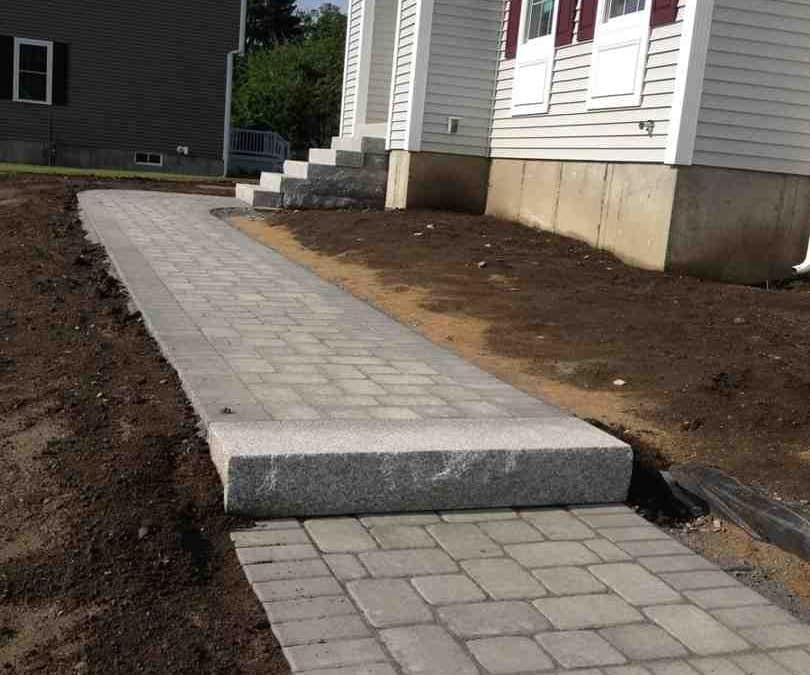
Why Your Walkway Needs a Proper Foundation
A paver base for walkway is the unseen foundation of crushed stone and sand that prevents sinking, shifting, and cracking over time. Here’s what you need to know:
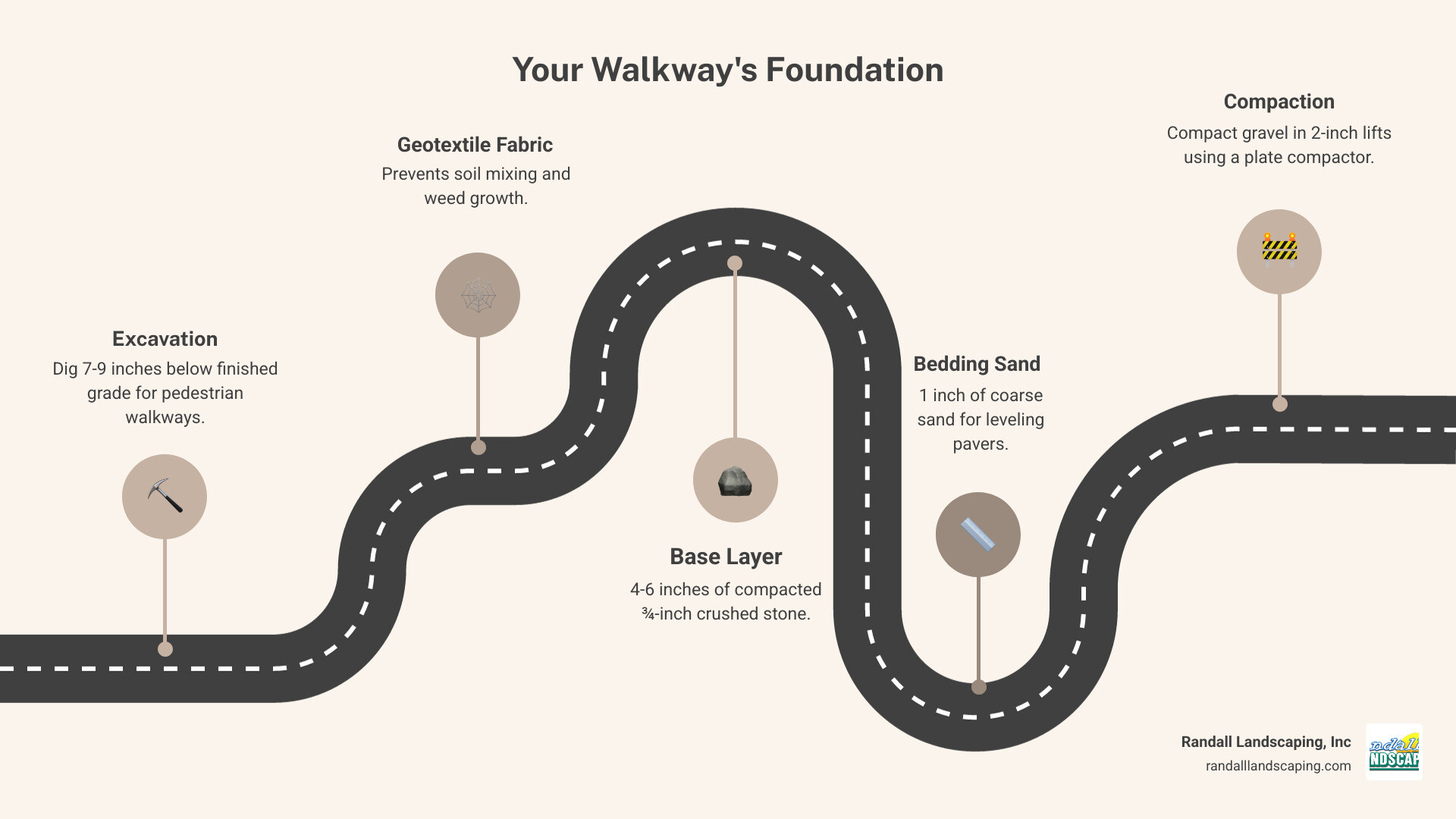
Quick Answer: Essential Components of a Paver Base
- Excavation: Dig 7-9 inches below finished grade for pedestrian walkways
- Geotextile Fabric: Prevents soil mixing and weed growth
- Base Layer: 4-6 inches of compacted ¾-inch crushed stone
- Bedding Sand: 1 inch of coarse sand for leveling
- Compaction: Compact gravel in 2-inch lifts using a plate compactor
As one industry expert puts it: “There’s one primary reason why pavers fail: they don’t have a strong paver base.” Without proper base preparation, even the most beautiful pavers will sink, rotate, and separate within a few seasons.
The difference between a walkway that lasts decades and one that fails in a year is this unseen foundation. A proper paver base provides structural support, manages drainage, and prevents frost heave. Skipping steps here is the most common mistake, leading to uneven surfaces and costly repairs.
I’m Tommy Randall, owner of Randall Landscaping, and I’ve installed professional hardscapes in Massachusetts and New Hampshire since 2006. In my experience, a properly installed paver base for walkway is the single most important factor for a long-lasting investment. Let’s walk through how to build a foundation that will keep your walkway perfect for years.
Similar topics to paver base for walkway:
The Anatomy of a Durable Paver Base
A proper paver base is a multi-layered system designed for stability and drainage. Each layer is crucial for supporting the paver surface and withstanding the elements, much like the foundation of a house. Understanding these components is key to a successful hardscaping project.
Layer 1: The Subgrade (Native Soil)
The subgrade is the native soil your walkway will rest upon. Preparing this natural foundation correctly is critical.
- Subgrade Preparation: First, remove all organic matter (grass, roots) that can decompose and cause settling. Then, compact the subsoil with a plate compactor to create a stable, uniform starting point.
- Soil Types: The soil type in areas like Andover or Salem affects base thickness. Heavy clay soils retain water and may require a thicker base, while sandy soils drain well but need thorough compaction to be stable. Loam is generally a good, stable base.
- Compaction: Use a plate compactor for large areas or a hand tamper for small spaces to achieve a firm, unyielding surface.
- Slope for Drainage: From the start, establish a slope of 1/8” to 1/4” per foot to drain water away from structures. This is crucial for preventing water pooling and damage from freeze-thaw cycles in our New England climate.
Layer 2: Geotextile Fabric
This durable, permeable fabric is a secret weapon for a long-lasting paver base, acting as a separator and stabilizer.
- Weed Prevention: While it offers some weed suppression, its primary roles are structural.
- Soil Separation: Its most critical function is preventing the subsoil and gravel base from mixing. This separation maintains the base’s drainage capacity and structural integrity by stopping gravel from sinking into soft soil or soil from clogging the gravel.
- Stabilization: The fabric also distributes weight more evenly across the subgrade, enhancing stability, which is especially helpful in the clay-rich soils found in the Merrimack Valley.
- Water Permeability: The fabric is permeable, allowing water to pass through while keeping the soil and gravel layers separate.
- Installation Tips: Lay the fabric over the compacted subgrade, overlapping seams by at least 6 inches to create a continuous barrier.
Layer 3: The Base Layer
The base layer is the muscle of the paver base for walkway. Made of crushed stone, it provides the primary structural support and load distribution.
- Structural Support: This layer provides the strength to support pavers and foot traffic. For walkways, a 4-6 inch thick base is recommended. For heavier loads like driveway pavers, this increases to 8-12 inches.
- Crushed Stone or Gravel: We use ¾-inch crushed angular stone (dense-grade aggregate). Its angular pieces interlock when compacted, creating a much more stable foundation than rounded river stone.
- Frost Heave Prevention: In our region, this well-drained layer is vital. It minimizes water retention, which helps mitigate frost heave when water freezes and expands.
- Load Distribution: The compacted base spreads weight from foot traffic over a larger area, preventing concentrated pressure points that cause sinking.
- More info about driveway pavers
Layer 4: The Bedding Layer
This thin, final layer is crucial for creating a perfectly level surface for the pavers.
- Leveling Surface: The bedding layer creates a smooth surface for setting the pavers, filling minor inconsistencies in the base to ensure each paver sits evenly.
- Coarse Sand: We use washed concrete sand, as its coarse, angular grains interlock and drain well. Do not use fine masonry sand, which retains moisture and can shift.
- Screeding: This is the process of leveling the sand to a precise thickness. We use 1-inch screed rails and a straight board to pull across the sand, creating a perfectly flat and sloped surface.
- Uniform Thickness: The bedding layer should be a consistent 1 inch thick.
- Paver Setting: Pavers are placed directly on the screeded sand, which allows for minor adjustments to ensure a tight, uniform finish.
How to Install the Perfect Paver Base for a Walkway

Follow this step-by-step process to create a professional-grade paver base. Precision and proper compaction are key to a lasting installation.
Step 1: Excavation and Layout
Careful planning and execution here will set the stage for success.
- Marking the Area: Mark the walkway area with paint or stakes and string, extending the marks 6 inches beyond the planned edge for better support. Call 811 (Dig Safe) before you dig to locate underground utilities.
- Excavation Depth: For pedestrian walkways, excavate 7 to 9 inches below the final grade. This depth accounts for 4-6 inches of base material, 1 inch of bedding sand, and the height of your pavers (e.g., 2-inch pavers + 1-inch sand + 4-inch base = 7-inch excavation).
- Calculating Depth: Always factor in the paver thickness, the 1-inch bedding layer, and the recommended base layer thickness.
- Walkway Width: A standard walkway is 36 inches wide, but we often recommend 48 inches to allow two people to walk comfortably.
- Slope: Use your string lines to establish a consistent slope of 1/8” to 1/4” per foot, directing water away from structures. This is critical for managing runoff in areas like Georgetown or Methuen.
- Subsoil Compaction: After excavating, thoroughly compact the exposed subsoil with a plate compactor, making several passes.
Step 2: Laying Geotextile Fabric
This small investment yields big returns in your walkway’s longevity.
- Covering the Subgrade: Unroll the geotextile fabric to completely cover the excavated area.
- Overlapping Seams: Overlap seams by at least 6 inches to ensure continuous coverage.
- Securing the Fabric: Use landscape pins or a few shovelfuls of base material to hold the fabric in place.
- Preventing Material Mixing: This barrier is critical for keeping soil out of your gravel base, which preserves its drainage and strength.
Step 3: Installing and Compacting the Base Material
This is the most critical step for a durable walkway.
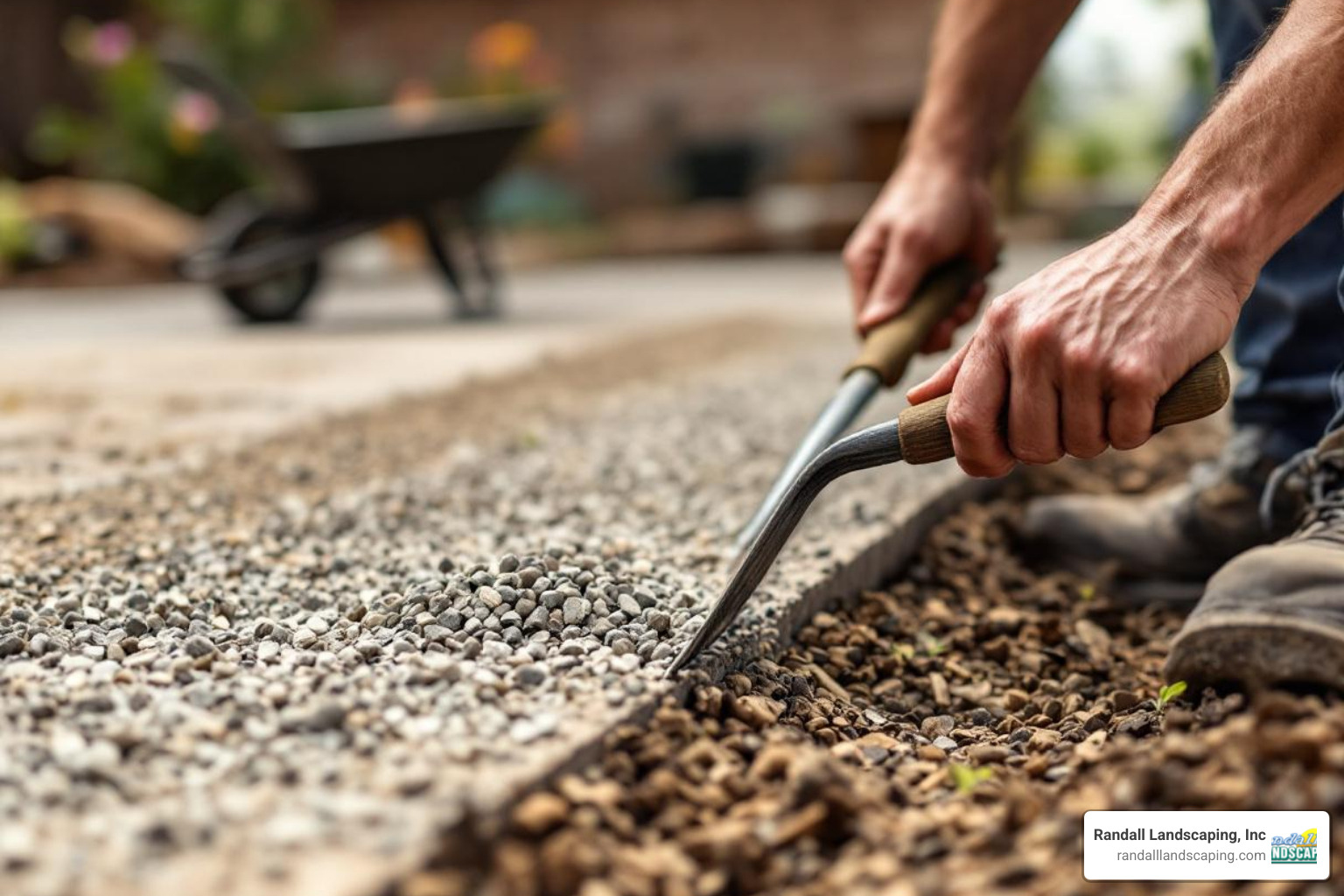
- Base Material Types: We use ¾-inch crushed angular stone (dense-grade aggregate). For areas needing maximum drainage, an open-graded base (uniformly sized stone with no fines) is an option.
- Spreading in Lifts (2-3 inch layers): Spread the base material in 2 to 3-inch layers, or “lifts.” Compacting in thin lifts is far more effective than trying to compact a thick layer all at once.
- Plate Compactor Use: Use a plate compactor (at least 5,000 lbs of force) to compact each lift. Make several overlapping passes over the entire area. A hand tamper can be used for tight spots, but it is less effective.
- Achieving Proper Compaction: The base is properly compacted when it feels solid underfoot with no give. Lightly wetting the stone can help. Continue adding and compacting lifts until you reach the desired 4-6 inch total thickness.
- Paver walkway installation services
Step 4: Adding and Screeding the Bedding Sand
This step creates the perfect canvas for your pavers.
- Bedding Sand Purpose: This 1-inch sand layer creates the final leveling surface for the pavers, allowing for minor adjustments and providing a cushion between the pavers and the gravel base.
- Coarse Concrete Sand: Use coarse, washed concrete sand for its stability and drainage. Avoid fine play sand or masonry sand.
- 1-inch Thickness: A consistent 1-inch thickness is ideal for leveling without becoming unstable.
- Screed Rails: Place two parallel 1-inch diameter pipes on the compacted base to act as guides.
- Leveling the Sand (Screeding): Spread sand between the screed rails. Drag a straight 2×4 or screed board across the rails to level the sand, creating a flat, sloped surface. Remove the rails and fill the voids, smoothing the sand with a trowel.
- Using a screed board
Key Decisions for Your Paver Base
A few key decisions about materials and thickness will impact your project’s performance. Considering your climate and soil is crucial for a walkway that lasts.
How Thick Should a Paver Base Be?
Base thickness depends on use and soil conditions. Our goal is to recommend a base that ensures stability and longevity in our New England climate.
- Walkway Thickness: For residential walkways with only foot traffic, a compacted base of 4 to 6 inches is sufficient.
- Driveway Thickness: For driveways supporting vehicles, we install a much thicker base, typically 8 to 12 inches, to distribute the weight and prevent rutting.
- Pedestrian Traffic: Lighter loads from people walking require a thinner base than areas with vehicle traffic.
- Vehicular Loads: Driveways must withstand heavy car and truck loads, making a deep, compacted base non-negotiable.
- Soil Conditions: Soil type influences base thickness. Soft or clay-rich soils, common in areas like Dracut or Pelham, may require a thicker base (closer to 6 inches) to compensate for instability. Firmer, well-draining soils might only need a 4-inch base, which is the recommended minimum for walkways.
Traditional vs. Open-Graded Base Materials
You’ll choose between two primary base types: traditional (dense-graded) and open-graded.
| Feature | Traditional (Dense-Graded) Base | Open-Graded (Permeable) Base |
|---|---|---|
| Material Composition | Mix of crushed stone/gravel with fine particles (stone dust) | Uniformly sized crushed stone/gravel, virtually no fine particles |
| Compaction | Compacts very tightly due to fines filling voids | Relies on angular stone interlocking; less dense than traditional |
| Drainage | Good drainage, but can retain some water due to fines | Excellent, rapid drainage; highly permeable |
| Best Use Cases | Standard walkways, patios, driveways; provides solid structural support | Driveways, areas with high water runoff, freeze-thaw climates, permeable paver systems |
- Traditional Base Material: This is the most common choice for a paver base for walkway. It’s a mix of crushed stone and fine particles (“fines”) that compacts into a dense, strong base. While it offers excellent structural support, the fines can retain some moisture, making proper slope for drainage essential. A 4-inch base of 3/4-inch quarry process is a standard choice.
- Open-Graded Base Material: This material consists of uniformly sized crushed stone with no fine particles, offering superior drainage. It’s ideal for permeable systems or areas with heavy rainfall and severe freeze-thaw cycles. The interlocking stones provide stability, though it may require geotextile fabric on both sides to prevent other materials from mixing in.
Climate Considerations for Your Paver Base for Walkway
Our location in the Merrimack Valley and Southern New Hampshire means we must account for freeze-thaw cycles when installing a paver base for walkway.
- Freeze-Thaw Cycles: In our region, water freezes and expands in the soil, causing the ground to heave. This cycle can crack an improperly installed walkway. A well-drained base is the best defense.
- Deeper Base in Cold Climates: To combat frost heave, we recommend a deeper base (closer to 6 inches for walkways) in cold climates. This provides better insulation and drainage, minimizing the water that can freeze beneath the pavers.
- Drainage Importance: Effective drainage is always crucial, but it’s amplified in cold climates to prevent water retention that leads to frost heave. A proper slope and permeable materials are key.
- Frost Heave: A proper paver base directly addresses this issue. The granular material holds little water and drains it away, significantly reducing the risk of frost heave damage.
Frequently Asked Questions about Paver Walkway Bases
We often get questions from homeowners in Andover, Windham, and beyond about the best way to ensure their paver walkways last. Here are some of the most common inquiries we receive:
How do I calculate the amount of base material I need?
To calculate your material needs, use this formula: (Length in ft x Width in ft x Depth in ft) / 27 = Cubic Yards. Remember to convert your depth from inches to feet (e.g., 6 inches = 0.5 feet). For example, a 30 ft x 4 ft walkway with a 6-inch base needs: (30 x 4 x 0.5) / 27 = 2.22 cubic yards of base material. You’ll need to do a separate calculation for the 1-inch sand layer. Always add 10-15% to account for compaction and waste. For an easier option, you can use an online paver calculator.
What is the best material for a paver base?
The best and most common material for a paver base for walkway projects in our area is a ¾-inch crushed angular stone, often called dense-grade aggregate, quarry process, or road base. This material is a mix of crushed rock and fine particles that, when compacted, interlocks tightly to create an incredibly solid and stable foundation. It provides excellent structural support, distributes weight evenly, and facilitates good drainage, all critical for a long-lasting custom paver patio or walkway.
We source our materials from local suppliers in Merrimack, Wilmington, and other nearby towns, ensuring quality and consistent availability for our projects. You can find this type of material at any reputable landscape material center.
Can I use just sand for a paver base?
No, you should never use only sand for a paver base. This is a common misconception, and it’s one of the quickest ways to ensure your beautiful paver walkway fails prematurely. Sand alone does not provide the structural support needed to withstand foot traffic or environmental pressures. Over time, sand will shift, settle unevenly, and wash away, causing pavers to sink, become uneven, and create tripping hazards. A compacted gravel base is absolutely essential for long-term stability, load distribution, and drainage. The sand layer is merely a thin bedding course, not the primary structural component.
Get a Professional Foundation for Your Walkway
Building the perfect paver base for a walkway is a labor-intensive job that requires precision and the right equipment. While a rewarding DIY project, an improperly installed base can lead to costly repairs and frustration down the line. We’ve seen countless instances where homeowners tried to cut corners, only to face extensive repairs within a few short years.
For a flawless and durable walkway in the Merrimack Valley and Southern New Hampshire, trust the experts at Randall Landscaping, Inc. We bring nearly two decades of experience to every project, ensuring every layer of your paver base is perfectly installed, compacted, and graded for a beautiful, long-lasting result that stands up to our challenging climate. We pride ourselves on quality work and 100% reliability, focusing on customer satisfaction from initial design to final installation.
Contact us today to learn more about our professional walkway installation services and let us help you create the walkway of your dreams!