
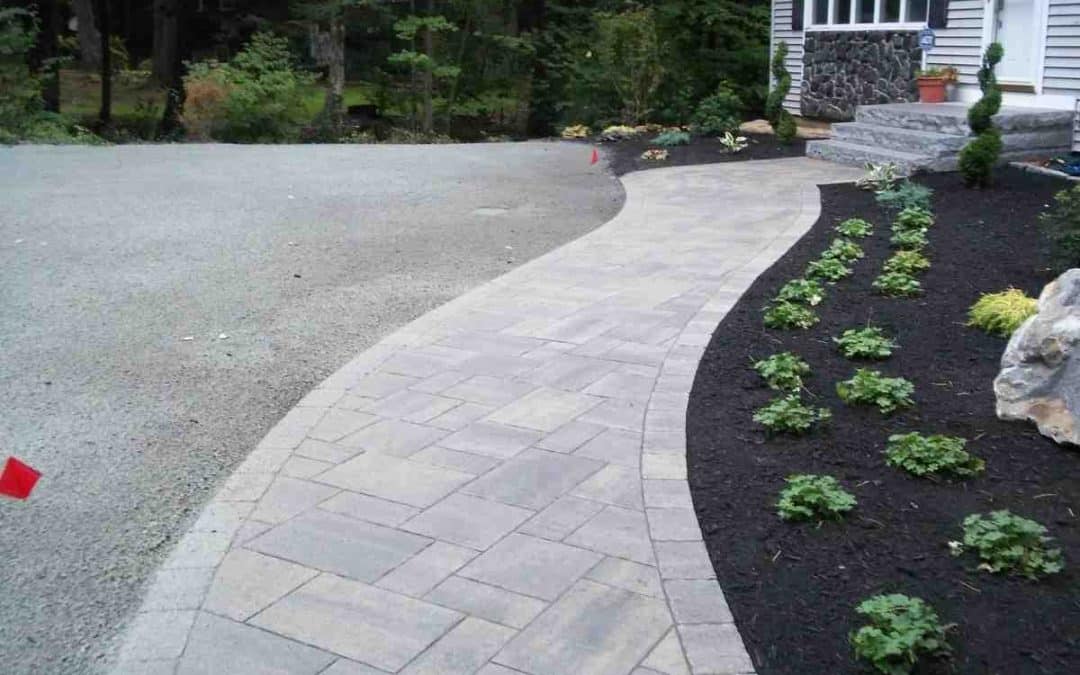
Transform Your Landscape with Professional Care
Mulch and edging services are essential landscape maintenance solutions that improve your property’s appearance while providing critical protection for plants and soil. If you’re looking for professional mulch and edging services, here’s what you need to know:
- What they include: Bed preparation, weed removal, precise edging installation, mulch selection and application (typically 2-3 inches deep)
- Average cost: $40-150 per cubic yard of mulch installed (varies by material type and property size)
- Benefits: Weed suppression, moisture retention, temperature regulation, defined borders, improved curb appeal
- Professional advantage: Even application, proper depth, clean edges, time savings
After a long winter, there is nothing more refreshing than seeing freshly mulched beds with crisp, clean edges defining your landscape. These services not only create immediate visual impact but also provide long-term benefits for your garden’s health.
I’m Tommy Randall, owner of Randall Landscaping, Inc., with over 18 years of experience providing premium mulch and edging services throughout Massachusetts and New Hampshire, where we’ve transformed thousands of properties with our meticulous attention to detail and quality materials.
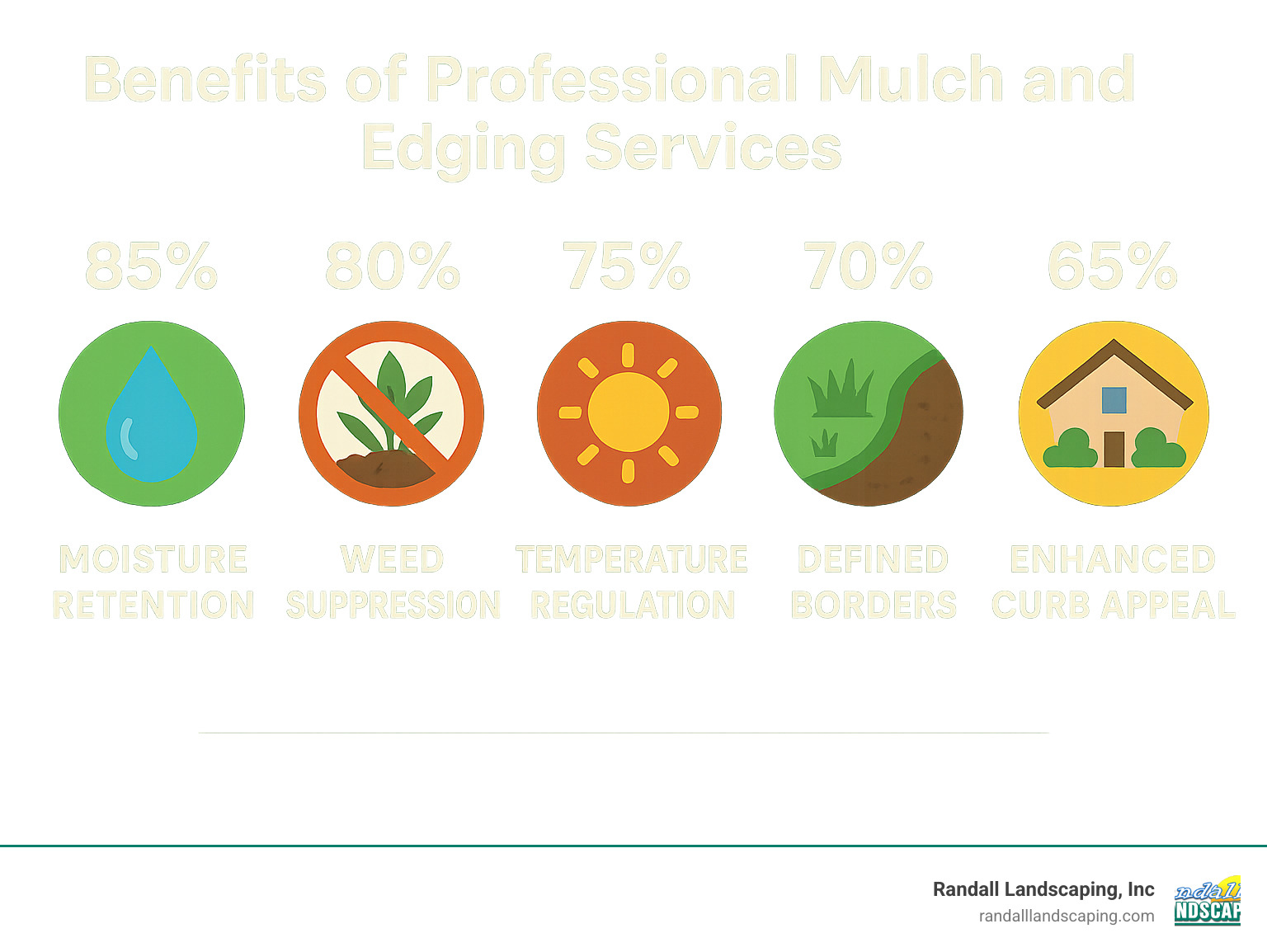
Mulch and edging services terms made easy:
– Eco-friendly mulch options
– Garden bed mulching
– Moisture retaining mulch
Mulch and Edging Services 101
Mulch and edging services are truly the unsung heroes of beautiful landscapes. Think of them as the foundation garments of your garden – they might not be the showstoppers, but without them, everything else falls flat!
What exactly are these services? Let me break it down for you in plain English.
Mulching is simply spreading a protective blanket of material over your soil, typically 2-4 inches thick. This cozy layer does so much more than just look pretty:
It acts like a bouncer at an exclusive club, keeping unwanted weeds from crashing your garden party. It’s also a moisture-saving superhero, reducing your watering chores while keeping your plants happily hydrated. Throughout the seasons, mulch works as a temperature regulator – cooling roots in summer and insulating them in winter. If you choose organic mulch, it slowly breaks down to feed your soil with natural goodness. And let’s be honest – a fresh layer of mulch instantly makes your landscape look like you’ve got your life together!
Edging, meanwhile, is the art of creating clean, defined borders between different areas of your landscape. These crisp lines don’t just satisfy your inner perfectionist – they serve practical purposes too. They keep grass from sneaking into your flower beds, help contain your mulch where it belongs, and dramatically reduce the maintenance headaches that come with blurred boundaries.
Here at Randall Landscaping, we’ve spent years perfecting our Mulch Installation & Blowing techniques throughout the Merrimack Valley and Southern New Hampshire. We’ve seen how these seemingly simple services transform both the health and appearance of our clients’ outdoor spaces.
How Mulch and Edging Services Support Soil & Plants
The magic of mulch and edging services happens mostly below the surface, where your plants’ root systems are silently thanking you.
Your plant roots are surprisingly sensitive creatures. They don’t appreciate extreme temperatures, which is why mulch acts as their personal climate control system. During freezing New England winters, mulch prevents the freeze-thaw cycles that can literally push plants out of the ground (a phenomenon aptly called “frost heave”). When summer scorches, that same layer keeps roots cool and calm, reducing stress and helping plants thrive when others wilt.
The nutrition cycle created by organic mulches is truly nature’s perfect design. As materials like bark or wood chips gradually decompose, they release nutrients in a slow, steady stream – exactly how plants prefer to feed. No shocking fertilizer burns or feast-and-famine cycles here!
Temperature moderation is another invisible benefit that makes a visible difference. A proper 2-3 inch layer can reduce soil temperature by 8-13 degrees during those dog days of summer. Your plants’ roots will be relaxing in relative comfort while unprotected gardens bake.
Water conservation is perhaps the most impressive trick in mulch’s repertoire. Properly edged and mulched beds can reduce evaporation by up to 70% compared to bare soil. That means less time dragging hoses around and lower water bills during dry spells.
Professional edging complements these benefits beautifully by establishing clear boundaries. This prevents aggressive lawn grasses from bullying your garden plants and competing for resources. It also helps direct rainfall and irrigation where you want it – to your plants’ roots rather than running off into the street.
Common Mistakes in DIY Mulch and Edging Services
While the DIY spirit is admirable, we’ve rescued many gardens from well-intentioned but problematic mulching and edging attempts over the years.
Over-mulching is the classic mistake we see most often. Those “mulch volcanoes” piled high against tree trunks might look impressive, but they’re actually tree torture devices. The constant moisture trapped against bark creates the perfect environment for diseases, pests, and rot. Always keep mulch a few inches away from trunks and stems – think donut, not volcano!
Shallow edges rarely stand the test of time. When weekend warriors don’t cut deep enough (aim for 3-4 inches), grass roots simply tunnel underneath and pop up in your beds like uninvited guests. You’ll find yourself re-edging constantly instead of enjoying your garden.
Landscape fabric misuse ranks high on our list of garden mishaps. While weed barrier has its place, it’s often installed incorrectly or unnecessarily. Improperly placed, it can actually prevent water from reaching plant roots. And there’s nothing quite like the frustration of seeing that expensive fabric eventually work its way to the surface as mulch breaks down – giving your garden beds that “partially unwrapped” look.
Improper depth is a balancing act many get wrong. Too thin (under 2 inches) and weeds party right through it. Too thick (over 4 inches) and water struggles to reach the soil, while roots may grow into the mulch layer instead of where they belong – in the soil with its minerals and nutrients.
Uneven application is the telltale sign of DIY mulching. Those hills and valleys throughout your beds not only look unprofessional but create inconsistent benefits. Some areas dry out while others stay too wet. Professional mulch and edging services ensure that Goldilocks-perfect even coverage.
Mixing mulch types can create a patchwork effect as different materials break down at different rates. Your once-uniform beds start to look like a mulch sampler platter by mid-season.
At Randall Landscaping, our team avoids these pitfalls through proper techniques, professional equipment, and years of experience working with the unique soils and climate challenges of the Merrimack Valley and Southern New Hampshire. We’ve made the mistakes so you don’t have to!
Selecting Materials: Mulch Types & Edging Styles
When it comes to mulch and edging services, the materials you choose can make all the difference in both appearance and performance. I’ve helped countless homeowners throughout Merrimack Valley transform their landscapes with the right combination of mulch and edging—and I’m happy to share what works best in our New England climate.
Think of mulch and edging as the frame around your garden’s picture. The right choices will complement your home’s style while providing practical benefits for your plants and soil.
Mulch Types
Organic mulches bring natural beauty while feeding your soil as they break down. Hardwood mulch remains our most requested option, available in natural earthy tones, rich chocolate brown, or deep black-dyed varieties. It typically needs refreshing every 1-2 years, but this decomposition actually enriches your soil over time.
For something with more character, pine bark offers larger, decorative chunks that last a bit longer than standard hardwood. Many of our clients in Andover and Amesbury appreciate the distinctive look it brings to their garden beds.
If you’re concerned about insects, cedar mulch might be your perfect match. Its natural aromatic oils help repel many common pests, and the warm reddish tones create a beautiful contrast against green foliage.
Gardens with acid-loving plants like azaleas thrive with pine straw mulch, while gardeners focused on soil health often choose compost as a quick-enriching option.
For those seeking permanent solutions, inorganic mulches like stone or gravel never need replacement, though they won’t improve your soil quality. Rubber mulch, made from recycled tires, has become popular for playground areas where safety and longevity matter most. For contemporary landscapes, landscape glass offers a unique, reflective quality that catches the eye.

Edging Styles
The right edging creates definition and prevents your carefully chosen mulch from migrating into lawns or walkways. A simple trench edge creates a clean, natural look by digging a V-shaped channel between lawn and garden bed—perfect for traditional New England landscapes.
For modern homes, metal edging in steel or aluminum provides almost invisible clean lines that let your plants take center stage. Many of our Atkinson clients choose cor-ten steel for its beautiful weathered patina that develops over time.
Nothing says timeless quite like natural stone edging. Whether you prefer the rustic charm of fieldstone or the precision of cut stone, these materials bring character and permanence to your landscape.
For the ultimate in customization, concrete curbing is formed right on your property, creating seamless edges that can be colored and textured to mimic more expensive materials. You can see the selection of colors and styles to get inspiration.
Brick or paver edging offers classic charm that complements traditional homes beautifully, while plastic or composite edging provides affordable alternatives that mimic more expensive materials. For a natural look that blends with wooded settings, wood edging creates warm boundaries, though it will eventually need replacement.
| Mulch Type | Longevity | Maintenance | Average Cost* | Best For |
|---|---|---|---|---|
| Hardwood | 1-2 years | Annual refresh | $40-120/cubic yard | Most landscapes |
| Cedar | 1-3 years | Biennial refresh | $50-150/cubic yard | Insect-prone areas |
| Pine Bark | 1-3 years | Biennial refresh | $45-135/cubic yard | Decorative beds |
| Stone/Gravel | Permanent | Occasional cleaning | $70-210/cubic yard | Low-maintenance areas |
| Rubber | 7-10 years | Minimal | $100-300/cubic yard | Playgrounds, high-traffic |
*Note: These are average costs based on internet data and not actual costs for Randall Landscaping, Inc. Prices vary widely based on region, quality, and installation requirements.
Mulch Material Breakdown & Coverage Math
Getting the right amount of mulch is both an art and a science. Too little won’t give you the benefits you need, while too much wastes money and can harm plants. The sweet spot is typically 2-3 inches deep for most applications.
One cubic yard of mulch covers approximately 162 square feet at 2 inches deep, 108 square feet at 3 inches deep, or 81 square feet at 4 inches deep (though we rarely recommend going this thick).
Figuring out your needs is simple: measure your bed’s square footage, decide on your depth, then divide by the coverage rate. For a 500 square foot garden area at 3 inches deep, you’d need about 5 cubic yards of mulch (500 ÷ 108 = 4.63, rounded up).
When we visit your property, we handle these calculations for you, ensuring you get precisely what you need—no more, no less.
Edging Material Cheat Sheet
Each edging material brings its own personality to your landscape. Plastic roll edging offers affordability and flexibility for curved beds, though it typically lasts just 3-5 years before becoming brittle. Steel edging creates those crisp, professional lines that many homeowners covet, with minimal maintenance and a lifespan exceeding 10 years.
For coastal properties or areas with high moisture, aluminum edging provides rust-proof durability with a 15+ year lifespan. Brick and paver edging brings classic appeal that can beautifully echo your home’s architecture, though it requires checking annually for shifting in our New England freeze-thaw cycles.
Wood edging offers natural charm at a reasonable price point, but plan on replacing sections every 3-7 years as they deteriorate. Rubber edging made from recycled materials provides eco-friendly flexibility with moderate durability.
For the “install it and forget it” approach, concrete curbing represents the premium option. While it has the highest initial cost, its 20+ year lifespan and minimal maintenance requirements make it economical in the long run.
Here in the Merrimack Valley and Southern New Hampshire, we typically recommend materials that stand up to our harsh seasonal changes—steel edging and properly installed concrete curbing have proven themselves time and again in our region’s challenging conditions.
Why Go Pro? Process, Packages & Costs
There’s something special about a professionally mulched and edged landscape that’s hard to achieve with DIY efforts. While spreading mulch might seem straightforward, the difference between amateur and professional mulch and edging services becomes obvious when you see the results side by side.
At Randall Landscaping, we bring specialized equipment to every job. Our bark blowers aren’t just faster—they actually save you money by reducing waste. These machines provide 10-20% better coverage than hand-spreading while ensuring even distribution in hard-to-reach spots without damaging your precious plants.
The magic happens before we even open a bag of mulch. Our crews carefully prepare each bed—removing stubborn weeds, refreshing faded edges, and applying pre-emergent weed control when you want that extra protection. This preparation phase is often the most labor-intensive part of the process, but skipping it virtually guarantees disappointment down the road.
“Many homeowners don’t realize that proper bed preparation is the foundation of beautiful, low-maintenance landscaping,” says Tommy Randall. “It’s like painting a house without prepping the surface—it might look good for a month, but it won’t last.”
Our weed prevention expertise means we can apply specialized granular products that suppress over 100 common weeds when applied at the right time, in the right way. This knowledge comes from years of experience in the diverse growing conditions throughout Massachusetts and New Hampshire.
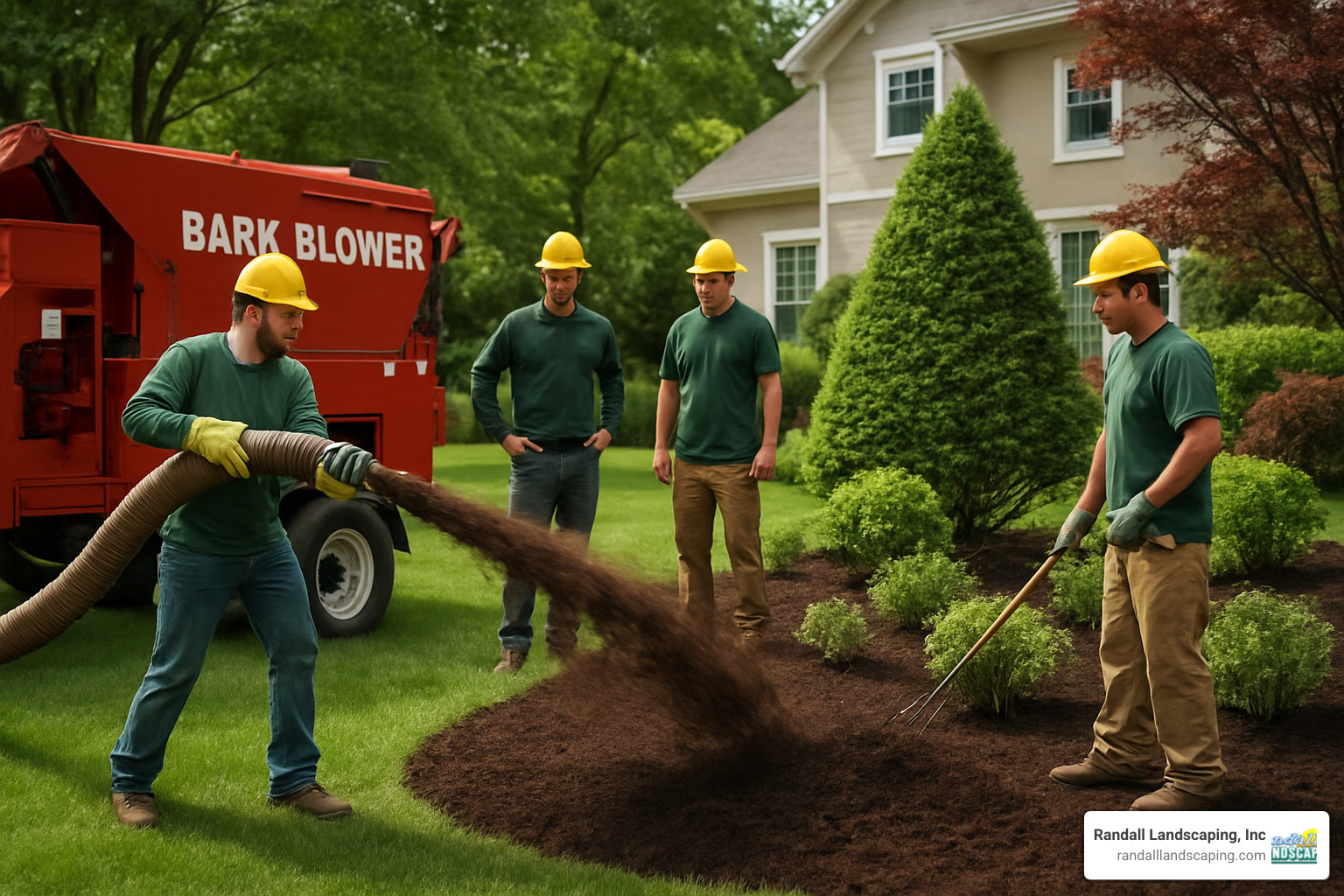
What might consume your entire weekend (or several) transforms into a matter of hours with our experienced crews. We’re not just saving you time—we’re delivering superior results that protect your landscape investment.
Based on internet data (not actual Randall Landscaping pricing), professional mulch and edging services typically range:
- Basic Mulch Installation: $40-120 per cubic yard installed
- Premium Mulch Installation: $50-150 per cubic yard installed
- High-End Specialty Mulch: $70-210 per cubic yard installed
- Bed Edging: $3.75-13.10 per linear foot (varies by material)
- Weed Barrier Installation: $0.55-1.65 per square foot (materials and labor)
Additional services like shrub trimming or specialized bed weeding would be priced separately, custom to your property’s specific needs.
We pride ourselves on transparent pricing and exceptional value throughout the Merrimack Valley and Southern New Hampshire. Our team regularly provides Mulch Installation in Haverhill, MA and surrounding communities with the same attention to detail regardless of project size.
Step-by-Step Professional Mulch & Edge Workflow
When you choose Randall Landscaping for your mulch and edging services, we follow a proven process refined over thousands of installations:
We begin with a thorough site assessment, carefully noting your existing plants, drainage patterns, and any special considerations. This attention to detail continues as we take precise measurements to calculate exact material needs—no wasteful overordering or disappointing thin spots.
Before any mulch touches your soil, we roll up our sleeves for proper preparation. We clear debris and old mulch when necessary, thoroughly address existing weeds, apply pre-emergent control if requested, and carefully define your bed edges.
For natural edging, our specialized spades create clean 3-4 inch deep trenches between lawn and beds. This isn’t just for looks—this depth effectively blocks grass roots from invading your garden spaces while creating that crisp visual definition that lifts your landscape.
Depending on your property’s layout and accessibility, we’ll either use our efficient bark blowers for larger areas or hand-apply mulch around delicate plants and intricate spaces. Throughout the process, we maintain a consistent 2-3 inch depth—the sweet spot for weed suppression and moisture retention without suffocating your plants.
The details matter most: keeping mulch away from tree trunks to prevent rot, creating clean transitions between different areas, and ensuring no mulch spills onto your walkways or driveway. After a thorough cleanup that leaves your property spotless, our foreman conducts a final walkthrough to ensure everything meets both our exacting standards and your expectations.
This methodical approach delivers consistent, professional results that improve both the beauty and health of your landscape.
Optional Add-On Services & Timing Tips
To maximize the benefits of your mulch and edging services, we offer several complementary options that work together for a truly stunning landscape.
Pre-emergent weed control creates an invisible barrier that stops weed seeds from germinating in the first place. Timing is everything here—we typically apply it in early spring before soil temperatures reach 55°F for maximum effectiveness.
For the cleanest start possible, our thorough bed weeding service removes existing weeds before mulch application. While mulch helps suppress future weeds, it won’t magically eliminate ones that are already established.
Many clients opt for shrub trimming before mulching. This not only allows better access for our crews but creates a more polished final appearance. It’s simply more efficient to trim first, then clean up the debris during bed preparation.
For areas with persistent weed issues, professional-grade weed barrier fabric provides an additional layer of protection when installed correctly. Unlike the flimsy materials available at big box stores, our commercial-grade fabrics allow proper water penetration while blocking unwanted growth.
For high-visibility areas, we offer mid-season touch-ups to refresh mulch that may have thinned or faded during the summer months. This is particularly popular for properties that host outdoor gatherings or events.
In our New England climate, spring application (March-May) provides season-long benefits when outdoor living is at its peak. For winter protection and a fresh fall look, autumn application (September-November) is ideal. If you’re planning outdoor events, we recommend scheduling your mulch service 1-2 weeks beforehand to allow for settling and ensure your landscape looks its absolute best.
Understanding the Price Tag: Average Costs & Savings
When evaluating professional mulch and edging services, understanding what drives costs helps you make informed decisions about your landscape investment.
Material choice significantly impacts your bottom line. Premium options like cedar or vibrant colored varieties generally cost more than standard hardwood mulch. Based on internet data (not actual Randall Landscaping pricing), expect ranges from $40-120 per cubic yard for basic mulch to $70-210 per cubic yard for premium options.
Naturally, property size matters. A typical suburban home might require 5-10 cubic yards, while larger estates could need 20+ cubic yards of material. Properties with limited access or steep terrain that prevents direct blower application may require more labor-intensive wheelbarrow transport, affecting overall costs.
Bed condition plays a major role too. Overgrown areas needing extensive weeding or edges requiring significant restoration will require more preparation time. Your edging choice also impacts pricing—simple trench edging costs less initially than steel, aluminum, or poured concrete curbing (though the latter options typically last much longer).
Beyond the initial price tag, consider the long-term value. Professional application saves countless hours of your personal time while our equipment provides 10-20% better material efficiency. Proper mulching reduces water bills and plant replacement costs while minimizing ongoing weed control needs.
Perhaps most compelling for many homeowners: research consistently shows that quality landscaping can increase property values by 5-12%—making professional mulch and edging services not just an expense, but a genuine investment in your home’s value.

At Randall Landscaping, we provide detailed, transparent quotes that break down all costs, allowing you to make informed decisions about your landscape investment.
Frequently Asked Questions about Landscape Mulch & Edging
After nearly two decades of providing mulch and edging services throughout the Merrimack Valley and Southern New Hampshire, we’ve heard just about every question imaginable. Here are the answers to questions our clients ask most often:
Q: How often should I have my mulch refreshed?
A: Most landscapes benefit from an annual refresh. Organic mulches naturally decompose over time, which is actually good for your soil but diminishes both their weed-suppressing abilities and that fresh, clean look everyone loves. For some properties, especially those with thicker previous applications, we might recommend just a light top-dressing rather than a complete replacement. Your specific landscape’s needs will determine what’s best.
Q: Can mulch completely eliminate weeds?
A: I wish I could say yes! While a proper 2-3 inch layer of mulch dramatically reduces weed growth by blocking sunlight and creating a physical barrier, it’s not quite a 100% solution. For the most stubborn weed-prone areas, we often recommend combining mulch with pre-emergent herbicides or landscape fabric underneath. Even with these measures, you’ll still need some maintenance, but you’ll spend far less time pulling weeds than with bare soil.
Q: Is it better to remove old mulch before adding new mulch?
A: It depends on what’s happening in your beds. If your existing mulch is decomposing properly and hasn’t built up excessively, adding a fresh layer on top is usually fine and environmentally friendly. However, if you notice the old mulch is compacted, showing signs of fungal growth (those white or yellow patches), or has accumulated to more than 4 inches deep, we recommend partial or complete removal before adding fresh material.
Q: What’s the difference between mulch blowing and hand-spreading?
A: Mulch blowing uses specialized equipment to apply mulch through a flexible hose, allowing for quick, even application even in hard-to-reach areas. It’s particularly effective for larger properties. Hand-spreading takes more time but allows for greater precision around delicate plants and intricate garden features. At Randall Landscaping, we typically use a combination of both methods to get the best results for each unique landscape situation.
Q: When should I schedule mulch and edging services?
A: Early to mid-spring is ideal for most properties in our New England climate – after the risk of heavy frost has passed but before summer heat and weed pressure kick into high gear. Fall is our second-most popular time, as fresh mulch provides excellent winter protection for plant roots. That said, we can provide these services throughout the growing season whenever your landscape needs refreshing.
When should I refresh mulch and maintain my edging?
Getting the timing right for your mulch and edging services ensures you’ll maximize both the aesthetic and functional benefits:
Spring Refresh (March-May) is ideal for mulch application. The soil has warmed enough for good microbial activity, but you’ll get your weed suppression in place before the major growing season begins. This timing gives you that fresh, clean look just as you’re starting to enjoy your outdoor spaces again after winter.
Fall Application (September-November) provides excellent winter protection for your plants’ root systems. The insulating properties of mulch help moderate soil temperature fluctuations that can damage roots during freeze-thaw cycles.
You’ll know it’s time for a refresh when you notice your mulch has significantly faded in color, thinned to less than an inch in depth, or become heavily compacted. These are signs it’s breaking down and no longer providing optimal benefits.
For edging maintenance, we recommend checking your edges twice a season. Trench edging typically needs re-cutting 1-2 times per year, usually in spring and again in mid-summer. If you have installed edging materials like metal or plastic, spring is the perfect time to inspect for any winter damage and ensure everything is still properly positioned.
After particularly heavy rain events, it’s also worth taking a quick look at your edging to check for erosion that might have compromised its integrity.
Many of our regular clients in towns like North Andover, North Reading, and Pelham have found that an annual spring mulching with a mid-season edge touch-up keeps their landscapes looking crisp and professional all season long.
How much mulch do I need per square foot?
Understanding mulch quantities can save you from running short in the middle of a project or wasting money on excess material:
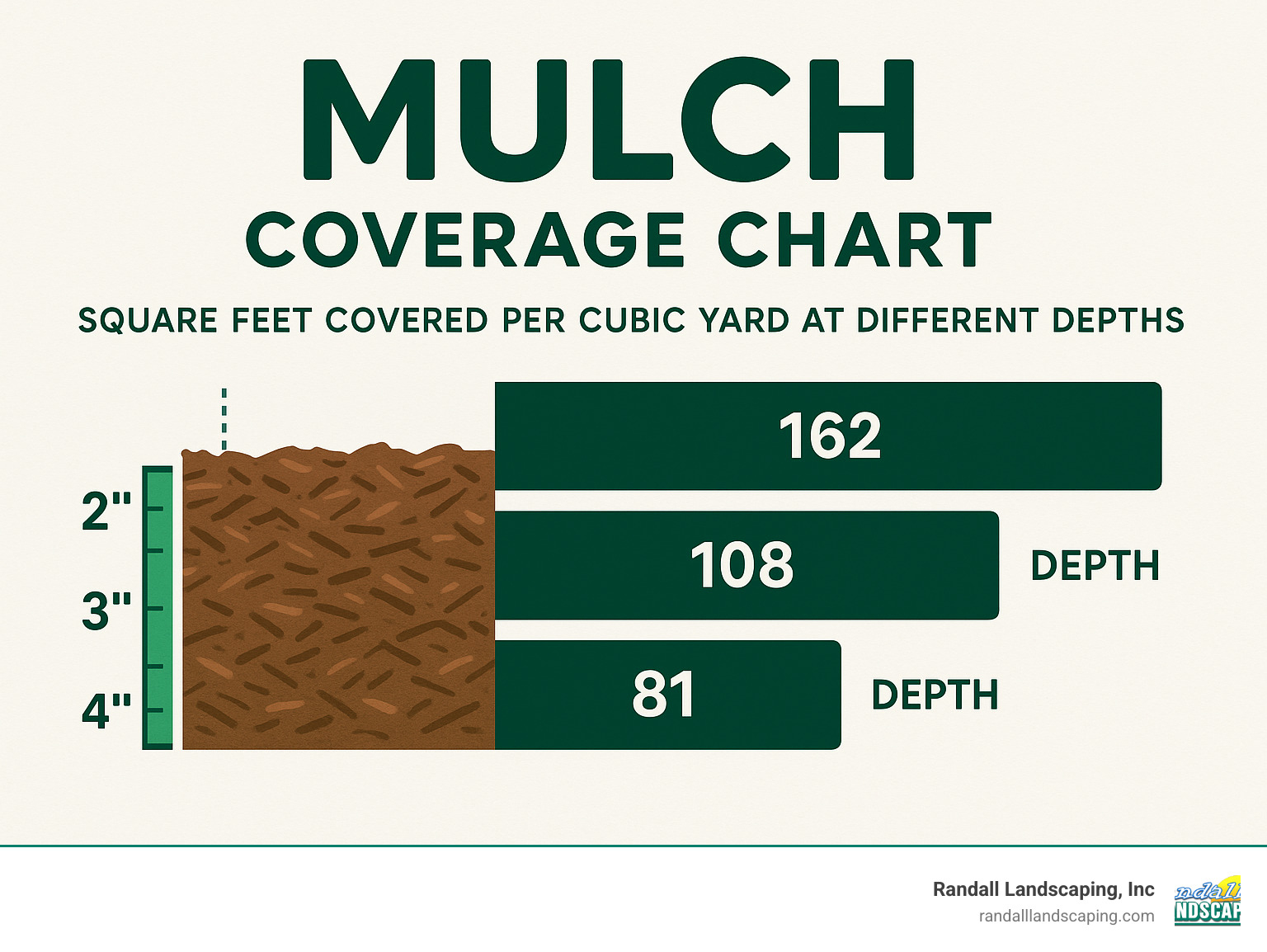
For a quick DIY calculation:
1. Measure each bed’s length and width in feet
2. Multiply these numbers to get your square footage
3. Decide on your desired depth (we typically recommend 2-3 inches)
4. Use these simple divisors to convert to cubic yards:
– For 2″ depth: divide your square footage by 162
– For 3″ depth: divide by 108
– For 4″ depth: divide by 81
Let’s walk through an example: Say you have a garden bed that’s 10′ × 20′ and you want to apply mulch at a 3″ depth.
– First, calculate the area: 10 × 20 = 200 square feet
– Then divide by the appropriate factor: 200 ÷ 108 = 1.85 cubic yards
– Always round up, so you’d need 2 cubic yards for this bed
When ordering mulch, it’s always better to round up slightly than to come up short. At Randall Landscaping, we handle these calculations for you during our initial consultation, ensuring you get exactly the right amount for your property without unnecessary waste or expense.
What should I look for when hiring a mulching and edging professional?
Choosing the right professional for your mulch and edging services makes all the difference between a so-so job and a landscape change you’ll love. Here’s what to consider:
Insurance and Licensing should be your first checkpoint. A reputable company will carry both liability insurance and workers’ compensation coverage. This protects you from potential liability if accidents occur on your property. Never hesitate to ask for proof of insurance – professional companies expect this question.
References and Portfolio tell the real story about a company’s work quality. Ask to see photos of completed projects, particularly those with properties similar to yours. A confident professional will be happy to share before-and-after images and provide references from satisfied customers.
Clear Scope of Work is essential for avoiding misunderstandings. Your proposal should specifically detail what’s included: bed preparation methods, edging type and depth, mulch variety and application thickness, cleanup procedures, and any additional services like weed barrier installation or pre-emergent application.
Material Specifications matter tremendously for quality results. Your contractor should clearly state exactly what type of mulch they’ll use, its source, and its quality characteristics. Vague descriptions like “brown mulch” without further details can be a red flag.
Equipment and Crew considerations impact efficiency and results. Companies with proper equipment (like bark blowers) and experienced teams can complete the job more efficiently with better results. Ask about the experience level of the crew who will be working on your property.
Warranty or Guarantee offerings demonstrate confidence. At Randall Landscaping, we stand behind our work with our 100% reliability guarantee because we’re confident in our quality standards.
Local Experience brings valuable insights. Companies familiar with the specific conditions of the Merrimack Valley and Southern NH will better understand our local soil types, climate challenges, and plant needs. This regional knowledge translates to better long-term results for your landscape.
Communication Style predicts your overall experience. Choose professionals who listen attentively to your needs, answer questions clearly without jargon, and respond promptly to inquiries. The quality of communication during the estimate process often reflects how the entire project will go.
By evaluating these factors carefully, you’ll find a professional who delivers not just mulch and edging, but a transformed landscape that improves your property’s beauty, health, and value for seasons to come.
Conclusion
There’s something magical about freshly applied mulch and crisp, clean edging. Professional mulch and edging services offer one of the most dramatic landscape changes for your investment, creating immediate visual impact while delivering long-lasting benefits for your garden’s health.
I’ve seen countless properties throughout our service area transformed by these seemingly simple improvements. That rich, dark mulch against vibrant green plants creates a striking contrast that makes everything in your landscape look more intentional and cared for. The clean lines of professional edging frame your garden beds like a custom mat frames a beautiful photograph.
But beyond just looking good, these services form the foundation of a thriving, lower-maintenance landscape. The right mulch properly applied helps your soil retain moisture, reducing your water bills during summer heat. It suppresses those persistent weeds that seem to appear overnight, saving you hours of tedious garden maintenance. As organic mulches gradually break down, they enrich your soil with valuable nutrients, creating a healthier environment for your plants.
Your garden plants will thank you too. That protective blanket of mulch shields delicate root systems from New England’s temperature extremes – both our freezing winters and scorching summer days. The defined spaces created by quality edging don’t just please the eye; they guide visitors through your outdoor spaces and prevent lawn grass from invading your carefully tended garden beds.
At Randall Landscaping, we’ve provided these transformative services to homes and businesses throughout Amesbury, Andover, Atkinson, Boxford and all our service communities in the Merrimack Valley and Southern New Hampshire. Our clients consistently tell us that this relatively simple investment makes their landscapes look professionally maintained year-round, even as seasons change.
When considering mulch and edging services, quality materials and proper installation techniques make all the difference. The small premium for professional installation typically pays dividends through better results, time savings, and reduced material waste. Our experienced crews know exactly how deep to apply mulch for maximum benefit without risking plant health, and our edging techniques stand up to New England’s challenging freeze-thaw cycles.
Whether you’re preparing your property for a special event, improving your home’s value before selling, or simply want to enjoy a more beautiful and healthy landscape, professional mulch and edging provide immediate impact and lasting benefits.
Ready to transform your landscape with professional mulch and edging services? Contact Randall Landscaping, Inc. today to schedule a consultation. Our team serves communities throughout the Merrimack Valley and Southern New Hampshire, including Mulch Installation in Haverhill, MA and surrounding areas. Let us help you create the landscape you’ve always wanted—beautiful, healthy, and easier to maintain.