

Why Mulch is Your Garden’s Best Friend
Mulch installations are one of the simplest yet most impactful improvements for your landscape. Proper mulching suppresses weeds, retains soil moisture, and boosts curb appeal with results that last all season.
Quick Answer for Mulch Installation:
- Best timing: Early spring or fall
- Proper depth: 2-4 inches (never against plant stems)
- Coverage: Extend to plant drip line when possible
- Key rule: Create a “donut” shape around trees, not a “volcano”
- Materials needed: Mulch, rake, edging tool, wheelbarrow
As one landscaping expert puts it: “Mulch is one of the most beneficial things a homeowner can do for tree health.” The benefits go far beyond aesthetics. Mulch helps retain soil moisture, reducing the need for frequent watering, while suppressing weeds and regulating soil temperature to protect plants from extreme weather.
However, improper installation can harm your plants. Piling mulch against tree trunks (“mulch volcanoes”) can lead to root rot, pests, and even tree death. Getting it right from the start saves time, money, and frustration.
I’m Tommy Randall, owner of Randall Landscaping. Since 2006, my team and I have perfected mulch installation techniques across Massachusetts and New Hampshire, changing landscapes into thriving, low-maintenance outdoor spaces.
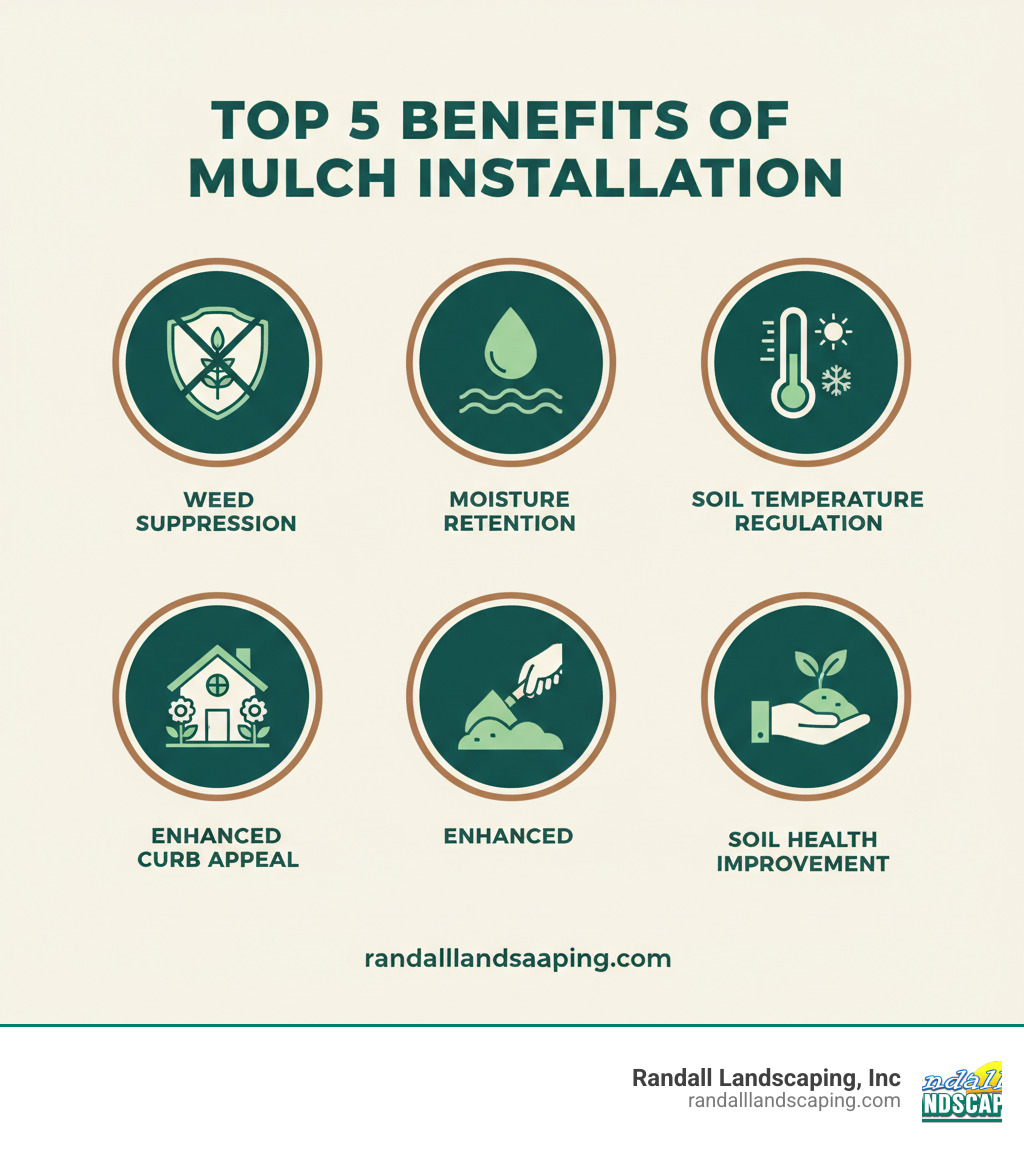
Mulch is a material spread over soil to enrich or insulate it. Its benefits are numerous: it reduces watering needs, regulates soil temperature, suppresses weeds, and protects tree roots from lawn equipment. Organic mulches also break down to enrich the soil with vital nutrients, improving the health and visual appeal of your entire yard.
Understanding Mulch: A Guide to Types, Colors, and Materials
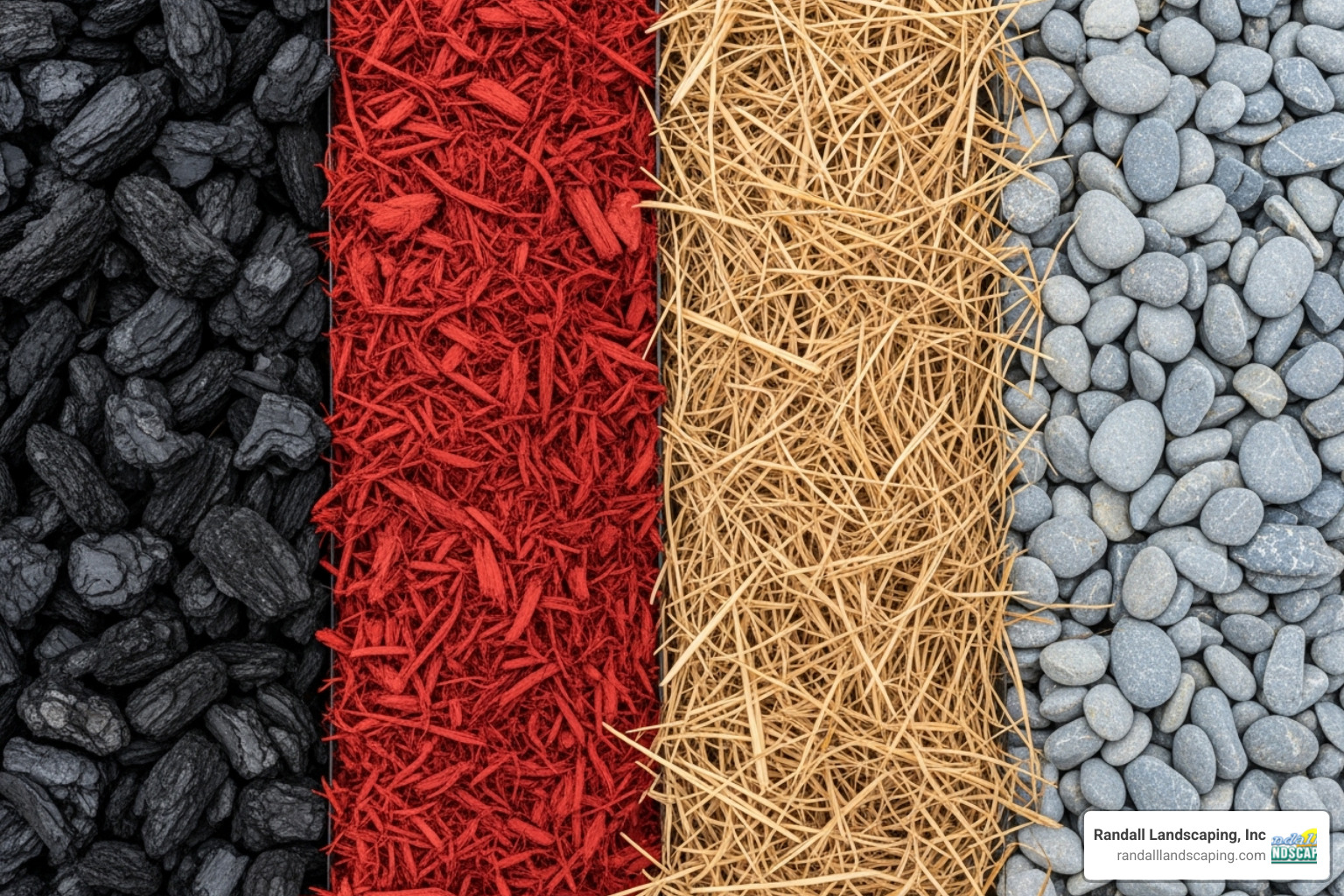
Selecting the right mulch is key to your garden’s appearance and health. Beyond looks, different mulches serve different purposes. Understanding these differences will help you make the best choice for your needs.
When planning your mulch installation, you’ll encounter two main categories: organic and inorganic materials. Each offers unique benefits for different situations.
| Mulch Type | Benefits | Longevity | Maintenance | Best Uses |
|---|---|---|---|---|
| Organic Mulch | Improves soil health, adds nutrients, retains moisture, suppresses weeds, regulates temperature | Decomposes (needs annual replenishment) | Requires annual refreshing, occasional turning | Flower beds, vegetable gardens, around trees/shrubs |
| Inorganic Mulch | Permanent, low maintenance, excellent weed barrier, no decomposition | Very long-lasting | Occasional cleaning/redistribution | Pathways, rock gardens, areas with minimal plant growth, commercial properties |
Organic Mulch Options
Organic mulches are materials that were once living. As they decompose, they feed your plants a steady diet of nutrients, acting like a slow-release fertilizer.
- Bark chips: From hardwood and softwood trees, these break down slowly for long-lasting coverage. Fine-ground options like aged hemlock offer a rich, professional look.
- Shredded hardwood: More finely shredded than chips, these pieces interlock, making them less likely to blow away in New England storms.
- Pine straw: Made from fallen pine needles, this creates a light, airy layer perfect for acid-loving plants like azaleas and blueberries.
- Compost: Packed with nutrients, this mulch actively improves your soil structure.
Because organic mulches decompose, they improve your soil over time but require an annual refresh to maintain their benefits. For more sustainable options, check out our guide on eco-friendly mulch options or learn about organic mulch types from gardening experts.
Inorganic Mulch Options
Inorganic mulches are low-maintenance and provide a permanent, polished look. They don’t feed the soil but excel at long-term weed control.
- River rock and gravel: These are champions of durability, available in various sizes and colors. They’re perfect for pathways or areas where you want a clean, permanent ground cover.
- Rubber mulch: Made from recycled tires, it’s popular for playgrounds but not recommended for home landscapes near edible plants due to potential environmental impacts.
The main advantage of inorganic mulches is their longevity. They are excellent for preventing weeds and regulating soil temperature but won’t improve your soil’s organic content.
Choosing the Right Color and Texture
The color and texture of your mulch can make your plants pop or blend in naturally.
Color choices range from natural earth tones to bold dyes. Dark mulches create a stunning contrast with green foliage, while lighter colors can brighten shady areas. When using dyed mulches, apply them during dry weather and allow 24-48 hours to set before rain to prevent color from running.
Texture also affects your landscape’s feel. Fine mulches create a smooth, formal look, while chunky bark offers a more rustic, natural vibe. The key is to match the mulch to your home’s style and garden’s scale, so it improves your plants without stealing the show.
The Perfect Mulch Installation: Timing, Amount, and Technique
Getting mulch installation right comes down to three factors: timing, amount, and technique. Proper preparation and application make all the difference between a landscape that thrives and one that struggles.
When is the Best Time to Install Mulch?
In the Merrimack Valley and Southern New Hampshire, there are two prime windows for mulch installation:
- Spring: Applying mulch in mid-spring, after the soil has warmed, helps suppress weeds and locks in moisture from spring rains before summer heat arrives. A fresh layer of mulch also gives your landscape a clean, updated look for the season.
- Fall: A fall application acts like a blanket for your plants, stabilizing soil temperatures and protecting delicate root systems from the harsh New England freeze-thaw cycles.
You can install mulch anytime your landscape needs a refresh. For more on its water-saving benefits, see our guide on Moisture Retaining Mulch.
How to Calculate Your Mulch Needs
Calculating your needs correctly saves time and money.
- Measure your space: Calculate the total square footage of your garden beds.
- Decide on depth: We recommend 2 to 4 inches. Use 1-2 inches for refreshing existing beds and 3-4 inches for new beds or areas with significant weeds. Avoid applying more than 4 inches, as this can suffocate plant roots.
- Calculate the amount: To find cubic feet, multiply your square footage by your desired depth in inches, then divide by 12. To convert to cubic yards, divide the cubic feet by 27.
For an easier option, use this handy mulch calculator. As a rule of thumb, one cubic yard covers about 100 square feet at a 3-inch depth.
Best Practices for Your Mulch Installation
Follow these steps for a crisp, polished look:
- Prepare the area: Start with a clean slate by removing old mulch, weeds, and debris.
- Create clean edges: Use an edging tool to create a 4-inch deep cut around your beds. This defines the space and keeps mulch contained. Remember to call for utility locates before digging.
- Grade the soil: Rake the soil smooth, filling in low spots.
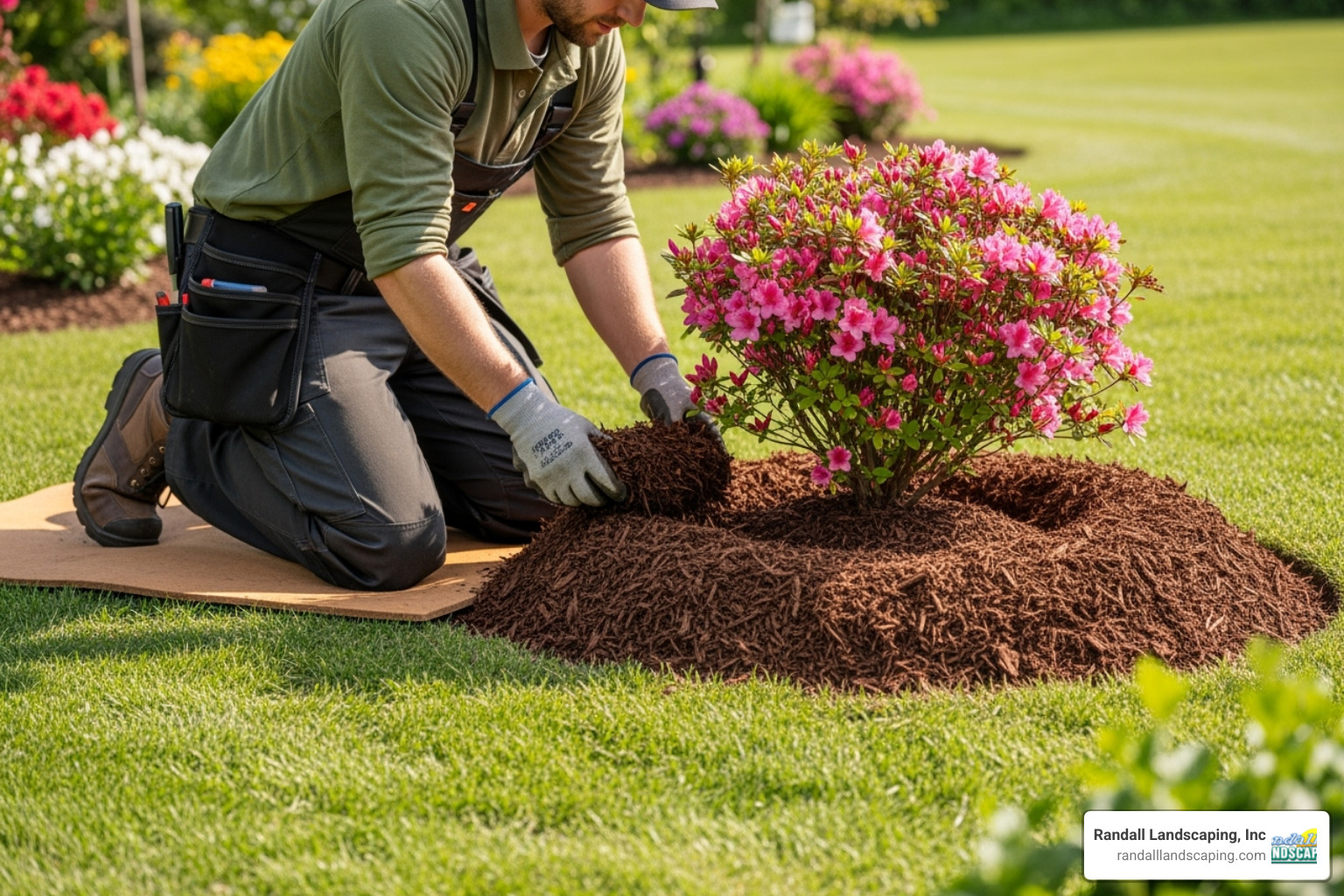
- Apply evenly: Spread mulch in small mounds and distribute it to a uniform 2-4 inch depth.
- Follow the “donut rule”: Keep mulch 2-3 inches away from tree trunks and plant stems to prevent rot and disease. You should always see the base of the trunk.
- Water lightly: A light watering helps the mulch settle.
For professional results without the work, our Garden Bed Mulching service handles every detail.
Common Mulching Mistakes and How to Avoid Them
It’s easy to make mistakes during mulch installation that can harm your plants. Fortunately, these common errors are completely preventable.
The Dreaded “Mulch Volcano”
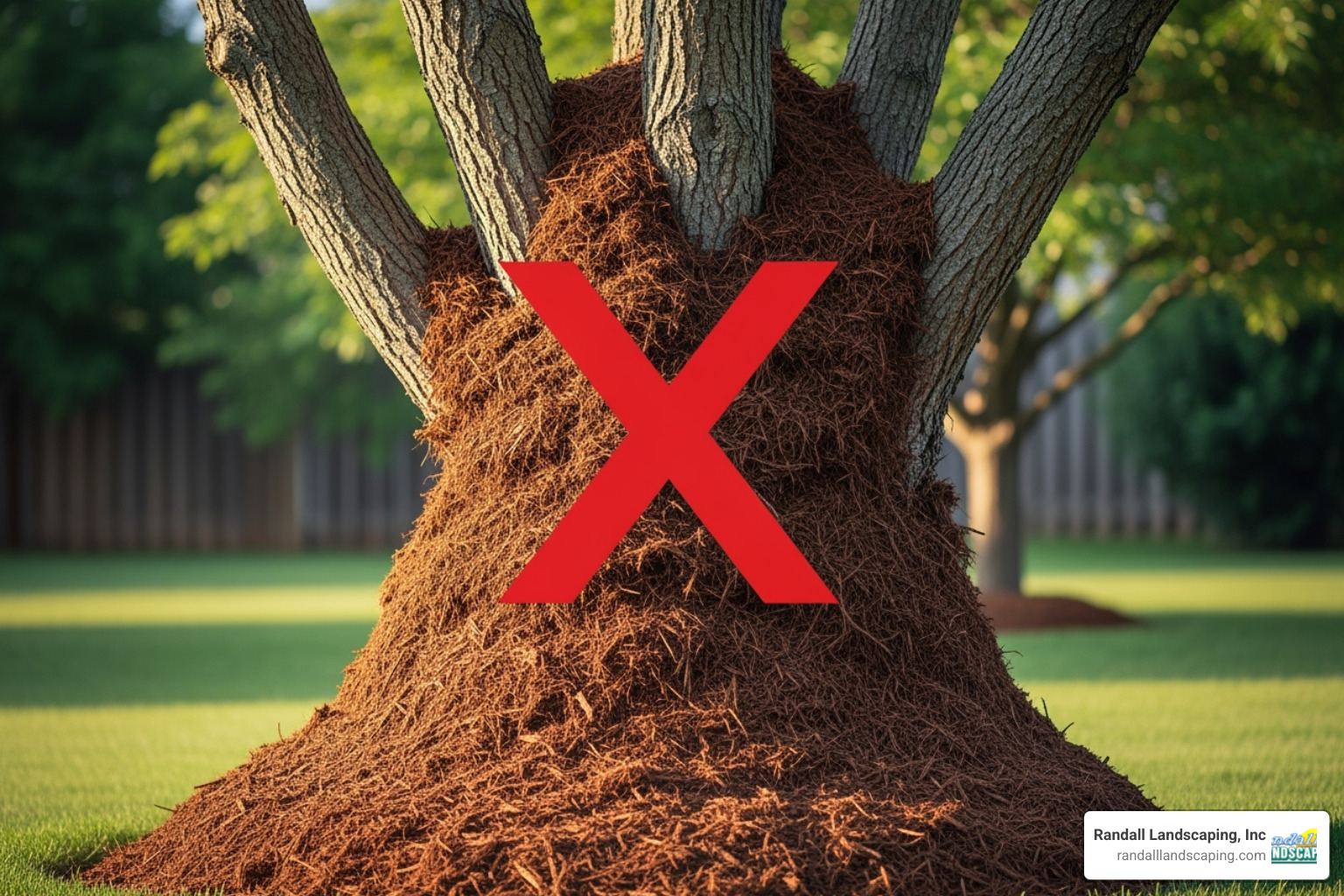
This is the most common and damaging mistake. A “mulch volcano” is a cone of mulch piled high against a tree trunk. This practice is harmful for several reasons:
- It traps moisture against the bark, leading to rot, disease, and insect infestations.
- It encourages girdling roots, which grow into the mulch and can wrap around the trunk, choking the tree.
- It provides shelter for pests like rodents that can damage the tree.
The solution is to create a “donut,” not a volcano. Keep mulch 2-3 inches away from the tree trunk, so the base (or root flare) is visible.
Applying Too Much or Too Little
Getting the depth right is crucial.
- Too much mulch (over 4 inches) can suffocate plant roots by blocking oxygen and water. It can also become compacted and repel water instead of absorbing it.
- Too little mulch (under 2 inches) is ineffective for suppressing weeds, retaining moisture, and regulating soil temperature.
The sweet spot is a 2-4 inch layer. This depth provides all the benefits without harming your plants.
Misusing Landscape Fabric
While landscape fabric seems like a good idea for weed control, it often causes more problems than it solves.
- It interferes with soil health by blocking the exchange of air, water, and nutrients.
- It prevents organic mulch from enriching the soil as it decomposes.
- Roots and weeds can grow through or on top of the fabric, creating a tangled mess that is difficult to remove later.
Our recommendation is to skip the fabric in most garden beds. A proper 2-4 inch layer of mulch is a better, more natural solution for weed control. For stubborn weeds, consider Effective Mulch for Weed Control techniques instead.
DIY vs. Professional Mulch Installation
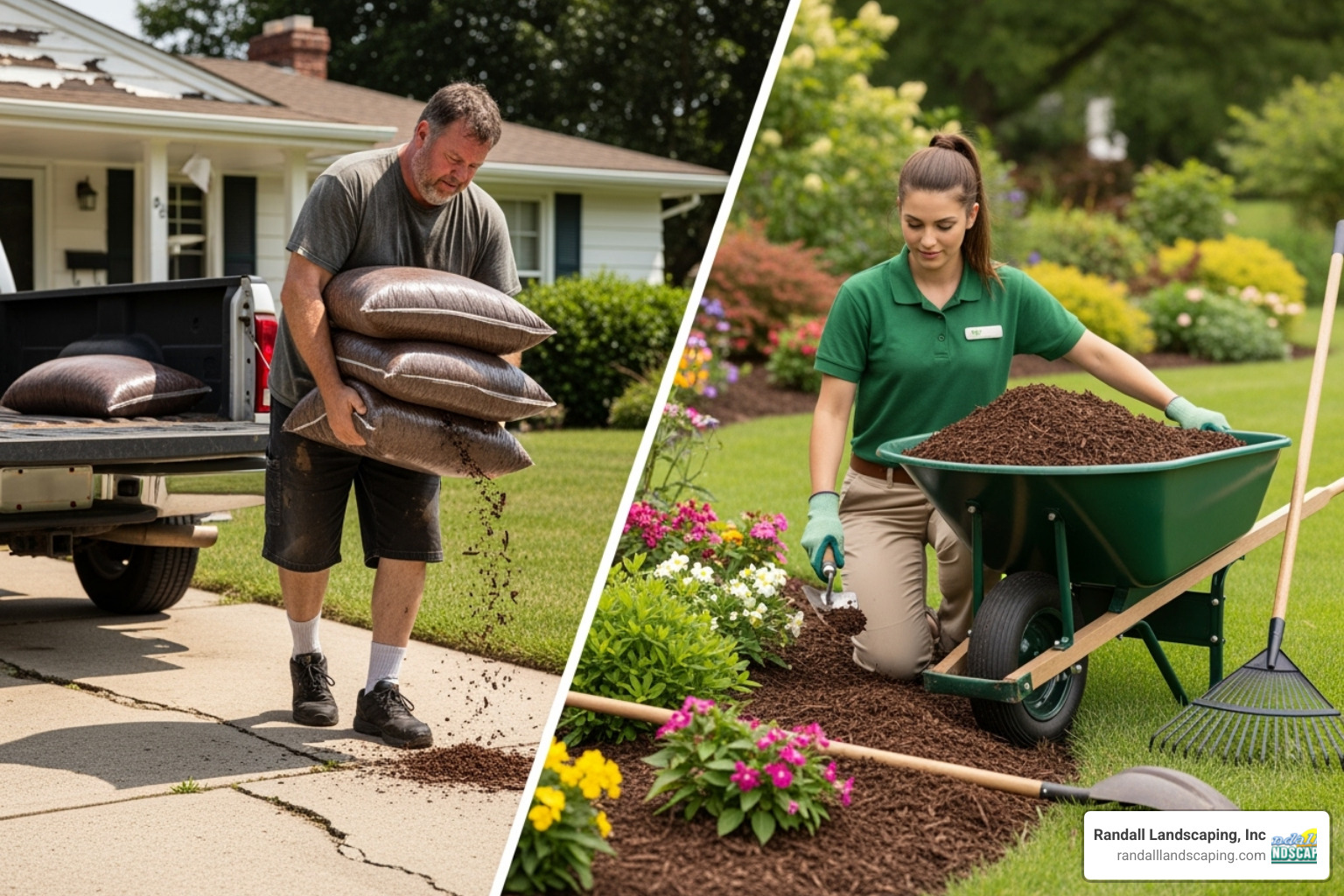
Deciding between DIY mulch installation and hiring a professional involves balancing time, effort, cost, and desired results. Understanding what each entails will help you choose.
The DIY Approach
A DIY project can be satisfying and saves on labor costs. However, it requires significant physical effort. A cubic yard of mulch can weigh up to 800 pounds, meaning many trips with a wheelbarrow.
You’ll also be responsible for sourcing materials, calculating the correct amount, and arranging delivery. The time commitment can be substantial, often taking an entire weekend. Without experience, it’s easy to make mistakes like creating mulch volcanoes or applying an uneven layer.
Hiring a Professional Service
When you hire Randall Landscaping, you’re investing in expertise and efficiency. Our team has perfected mulch installation techniques across the Merrimack Valley and Southern New Hampshire. We complete projects quickly and correctly the first time.
Key benefits include:
- Expertise: We know which mulch types work best locally and apply them using proven techniques for optimal plant health and appearance.
- Quality Materials: We source premium bulk mulch, recommending the perfect type for your landscape’s needs.
- Proper Equipment: We arrive with all the necessary tools to prepare your beds and achieve a polished, professional finish.
- Guaranteed Results: We stand by our commitment to quality and 100% reliability. We handle every detail, from weeding and edging to application and cleanup, ensuring your landscape looks its best.
For comprehensive landscape solutions, explore our Residential Landscaping Services or Commercial Landscaping Solutions. We serve properties throughout Amesbury, Andover, Atkinson, Boxford, Dracut, Georgetown, North Andover, North Reading, Pelham, Salem, Windham, Methuen, Lawrence, and Plaistow.
Regarding costs, bulk mulch typically runs around $45-$65 per cubic yard, excluding delivery and installation, while bagged mulch ranges from $4-$7 per 2-cubic-foot bag. Professional mulch installation, including material, delivery, and labor, usually ranges from $60 to $180+ per cubic yard. These are average costs based on internet data and not actual costs for Randall Landscaping.
While professional installation has a labor cost, the time saved and superior results often make it a smart investment.
Frequently Asked Questions about Mulching
Here are answers to the most common questions we receive about mulch installation.
How often does mulch need to be replenished?
Because organic mulch decomposes to enrich the soil, it gradually thins out. Most organic mulches need an annual refresh, typically in early spring. In our New England climate, freeze-thaw cycles can accelerate this process.
Check your mulch depth each spring. If it’s less than 2 inches, it’s time for a top-dressing (a fresh 1-2 inch layer). To prevent compaction, it’s also helpful to rake and fluff existing mulch during the growing season. Inorganic mulches like river rock are long-lasting and only need occasional cleaning.
Can I just put new mulch on top of old, compacted mulch?
Yes, but with a few caveats. If the existing layer is thin (under 2 inches), you can add a fresh layer on top. First, rake and break up any compacted old mulch to improve air and water flow.
The most important rule is to never exceed a total depth of 4 inches. If your existing layer is already deep, remove some before adding new material to avoid suffocating your plants.
Is dyed mulch bad for my plants and soil?
Most quality dyed mulches are safe for plants and soil. They typically use non-toxic, carbon-based or iron oxide colorants that break down naturally.
However, the source of the wood is more important than the dye. Avoid mulches made from recycled construction waste or pallets, which could contain chemical residues. For vegetable gardens, we recommend using natural, undyed organic mulches as the safest option. For ornamental beds, quality dyed mulch is generally fine.
Pro Tip: Apply dyed mulch during dry weather and allow 24-48 hours for the color to set before watering to prevent it from bleeding onto walkways.
Conclusion: Transform Your Property with a Flawless Finish
Mulch installation is one of the smartest investments for your landscape. It delivers results that go beyond aesthetics, from suppressing weeds and retaining soil moisture to regulating soil temperature and enriching your soil.
A fresh layer of quality mulch instantly makes any landscape look crisp and well-maintained. The key to success, however, lies in proper technique. Avoiding mulch volcanoes, maintaining a 2-4 inch depth, and keeping mulch away from plant stems are crucial for achieving the best results and long-term plant health.
Correctly applied mulch is a low-maintenance solution that saves time and water while boosting your property’s curb appeal. It helps plants develop stronger roots, improve drought tolerance, and show more vibrant growth.
If you’re ready to give your Merrimack Valley or Southern New Hampshire property a flawless finish, let our team help. Get a quote for your professional landscape mulch installation and let our experienced team handle every detail. With our commitment to quality work and 100% reliability, we’ll ensure your landscape thrives.