
Why an Irrigation System is a Smart Investment for Your Garden
The cost of garden irrigation system varies greatly depending on the type, size, and complexity of your setup. Investing in one saves time, reduces water bills, and leads to healthier plants. For a quick overview, here are some typical price ranges based on internet data, not Randall Landscaping actual costs:
- Basic DIY Drip Irrigation Kits: As low as $20 (for small patio plants or raised beds).
- Professionally Installed Drip Irrigation Systems: Typically range from $200 to $2,850, depending on garden size and complexity.
- Professionally Installed Sprinkler Systems (In-Ground): Usually cost between $1,800 to $6,500 for typical residential yards, but can reach $12,600 for very large or complex properties.
- Soaker Hoses: A budget-friendly option, often available for as little as $30 per 100 feet.
I’m Tommy Randall, owner of Randall Landscaping. With nearly two decades of experience, I’ve seen how these systems transform outdoor spaces. In this guide, we’ll break down the expenses so you can make an informed decision for your home.
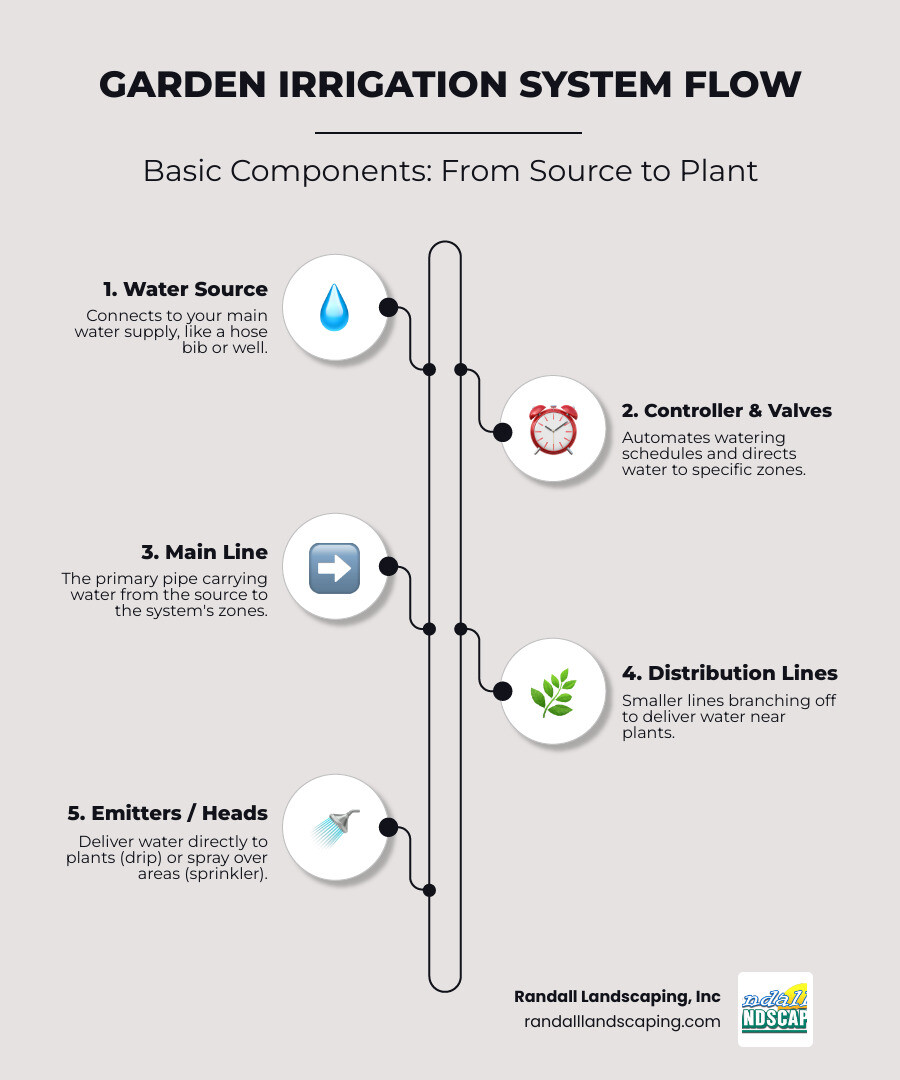
Cost of garden irrigation system terms you need:
- average cost of inground sprinkler system
- professional sprinkler installation
- professional sprinkler system
Types of Garden Irrigation Systems and Their Costs
Alright, let’s dive into the different ways you can water your garden automatically! The right system depends on your yard’s unique needs, and understanding your options is key to figuring out the overall cost of garden irrigation system for your home.
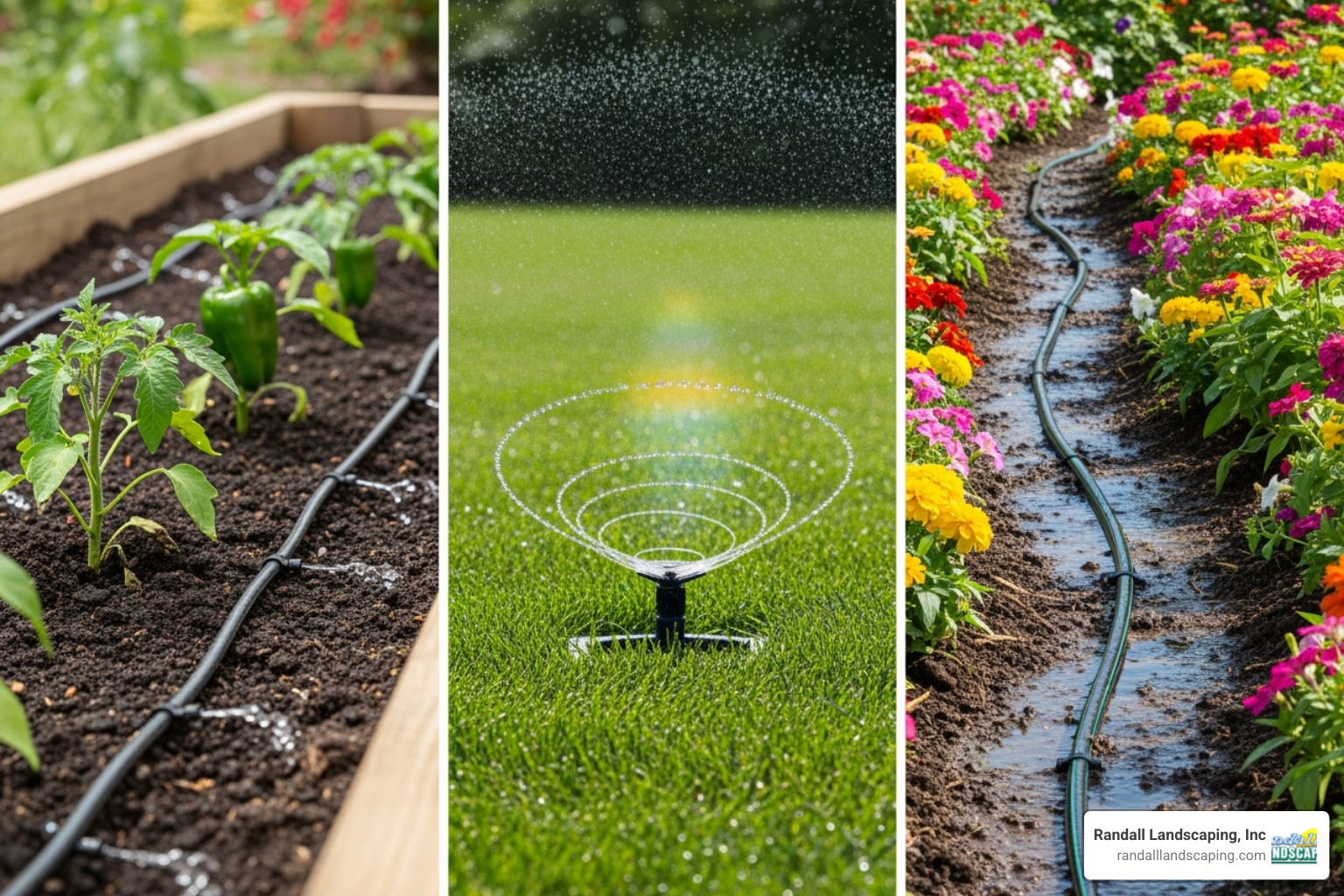
Each type affects water savings, ease of setup, and cost. Let’s explore the main types.
Drip Irrigation Systems
A drip system uses a network of tubes with small emitters to deliver water slowly and directly to the base of each plant. This low-pressure method is highly efficient, minimizing water loss from evaporation or runoff.
It’s best for vegetable gardens, raised beds, container plants, shrubs, and flower beds. By delivering water to the soil, it keeps leaves dry, which helps prevent fungal diseases.
- Pros: High water efficiency (saving 30-50% more water than sprinklers), reduced weed growth, and minimizes fungal diseases.
- Cons: Emitters can get clogged, as low water quality is a leading cause of clogging. It’s not ideal for large lawns, and unburied lines can be a tripping hazard.
Curious about getting one of these efficient systems for your yard? You can find more details on our page about garden water irrigation system installation.
Sprinkler Systems
Sprinkler systems are designed to spray water broadly, making them the go-to choice for keeping grass looking its best. They use pop-up or stationary heads fed by pipes buried underground.
This system is best for lawns, ground cover, and any large garden areas where watering from above works well.
- Pros: Excellent at covering large areas effectively, and the in-ground components are very durable, often lasting for many years.
- Cons: Less water-efficient than drip systems due to evaporation and wind. Overhead watering can also promote leaf diseases on certain plants, and they have a higher upfront installation cost.
If a professional sprinkler system sounds like the right fit for your lawn, you can learn even more on our dedicated page about professional sprinkler systems.
Soaker Hoses
A soaker hose is a simple, porous hose that weeps water along its entire length, allowing it to soak directly into the soil. It’s a low-tech cousin to drip irrigation and a great starting point for automated watering.
It’s best for straight rows in vegetable gardens, new plantings, or established flower beds.
- Pros: Extremely budget-friendly (a 100-foot hose can be as little as $30), very easy to set up, and surprisingly water-efficient for localized areas.
- Cons: Less durable than other systems and can be prone to cracking. They can also provide uneven water distribution on long runs or slopes.
Breaking Down the Cost of a Garden Irrigation System
Let’s explore the numbers that make up the cost of garden irrigation system. The total price depends on the components, automation, material quality, and labor. All costs mentioned here are average national estimates based on internet data and will vary based on your specific project.
Key Factors That Influence the Total Cost of a Garden Irrigation System
Several elements impact your total cost. Understanding them helps tailor a system to your garden and budget.
- Garden Size: Larger areas require more materials and time. While systems can range from $0.20 to $1 per square foot, a 1/4 acre system might cost $1,700 to $5,500, while a full 1-acre system could range from $6,500 to $20,000 or more.
- Garden Layout Complexity: Winding paths, slopes, and obstacles like trees require more planning and labor. Rocky or hard soil also increases trenching costs.
- Number of Watering Zones: Different areas often need separate zones for optimal watering. A single zone might cost $500 to $1,500 to set up, with additional zones costing $350 to $1,100 each. Most homes need 3-5 zones.
- Water Source and Pressure: Low water pressure might require a booster pump, while high pressure needs a regulator, adding to the cost.
- System Type (Drip vs. Sprinkler): Drip systems are often cheaper to install than in-ground sprinklers due to less intensive labor. Above-ground drip systems might average $0.85 to $2.85 per square foot, while in-ground sprinkler systems can range from $2 to $7 per square foot.
- Automation Level: A simple timer is budget-friendly, but a smart controller costs more upfront while offering significant long-term water savings.
- Quality of Parts: Higher-quality, commercial-grade components cost more initially but offer superior performance, longevity, and fewer maintenance headaches.
Average Cost of Essential Irrigation Components
Here’s a breakdown of typical price ranges for common components, based on national internet data:
| Component | Typical Price Range (Based on Internet Data) |
|---|---|
| Tubing (Drip/Mainline) | $0.15 – $0.50 per foot |
| Emitters/Drippers | $0.10 – $1.00 each |
| Sprinkler Heads | $3 – $25 each (can go up to $40 for specialized types) |
| Basic Timers | $25 – $80 |
| Smart Controllers | $70 – $300+ |
| Pressure Regulators | $5 – $20 |
| Filters | $10 – $40 |
| Valves (for zones) | $12 – $40 each |
| Backflow Preventers | $4 – $6 (small kits), up to $500 (large residential) |
The Value of Upgrading to a Smart Irrigation System
Is a smart system worth the extra cost? In our experience, absolutely. While a basic timer ($25-$80) automates your schedule, a smart controller ($70-$300+) takes efficiency to a new level. These units use Wi-Fi, local weather data, and even soil moisture sensors to optimize watering, often controlled by a smartphone app.
The benefits are clear:
- Maximized Water Savings: Smart systems can reduce water use by 30% to 50% by preventing over-watering, leading to lower water bills.
- Healthier Plants: Precise watering prevents both under- and over-watering, resulting in more robust plants.
- Convenience: Manage your system from anywhere, whether you’re at work or on vacation.
The long-term savings on your water bill can quickly offset the higher upfront investment, making a smart system a wise choice for your wallet and the environment.
DIY Installation vs. Hiring a Professional
Deciding whether to install the system yourself or hire a professional is a major factor in the overall cost of garden irrigation system. Both options have their merits, so it’s important to weigh the time, effort, and potential risks.
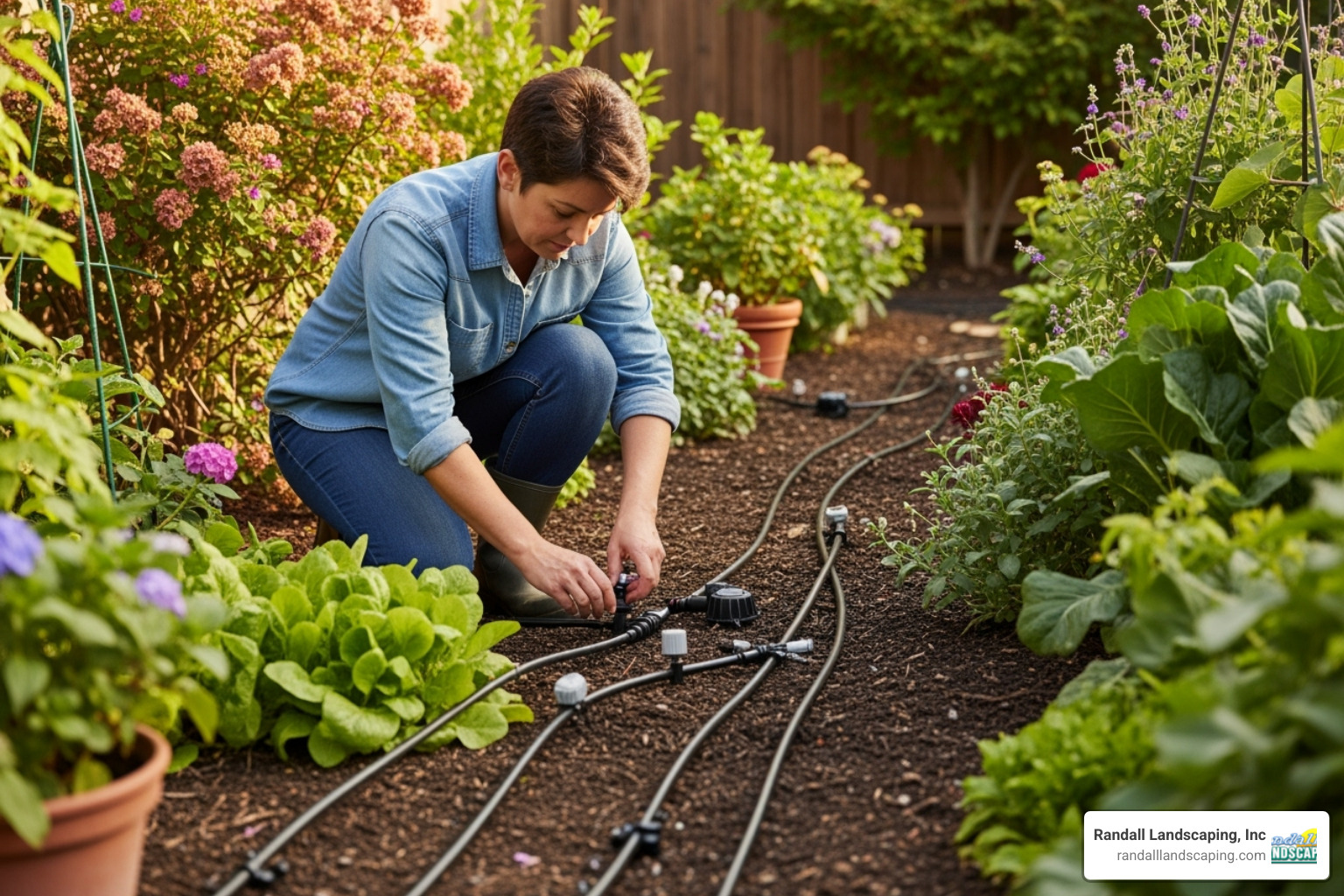
The DIY Route: Saving Money Upfront
For smaller gardens or hands-on homeowners, the DIY route is appealing due to lower initial costs. You have complete control over customization.
However, it requires a significant time commitment and basic plumbing skills. Errors in design can lead to leaks, poor coverage, and wasted water, potentially costing more to fix later. You’ll also need the right tools, which might mean renting a trencher ($60-$200 per day based on internet data). A key drawback is that there’s no labor warranty; you’re responsible for all fixes.
Typical DIY kit costs (based on internet data, not Randall Landscaping’s prices):
- Small patio kits: $15-$50
- Raised bed kits: $30-$100
- Larger garden kits: $50-$100+
Professional Installation: Investing in Expertise
For larger, complex landscapes, professional installation is often the smarter choice. While the upfront cost is higher, it pays for itself in efficiency and peace of mind. A professional installation for a 1/4-acre yard can range from $2,800-$9,000, compared to a DIY cost of $500-$1,500.
- Expert Design: Professionals create a system optimized for your specific landscape, saving water and money long-term.
- Correct Installation: They use specialized equipment and experience to prevent leaks and ensure proper coverage.
- Time and Hassle Savings: A pro can install a system in a day or two, saving you weeks of work.
- Warranty: Reputable companies like Randall Landscaping offer a warranty on parts and labor. They can also handle any required permits ($50-$200).
For more details on what goes into a professional setup, visit our page on More info about professional sprinkler system installation.
Beyond the Initial Price Tag: Long-Term Value and Ongoing Costs
The initial purchase price is just the beginning when considering the cost of garden irrigation system. The real value comes from its long-term benefits, balanced against some routine upkeep.
How an Irrigation System Saves You Money and Time
An automated system is an investment that pays you back in several ways:
- Water Conservation: Efficient systems, especially drip irrigation, can cut water use by 30% to 50%, leading to significantly lower water bills.
- Time Savings: Get back hours each week that you used to spend hand-watering your garden.
- Healthier Plants: Consistent, precise watering means stronger plants, more vibrant blooms, and better harvests.
- Increased Property Value: A lush, well-maintained landscape is a major draw. An in-ground sprinkler system can increase property value by 7% to 15% on average.
Hidden and Ongoing Maintenance Expenses
To keep your system running smoothly for years, it’s important to budget for routine maintenance. All cost ranges are national estimates based on internet data.
- Seasonal Tasks: In climates like ours in Merrimack Valley, winterization (a “blow-out” to clear pipes of water) is essential to prevent freezing damage. This typically costs $50 to $150 annually. In the spring, a spring start-up and inspection service to check for damage and ensure proper function usually ranges from $75 to $250.
- Common Repairs: Over time, you may need repairs. Fixing broken lines can cost $130 to $450. Replacing a damaged sprinkler head might cost $65 to $200 for professional service (or $2-$12 for a DIY part). A backflow preventer replacement can cost $300 to $700.
- Filter Cleaning: Filters need regular cleaning or replacement to prevent clogs.
Proper maintenance ensures your system lasts. In-ground sprinklers can last up to 20 years, while drip systems offer 10-15 years of reliable service.
Frequently Asked Questions about Garden Irrigation Costs
We often hear similar questions from homeowners. Let’s tackle some common ones to clarify the cost of garden irrigation system.
What is the most budget-friendly yet effective garden irrigation option?
For the lowest initial cost, soaker hoses are hard to beat, often available for around $30 per 100 feet. They are great for simple, straight rows. For more versatility and efficiency, DIY drip irrigation kits are an excellent step up. They deliver water directly to plant roots, saving water and reducing weeds. You can find small kits for $15-$50 and larger ones for $50-$100+.
How much does a drip irrigation system cost for a typical 100 sq. ft. garden?
The cost for a 100 sq. ft. garden varies. A DIY kit will typically cost between $30 and $100. If you hire an expert, a professional installation for the same area could range from $300 to over $900. These are national averages based on internet data. The professional price covers expert design, quality materials, labor, and a warranty.
Can I convert an existing sprinkler head to a drip irrigation zone?
Yes, and it’s a great way to create targeted watering zones for flower beds or shrubs. Special conversion kits make this easy. They replace a sprinkler head with a connection for drip tubing and usually include a pressure regulator and filter to ensure the drip system runs correctly. These kits are affordable, typically costing between $10 and $35.
Conclusion: Making the Right Watering Investment for Your Landscape
We’ve covered a lot, from the different system types—drip irrigation, sprinklers, and soaker hoses—to the key factors that shape the final cost of garden irrigation system. The size and complexity of your garden, the number of zones, and your choice of automation all play a role.
While a DIY approach can save money upfront, the value of professional installation lies in its expertise, efficiency, and the peace of mind that comes with a job done right. The long-term water savings and extended system life often make it a worthwhile investment.
An irrigation system is more than an expense; it’s an investment in your home, your landscape, and your free time. It gives your plants the consistent hydration they need to thrive, lowers your water bills, and boosts your property’s curb appeal.
When you’re ready for a reliable, efficient, and professionally designed system custom to your landscape in the Merrimack Valley and Southern New Hampshire, we’re here to help. At Randall Landscaping, we pride ourselves on quality work and 100% reliability. We serve communities across the region, including Amesbury, Andover, Atkinson, Boxford, Dracut, Georgetown, North Andover, North Reading, Pelham, Salem, Windham, Methuen, Lawrence, and Plaistow.
Contact us today for a comprehensive landscape design and installation quote and let’s bring your dream garden to life.