
Why Your Retaining Wall Deserves Immediate Attention
Retaining wall crack repair is essential to prevent costly structural failure and protect your property from erosion and water damage. Here’s what you need to know:
Quick Action Guide:
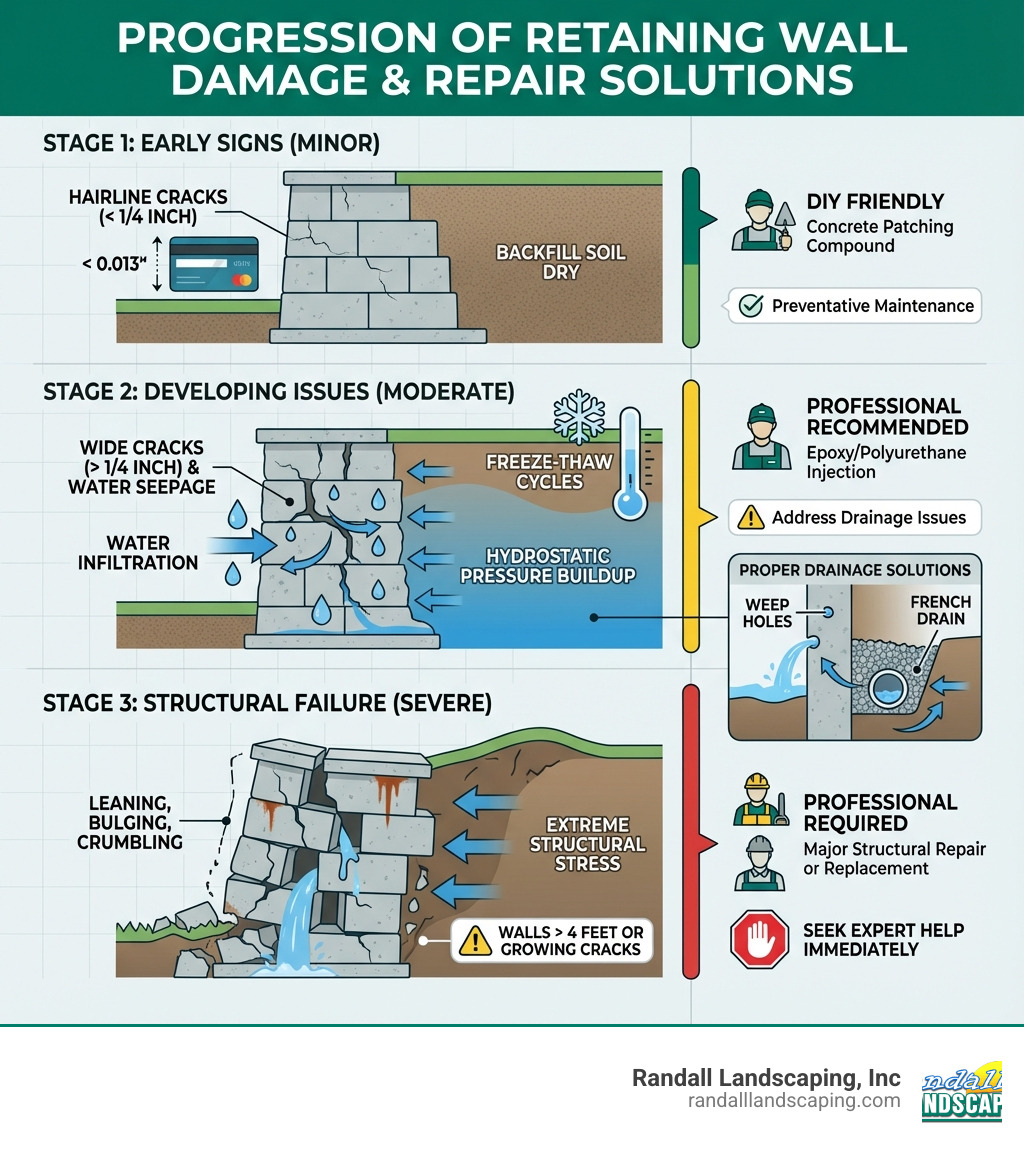
- Hairline cracks (< 1/4 inch): Can often be DIY repaired with concrete patching compound
- Wide cracks (> 1/4 inch): Require professional epoxy or polyurethane injection
- Leaning, bulging, or walls over 4 feet: Always call a professional
- Growing cracks or rust stains: Sign of serious structural issues—seek expert help immediately
You might think that small crack in your retaining wall is just cosmetic. But according to industry data, cracks wider than 0.013 inches (about the width of a credit card) can allow water penetration—and water is the enemy of any retaining wall. What starts as a minor fissure can quickly escalate into a major structural failure, especially in areas with freeze-thaw cycles or poor drainage.
The good news? Most retaining wall cracks are repairable if you catch them early. The key is understanding when you can tackle the repair yourself and when you need professional help.
One of the main culprits behind retaining wall failure is poor drainage. When water accumulates behind your wall, it creates hydrostatic pressure—essentially, the weight of all that trapped water pushing against the concrete or block. Add in the expansion that happens when water freezes in winter, and you have a recipe for cracking, bowing, and eventual collapse.
I’m Tommy Randall, owner of Randall Landscaping, and I’ve been building and repairing retaining walls across Massachusetts and New Hampshire since 2006. Over the years, I’ve seen everything from simple hairline cracks to complete wall failures, and I can tell you that understanding the difference between minor damage and major structural issues is crucial for retaining wall crack repair success.
Simple retaining wall crack repair glossary:
Why Your Retaining Wall is Cracking (and What to Look For)
Retaining walls constantly battle natural forces, making them susceptible to wear. Understanding the common causes of cracks is the first step in effective retaining wall crack repair.
Hydrostatic Pressure
This is the number one enemy of retaining walls. Hydrostatic pressure occurs when water accumulates behind the wall with no escape. This trapped water exerts immense force, especially in New England’s clay/loam soils. The constant pressure leads to cracks, bulging, and failure, often caused by poor drainage.
Poor Construction
Sometimes, the problem is how the wall was built. Poor construction includes:
- Inadequate Design: The wall wasn’t designed for the specific load or soil conditions.
- Insufficient Reinforcement: Lack of or improperly placed steel rebar weakens the wall.
- Small Footing Toe: The base isn’t wide enough to provide stability.
- Weak Concrete: A poor-quality mix makes the wall prone to crumbling.
Freeze-Thaw Cycles
In Massachusetts and Southern New Hampshire, harsh winters take a toll. Water seeps into cracks, freezes, and expands, putting incredible stress on the wall. This widens existing cracks and forms new ones, accelerating deterioration.
Soil Settlement and Tree Roots
The ground naturally shifts over time, creating uneven pressure. Nearby tree roots can also expand and push against the wall, causing cracks.
Signs of Failure
Knowing what to look for is crucial for timely retaining wall crack repair:
- Leaning or Bulging: A major red flag indicating significant pressure and structural compromise.
- Water Seepage: Visible water or white, powdery deposits (efflorescence) signal water infiltration.
- Crumbling Concrete: Flaking or spalling material suggests deterioration from water and freeze-thaw cycles.
Assessing the Damage: Minor Flaw or Major Failure?
Properly assessing the damage guides your next steps for retaining wall crack repair.
- Hairline Cracks: Fine cracks (< 0.013 inches), often cosmetic from concrete shrinkage. While not immediately dangerous, they can let water in and should be addressed.
- Structural Cracks: Wider, deeper cracks, often through the wall’s full thickness. They may accompany leaning or bulging. If a crack is growing, the underlying issue must be fixed first.
- Vertical vs. Horizontal Cracks: Horizontal cracks are more concerning as they can suggest significant lateral pressure.
- Stair-Step Cracks: Common in block walls, these follow mortar joints and often indicate settlement or pressure.
- Measuring Crack Width: Use a crack width gauge for accuracy. Cracks wider than a credit card (0.013 inches) should be repaired.
- Monitoring Crack Growth: Use a crack monitor to see if a crack is widening—a sign of an active, underlying problem.
- Rust Stains: Orange stains indicate corroding internal rebar. This is a serious issue that compromises the wall’s integrity and requires professional attention.
Knowing the difference between minor and major issues is key to effective retaining wall crack repair. For those interested in the robust construction that prevents such issues, learn More about quality retaining walls.
DIY Repair vs. Calling a Professional: Making the Right Call
Deciding whether to tackle a retaining wall crack repair yourself or call in the professionals depends on the severity of the damage. While a DIY approach can save money on minor issues, attempting a repair beyond your skill level can lead to more costly damage. The table below provides a quick comparison.
| Feature/Scenario | DIY Repair | Professional Repair |
|---|---|---|
| Crack Size | Hairline cracks (< 0.013-in) or minor surface cracks (< 1/4-inch) | Wide cracks (> 1/4-inch), deep cracks, or cracks that extend through the entire wall thickness |
| Wall Height | Walls under 4 feet | Walls over 4 feet (require professional assessment) |
| Signs of Structural Failure | None (no leaning, bulging, or significant movement) | Leaning, bulging, bowing, shifting, or separation from adjacent structures |
| Crack Growth | Crack is stable and not growing | Crack is actively growing or widening over time (use a crack monitor to verify) |
| Presence of Water | Minor seepage or efflorescence that can be managed with surface sealants | Persistent water intrusion, active leaks, or significant hydrostatic pressure issues |
| Rebar Corrosion | No orange rust stains visible | Orange rust stains visible, indicating rebar corrosion |
| Underlying Cause | Known and easily addressable (e.g., minor shrinkage, superficial damage) | Unknown, complex (e.g., soil issues, foundation problems, poor original construction), or requires specialized equipment/knowledge |
| Typical Costs | $50 – $200 for materials | $800 – $10,000+ (depending on severity and method) |
| Risk Level | Low for minor, cosmetic issues | High for structural issues; improper DIY can worsen damage and pose safety risks |
When to Attempt a DIY Retaining Wall Crack Repair
A DIY repair is appropriate for minor, non-structural issues. Consider tackling the job yourself if you’re dealing with hairline cracks (narrower than a credit card), the wall is under 4 feet tall, and it shows no signs of leaning, bulging, or movement. This can be a cost-effective solution for cosmetic fixes and preventing water entry. If you’re interested in learning more about concrete repair in general, you can Find a Course Now! to expand your knowledge.
When You Absolutely Need a Professional
For anything beyond superficial damage, we strongly advise calling a professional. A retaining wall holds back tons of soil, and its failure can be dangerous and expensive. You absolutely need an expert if you see wide or growing cracks (> 1/4-inch), any leaning or bowing, major water issues, or rust stains. Walls over 4 feet tall with any signs of distress also warrant immediate professional assessment from a team like Randall Landscaping. We specialize in comprehensive retaining wall repair solutions for homeowners across the Merrimack Valley and Southern New Hampshire.
When in doubt, always consult with a professional. For comprehensive guidance on professional services, see our guide on When to hire a retaining wall contractor.
A Step-by-Step Guide to Retaining Wall Crack Repair
Whether you’re tackling a minor crack yourself or understanding the process for a professional repair, knowing the steps involved is empowering.
DIY Retaining Wall Crack Repair for Minor Issues
For small, non-structural cracks (typically less than 1/4-inch wide), you can often perform a DIY retaining wall crack repair.
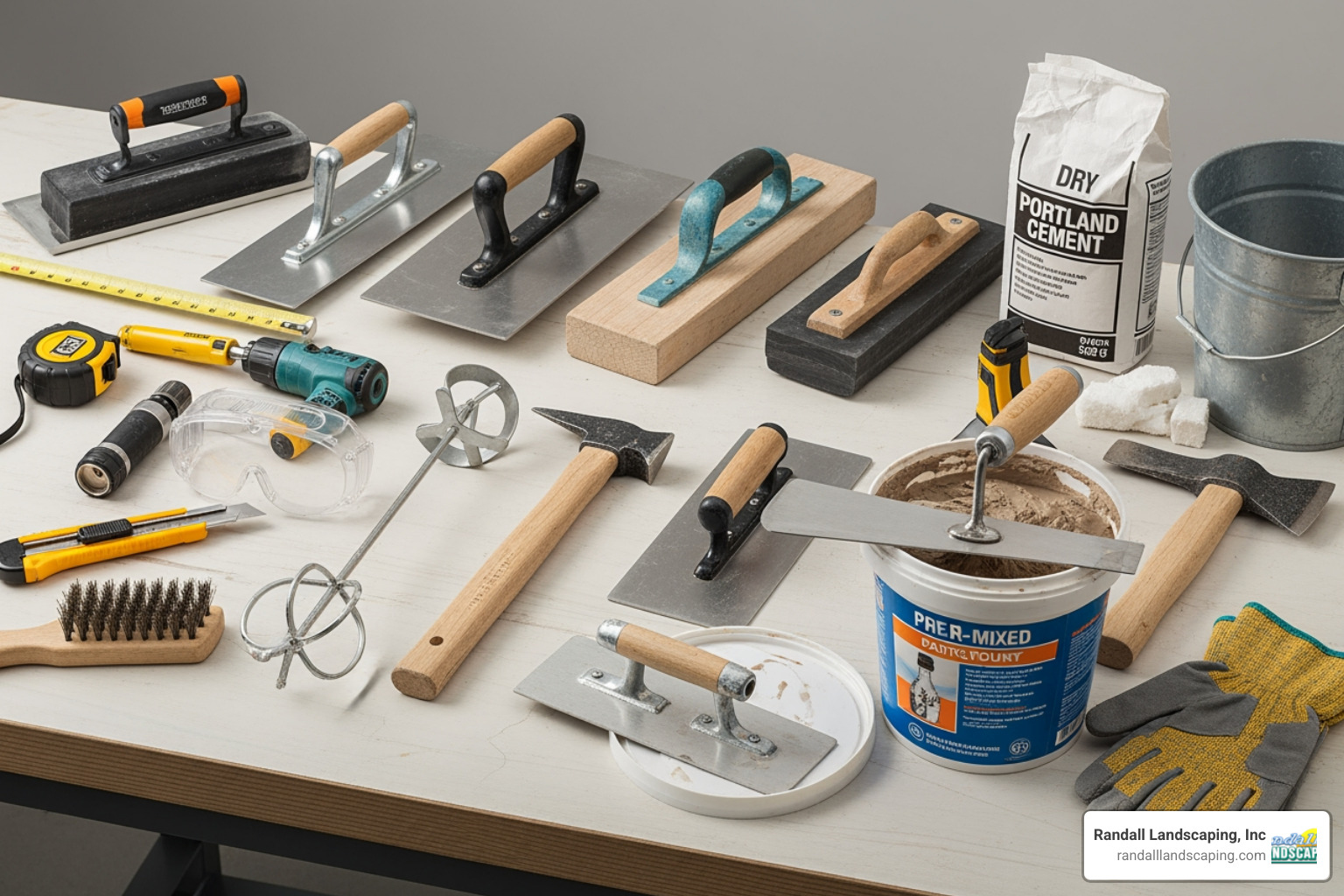
Tools and Materials:
- Safety Goggles and Gloves
- Wire Brush
- Chisel and Hammer
- Shop Vacuum or Compressed Air
- Concrete Patching Compound
- Low Viscosity Epoxy Adhesive: We recommend PC-Concrete Two-Part Epoxy Adhesive.
- Two-Part Epoxy Paste: For wider cracks, use a two-part epoxy paste.
- Caulk Gun: Such as this caulk gun.
- Trowel or Putty Knife
- Denatured Alcohol: Like this denatured alcohol.
Steps:
- Clean the Crack: Use a wire brush to remove all loose debris. For cracks over 1/8-inch, use a chisel to create an inverted ‘V’ shape for better bonding. Vacuum or use compressed air to clear all dust. The surface must be clean and dry.
- Apply the Filler: For hairline to 1/2-inch cracks, inject a low viscosity epoxy adhesive. For wider cracks or small spalls, use a trowel to apply a two-part epoxy paste, pressing it firmly into the void.
- Smooth the Surface: Use a trowel to smooth the patch flush with the wall. For a clean epoxy finish, dip a gloved finger in denatured alcohol and smooth the surface.
- Cure: Allow the material to cure fully according to the manufacturer’s instructions before the area is disturbed.
This method works well for cosmetic fixes. For more extensive projects, explore our services for More on landscape wall construction.
Professional Retaining Wall Crack Repair for Structural Damage
When cracks are wide, growing, or show signs of structural instability, it’s time for professional retaining wall crack repair.
Epoxy and Polyurethane Injection
This method seals leaks and restores structural integrity. Professionals seal the crack’s surface and install injection ports. A specialized epoxy resin (for strength) or polyurethane foam (for sealing active leaks) is then injected under pressure, filling the entire crack from the inside out. This process can restore the wall’s load-bearing capacity and prevent water intrusion that corrodes rebar. Products like the Sikadur Crack Repair Kit are designed for this purpose.
Structural Reinforcement
When a wall is leaning or bowing, it needs more than a crack filler.
- Wall Anchors: These systems brace the wall by connecting an interior plate on the wall face to an earth anchor embedded in stable soil behind the wall.
- Helical Tiebacks: These giant screws are bored into the soil behind the wall and connected to a wall plate. They provide powerful stabilization, especially in rocky soil or tight spaces. Find more information on our page about helical anchor repair and our complete guide to retaining wall anchors.
Rebuilding Sections
In cases of severe crumbling, collapse, or widespread rebar corrosion, the only safe option may be to dismantle and rebuild the compromised sections with proper drainage and reinforcement.
Prevention is the Best Medicine: The Role of Proper Drainage
The best retaining wall crack repair is the one you never have to do! Proper drainage is the single most critical factor in preventing retaining wall failure and extending its lifespan. As we’ve seen, hydrostatic pressure is a major culprit behind cracks and instability.
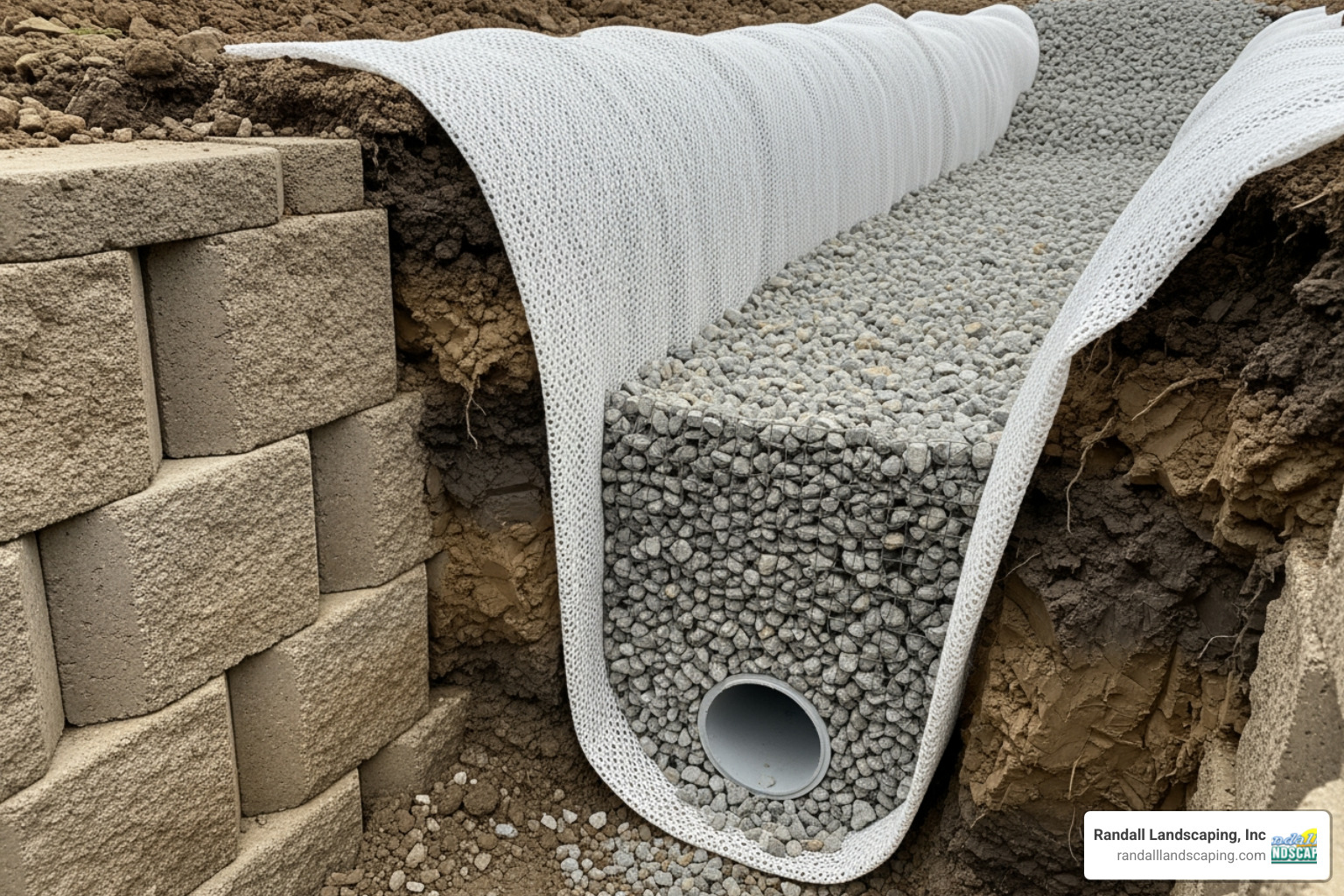
Here’s how we ensure proper drainage for retaining walls in places like Dracut, North Andover, and Boxford:
- Weep Holes: These are small openings or pipes installed at the base of the retaining wall, allowing trapped water behind the wall to escape. They relieve hydrostatic pressure directly.
- French Drains: A French drain is a trench filled with gravel and a perforated pipe that diverts surface water and groundwater away from the retaining wall. This is an excellent way to prevent water from building up behind the wall in the first place.
- Gravel Backfill: When constructing or repairing a retaining wall, we always include a layer of clean, coarse gravel directly behind the wall. This permeable layer allows water to filter down to the weep holes or drainage pipe, preventing it from saturating the soil directly against the wall.
- Grading: Ensuring that the ground slopes away from the top of the retaining wall helps direct surface water away, preventing it from pooling and seeping behind the wall.
By effectively managing water, we prevent hydrostatic pressure from building up, which in turn significantly reduces the risk of cracking, bulging, and eventual wall failure. This proactive approach not only extends the service life of your retaining wall but also protects your property and landscape for years to come. Our hardscaping services always prioritize proper drainage for longevity.
Frequently Asked Questions about Retaining Wall Repair
We often get questions from homeowners in Merrimack Valley and Southern New Hampshire about their retaining walls. Here are some of the most common ones we address:
How much does retaining wall crack repair cost?
The cost of retaining wall crack repair varies widely. A simple DIY repair might cost $50-$200 for materials. Professional structural repairs are more involved and can range from $800 to $10,000 or more. The final price depends on the crack’s size, wall type, accessibility, and whether underlying issues like drainage need to be fixed.
- Price Disclaimer: These are internet-based averages and not a quote from Randall Landscaping. For an accurate estimate custom to your specific needs in Andover, Methuen, or Atkinson, we recommend scheduling a professional assessment.
Can a crumbling or leaning retaining wall be saved?
Yes, in many cases. A leaning or crumbling wall doesn’t automatically require a complete rebuild. A professional can assess the root cause. Often, walls can be stabilized with reinforcement systems like wall anchors or helical tiebacks, a process that can take just a day or two. However, if the foundation has failed or the deterioration is too severe, a rebuild is the safest long-term solution.
How long does a retaining wall repair last?
The longevity of a retaining wall crack repair depends on the method used and whether the underlying cause of the crack was addressed. A cosmetic surface patch may only last a few years. However, a professional structural repair, like epoxy injection or installing wall anchors that address the underlying pressure, can last for decades—often for the remaining life of the wall. At Randall Landscaping, we use industry-leading products and proven techniques to ensure our repairs stand the test of time.
Secure Your Landscape for the Long Term
A sound retaining wall is an investment in your property’s safety, beauty, and value. Addressing retaining wall crack repair promptly and correctly offers numerous benefits.
- Long-Term Benefits: By investing in proper repair, you’re not just fixing a crack; you’re safeguarding the entire structure and the landscape it supports for years to come.
- Increased Property Value: A damaged retaining wall can be a significant deterrent to potential buyers. A well-repaired and stable wall improves your property’s curb appeal and value.
- Safety and Stability: The most crucial benefit is ensuring the safety of your family and property. A failing retaining wall poses a serious risk of collapse, which can cause significant damage or injury.
- Preventing Erosion: Repairing cracks ensures your retaining wall continues to prevent soil erosion, protecting your landscape from washouts.
- Peace of Mind: Knowing that your retaining wall is secure allows you to enjoy your outdoor space without worry.
At Randall Landscaping, we deliver reliable, quality work focused on customer satisfaction. Our professional assessment identifies the root cause of your wall’s issues to provide the most effective retaining wall crack repair solutions in areas like Windham, Pelham, or North Reading. We are committed to maintaining the beauty and safety of your residential or commercial property.
Don’t let a small crack turn into a big problem. Contact us for expert retaining wall repair services today, and let us help you secure your landscape for the long term.