
Why Finding the Right Retaining Walls Contractor is Critical for Your Property
A retaining walls contractor is a specialized professional who designs, builds, and repairs structures that hold back soil. These walls are essential for managing elevation changes on your property and preventing erosion. For more details on the engineering behind them, you can learn more about retaining walls.
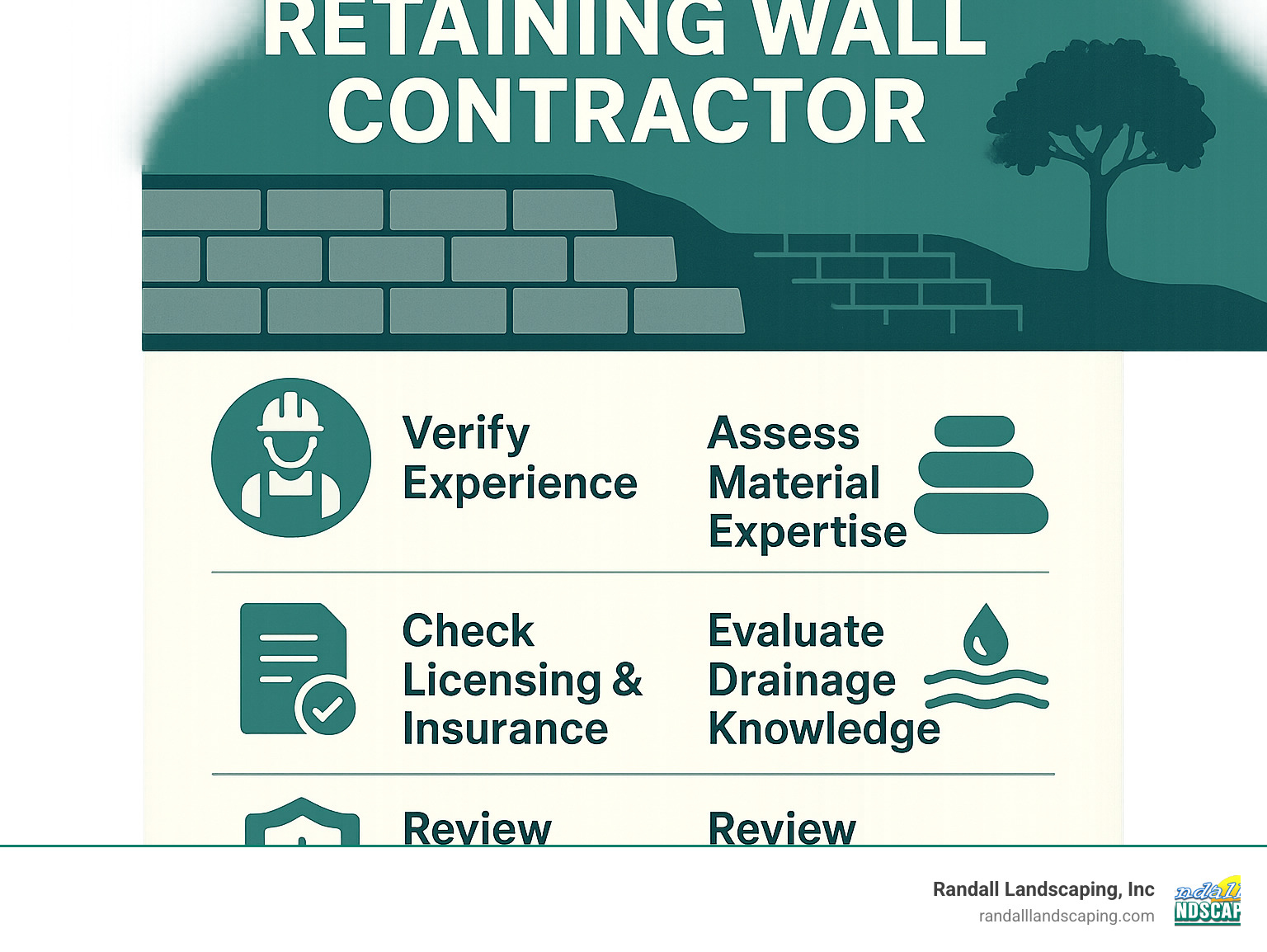
Key Qualifications to Look For:
- Experience: A proven track record in retaining wall construction.
- Portfolio: Examples of similar projects and client testimonials.
- Licensing & Insurance: Proper licensing and full liability coverage.
- Materials Expertise: Knowledge of materials suited for your climate and soil.
- Permit Handling: Ability to manage permits and follow local building codes.
Essential Services They Provide:
- Site assessment and soil analysis
- Custom design and engineering
- Proper drainage installation
- Quality material sourcing
- A warranty on workmanship
Whether you’re dealing with soil erosion or creating usable space on a sloped yard, the right retaining wall can transform your property. However, improper construction is the leading cause of retaining wall failure, making your choice of contractor crucial.
As Tommy Randall, owner of Randall Landscaping Business, I’ve helped Massachusetts and New Hampshire homeowners choose the right retaining walls contractor since 2006. With nearly two decades of experience, I know what separates quality work from that which cuts corners.
Common retaining walls contractor vocab:
The Dual Role of Retaining Walls: Functionality and Aesthetics
While many homeowners see retaining walls as a purely practical solution for sliding soil or erosion, that’s only half the story. A well-designed retaining wall solves landscape challenges and transforms your outdoor space into something beautiful. With an experienced retaining walls contractor, you get both function and form.
In the varied terrain of the Merrimack Valley and Southern New Hampshire, retaining walls offer incredible versatility. They turn unusable slopes into functional spaces for terraced gardens, multi-level patios, or distinct outdoor living areas. This dual purpose—solving structural problems while creating visual appeal—makes them a smart investment.
Whether for a residential property in Andover or a commercial space in Lawrence, retaining walls boost curb appeal, provide essential support, and increase property value. These structures are key to beautiful drainage management and erosion control. You can see how we integrate these structures into broader outdoor visions on our hardscaping page.
Primary Functions: Solving Landscape Challenges
Retaining walls perform several essential jobs to protect and improve your property.
- Soil Erosion Prevention: A properly built wall stops soil from washing away during heavy rain or spring thaws, preventing unsightly and unstable bare spots.
- Managing Water Flow: The best walls are designed to work with water, not against it. They allow water to flow through or around the structure in a controlled way, preventing the dangerous pressure buildup that leads to failure.
- Preventing Foundation Damage: By controlling soil and water movement, retaining walls act as a first line of defense for your home’s foundation, saving you from costly future repairs.
- Supporting Sloped Yards: Walls can turn a steep, difficult-to-mow hillside into a level, usable area perfect for a fire pit, garden, or easier lawn maintenance.
- Creating Garden Beds: They excel at creating terraced planting areas, providing distinct zones for different plants at a comfortable working height.
Our team designs retaining wall systems that address these functional needs. Learn more on our retaining walls page.
Aesthetic Improvements: Elevating Your Landscape Design
Beyond their practical benefits, retaining walls can completely transform your outdoor space.
- Creating Visual Interest: Walls add vertical dimension to your landscape, breaking up flat areas and creating natural focal points with curves, straight lines, or multi-tiered designs.
- Multi-Level Patios and Walkways: They enable a seamless transition from a main patio to a lower garden area, connected by steps and creating stunning outdoor living spaces.
- Integrated Seating Areas: A smart contractor can build seating directly into a wall’s design, creating cozy gathering spots that serve a dual purpose.
- Complementing Existing Features: The right design can tie a pool, patio, and other landscape elements together for a cohesive, polished look.
- Limitless Custom Design Options: From the rustic charm of natural stone to the sleek lines of modern concrete blocks, materials can be chosen to complement your home’s architecture and personal style.
For inspiration, explore our patio design services.
Choosing Your Wall: Types and Materials
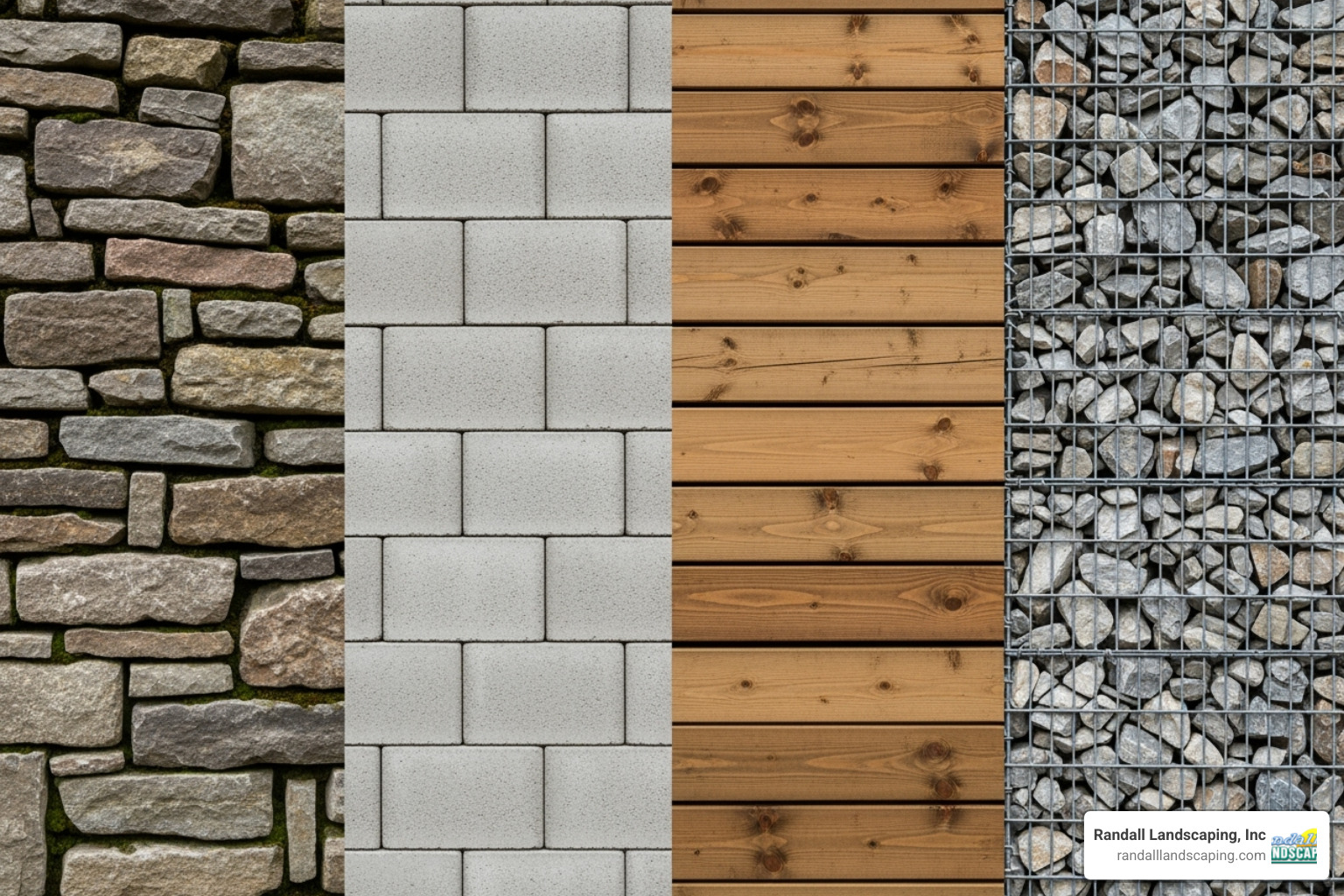
Selecting the right retaining wall involves more than just looks. Material durability and climate suitability are critical in New England, where freeze-thaw cycles can destroy poor choices. While budget considerations are important, the cheapest option upfront often becomes the most expensive long-term. Factoring in maintenance requirements from the start is a smart way to protect your investment.
Common Retaining Wall Types
Understanding the four main types of retaining walls will help you have more productive conversations with your contractor.
- Gravity Walls: These thick, heavy structures use their sheer mass to hold back soil. They are simple and effective for walls under 4 feet, often used for garden borders.
- Cantilever Walls: These reinforced concrete walls use an L-shaped or T-shaped footing to leverage the weight of the soil above to resist pressure. They are excellent for taller walls but require professional engineering.
- Segmental Retaining Walls: These popular systems use interlocking concrete blocks that stack together. They are durable, flexible, and cost-effective, making them ideal for most residential projects.
- Gabion Walls: These are metal baskets filled with stones, offering a modern, industrial look. They provide excellent drainage and are often a budget-friendly option for contemporary designs.
Comparing Retaining Wall Materials for a Northeast Climate
Your retaining wall must handle everything New England’s climate throws at it. Here’s how popular materials compare:
| Material | Pros | Cons | Best For |
|---|---|---|---|
| Natural Stone | Timeless look, highly durable, weather-resistant, blends seamlessly with architectural styles | Higher cost, labor-intensive, requires skilled craftsmanship | Premium landscapes, garden borders, high-end designs |
| Concrete Blocks | Versatile, strong, cost-effective, low maintenance, customizable with textures/patterns | Can look uniform if not designed well, requires proper installation for longevity | Modern designs, high-load areas, structural walls |
| Stone Veneer | Natural stone look, lighter and more cost-effective than solid stone, wide range of styles | Less structural strength than solid stone, applied to a concrete or block core | Aesthetic-focused walls, covering existing concrete or block, decorative purposes |
| Wood Timbers | Rustic appeal, lower initial cost, easy to install for DIYers (for small projects) | Prone to rot and insects, shorter lifespan (average 10-20 years), height limitation (cannot be built over 10 feet high) | Low walls, garden beds, non-critical areas, temporary solutions |
Natural stone is the gold standard for durability and timeless beauty, making it a great long-term investment. Concrete blocks offer incredible versatility and strength, with modern designs that go far beyond plain gray. Stone veneer provides the look of natural stone at a lower cost, perfect for aesthetic-focused projects. Wood timbers offer rustic charm but have a shorter lifespan in our climate and are best for non-critical applications.
A quality retaining walls contractor will help you steer these options to find the perfect match for your needs and budget.
The Construction Process: From Consultation to Completion
Building a retaining wall is a precise process that turns a vision into a durable structure. An experienced retaining walls contractor ensures every step is planned and executed for longevity. The journey involves several critical phases where attention to detail is paramount.

What sets professional installation apart is the focus on what you can’t see. The foundation, drainage, and compaction techniques determine whether a wall lasts 15 years or 50. We don’t cut corners, because we know shortcuts lead to expensive problems.
The Initial Consultation and Design Phase
Every great wall begins with a great conversation. In our initial consultation, we focus on understanding your goals and identifying potential challenges.
- Scope & Site Assessment: We discuss your “why”—whether it’s erosion control or creating a new patio—and assess soil conditions, drainage, and other site-specific factors.
- Budget & Materials: We have honest conversations about budget and help you select the right materials, balancing aesthetics, function, and cost. We can show you samples to help you decide.
- 3D Design & Permitting: We use 3D mockups to bring your vision to life, allowing for refinements before work begins. We also handle the entire permit process, which is often required for walls over 3-4 feet high. For planning support, see our Landscape Design services.
Construction and Installation Best Practices
Once the plan is set, our skilled craftsmen get to work, focusing on quality and adherence to best practices.
- Excavation and Base Preparation: We excavate to a precise depth and create a stable, compacted gravel base—the invisible foundation of a lasting wall. For taller walls, we may use concrete footings and geogrid reinforcement.
- Drainage Systems: This is the most critical step. Poor drainage is the #1 cause of wall failure. We use clear gravel backfill and drainage pipes to ensure water flows safely away from the wall.
- Wall Construction & Compaction: Whether using blocks or stone, every course is level and secure. We use geogrid reinforcement for taller walls to tie the structure into the soil behind it. We compact the backfill material in lifts to prevent future settling.
- Final Grading and Cleanup: We finish by grading the surrounding area to ensure proper water flow and restore any disturbed landscape, leaving your property clean and beautiful.
We adhere to all local building codes across the Merrimack Valley and Southern New Hampshire, ensuring your investment is compliant and built to last.
How to Hire the Best Retaining Walls Contractor
Finding the right retaining walls contractor can feel overwhelming, but it’s one of the most important decisions you’ll make for your property. After all, a poorly built retaining wall isn’t just an eyesore – it can be a safety hazard and a costly mistake that affects your home’s foundation and landscape for years to come.
The good news? With the right approach, you can confidently choose a contractor who will deliver exceptional results. Here’s what separates the professionals from those who might leave you with problems down the road.
Experience and expertise are non-negotiable. You want a contractor who has spent years mastering the art and science of retaining wall construction. They should understand soil conditions, drainage requirements, and local building codes like the back of their hand. Our team brings decades of combined experience to every project, having tackled everything from simple garden walls to complex commercial installations across the Merrimack Valley and Southern New Hampshire.
A strong portfolio and genuine customer reviews tell the real story. Don’t just take their word for it – ask to see photos of completed projects and read what previous clients have to say. Look for consistency in quality and attention to detail across different types of projects. We’re proud of our track record and happy to share examples of our work with potential clients.
Insurance and proper licensing protect both you and the contractor. Never work with someone who can’t provide proof of liability insurance and appropriate licensing for your area. This isn’t just about following rules – it’s about ensuring you’re covered if something goes wrong during construction.
Clear communication and transparency make all the difference in your experience. The right contractor will listen to your concerns, explain their process in terms you understand, and keep you informed throughout the project. They’ll also provide detailed, written estimates that break down costs, materials, and timelines so there are no surprises.
Look for contractors who offer an industry-leading warranty on their work. This shows they stand behind their craftsmanship and gives you peace of mind knowing you’re protected if issues arise. Our comprehensive warranty reflects our confidence in the quality and durability of every wall we build.
What to Ask a Potential Retaining Walls Contractor
Before you sign any contracts, arm yourself with the right questions. The answers will reveal whether you’re dealing with a true professional or someone who might cut corners.
Start with the basics: “How many years have you been building retaining walls specifically?” General landscaping experience is valuable, but retaining walls require specialized knowledge. You want someone who has handled projects similar to yours and understands the unique challenges your property might present.
Ask to see examples of recent projects that are similar in scope and style to what you’re planning. Pay attention to the quality of materials, craftsmanship details, and how well the finished walls integrate with the surrounding landscape. A contractor who’s proud of their work will be eager to show it off.
Material selection is crucial, especially in our climate. Ask: “What materials do you recommend for my specific situation, and why?” The right contractor will consider factors like your soil type, drainage needs, aesthetic preferences, and long-term maintenance requirements. They should be able to explain the pros and cons of different options without pushing you toward the most expensive choice.
Timeline questions help set realistic expectations. Find out how long the project will take from start to finish, and what factors might affect the schedule. Weather, permit approval, and material availability can all impact timing, and an experienced contractor will account for these variables.
Drainage strategy is absolutely critical. Ask how they plan to handle water management for your specific site. Poor drainage is the leading cause of retaining wall failure, so this answer will tell you a lot about their expertise and attention to detail.
Don’t forget about the permit process. If your wall requires permits (typically for walls over 3-4 feet), ask how they handle this. A professional contractor will guide you through the entire process and ensure all requirements are met. For specific local requirements, such as Retaining Wall Installation in Andover, MA, experienced contractors will know exactly what’s needed.
Warning Signs: When to Repair Your Retaining Wall
Even the best-built retaining walls can develop problems over time, and recognizing the warning signs early can save you from costly repairs or dangerous failures. Think of it as giving your wall a regular health checkup – a little attention now can prevent major problems later.
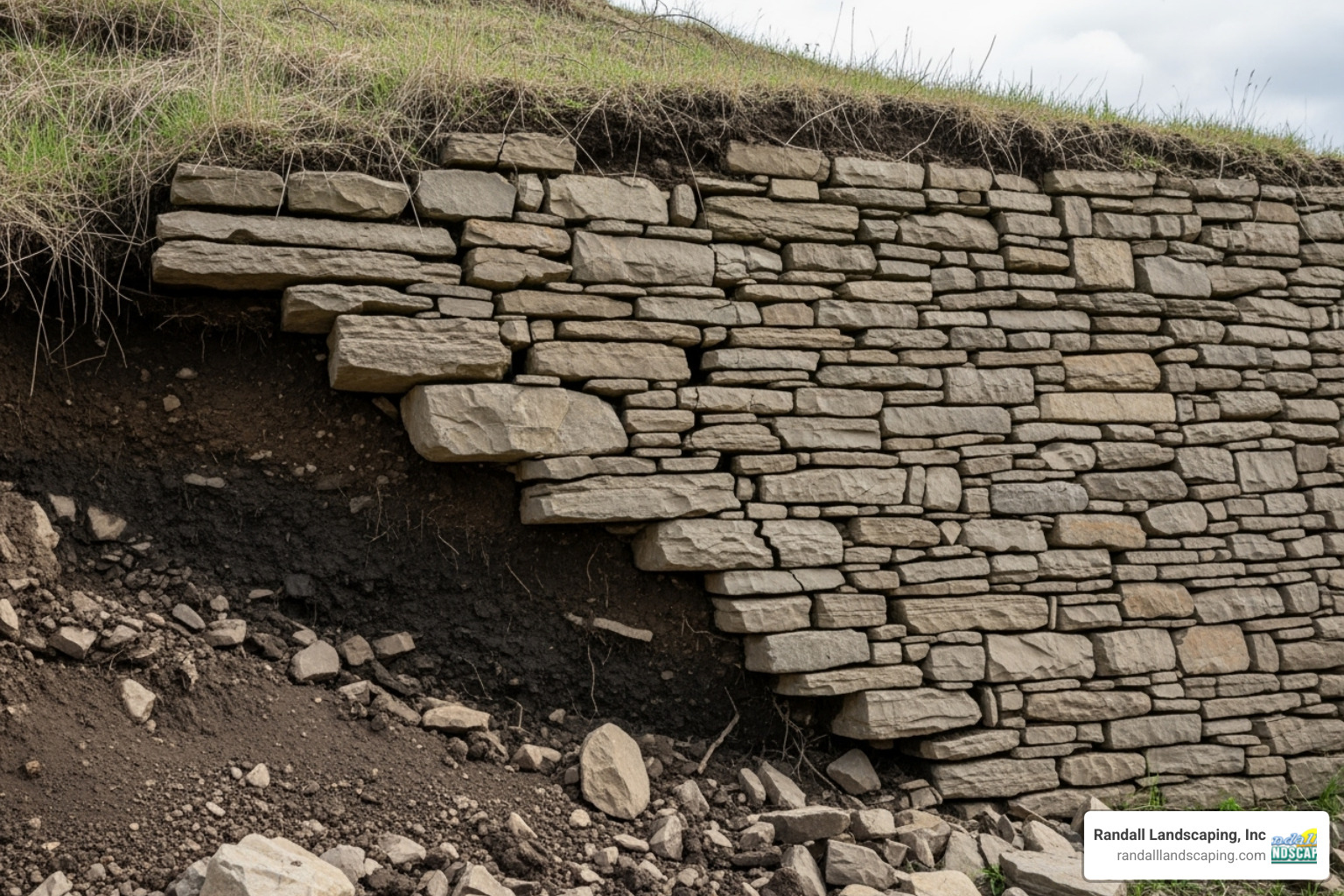
Tilting or leaning is the most serious warning sign you can see. If your wall is no longer standing straight, it means the soil pressure is winning the battle against the wall’s structural integrity. This often indicates foundation problems, inadequate drainage, or soil movement that needs immediate attention.
Cracks and buckling might start small, but they rarely stay that way. Horizontal cracks are particularly concerning, as they suggest the wall is under significant pressure. In our climate, freeze-thaw cycles can turn minor cracks into major structural issues surprisingly quickly.
Watch for separating sections where different parts of the wall are pulling apart. This suggests the wall wasn’t properly reinforced or that ground movement is affecting the structure’s stability.
Water pooling or poor drainage around your wall is a red flag that shouldn’t be ignored. If you notice standing water, erosion patterns, or signs that water isn’t draining properly, the wall’s drainage system may be failing. Inadequate drainage is the number one cause of retaining wall failure.
Bulging or crumbling materials show that your wall is reaching the end of its useful life or suffering from material degradation. Wood rot, concrete spalling, or stones that are coming loose all indicate it’s time for professional attention.
The key is not to wait until small problems become big ones. Early intervention is almost always less expensive and less disruptive than waiting until a wall fails completely. Our team specializes in both preventive maintenance and comprehensive repairs, helping property owners protect their investment and maintain safe, attractive landscapes for years to come.
Frequently Asked Questions about Retaining Wall Projects
It’s normal to have questions when planning a retaining wall. After nearly two decades of helping homeowners in the Merrimack Valley and Southern New Hampshire, we’ve compiled answers to the most common inquiries.
How much does a retaining wall cost?
Retaining wall costs vary widely based on several factors. The final price depends on material choice, wall height and length, site accessibility, and soil conditions. A simple concrete block wall will cost less than a custom natural stone wall, but they serve different aesthetic and structural goals.
Based on general industry data from across the country, retaining wall costs can range from $25 to over $75 per square foot. For example, a simple 3-foot high, 50-foot long wall might cost between $3,750 and $11,250, while a more complex project could exceed $25,000. Please note these are general estimates based on internet research and not actual pricing for our services.
For an accurate price, get a detailed, customized estimate based on a professional site visit.
Do I need a permit for a retaining wall?
Permit requirements depend on your local municipality. In most towns in Massachusetts and New Hampshire, walls over 3 to 4 feet in height require a permit and sometimes drawings from a licensed engineer. Some towns have rules for walls near property lines, regardless of height.
The good news is that as your retaining walls contractor, we handle the entire permit process for you. We know the local codes and have relationships with building departments, ensuring your project is compliant and proceeds smoothly.
What is the best material for a retaining wall in a climate with freezing winters?
For New England’s harsh freeze-thaw cycles, material choice and proper installation are key.
- Natural stone is a top choice for durability. It has weathered New England winters for centuries and can last for generations.
- High-quality interlocking concrete blocks are also an excellent option. They are engineered to handle ground movement and temperature changes without compromising the wall’s integrity.
However, the single most important factor for longevity in our climate is proper drainage. Without it, water can freeze and expand behind the wall, generating enough force to destroy even the strongest materials. A robust drainage system is not a luxury—it’s a necessity that ensures your wall will stand strong for decades.
Your Partner for a Lasting Retaining Wall
A retaining wall is a significant investment in your property’s safety, function, and beauty. It’s a long-term solution that prevents costly erosion, creates valuable outdoor living space, and improves your landscape’s appeal.
Choosing the right retaining walls contractor is the most critical step. Poor construction is the leading cause of wall failure, which is why experience and expertise are non-negotiable. You need a team that combines specialized knowledge, creative design, and proven construction techniques.
At Randall Landscaping, Inc., we have served the Merrimack Valley and Southern New Hampshire since 2006. With nearly two decades of hands-on experience, we have the expertise to tackle any site condition with confidence.
We believe in open communication and transparent processes. We take the time to understand your vision, explain your options, and keep you informed every step of the way. As your local retaining walls contractor, we understand the challenges of building in New England, from navigating freeze-thaw cycles to managing local permits.
Our commitment to professionalism, reliability, and exceptional results means you can trust us to deliver a retaining wall that will stand strong and look beautiful for years to come.
Contact us today to discuss your retaining wall project!