

Why an Irrigation Blowout Near Me Matters Before the First Freeze
If you’re looking for an irrigation blowout near me, here’s the short answer:
- What it is: A professional uses a high-volume air compressor to push all water out of your sprinkler pipes before winter.
- Why you need it: Water left in your pipes can freeze, expand, and crack valves, pipes, and sprinkler heads — causing hundreds or thousands of dollars in damage.
- When to do it: Schedule between early October and mid-November, before your first hard freeze.
- Who to call: A licensed, insured irrigation specialist — not a general handyman.
- Typical cost: Roughly $55 to $250+ depending on zone count (based on internet averages, not Randall Landscaping pricing).
Every fall, homeowners across Southern New Hampshire face the same risk: an irrigation system full of water sitting in the ground as temperatures drop. Underground pipes don’t need to stay frozen for long before the damage is done. Water expands as it freezes, and that pressure has nowhere to go — except into your pipes, valves, and backflow preventers.
The result? A costly repair bill come spring, right when you’re ready to get your lawn looking its best again.
I’m Tommy Randall, owner of Randall Landscaping, Inc., and with nearly 20 years of hands-on experience serving Massachusetts and New Hampshire homeowners, I’ve seen what a missed irrigation blowout near me can cost a homeowner who waited just a week too long. In this guide, I’ll walk you through everything you need to know — from what the process actually involves to how to find the right local pro for the job.
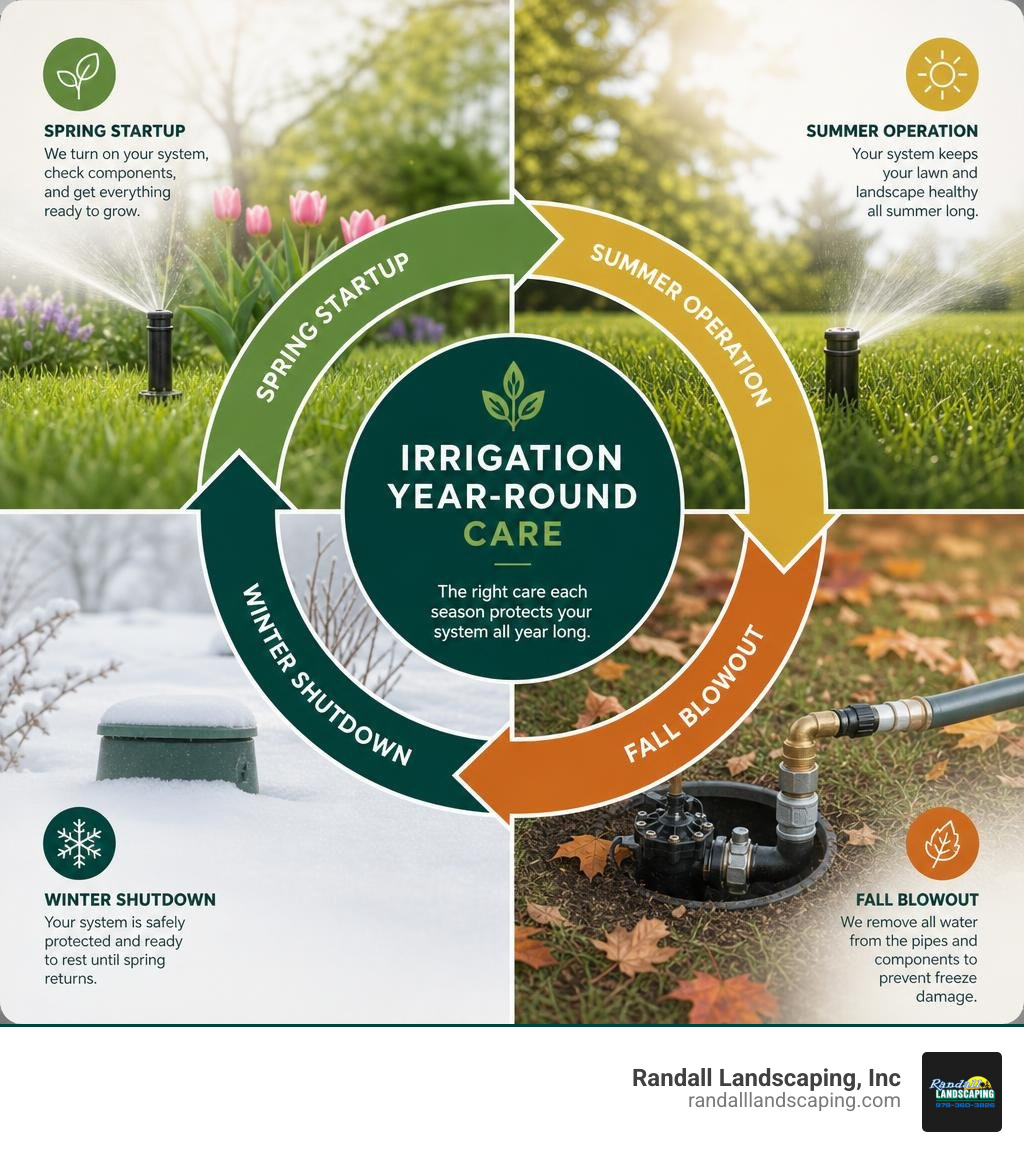
What is a Sprinkler Blowout and Why is it Necessary?
To understand why a blowout is so critical, you have to look at how modern in-ground sprinkler systems are built. Unlike the deep municipal water mains running under our streets in places like Methuen or Salem, residential irrigation lines are buried relatively shallow—usually only about 8 to 12 inches deep.
Because they sit well above the New England frost line, these pipes are completely exposed to the freezing temperatures of our harsh winters. Simply turning off the main water supply inside your basement isn’t enough. Gravity drainage only removes a small fraction of the water, leaving massive pools trapped in low points, fittings, and the delicate mechanisms of your sprinkler heads.
If you want to know how to keep your system healthy, our Garden Irrigation System Guide 2025 provides an excellent foundation. When water is left inside these sealed lines and freezes, it behaves exactly like municipal water mains during a winter cold snap. We often read about major infrastructure failures, such as when a Main pipe bursts, precautionary boil water notice issued for some Midway residents, which demonstrates the sheer, destructive power of water pressure and temperature shifts. The exact same physics apply to the poly or PVC pipes under your lawn.
The Science of Freeze Damage in Irrigation Systems
When temperatures drop below 32°F, water undergoes a physical transformation. Unlike most substances that contract when they cool, water expands by approximately 9% as it crystallizes into ice.
Within a confined plastic pipe, this expansion exerts thousands of pounds of pressure per square inch. This pressure easily ruptures poly pipe walls, cracks rigid PVC fittings, and splits brass or plastic valves.
The most vulnerable—and expensive—component of your system is the backflow preventer assembly. Located above ground or just below the surface, the backflow preventer contains delicate internal springs, seals, and ceramic or brass poppets designed to keep irrigation water from siphoning back into your clean drinking water. If water freezes inside this assembly, it will crack the heavy brass casting, requiring a complete and highly expensive replacement.
Why You Need an Irrigation Blowout Near Me Before Winter
A professional blowout is the only guaranteed way to empty your system completely. By using high-volume, regulated compressed air, we force all residual water out of every line, valve, and lateral pipe. This zone-by-zone purging ensures that there is absolutely no water left behind to freeze and expand.
Investing in an irrigation blowout near me protects your initial investment. The average cost of a lawn sprinkler system is $2,550, ranging from $350 to $5,000 or more depending on yard size and sprinkler type. A yard that is 1/4 of an acre averages a total sprinkler system cost of $2,460, while a one-acre yard averages $9,840.
With those numbers in mind, spending a small amount each fall to preserve your system is a no-brainer. If you are starting from scratch or looking to replace a ruined setup, you can learn more about the setup process on our Professional Sprinkler System Installation page.
Professional Sprinkler Blowout vs. DIY Methods
Many homeowners in our service areas, from Dracut and Andover to Windham and Pelham, are avid DIYers. However, winterizing an irrigation system is one chore that should be left to the professionals. The difference between a professional service and a DIY attempt comes down to the specialized equipment and technical training required to complete the job safely.

The Risks of DIY Sprinkler Winterization
The primary danger of DIY blowouts lies in using the wrong equipment. Most residential air compressors are high-pressure, low-volume machines (typically delivering 2 to 5 cubic feet per minute, or CFM). To clear irrigation lines, you actually need the exact opposite: low pressure and high volume.
To safely purge water without melting or shattering the plastic pipes, you need a commercial-grade compressor that can deliver between 50 and 100 CFM at a strictly regulated pressure of no more than 50 to 80 PSI.
If you hook up a standard home compressor, you will likely run into two major issues:
- Incomplete water removal: The low volume of air will simply blow over the water in the pipes, leaving deep pools in low spots that will freeze and crack the lines later.
- System destruction: To compensate for low air volume, DIYers often crank up the pressure (PSI). This excessive pressure can cause friction that melts plastic gears inside rotating sprinkler heads, blows valves apart, or sends plastic shards flying through your lawn like shrapnel.
What to Expect During a Professional Irrigation Blowout Near Me
When we arrive at your home in North Andover or Salem for an irrigation blowout near me, our process is meticulous and designed to protect your property:
- Main Water Shutoff: We locate and shut off the main water valve inside your home or in your utility pit.
- Compressor Connection: We hook up our commercial tow-behind air compressor to the blowout port on your backflow preventer or main manifold.
- Zone Purging: We activate the compressor and systematically open one zone at a time using your controller. We start with the zone farthest from the compressor and work our way back, running air through each zone until only a fine mist—and finally, clear air—exits the sprinkler heads.
- Backflow and Pump Draining: We open all test cocks on your backflow preventer, drain any booster pumps or filtration systems, and leave the valves open at a 45-degree angle to prevent any trapped moisture from causing damage.
- System Tagging: Finally, we place a highly visible winterization tag on your main valve. This prevents accidental water reactivation during a warm week in November. This step is crucial for local municipal safety, similar to how utility crews tag and manage regional lines during seasonal maintenance, as seen in reports like the Valve Replacement Work Near Lakeview Golf Course To Affect Two Streets on Tuesday as Rest of Area Returns to Normal.
How Much Does an Irrigation Blowout Near Me Cost?
When planning your fall maintenance budget, it helps to understand how pricing works for winterization services in the Merrimack Valley and Southern New Hampshire.
Please note: The pricing details provided below are average costs based on regional internet data and are not actual service costs for Randall Landscaping, Inc. Please contact us directly for an accurate, customized quote for your property.
| Number of Zones | Average Cost Range (Internet Data)* |
|---|---|
| 1 to 4 Zones | $55 – $120 |
| 5 to 8 Zones | $85 – $180 |
| 9 to 12 Zones | $120 – $250 |
| 13+ Zones / Commercial | $250 – $750+ |
To see how these ongoing maintenance costs fit into the bigger picture of system ownership, check out our guide on the Average Cost of Inground Sprinkler System.
Average Cost Breakdown and Pricing Factors
The cost of your blowout is primarily determined by the size and complexity of your system:
- Zone Count: Most residential properties in Atkinson, Boxford, or North Reading have between 4 and 8 zones. Since each zone must be blown out individually to ensure all water is removed, more zones mean more time on site.
- Timing and Peak Demand: Scheduling your appointment early in the fall (September or early October) can sometimes save you money. Many providers raise their rates after the first hard freeze warning because of the sudden surge in emergency calls.
- System Accessibility: If your main shutoff valve is difficult to access or if your backflow preventer requires special adapters, it may slightly affect the service time and cost.
When is the Best Time to Schedule Your Sprinkler Blowout?
In our corner of New England, timing is everything. If you wait too long, a sudden cold snap can freeze your backflow preventer before the technician even arrives.

The optimal time window for scheduling an irrigation blowout near me in Southern NH and the Merrimack Valley is between October 1st and November 15th.
During this window, the ground temperature has not yet dropped below freezing, but you are done watering your lawn for the season. Waiting until late November is a gamble. Ground frosts can occur quickly in places like Plaistow, Windham, and Georgetown. If you want to see how local professionals manage regional schedules, you can read about winterization services in nearby Essex County through resources like Sprinkler Blowouts | North Andover, MA or Serving Dracut, Massachusetts 01826 – Grasshopper Irrigation, Inc.
How to Choose the Best Local Sprinkler Blowout Service
Because of the high demand for winterization in October, many “trunk-slammer” handymen and fly-by-night operations pop up offering cheap blowouts. Hiring an unqualified provider is a major risk to your home and landscape.
When searching for the right professional, look for the following qualifications:
- General Liability Insurance: If an uninsured worker hooks up a massive compressor and blows apart your backflow assembly, sending water flooding into your basement, you could be left holding the bill. Always verify that the company carries active liability insurance.
- Dedicated Equipment: Make sure the company uses tow-behind, high-volume commercial air compressors, not small portable units strapped to the back of a truck.
- Full-Time Specialization: Choose a company that specializes in irrigation and landscaping year-round rather than a general contractor who only does blowouts as a side hustle.
- Commercial Capabilities: If you manage a local business, HOA, or municipal property, ensure the company offers dedicated Commercial Landscape Irrigation Services to handle large-scale, high-zone systems.
Frequently Asked Questions about Sprinkler Winterization
Can I use a standard home air compressor for a blowout?
No. A standard home air compressor does not have the necessary volume (CFM) to clear the lines. It will only blow air over the water, leaving plenty of water behind to freeze and break your pipes during the winter. It also runs a high risk of overheating and melting your sprinkler components.
How long does a professional blowout service take?
For a standard residential system with 4 to 8 zones, a professional blowout typically takes between 30 and 45 minutes. Larger properties with more zones or complex layouts can take up to an hour or more.
What happens if I don’t winterize my sprinkler system?
If you skip winterization, water will freeze inside your lines, valves, and backflow preventer. This leads to cracked pipes underground, ruined manifolds, broken valve boxes, and shattered backflow assemblies. You won’t notice the damage until you turn the water back on in the spring, which will result in geysers under your lawn and a very expensive repair bill.
Conclusion
Your home’s sprinkler system is a valuable asset that keeps your lawn lush, green, and beautiful all summer long. Protecting that investment requires a proactive approach every autumn. By scheduling a professional irrigation blowout near me, you can rest easy knowing your pipes, valves, and backflow preventer are completely safe from the freezing New England winter.
At Randall Landscaping, Inc., we have built our reputation across the Merrimack Valley and Southern New Hampshire on two simple principles: quality work and 100% reliability. We proudly serve homeowners and businesses in Amesbury, Andover, Atkinson, Boxford, Dracut, Georgetown, North Andover, North Reading, Pelham, Salem, Windham, Methuen, Lawrence, and Plaistow.
Don’t wait for the ground to freeze! Contact us today to schedule your professional blowout, or visit our Professional Sprinkler Installation page to learn more about how we can help you design, maintain, and protect your irrigation system.