
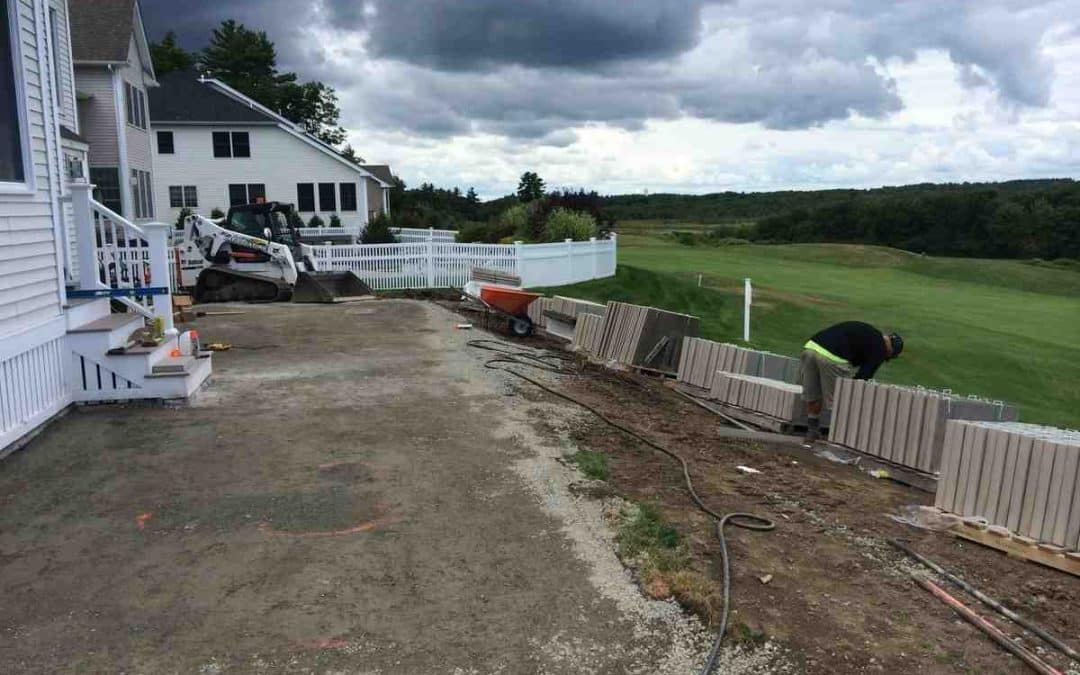
Why Block Walls Are the Smart Choice for New England Properties

A block wall builder can transform your property with structures that combine strength, beauty, and lasting value. Whether you need to manage a sloped yard, create privacy, or add architectural interest, block walls offer superior durability and versatility.
What a Block Wall Builder Does:
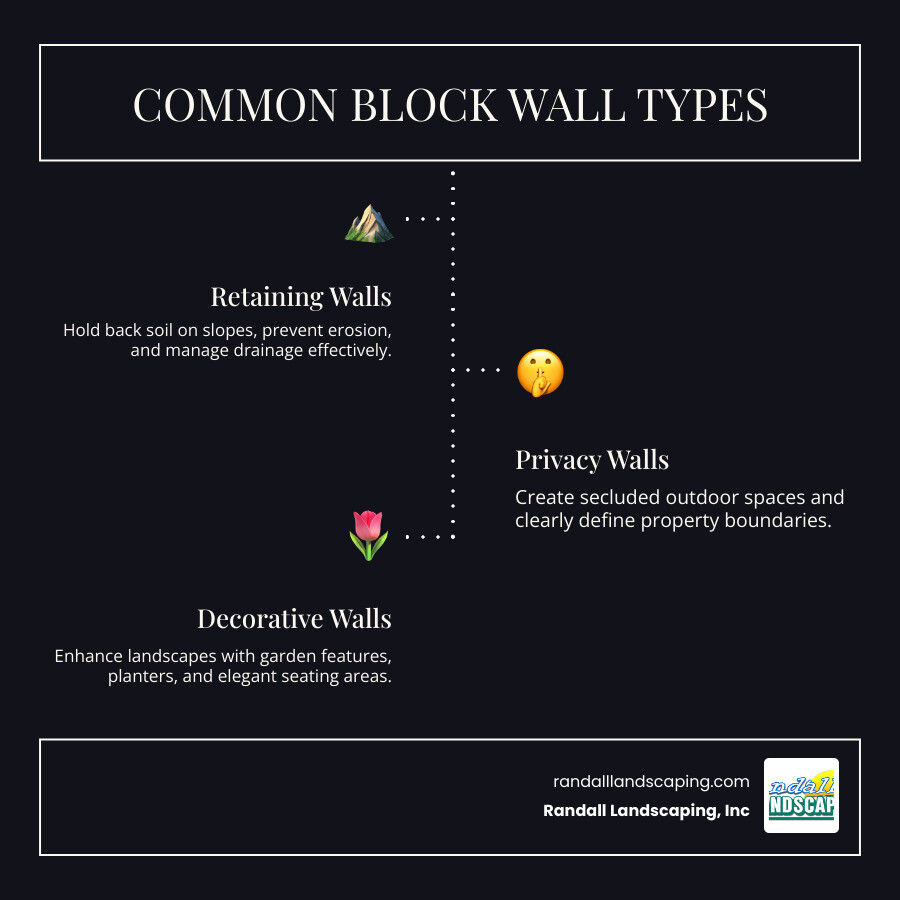
- Retaining Walls – Hold back soil on slopes and prevent erosion
- Privacy Walls – Create secluded outdoor spaces and property boundaries
- Decorative Walls – Add visual appeal with planters, seating areas, and garden features
- Custom Design – Offer various colors, textures, and finishes to match your style
- Professional Installation – Handle soil analysis, drainage, permits, and engineering
Block walls can last up to 50 years, far outliving wood fences that often need replacement every 5-10 years. They resist weather, require minimal maintenance, and boost your property value while solving practical problems like drainage and erosion.
The key to a successful project lies in what you can’t see: proper foundation, drainage, and soil management. These elements separate a wall that lasts decades from one that fails within years. New England’s challenging soil conditions, like clay and loam, demand professional expertise.
I’m Tommy Randall, owner of Randall Landscaping. Since 2006, our team of skilled block wall builders has helped hundreds of homeowners across Massachusetts and New Hampshire build walls that combine structural integrity with beautiful design, from simple garden planters to complex terraced retaining systems.
Basic block wall builder glossary:
Why Choose a Block Wall? Types, Materials, and Benefits
For property owners in the Merrimack Valley or Southern New Hampshire, a block wall is a compelling improvement. It improves property value and curb appeal, requires low maintenance, and withstands New England’s weather. With a lifespan of up to 50 years, block walls are a wise long-term investment, far superior to wood fences that need replacement every 5-10 years.
Types of Block Walls
Block walls are incredibly versatile. Our block wall builder team designs and installs a variety of walls custom to your needs:
- Retaining Walls: Essential for managing sloped terrain and preventing soil erosion. They create usable, flat spaces on hillsides, turning challenging areas into functional parts of your yard. This is crucial for New England’s varied terrain.
- Privacy Block Walls: These walls define property lines and create secluded outdoor living spaces, shielding your home from noise and views.
- Decorative Garden Block Walls: Add aesthetic charm and structure to your garden by outlining flower beds, creating tiered landscaping, or adding an architectural element.
- Planter Boxes: Durable and attractive, block planter boxes integrate greenery into your landscape design and outlast wood alternatives.
- Seating Walls: Low block walls can double as permanent, weather-resistant seating for patios, fire pits, or garden nooks.
- Property Line Block Walls: Clearly mark your property boundaries with a robust block wall, replacing less durable wood or chain-link fences.
Common Materials and Finishes
The beauty of block walls lies in the array of available materials and finishes. Our block wall builder specialists work with:
- Concrete Blocks: The workhorse of wall construction, concrete blocks offer incredible strength, durability, and form the core of many wall types.
- Cinder Blocks: A lightweight yet sturdy type of concrete block used for various wall applications.
- Natural Stone: For a timeless, rustic look, natural stone like granite or fieldstone integrates seamlessly with New England landscapes. Learn more about Sandstone Retaining Wall Builders.
- Brick: Brick adds traditional charm and is often used for decorative elements.
- Stucco Finish: Applied over concrete blocks, stucco provides a smooth, colored surface for a modern or Mediterranean look.
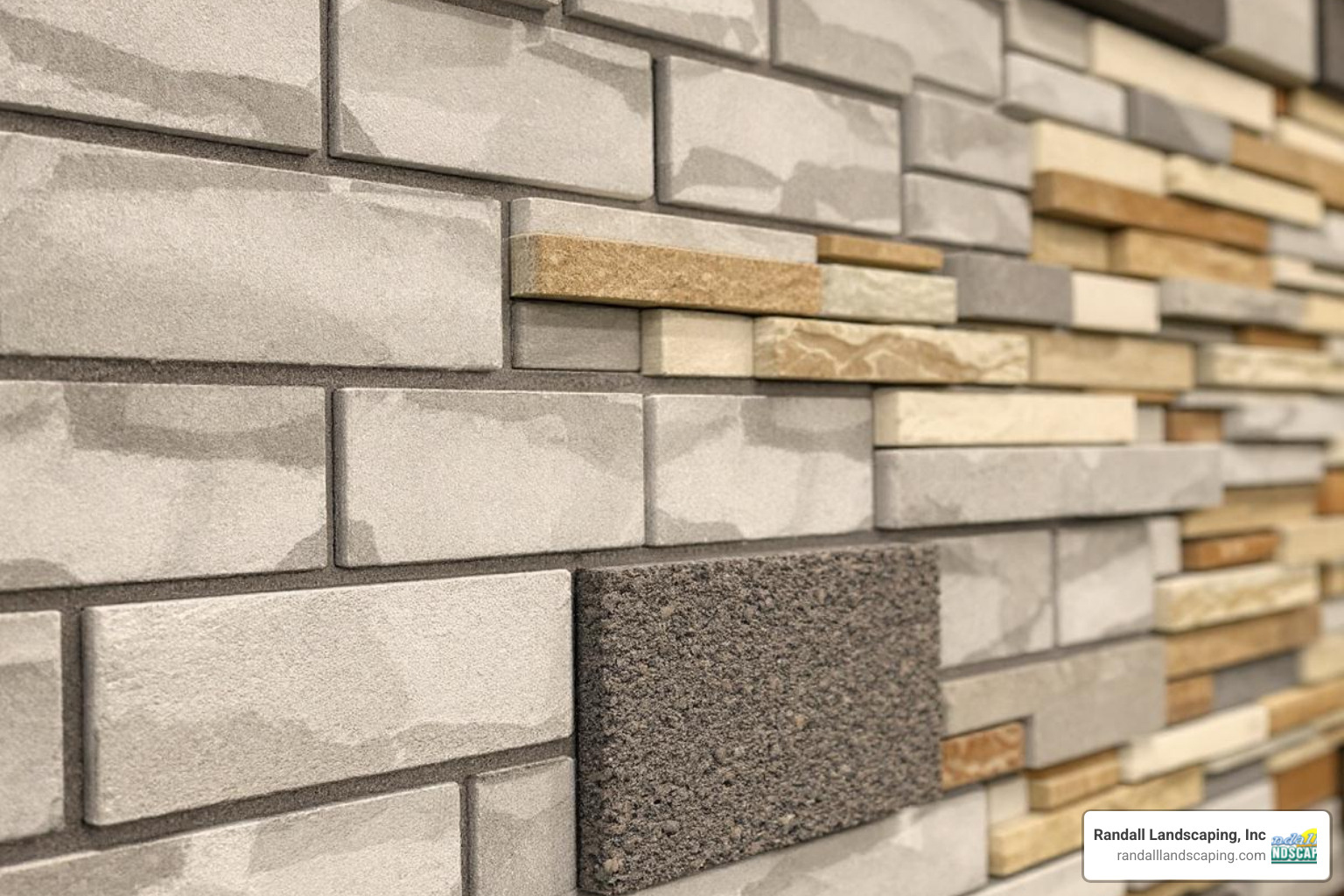
- Colored Blocks: Available in many hues, colored blocks allow for creative designs without painting.
- Textured Blocks: Split-face or tumbled finishes add visual interest and depth to your wall.
The Advantages Over Other Options
Choosing a block wall over other options offers significant benefits for homeowners in our region:
| Feature | Block Walls | Wood Fences |
|---|---|---|
| Lifespan | Up to 50 years. Our research shows block walls can last significantly longer than traditional fences. | Typically 5-10 years, requiring frequent replacement. |
| Maintenance | Very low. Primarily requires occasional cleaning and minor repairs. | High. Requires regular staining, painting, or sealing to prevent rot and decay. |
| Durability | Excellent. Resistant to rot, pests, fire, and extreme weather. Provides superior structural support and erosion control. | Moderate. Susceptible to rot, insect damage, warping, and weather wear. |
| Strength | Superior. Can withstand significant soil pressure (for retaining walls) and provide robust security. | Limited. Primarily acts as a barrier, not for structural support. |
| Versatility | High. Can be used for retaining, privacy, decorative, seating, and planter walls. Wide range of materials, colors, and finishes. | Moderate. Primarily for privacy and boundary. Limited aesthetic options. |
| Property Value | Significant increase. A durable, attractive block wall is a major asset. | Moderate. Can improve value but less so than a permanent structure. |
| Erosion Control | Excellent. Retaining walls effectively manage slopes and prevent soil loss. | Minimal to none. |
Mortarless systems like Allan Block offer superior flexibility, which is ideal for New England’s freeze-thaw cycles. Their strength and versatility make them a top choice for lasting landscape features.
The Step-by-Step Block Wall Construction Process
Building a block wall is a meticulous process requiring expertise to ensure longevity. As your trusted block wall builder, we follow a proven methodology for a durable, beautiful result.

Phase 1: Planning and Preparation
A strong wall begins with careful assessment and preparation.
- Soil Conditions: This is paramount in New England, where clay and loam soils can create “slip planes” leading to wall failure. A pre-construction soil inspection is essential to plan for reinforcement or water redirection. We ensure proper compaction (95% of Standard Proctor density), a detail we never overlook.
- Drainage Planning: Water is the main enemy of retaining walls, and proper drainage is crucial to prevent failure. We design comprehensive systems with drain pipes and wall rock to manage water pressure. A drain pipe is required for walls over 4 feet or in silty/clay soils.
- Local Permits: We handle the complex process of obtaining local permits and managing inspections, ensuring your project complies with all codes in the MA and NH towns we serve.
- Site Excavation: After plan approval, we excavate the site. Trench depth and width are critical for stability.
- Foundation Compaction: A stable, compacted base (minimum 95% Standard Proctor density) is non-negotiable. This prevents settlement and ensures a level, strong wall.
For more in-depth information, visit our guide on More info about retaining wall construction.
Phase 2: Building the Wall
With the groundwork prepared, our block wall builder team begins construction.
- Base Course Leveling: The first course of blocks (the base course) is the most critical. It must be perfectly level on a prepared granular pad to ensure the entire wall is stable.
- Stacking Blocks: Blocks are carefully placed course by course, with the technique varying by block system.
- Mortarless Interlocking Systems: Many modern walls use mortarless interlocking systems like Allan Block. These systems create flexible, durable structures that are adaptable and easier to install than rigid, mortared walls.
- Reinforcement (Steel Rebar): For concrete block retaining walls, steel rebar and concrete fill improve strength against long-term soil and water pressure.
- Backfilling with Gravel: As each course is laid, we backfill with gravel (wall rock) for drainage and stability, compacting as we go. An alternative, No-Fines Concrete Backfill, can reduce excavation depth and save time.
For a deeper dive into specific block systems, refer to resources like Build a Durable and Attractive Retaining Wall with Allan Block .
Phase 3: Finishing Touches
The final phase focuses on aesthetics and long-term performance.
- Capping Stones: Capping stones provide a finished look and protect the blocks below from weather.
- Bullnose Caps: Bullnose caps provide a smooth, rounded edge, ideal for seating and planter walls.
- Drainage Outlets: We ensure drainage outlets are properly installed to redirect water away from the wall.
- Final Grading: We grade the surrounding area to promote water runoff and integrate the wall into the landscape.
- Sealing the Wall: A sealant can be applied to protect the wall from staining and weathering, enhancing its appearance and longevity.
Budgeting and Customizing Your Block Wall Project
Understanding the factors that influence cost and customization is key to planning your block wall project. We help you balance your budget with your aesthetic goals.
What Factors Influence the Cost?
Several elements will affect the overall investment in your block wall project.
- Wall size (height/length): Taller and longer walls require more materials and labor.
- Material choice: Natural stone or specialized decorative blocks cost more than standard concrete blocks.
- Site accessibility: Difficult access for machinery and materials can increase labor costs.
- Labor: The complexity of the design and the experience of the block wall builder team play a role.
- Design complexity: Curved walls or those with integrated features are more complex than straight walls.
- Soil conditions: Challenging New England soils may require additional stabilization or drainage, adding to the cost.
Pricing disclaimer: All prices referenced are average costs based on internet data and not actual costs for Randall Landscaping. Average pricing for block wall installation ranges widely, from $20–$60 per square foot, with high-end projects reaching $180+ per square foot depending on materials and complexity.
Customization Options for a Unique Look
A key benefit of block walls is customization. With our block wall builder expertise, the possibilities are vast:
- Colors: Blocks come in a spectrum of earthy tones and grays. We can also apply stucco or paint for a specific color palette.
- Textures: Choose from smooth, split-face (mimicking natural stone), or tumbled blocks for a rustic look.
- Shapes (curved/straight): We can create graceful curves, geometric patterns, or straight, modern lines.
- Staggered designs: Varying the height or setback of wall sections creates unique visual interest.
- Capping options: Options like flat caps, bullnose caps (great for seating), and decorative stone caps add a sophisticated finish.
These options allow us to create a functional and beautiful wall that is an integral part of your landscape. Learn how we personalize projects on our More info about residential retaining walls page.
The Role of a Professional Block Wall Builder
While a DIY project is tempting, the complexities of block wall construction make hiring a professional block wall builder crucial, especially for retaining walls. Our expertise ensures your investment is sound.
Why Hiring a Professional Block Wall Builder is Crucial
A professional brings invaluable knowledge to guarantee a beautiful and structurally sound result:
- Soil Mechanics: We understand New England’s complex soils and how to prepare them to prevent wall failure.
- Water Management: Professionals design effective drainage systems to protect your wall from hydrostatic pressure, the leading cause of failure.
- Permit Handling: We manage the entire permitting and inspection process, saving you time and headaches.
- Structural Integrity: We use correct materials, compaction techniques, and reinforcement to build a wall that lasts.
- Warranty: As a reputable block wall builder, we offer warranties on our installations for your peace of mind.
Our Retaining Wall Builders Hiring Guide offers more insights. We serve Andover, Boxford, Dracut, Georgetown, Methuen, and other towns in MA and NH. Find out more on our Retaining Wall Builders Near Me page.
Challenges of a DIY Block Wall Builder Project
A DIY block wall, especially for retaining soil, can lead to significant problems:
- Foundation Errors: Improper soil analysis and compaction can cause the wall to crack, lean, or collapse.
- Poor Drainage: Inadequate drainage leads to water buildup and eventual wall failure.
- Wall Failure: A poorly built wall is a safety hazard and can lead to costly property damage.
- Time Commitment: Building a wall is labor-intensive and takes longer than most people expect.
- Physical Labor: The work involves heavy lifting and digging, which can lead to injury.
- Tool Requirements: Specialized tools for excavation and compaction represent a significant cost.
Leave the heavy lifting and engineering to the experts. We’ve seen the results of poor DIY work and, while we can do repairs, we prefer to build it right the first time!
Block Wall Maintenance and Repair Essentials
Block walls are low-maintenance and can last up to 50 years, but they sometimes need attention. Knowing the signs of trouble and when to call a professional block wall builder is key to maximizing your wall’s lifespan.
Signs Your Block Wall Needs Repair
Regular inspections help catch issues early. Here are common signs your wall needs repair:
- Cracks: Large, stair-step, or horizontal cracks are a red flag, especially with leaks or mold.
- Leaning or Bowing: A wall that is bulging or no longer vertical indicates significant structural stress.
- Wet Blocks: Persistent dampness or efflorescence (a white, powdery residue) points to drainage problems.
- Mold or Efflorescence: These indicate excessive moisture that can degrade the blocks.
- Root Damage: Nearby tree roots can exert pressure, causing the wall to shift or crack.
- Impact Damage: Accidents or falling trees can cause immediate damage requiring prompt repair.
Our Complete Retaining Wall Repair Guide is an excellent resource for more information.
Essential Steps for Block Wall Repair
When your wall shows distress, timely repair is crucial. Our block wall builder team follows a systematic approach:
- Cleaning the Area: We first clean the affected area to accurately assess the damage.
- Filling Cracks: Minor cracks can be filled with masonry sealant. Larger cracks may require more extensive work.
- Replacing Damaged Blocks: Damaged blocks are carefully removed and replaced with matching new ones.
- Mortar Application: For mortared walls, we repoint damaged joints (tuckpointing). For mortarless systems, we realign and replace blocks.
For severe structural failure, advanced solutions like helical anchors may be needed to stabilize the wall. Learn more on our Helical Anchors Retaining Wall Repair page. While minor DIY repairs are possible, professional work ensures lasting stability.
Frequently Asked Questions about Block Walls
Homeowners in Andover, Boxford, Dracut, and other communities we serve often ask about block walls. Here are some common inquiries.
How long do block walls typically last?
A well-built block wall can last up to 50 years or more. Longevity is influenced by:
- Material quality: High-grade blocks and stone outlast cheaper materials.
- Installation quality: Proper foundation, drainage, and professional installation are paramount.
- Climate impact: Block walls are weather-resistant, but New England’s freeze-thaw cycles can have an impact over decades.
- Maintenance: Occasional cleaning and prompt repairs extend a wall’s life.
Compared to wood fences that need replacement every 5-10 years, block walls are a superior long-term investment.
Are block walls better than poured concrete?
Both are strong options, but block walls have distinct advantages:
- Flexibility: Segmental block walls offer flexibility that poured concrete lacks, allowing them to withstand ground movement and New England’s freeze-thaw cycles without cracking.
- Aesthetics: Block walls offer more aesthetic versatility with a wide range of colors, textures, and caps. Poured concrete generally has fewer design choices.
- Cost comparison: Mortarless block systems can be more cost-effective due to simpler installation and less need for heavy machinery.
- Repairability: Damaged blocks can be replaced individually. Repairing a poured concrete wall is often more difficult and noticeable.
- Drainage: Many block systems have inherent drainage features. Poured concrete requires separate, carefully installed drainage systems.
For most residential landscaping, the versatility, drainage, and repairability of block walls make them the preferred choice.
Do I need a permit to build a block wall?
Yes, a permit is often required, especially for retaining walls or walls exceeding a certain height. Regulations vary across Massachusetts and New Hampshire.
- Local regulations: Each municipality has codes that dictate when a permit is required, based on height, location, and function.
- Wall height restrictions: Retaining walls over 3 or 4 feet typically require a permit and an engineered design.
- Retaining wall engineering: Taller walls may require an engineer’s stamp on the design plans to ensure stability.
- Professional consultation: Consulting a professional block wall builder like us is the best way to determine permit requirements. We are familiar with local processes and can ensure your project is compliant.
Always assume a permit may be needed and consult with professionals early in the planning process.
Conclusion
A block wall is a smart investment for your Merrimack Valley or Southern New Hampshire property, adding strength, beauty, and value. From functional retaining walls to decorative garden features, their versatility provides an enduring solution for any landscape.
The key to a successful project lies in professional installation. A professional block wall builder understands the complexities of soil, drainage, and structural integrity needed for a wall that lasts. With a lifespan of up to 50 years and minimal maintenance, a block wall installed by Randall Landscaping is a testament to quality and reliability.
Ready to improve your property with a beautiful, durable block wall? Our experienced team is here to guide you.
Contact us to discuss your retaining wall project today, and let’s build something strong and beautiful together.