
Why Finding the Right Local Retaining Wall Contractors Matters
Local retaining wall contractors are specialists who design and build structures that hold back soil, prevent erosion, and create usable outdoor space on sloped or uneven ground.
If you need one fast, here’s what to look for:
- Experience: Look for contractors with at least 10+ years of hands-on work
- Licensing and insurance: Never hire someone who can’t provide proof of both
- Local knowledge: A local contractor understands your soil conditions, drainage challenges, and permit requirements
- Reviews and references: Check Google reviews and ask for past project photos
- Written estimates: Get at least 2-3 quotes before committing
- Warranty: Quality contractors back their work — look for multi-year warranties
Sloped yards, flooding, and erosion are problems that get worse over time. A well-built retaining wall solves all three — and can last anywhere from several decades to over 100 years with the right materials and installation.
But hiring the wrong contractor can mean a wall that leans, cracks, or collapses within just a few years. The difference almost always comes down to drainage, foundation depth, and local expertise.
I’m Tommy Randall, owner of Randall Landscaping, Inc., and with nearly 20 years of hardscape and retaining wall experience serving Massachusetts and Southern NH, I’ve seen what separates a wall that lasts from one that fails — and I’ll walk you through exactly how to find local retaining wall contractors you can trust.
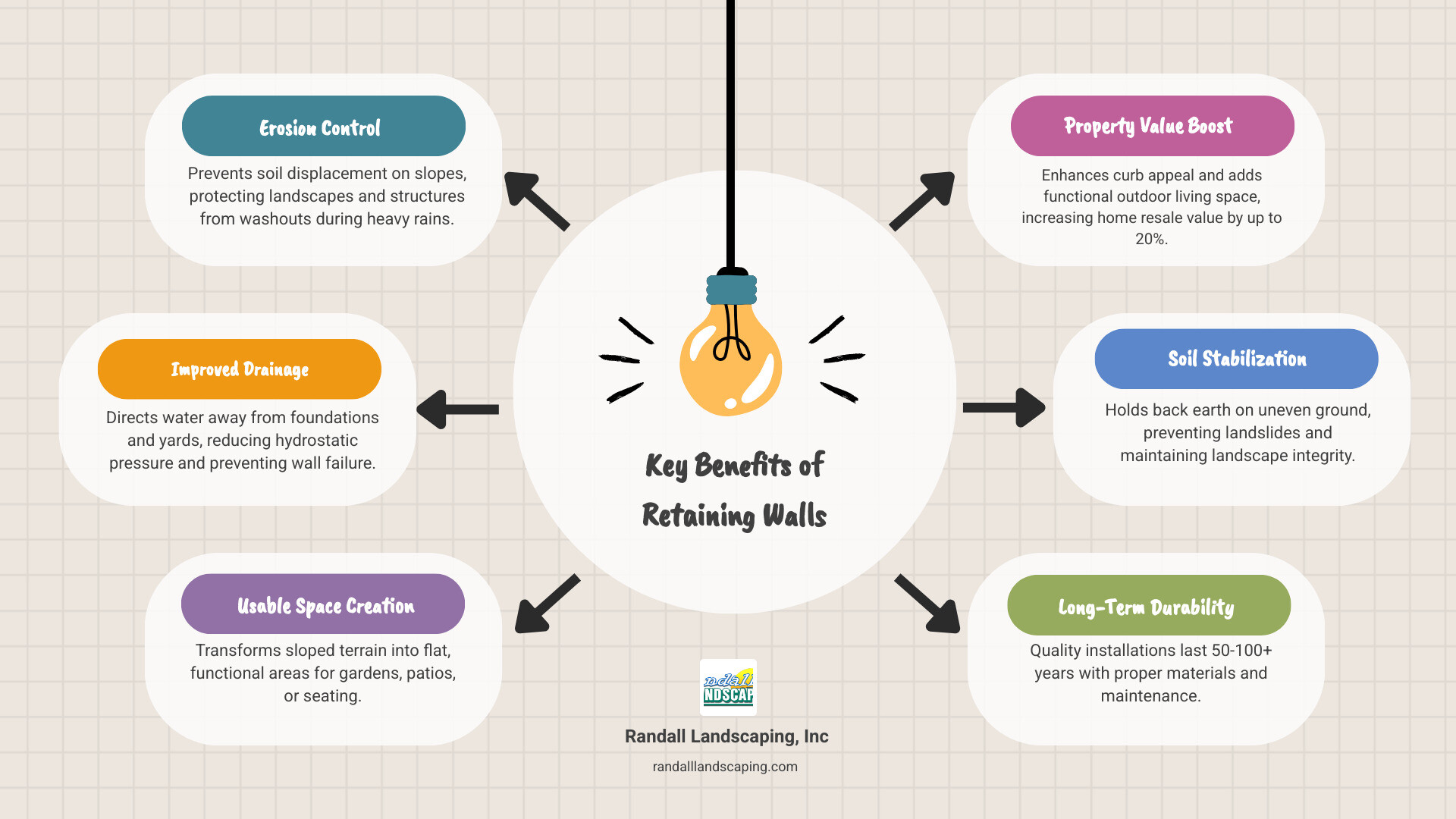
Quick local retaining wall contractors terms:
Understanding the Purpose and Types of Retaining Walls

When you look at a sloped backyard in places like North Andover or Salem, NH, you aren’t just looking at dirt; you’re looking at thousands of pounds of pressure waiting for a rainy day to move. The primary goal of any retaining wall is to battle gravity. By providing structural soil support, these walls allow us to manage elevation changes that would otherwise be unusable or dangerous.
Beyond just holding back a hill, these structures are essential for managing water runoff. Without a wall, heavy New England rains can turn a sloped lawn into a muddy slide, potentially threatening your home’s foundation. Whether we are building residential retaining walls for a small garden or quality retaining walls to support a new driveway, the engineering must be spot on.
Common Structural Designs
Not every hill requires the same type of “muscle.” Depending on the height of your slope and the type of soil (we see a lot of heavy clay and loam in the Merrimack Valley), we choose from several designs:
- Gravity Walls: These rely on their own massive weight to hold the soil. They are usually shorter and lean back toward the hill.
- Cantilever Walls: These use a “lever” design, often with a hidden footing that extends into the soil to use the weight of the dirt itself to stay upright.
- Sheet Piling: Best for tight spaces or soft soil, these involve driving long “slats” deep into the ground.
- Anchored Walls: For high-pressure situations, we use cables or retaining wall anchors driven deep into the earth or rock behind the wall for extra stability.
Popular Material Choices
The “look” of your wall is just as important as its strength. In our neck of the woods, homeowners usually choose based on a mix of budget and aesthetic goals.
- Natural Stone: This is the gold standard for longevity. Whether it’s fieldstone or granite, these walls breathe well and look better as they age.
- Concrete Blocks (Segmental): These are engineered “Lego” blocks that interlock. They are incredibly strong and allow for faster installation.
- Timber: Pressure-treated wood is the most affordable option, though it has a shorter lifespan than masonry.
- Gabion: These are wire baskets filled with stone. They are excellent for drainage and have a modern, industrial look.
| Material | Durability | Maintenance | Best For |
|---|---|---|---|
| Natural Stone | 50-200 Years | Very Low | Timeless aesthetics |
| Concrete Block | 50-100 Years | Low | High structural needs |
| Timber | 15-25 Years | Moderate | Budget-friendly projects |
| Poured Concrete | 50+ Years | Low | Modern, sleek designs |
Budgeting for Your Project: Costs and Longevity
Talking about money is never the “fun” part of landscaping, but being prepared helps prevent sticker shock. When you start searching for local retaining wall contractors, you’ll find that pricing varies wildly based on the height of the wall and the accessibility of your yard.
Average Cost Estimates
Note: The following figures are average costs based on internet data and are not actual costs for Randall Landscaping, Inc. Every site in the Merrimack Valley is unique!
On average, building a retaining wall costs between $20 and $50 per square foot. However, for complex engineering or high-end materials like steel or custom masonry, prices can reach $150 per square foot or more.
Factors that drive up the price include:
- Material Transport: Getting heavy stone into a backyard in a tight neighborhood like North Reading takes more time and specialized equipment.
- Labor Rates: Skilled masons are in high demand across MA and NH.
- Excavation: If we have to dig through solid ledge or manage extreme slopes, the prep work takes longer.
If your current wall is leaning or crumbling, you might be looking at a repair for your retaining wall rather than a full replacement. You can check out our complete retaining wall repair guide to see if your structure is salvageable.
Expected Lifespan and Durability
How long will your investment last?
- Stone Longevity: With proper footings and drainage, stone walls can last 50 to 200 years.
- Concrete Durability: Well-constructed block walls typically last 50 to 100 years.
- Timber Lifespan: Even the best pressure-treated wood will eventually succumb to moisture, usually lasting 15 to 25 years.
Navigating Permits and Regulations for Local Retaining Wall Contractors
In towns like Methuen, MA, or Salem, NH, you can’t just start stacking rocks whenever you feel like it. Building codes exist for a reason — mainly to make sure your wall doesn’t fall on your neighbor’s house.
Understanding Height Thresholds
Most municipalities have a “magic number” for height. In many areas, any wall over 3 feet or 4 feet requires a building permit and a design signed off by a structural engineer. This is especially true if the wall is supporting a “surcharge load” — like a driveway, a swimming pool, or a shed. View The Complete Retaining Wall Requirements Here to see how these regulations are typically structured.
If you are building a retaining wall in Methuen or Andover, we always check the specific town bylaws. For example, if a wall is located closer to the property line than its own height, the town might require extra scrutiny.
Why Hire Local Retaining Wall Contractors in Your Area?
Hiring someone from outside the region can be a headache. Local retaining wall contractors in the Merrimack Valley understand our specific “New England” challenges:
- Frost Heave: Our ground freezes deep. If your contractor doesn’t dig the foundation below the frost line, your wall will “heave” and lean after the first winter.
- Soil Conditions: We deal with everything from sandy soil in Seabrook to heavy clay in Pelham. Each requires a different drainage strategy.
- Permit Expertise: We know the folks at the local building departments in Salem, NH, and throughout the valley. We know exactly what paperwork they need to see to get your project approved quickly. Here are some examples of local permit requirements that show the level of detail required for municipal approval.
How to Choose and Vet Your Wall Builder
The “cheapest” guy with a truck isn’t always the best deal. When vetting local retaining wall contractors, you are looking for a partner who understands soil science as much as they understand stone-stacking.
Vetting Local Retaining Wall Contractors
Start by looking for retaining wall builders near you who have a local physical address.
- Licensing and Insurance: This is non-negotiable. If a worker gets hurt on your property or the wall collapses and damages a neighbor’s fence, you don’t want to be the one holding the bill.
- Warranties: Some companies offer a 1-year warranty; others go up to 15 years. A long warranty is a sign that the contractor expects their work to outlive them.
- Experience: Ask how many walls they’ve built in the last year. You want retaining wall construction contractors who do this every day, not just once in a while. You can also review our retaining wall builders hiring guide for more information.
Essential Questions to Ask
Before you sign a contract, put them in the “hot seat” with these questions:
- Do you use subcontractors? You want to know exactly who is on your property.
- What is the drainage plan? If they don’t mention gravel, perforated pipe, or weep holes, run away!
- Will you call DigSafe? Never let anyone dig in your yard without marking utility lines first.
- How do you handle soil engineering? For tall walls, ask if they work with a geotechnical engineer. Our retaining walls contractor ultimate guide provides a deeper dive into these questions.
Avoiding Common Construction Mistakes
Most wall failures aren’t caused by bad stone; they’re caused by bad dirt management.
- Poor Drainage: Water is the #1 enemy. Hydrostatic pressure (water building up behind the wall) can push over even the heaviest stones.
- Shallow Foundations: If the base isn’t deep enough or compacted correctly, the wall will settle and crack.
- Lack of Reinforcement: For taller walls, we often use geogrid (a high-strength fabric) to tie the wall into the soil behind it. In repair situations, we might even use helical anchors to pull a leaning wall back into place.
Frequently Asked Questions about Retaining Walls
Why is proper drainage essential for wall stability?
Imagine a giant sponge behind your wall. When it rains, that sponge gets heavy and expands. Without a way for that water to escape—through weep holes or granular gravel fill—that pressure will eventually blow the wall out. In some cases, we use helical anchors to provide extra “tug” against that pressure.
What is the best material for a long-lasting wall?
For the Merrimack Valley climate, segmental concrete blocks and natural stone are the winners. They handle the freeze-thaw cycle much better than timber. If your goal is a wall that your grandkids will still be looking at, go with natural stone.
Do I really need a professional for a small wall?
If the wall is under 2 feet and just for a flower bed, you might be able to DIY it. But anything higher involves serious soil pressure. A professional ensures the landscape wall construction is safe. If a wall fails, it’s not just a mess—it’s a safety risk for children and pets.
Conclusion
Finding local retaining wall contractors doesn’t have to be a stressful experience if you know what to look for. By focusing on drainage, proper materials, and local expertise, you can transform a “problem slope” into a beautiful, functional asset that increases your property value.
At Randall Landscaping, Inc., we’ve built our reputation on 100% reliability and quality work across the Merrimack Valley and Southern New Hampshire. Whether you’re in Andover, Windham, or Boxford, we treat every wall as if it were in our own backyard.
Ready to reclaim your yard? Contact us today for a consultation, and let’s build something that lasts.