
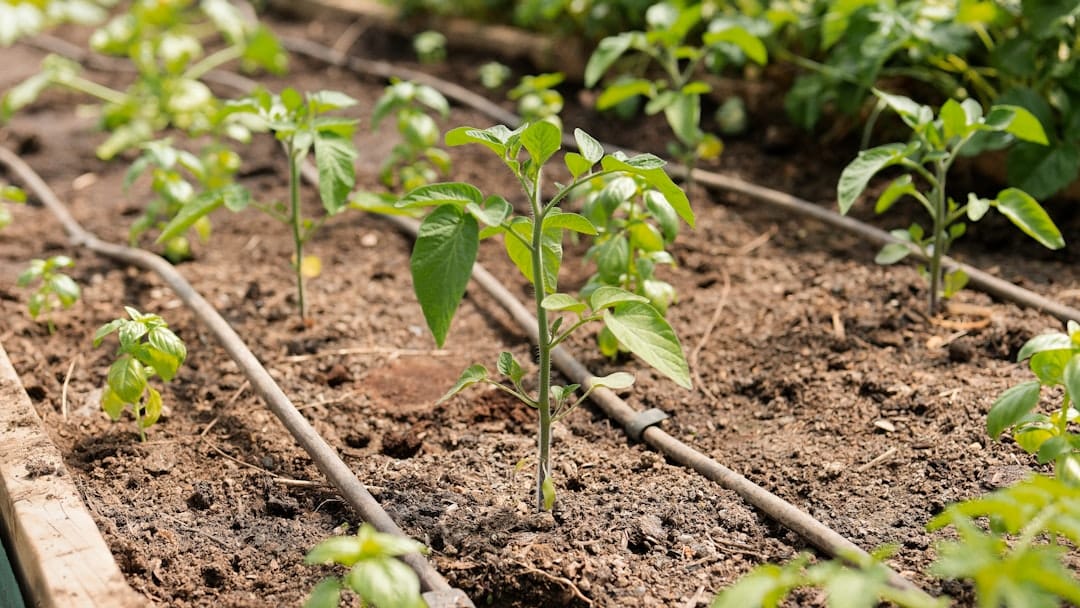
Why an Automated Drip Irrigation System Is the Smartest Upgrade for Your Garden
An automated drip irrigation system delivers water slowly and directly to the root zone of your plants — no manual watering, no wasted runoff, no guesswork.
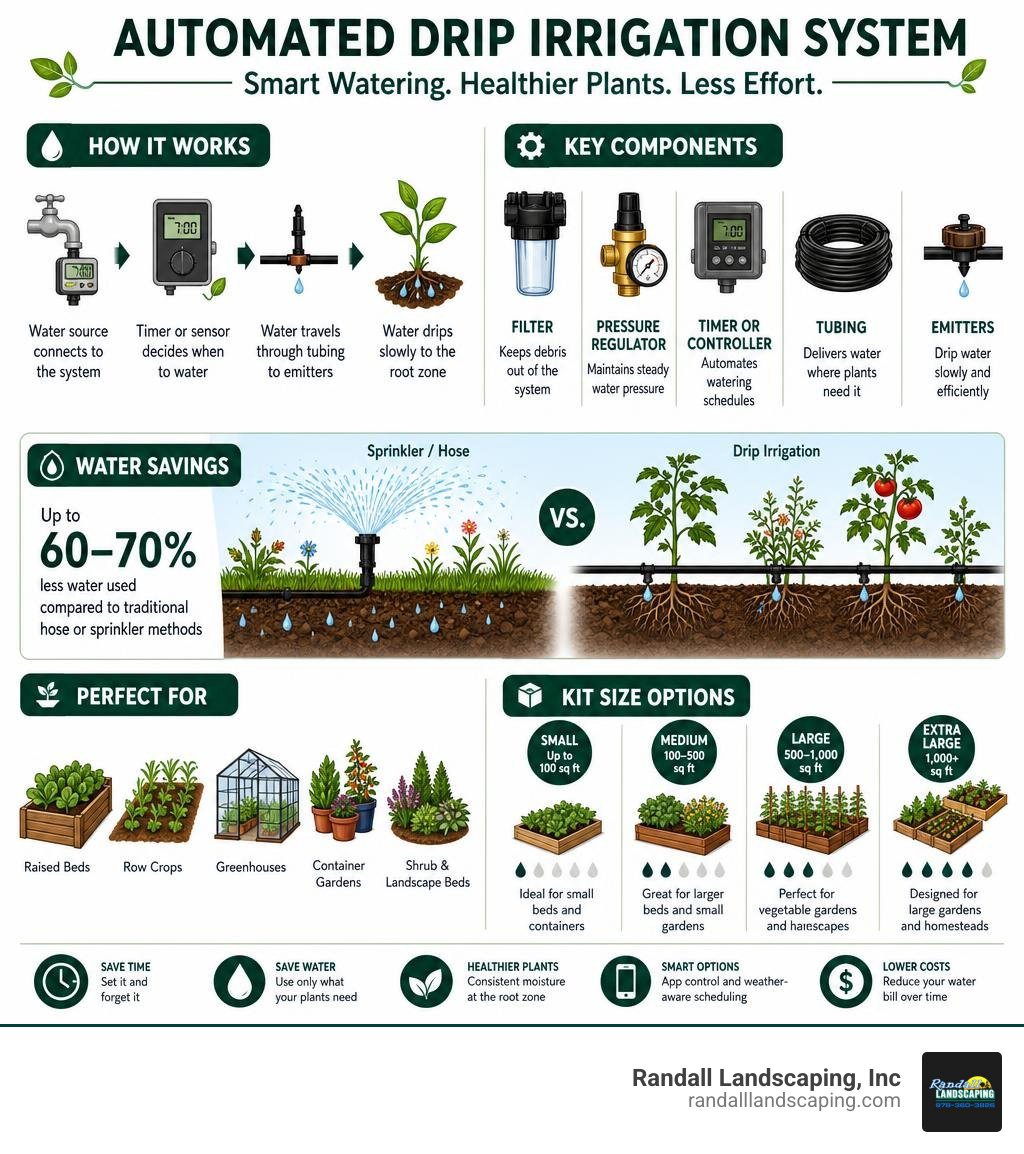
Here’s a quick summary of what you need to know:
- What it does: Drips water at low flow rates straight to plant roots on a timer or sensor-based schedule
- Who it’s for: Homeowners, gardeners, and growers who want healthier plants with less effort
- Water savings: Up to 60–70% less water used compared to traditional hose or sprinkler methods
- Key components: Tubing, emitters, a timer or controller, a pressure regulator, and a filter
- Best for: Raised beds, row crops, greenhouses, container gardens, and landscaped shrub beds
- Smart options: App-controlled systems can adjust schedules automatically based on weather and soil moisture
If you’re spending hours every week dragging a hose around your yard, there’s a much better way.
Drip irrigation has been around for decades, but the latest automated kits make it easier than ever to set up and forget. Whether you have a small raised bed or a large market garden, there’s a system sized for your space — and the water and time savings add up fast.
I’m Tommy Randall, owner of Randall Landscaping, Inc., and over nearly two decades of designing and installing outdoor spaces across Massachusetts and Southern New Hampshire, I’ve seen how a well-chosen automated drip irrigation system transforms both plant health and a homeowner’s weekly routine. In the sections below, I’ll walk you through everything you need to choose the right kit, get it installed, and keep it running efficiently.
Relevant articles related to automated drip irrigation system:
- garden irrigation system
- garden irrigation system timer
- drip irrigation mister
What is an Automated Drip Irrigation System?
An automated drip irrigation system (often referred to as trickle irrigation) is an eco-friendly watering method that delivers water slowly, precisely, and directly to the root zone of your plants. Unlike traditional methods that drench entire areas from above, a drip system uses a network of flexible plastic tubing and small plastic nozzles called emitters to supply water exactly where the soil needs it most.
By keeping the water delivery focused entirely on the roots, you can Keep Your Garden Happy with an Auto Watering System for Plants. This targeted delivery maintains optimal soil moisture levels, prevents water from pooling on plant leaves (which drastically reduces the risk of fungal foliage diseases), and starves surrounding weed seeds of the moisture they need to sprout. It is the ultimate balance of water conservation, plant health, and hands-off convenience.
How Drip Irrigation Differs from Sprinklers
Traditional lawn sprinklers are fantastic for wide, uniform turf areas, but they are incredibly inefficient when it comes to garden beds, shrubs, and ornamental plantings. Traditional overhead spray systems lose massive amounts of water to wind drift and evaporation. In fact, on hot New England summer afternoons in places like Methuen or Andover, a high percentage of sprinkler water evaporates before it even touches the soil.
Furthermore, sprinklers cause unnecessary runoff by throwing water onto adjacent driveways, sidewalks, and patios.
By contrast, systems developed by global leaders like Netafim use slower water flow rates for superior soil absorption. Instead of flooding the surface, water slowly drips out, allowing the soil to act like a sponge. This eliminates runoff and surface evaporation entirely. If you have delicate ornamental plants or hanging baskets, pairing a drip line with a specialized Drip Irrigation Mister can provide the gentle, targeted moisture they crave without the destructive impact of a heavy overhead spray.
Selecting an Automated Drip Irrigation System by Garden Size
Choosing the right kit size is critical to avoid under- or over-watering. If you buy a kit that is too small, you won’t have enough water pressure or tubing length to cover your plants; too large, and you risk wasting money on components you do not need.
Manufacturers like Greenhouse Megastore offer customizable solutions, such as the Automated Garden Drip Irrigation System – Greenhouse Megastore, which are tailored to different scales of planting.
To help you choose the right capacity for your property, we have compiled a quick-reference table based on typical kit sizes:
| Kit Size / Scale | Best Application | Average Tubing Length | Key Features Included |
|---|---|---|---|
| Small (10-Row / Patio) | Raised beds, container pots, small flowerbeds, deck gardens | 500 ft. dripline / 50 ft. supply | Faucet timer, pressure regulator, basic fittings, stakes |
| Medium (20-Row / Garden) | Large backyard gardens, small row crops, mixed landscape beds | 1,000 ft. dripline | Heavy-duty disc filter, automated timer, multi-zone connectors |
| Large (40-Row / Field) | Small farms, market gardens, extensive commercial landscapes | 2,000 ft. dripline | High-flow commercial filter, premium pressure regulator, multi-row valves |
Indoor vs. Outdoor Applications
Automated drip systems are highly versatile and are not limited to outdoor backyard gardens. They are also incredibly popular for indoor grow tents, greenhouses, and container gardens.
For indoor plant enthusiasts or those growing sensitive crops year-round, specialized systems like the OCTOPUS QRING Indoor Plant Watering System | Netadrip provide a modular, non-clogging ring emitter design that distributes water perfectly across 12 to 60 plants. These indoor systems save growers from the daily chore of manual watering and can increase final crop yields by up to 20% through ultra-consistent moisture delivery.
For larger indoor grow rooms or greenhouses ranging from 25 to 300 plants, a robust setup like the Hydra Drip Irrigation Kit with Pump | Netadrip is ideal. It uses a high-performance submersible pump and self-compensating emitters to ensure that every single plant receives the exact same amount of water, regardless of how far it sits from the main water reservoir.
Key Components of a Modern Drip Kit
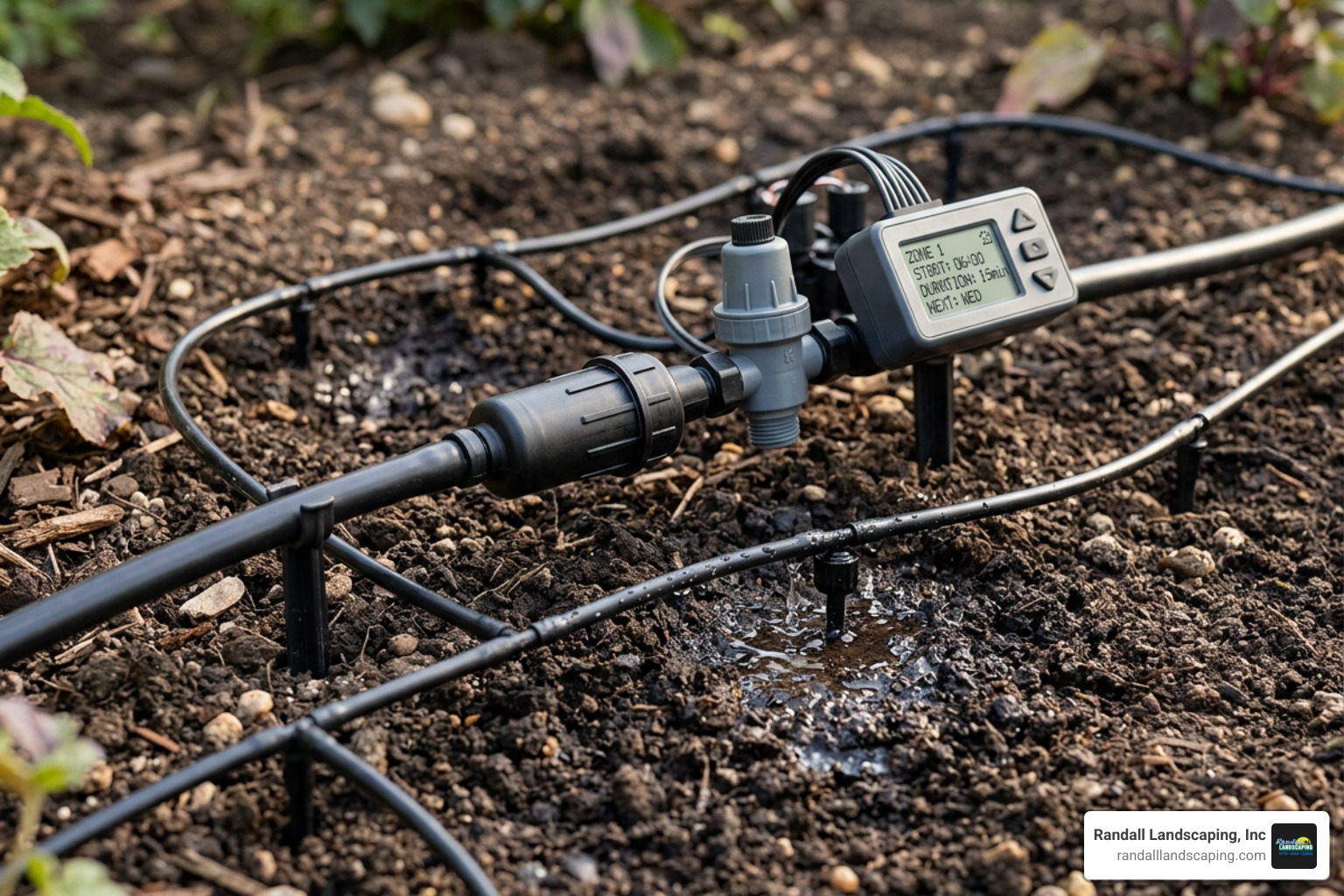
Before diving into installation, it helps to understand what actually goes into a typical automated drip irrigation system. A complete, professional-grade setup requires several interlocking parts to control the water’s flow, clean it, and distribute it safely to your plants. When we perform a professional Garden Water Irrigation System Installation, we ensure all of these vital components are balanced perfectly for your yard’s unique water pressure and layout.
- Mainline Tubing: Usually 1/2-inch or 3/4-inch UV-resistant polyethylene pipe that carries water from your source out to the garden zones.
- Feeder Lines (Microtubing): Smaller 1/4-inch tubes that branch off the mainline to deliver water directly to individual pots or plants.
- Drip Emitters: The small nozzles inserted into the tubing. They can be pressure-compensating (delivering a fixed rate, like 1 or 2 gallons per hour) or adjustable dial-style emitters.
- Filter: A crucial component (usually a mesh or disc filter) that catches sand, rust, and mineral sediment before it can reach and clog the tiny emitter holes.
- Pressure Regulator: Drip systems operate at low pressure (typically 15 to 25 PSI). Since standard home outdoor faucets in New Hampshire and Massachusetts often run at 50 to 80 PSI, a regulator is required to prevent the high pressure from blowing the fittings apart.
- Backflow Preventer: A safety valve that prevents dirty garden water from siphoning back into your home’s clean drinking water supply.
Smart Controllers and Timers
The brain of any automated system is its timer or controller. While basic battery-operated faucet timers work fine for simple layouts, modern smart controllers have completely changed the game.
Smart WiFi controllers allow you to monitor and adjust your watering schedules directly from your smartphone, tablet, or smart home assistant. Premium options, such as the SoilDrops Smart Sprinkler Controller — 8-Zone WiFi Irrigation Controll – Soildrops, utilize advanced AI scheduling. By pairing weather forecasts with real-time soil moisture sensors, these smart controllers completely eliminate unnecessary watering.
Instead of watering on a rigid, outdated schedule, they water on demand. This “deep, infrequent” watering philosophy encourages roots to grow deeper into the soil, making your plants far more resilient to New England’s dry spells.
Advanced Smart Features and App Control
If you want the absolute peak of modern irrigation technology, smart systems offer features that go far beyond simple on/off timers.
For example, the Irrigreen Smart Drip System – App-Controlled Precision Irrigation combines industry-leading Netafim drip lines with a smart valve that provides real-time diagnostics, leak detection, and clog alerts directly to your phone. If a line gets nicked by a garden spade or clogged with soil, you will receive an instant notification rather than finding out weeks later when your plants begin to wither.
Other options, like the IrriSense 2 | 4-in-1 Smart Sprinkler & Irrigation System | Aiper, act as complete lawn care hubs. These multi-zone systems offer weather-sensing automation and even integrated nutrient-dispersing chambers, allowing you to feed your garden organic liquid fertilizers automatically as it waters.
Step-by-Step Installation and Maintenance
Setting up an automated drip irrigation system is a highly rewarding project. While many homeowners opt for a tool-free, DIY-friendly kit that connects directly to an outdoor hose bib, larger landscapes with multiple zones often benefit from professional planning. Whether you are taking the DIY route or hiring us for a professional setup, understanding the basic installation sequence is key.
Our comprehensive guide, Water You Waiting For: A Guide to Professional Irrigation, outlines how our team designs and scales these systems for New England properties, but here is the general step-by-step process:

- Connect to the Water Source: Attach your backflow preventer, automated timer, filter, and pressure regulator to your outdoor faucet in that exact order.
- Lay Down the Mainline: Run your 1/2-inch polyethylene supply tubing along your garden beds. Secure it firmly to the ground every few feet using metal or plastic tubing stakes.
- Branch Off to Plants: Use a hole punch tool to snap holes into the mainline. Insert 1/4-inch barbed connectors, attach your 1/4-inch feeder lines, and run them to the base of your individual plants.
- Attach and Position Emitters: Insert your drip emitters or drip rings at the end of the feeder lines. Keep them positioned just above the soil surface, close to the plant’s root zone, and away from direct contact with the foliage.
- Flush and Cap the Lines: Before putting the end caps on your mainlines, turn on the water for a minute to flush out any dirt or plastic shavings that slipped in during installation. Once clean, pop the end caps on and run a test cycle.
How to Maintain Your Automated Drip Irrigation System
While automated systems save you countless hours of manual labor, they are not completely maintenance-free. To ensure system longevity and prevent clogs, follow this seasonal maintenance routine:
- Weekly Filter Cleaning: Unscrew your filter casing once a week and rinse out the mesh or disc element under clean water to remove trapped sediment.
- Flush the Lines Regularly: Open the end caps of your mainlines once or twice a season to flush out any fine silt that has accumulated inside the tubing.
- Inspect for Leaks: Walk your drip lines while the system is running to check for popped fittings, chewed lines (local squirrels and chipmunks occasionally bite into lines searching for water), or clogged emitters.
- New England Winterization: This is absolutely critical for our clients in Southern New Hampshire and the Merrimack Valley. Before the first hard freeze of autumn, you must shut off the main water connection, disconnect your smart timer and bring it indoors, and use compressed air to blow all remaining water out of the underground and surface lines to prevent ice from cracking the plastic.
- Spring Startup: Reconnect your components in the spring, inspect the lines for any frost damage, install fresh batteries in your timers, and run a complete test cycle to ensure uniform water delivery.
Average Costs and Savings
How much does it cost to install an automated drip irrigation system? Below are average cost ranges based on national internet data.
Please note: these are average internet-based costs and do not represent actual project pricing for Randall Landscaping, Inc. Every property has unique terrain, water sources, and planting layouts that require custom estimates.
- DIY Small Patio/Raised Bed Kit: $35 to $150
- DIY Medium Backyard Garden Kit: $150 to $450
- Professional Multi-Zone Landscape Installation: $1,200 to $4,500+ (Note: High-end custom residential installations with smart controllers, trenching, and extensive hardscape integration can easily exceed $5,000 depending on the scope of the property).
Despite the upfront investment, an automated drip system pays for itself over time. Homeowners typically see a 30% to 50% reduction in water bills compared to traditional watering methods, alongside significantly healthier plants that grow up to twice as fast.
Frequently Asked Questions About Drip Irrigation
How much water does an automated drip irrigation system save?
A properly calibrated automated drip system can reduce water consumption by up to 60% to 70% compared to traditional manual hose watering or overhead sprinklers. Because water is delivered slowly and directly to the soil, nearly 100% of the water is absorbed by the roots, completely eliminating waste from evaporation, wind drift, and pavement runoff.
Can I use organic fertilizers with a drip system?
Yes, but you must be incredibly careful. Thick, unfiltered organic fertilizers (like fish emulsion) will quickly clog small drip emitters. If you are using an automated system, it is highly recommended to use 100% mineral-based, water-soluble fertilizers to prevent salt buildup and blockages. If you do run organic nutrients, make sure to flush your lines with clean water immediately after feeding and use a high-quality inline filter.
Do I need a pump for my drip irrigation system?
Not always. If you are hooking your system up to a standard municipal or well-water outdoor faucet, your home’s natural water pressure (usually 40+ PSI) is more than enough to run the system (which is why we actually use a regulator to step it down). However, if you are running a system from a rain barrel (gravity system) or drawing water from a nutrient reservoir in an indoor grow room, you will need a specialized low-pressure submersible pump to push the water through the lines.
Conclusion
An automated drip irrigation system is one of the single best investments you can make for your home, your plants, and your peace of mind. By delivering water precisely where it’s needed, you’ll enjoy a lush, thriving landscape while slashing your water bills and reclaiming your free time on the weekends.
If you live in the Merrimack Valley or Southern New Hampshire—including Andover, Boxford, Salem, Windham, or Georgetown—and want to ensure your system is designed and installed to last through our tough New England winters, we are here to help. At Randall Landscaping, Inc., we specialize in reliable, high-quality irrigation solutions tailored to your unique property.
Get Professional Garden Sprinkler System Installation today, or contact us to schedule a consultation and take the first step toward a beautiful, worry-free yard!