
Why a Garden Sprinkler System Is the Smartest Upgrade for Your Lawn
A garden sprinkler system is one of the most effective tools a homeowner can use to keep their lawn and landscape healthy — especially during the hot, dry months of a New England summer.
Here’s a quick overview of what you need to know:
| Topic | Key Takeaway |
|---|---|
| Main types | Drip irrigation, in-ground pop-up, rotary, oscillating, and smart systems |
| Best for large lawns | In-ground rotary or gear-drive sprinkler systems |
| Best for garden beds | Drip irrigation delivers water directly to roots |
| Water savings | Smart controllers can cut outdoor water use by up to 50% |
| Typical pressure needed | 40–65 PSI depending on head type |
| DIY vs. professional | Both are possible; in-ground systems often benefit from pro install |
Without a reliable watering system, lawns in Southern New Hampshire can dry out fast in summer — and recovering from drought stress costs far more than preventing it in the first place.
A well-designed system doesn’t just save your grass. It saves your time, your water bill, and your weekend.
This guide covers everything: system types, key components, installation steps, smart controller options, and seasonal maintenance. Whether you’re comparing drip irrigation to rotary heads or trying to figure out how many zones your yard needs, you’ll find the answers here.
I’m Tommy Randall, owner of Randall Landscaping, Inc., and since 2006 I’ve been designing and installing garden sprinkler systems for homeowners across Massachusetts and Southern New Hampshire. Over nearly two decades, I’ve seen what works — and what leads to soggy patches, dry spots, and wasted water bills.
Choosing the Right Garden Sprinkler System for Your Yard
Every yard has its own personality. Some have sprawling, wide-open lawns that need deep watering; others feature narrow side yards, delicate flower beds, or heavy clay soil. Choosing the right garden sprinkler system means matching your property’s layout with the correct technology to avoid dry spots and soggy patches.
Before choosing hardware, we always look at several crucial factors:
- Yard Size and Shape: Large, open expanses are perfect for high-efficiency rotary sprinkler heads. Narrow strips of grass or irregular shapes require specialized spray patterns to avoid watering your driveway, siding, or sidewalk.
- Soil Type: New England soil can vary from sandy loam to dense, rocky clay. Sandy soil drains rapidly and requires more frequent, shorter watering cycles. Clay soil absorbs water slowly, meaning you need a system that applies water gently to prevent runoff.
- Water Pressure (PSI) and Flow Rate (GPM): Your home’s water supply dictates how many sprinkler heads can run at the same time. Traditional spray systems operate beautifully at 40 to 65 PSI. If your pressure is lower or higher, you will need pressure-regulating valves or heads designed for low flow.
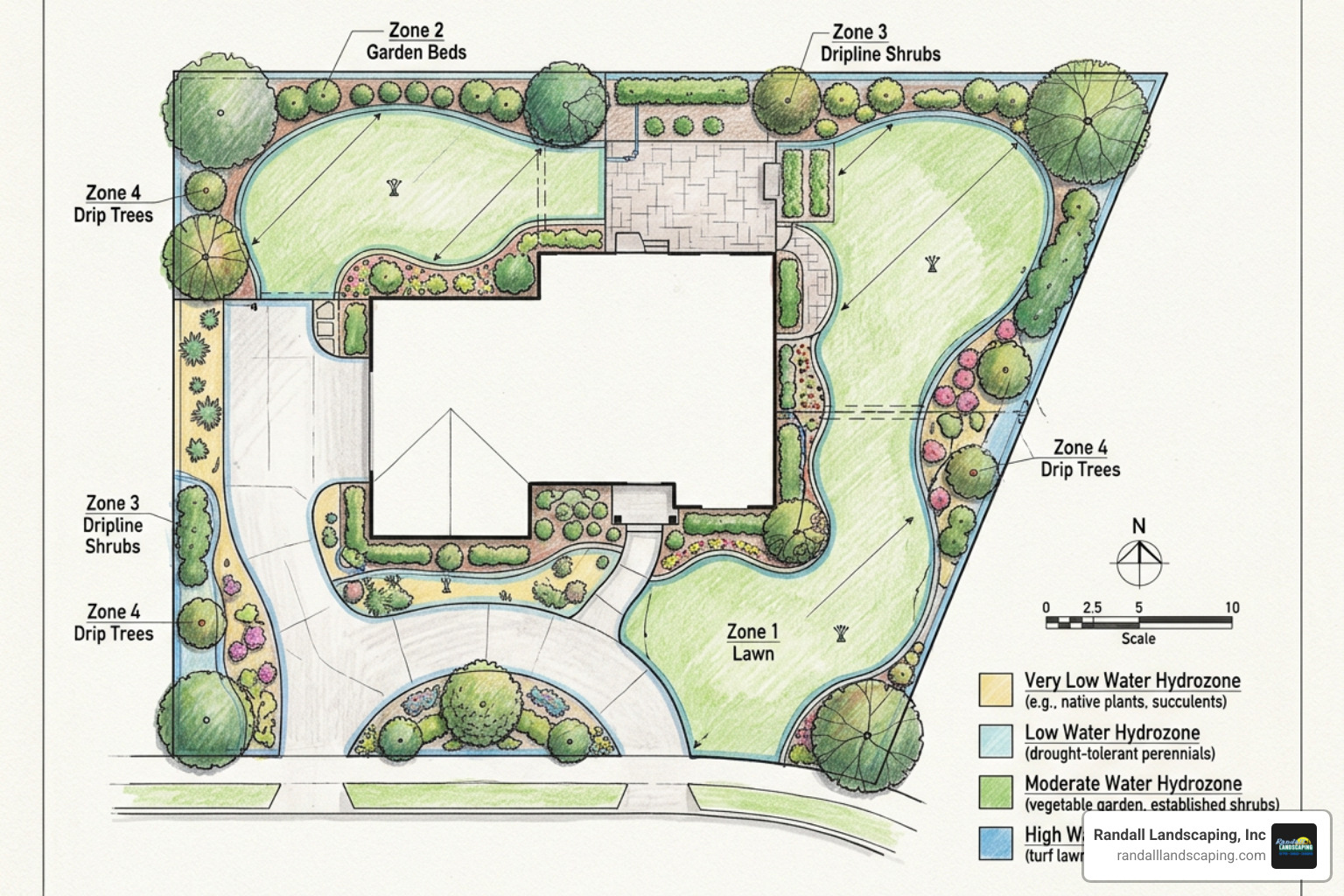
- Zoning (Hydrozoning): You should never water your lawn and your flower beds on the same zone. Lawns need deep, less frequent watering, while delicate annuals or shallow-rooted shrubs need gentle, frequent moisture. Grouping plants with similar water needs into distinct hydrozones ensures every plant gets exactly what it needs.
For a deeper dive into designing your watering zones, check out our comprehensive Garden Irrigation System Guide 2025.
Benefits of an In-Ground Garden Sprinkler System
While dragging a manual hose-end sprinkler around on Saturday morning has a certain old-school charm, it is highly inefficient. An in-ground garden sprinkler system offers massive advantages that pay off year after year:
- Boosted Property Value and Curb Appeal: A lush, green lawn is the first thing people notice. A professionally installed irrigation system is a major selling point for buyers who want a beautiful yard without the manual labor. If you are looking for local installation options, exploring an Inground Sprinkler System Near Me is a great place to start.
- Flawless Turf Health: Inconsistent watering is a primary cause of lawn disease, weed infestations, and bare patches. In-ground systems deliver precise, deep watering during the optimal early morning hours, promoting deep root growth.
- Water and Financial Savings: Hand watering or leaving a manual sprinkler running too long wastes thousands of gallons of water to evaporation and runoff. Automated systems apply exact amounts of water only where it is needed.
Designing a Custom Garden Sprinkler System Layout
Designing an efficient layout is a blend of science and geometry. One of the most common mistakes DIYers make is placing sprinkler heads too far apart, expecting the spray to simply “reach” the next area.
To achieve 100% even coverage, you must design for head-to-head coverage. This means the spray from one sprinkler head must reach all the way to the base of the adjacent head. This overlapping pattern prevents dry rings and ensures uniform turf health.
Additionally, we must account for:
- Sun and Shade Exposure: Areas under the blazing summer sun need significantly more water than shaded spots under mature oak trees.
- Slopes and Elevation: Water naturally runs down slopes. To prevent pooling at the bottom of a hill and dry soil at the top, we design zones on slopes with shorter, repeated watering cycles (often called “cycle and soak”).
- Narrow Spaces: For those awkward patches of grass alongside your driveway or walkway, we utilize specialized nozzles. Learn more about selecting the Best Sprinkler for Narrow Lawn Spaces That Keep Water Where It Belongs to stop wasting water on hardscaping.
Key Components of an Irrigation System
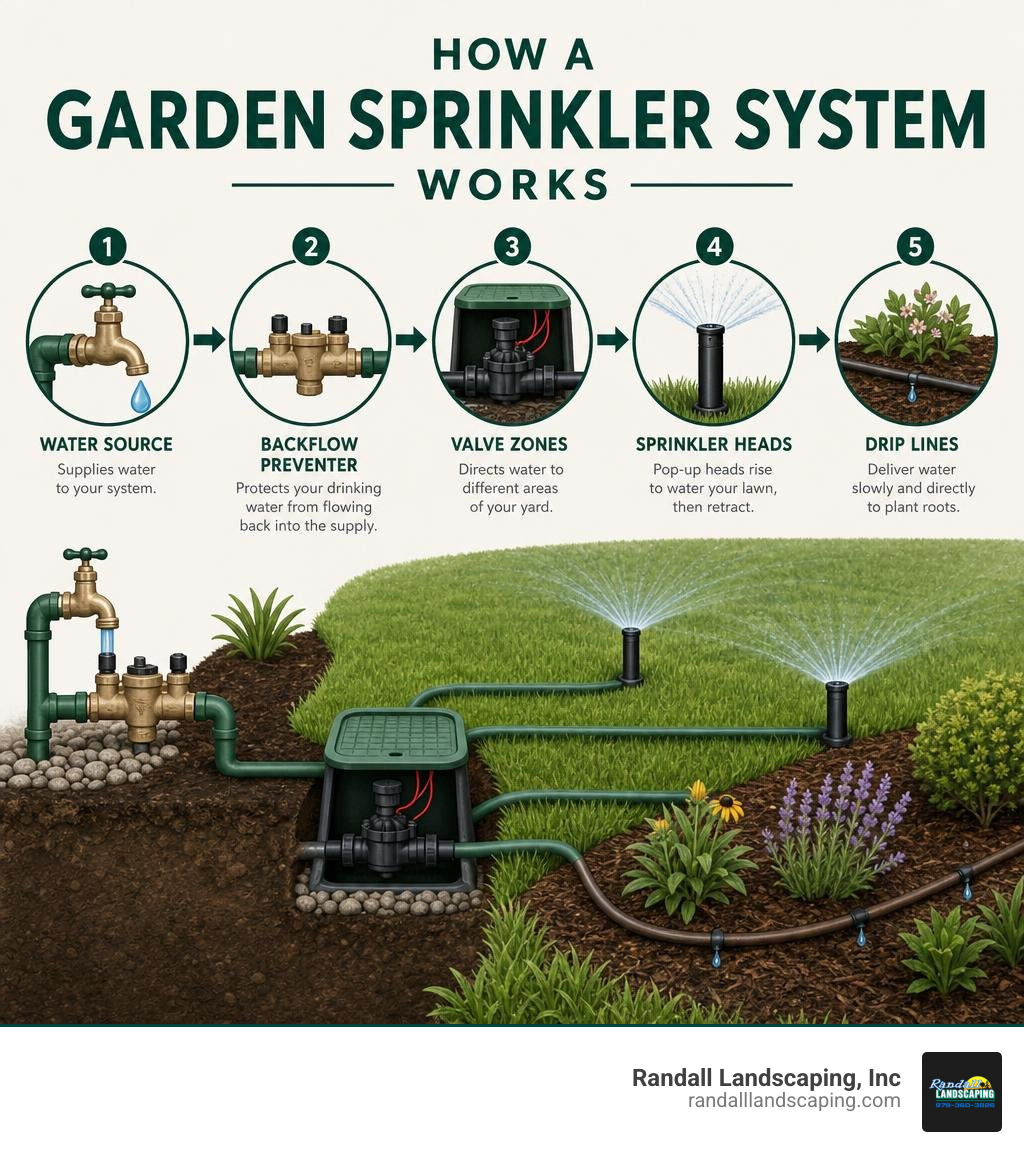
An underground garden sprinkler system is a network of carefully engineered parts working in perfect harmony. If one component fails or is sized incorrectly, the entire system’s efficiency drops.

Here are the essential components that make your system run:
- The Main Line and Lateral Lines: The main line is the high-pressure pipe that connects your water source directly to the valve manifold. It is under constant pressure. Lateral lines are the pipes that branch off from the valves to deliver water to the individual sprinkler heads when a zone is activated.
- The Valve Manifold: Think of this as the traffic cop of your system. It houses the electric valves that open and close to direct water flow to specific zones based on commands from your controller.
- The Backflow Preventer: This is a crucial safety device required by local building codes. It prevents dirty irrigation water (which can contain fertilizers, pesticides, and soil bacteria) from siphoning backward into your home’s clean drinking water supply.
- Fittings and Tubing: High-quality fittings connect your pipes securely. Modern systems often use flexible, swing-joint fittings or specialized poly-tubing to protect sprinkler heads from cracking if stepped on or run over by a lawnmower.
Sprinkler Heads and Nozzles
The heads and nozzles you select determine how water is physically distributed across your yard. Mixing different types of heads on a single zone is a major design flaw because they apply water at completely different rates.
- Pop-Up Spray Heads: These heads rise out of the ground when the water pressure is turned on and retract flush with the soil when finished. They are ideal for smaller lawns and shrub beds, delivering a continuous fan of water.
- Rotor Nozzles: Rotors use gear-driven streams that rotate back and forth. They are highly efficient for medium to large lawns because they deliver water slower than spray heads, giving the soil plenty of time to absorb it.
- Bubblers: Bubblers release a gentle trickle of water directly at the base of trees, shrubs, or ornamental plantings, preventing leaf diseases by keeping foliage dry.
Upgrading your heads can make a world of difference in your water bill. Read our guide on how to Level Up Your Lawn Essential Irrigation System Upgrades to see how modern, high-efficiency nozzles pay for themselves.
Valves, Timers, and Smart Controllers
The brain of your system is the controller. While old-school mechanical dial timers still exist, they are being rapidly replaced by smart, Wi-Fi-enabled controllers.
Modern smart controllers, such as the Rachio 3: 16-Zone Smart Sprinkler Controller | Rachio , connect to your home’s Wi-Fi to monitor hyper-local weather forecasts. If rain is on the way, or if it has been unusually windy or freezing, the controller automatically skips or adjusts the watering schedule. This prevents the classic embarrassment of your sprinklers running during a heavy downpour!
By pairing a smart controller with a Garden Irrigation System with Timer, you gain complete control over your yard’s watering schedule directly from your smartphone, saving both water and money.
Comparing Sprinkler Types: Pros and Cons
To help you decide which watering methods are best for different areas of your property, we have broken down the pros and cons of the three most popular options:
| Sprinkler Type | Best Use Case | Water Efficiency | Pros | Cons |
|---|---|---|---|---|
| Drip Irrigation | Flower beds, vegetable gardens, shrubs, potted plants | Excellent (90%+) | Delivers water directly to roots; virtually zero evaporation or wind drift; discourages weeds. | Requires regular filter cleaning; lines can be damaged by garden tools or chewing pests. |
| Rotary Heads | Medium to large lawns, slopes, open spaces | High (70-80%) | Slow application rate prevents runoff; wind-resistant streams; wide coverage area. | Higher initial cost; requires proper water pressure (typically 50+ PSI) to rotate correctly. |
| Oscillating Sprinklers | Temporary watering, newly seeded lawns, rectangular yards | Moderate (50-60%) | Great for DIY above-ground setups; easy to move around; classic gentle spray pattern. | High water loss to wind drift and evaporation; leaves puddles near the hose connection. |
Drip Irrigation vs. Traditional Sprinklers
When it comes to watering garden beds, drip irrigation is the undisputed champion. Unlike traditional spray heads that throw water into the air, drip systems use flexible tubing lined with tiny emitters to release water in a slow, steady trickle directly at the root zone.
This targeted approach means water goes exactly where plants need it most. Because the surrounding soil remains dry, weed seeds are less likely to sprout. Additionally, keeping water off the leaves of your roses, tomatoes, and hydrangeas dramatically reduces the risk of fungal disease.
To keep your landscaping looking its best with automated, low-waste watering, read our tips on how to Keep Your Garden Happy with an Auto Watering System for Plants.
Rotary, Oscillating, and Impact Sprinklers
For large turf areas, rotary and impact sprinklers are the go-to solutions. Gear-drive rotaries spin silently, distributing water evenly over distances of 15 to 30 feet or more. Impact sprinklers — the classic brass heads that make the nostalgic chick-chick-shhh sound — are incredibly durable and excellent for handling well water or water with high mineral content.
If you are not ready for an underground system but still have a large yard to maintain, you can set up a high-quality above-ground network. Learn the steps in our guide on How to Set Up Above Ground Sprinklers for Large Yards to maximize your coverage without digging up your lawn.
Installation, Maintenance, and Cost Guide
Installing a garden sprinkler system requires careful planning, labor-intensive trenching, and precise plumbing. Doing it correctly the first time prevents expensive repairs down the road.
Before a single shovel touches the dirt, there are several vital installation steps:
- Call 811 (Dig Safe): This is non-negotiable. Before any trenching begins, utility companies must mark underground gas, electric, water, and fiber-optic lines to prevent dangerous and costly accidents.
- Measure Water Flow and Pressure: Hook up a pressure gauge to your outdoor faucet. You need to know your exact PSI and GPM to design your zones correctly.
- Trenching: Main lines should be buried 10 to 12 inches deep, while lateral lines should sit 6 to 8 inches deep to protect them from aeration equipment and lawn mowers.
- Flushing the Lines: Before twisting on your sprinkler nozzles, run water through the open pipes to flush out any dirt, rocks, or construction debris that could clog the heads.
- System Calibration: Adjust the arc and radius of every head to ensure perfect overlap and to keep water off your home’s windows and siding.
DIY vs. Professional Installation Costs
Many homeowners wonder if they should tackle this project themselves or hire a professional. DIY kits are available for smaller yards, but installing a multi-zone underground system across a large property is physically demanding and requires a working knowledge of hydraulics and plumbing codes.
To help you budget, here is an overview of average irrigation costs.
Please note: The pricing below represents average market ranges based on national internet data and does not reflect actual project costs for Randall Landscaping, Inc.
- DIY Above-Ground/Simple Kits: A basic DIY kit for a small yard can run anywhere from $150 to $600, depending on the quality of the components.
- Professional In-Ground Installation: For a professionally designed, multi-zone underground system, average costs typically range from $3,000 to $12,000+ for larger or highly complex properties. This broad range exists because costs depend heavily on your yard’s size, the number of zones required, soil conditions (such as New England’s notorious ledge and rocks), and the complexity of the smart controller setup.
For a detailed breakdown of what goes into these numbers, explore our guides on the Average Cost of Inground Sprinkler System and the overall Cost of Garden Irrigation System.
Seasonal Maintenance and Winterization
Here in the Merrimack Valley and Southern New Hampshire, seasonal maintenance is mandatory. Water expands when it freezes, and any water left inside your underground pipes during our freezing winters will rupture the plastic lines and shatter the expensive valves.
- Spring Startup: In April or May, we slowly open the main water valve to repressurize the system. We inspect every zone, clean clogged nozzles, adjust heads that have settled, and program the controller for spring weather.
- Fall Winterization (The Blowout): Come October or November, the system must be winterized using the blowout method. We connect a heavy-duty commercial air compressor (operating between 50 to 80 PSI) to the system and blow compressed air through every zone until all water is completely cleared.
If you are using a hybrid system or high-quality DIY kit, such as the Medium Area All-In-One Sprinkler Kit with B-hyve® Smart Timer — Orbit , make sure you disconnect the faucet timer and store it indoors before the first hard freeze.
For a complete checklist on keeping your system running smoothly year-round, read our Garden Sprinkler Installation Complete Guide.
Frequently Asked Questions about Garden Sprinklers
How much water does a smart sprinkler controller save?
According to the EPA WaterSense program, homeowners can save up to 50% on their outdoor water usage by upgrading to a smart sprinkler controller. By adjusting your schedule based on real-time weather forecasts, wind speeds, and seasonal temperatures, these devices eliminate wasteful watering during rainstorms and prevent water runoff from over-saturated soil.
Can I install a garden sprinkler system myself?
Yes, you can install smaller drip systems or single-zone hose-end kits yourself. However, installing a multi-zone underground system requires permits, specialized trenching equipment, backflow preventer installation (which often requires a licensed plumber by local code), and precise hydraulic calculations. For most homeowners, hiring a professional saves time, avoids costly mistakes, and guarantees even coverage.
How do I winterize my irrigation system?
You should winterize your system using a professional blowout. This process uses a high-volume air compressor to purge every drop of water from the lines. Trying to blow out the system with a small home garage compressor is highly risky, as they lack the volume (CFM) needed to clear the lines completely, leaving water behind to freeze and crack your pipes.
Conclusion
A high-performing garden sprinkler system is the ultimate secret to a stress-free, beautiful landscape. By investing in the right layout, choosing high-efficiency heads, and utilizing smart controllers, you can enjoy a vibrant, healthy yard all summer long while keeping your water bills under control.
At Randall Landscaping, Inc., we are committed to providing top-tier quality and 100% reliable service to our neighbors throughout the Merrimack Valley and Southern New Hampshire. Whether you live in Andover, Boxford, Methuen, or Salem, NH, our experienced team is here to design, install, and maintain the perfect irrigation system for your property.
Ready to upgrade your lawn and take back your weekends? Contact us today to schedule your custom Garden Sprinkler System Installation!