Choosing the Perfect Lawn for Your Home
When searching for real grass installation near me, you’re weighing two main options: natural sod or artificial turf. Each choice impacts your home’s curb appeal, your weekly routine, and your long-term budget.
Quick Comparison:
- Natural Sod: Lower upfront cost, requires regular maintenance.
- Artificial Turf: Higher upfront cost, minimal maintenance.
- Installation Time: 1-3 days for most residential projects.
- Best Season: Spring through fall for natural grass; year-round for artificial turf.
Artificial grass can reduce water use by up to 70% and last 20 years, while natural grass offers cooling benefits and supports local ecosystems. The choice comes down to your lifestyle, budget, and long-term goals. Do you prefer the weekend freedom of artificial turf, or do you enjoy the connection to nature that real grass provides?
I’m Tommy Randall, owner of Randall Landscaping, and since 2006, I’ve helped homeowners in Massachusetts and New Hampshire with their lawn installations. Whether you choose natural sod or artificial turf, proper installation is crucial for a successful, long-lasting investment.
Real grass installation near me glossary:
- average cost of inground sprinkler system
- professional sprinkler system installation
- garden edging installation
Natural Sod vs. Artificial Turf: A Head-to-Head Comparison
For homeowners in the Merrimack Valley and Southern New Hampshire, choosing between natural sod and artificial turf is about defining a lifestyle for your outdoor space. At Randall Landscaping, we help homeowners steer this decision daily, weighing factors like upkeep, water usage, and budget.
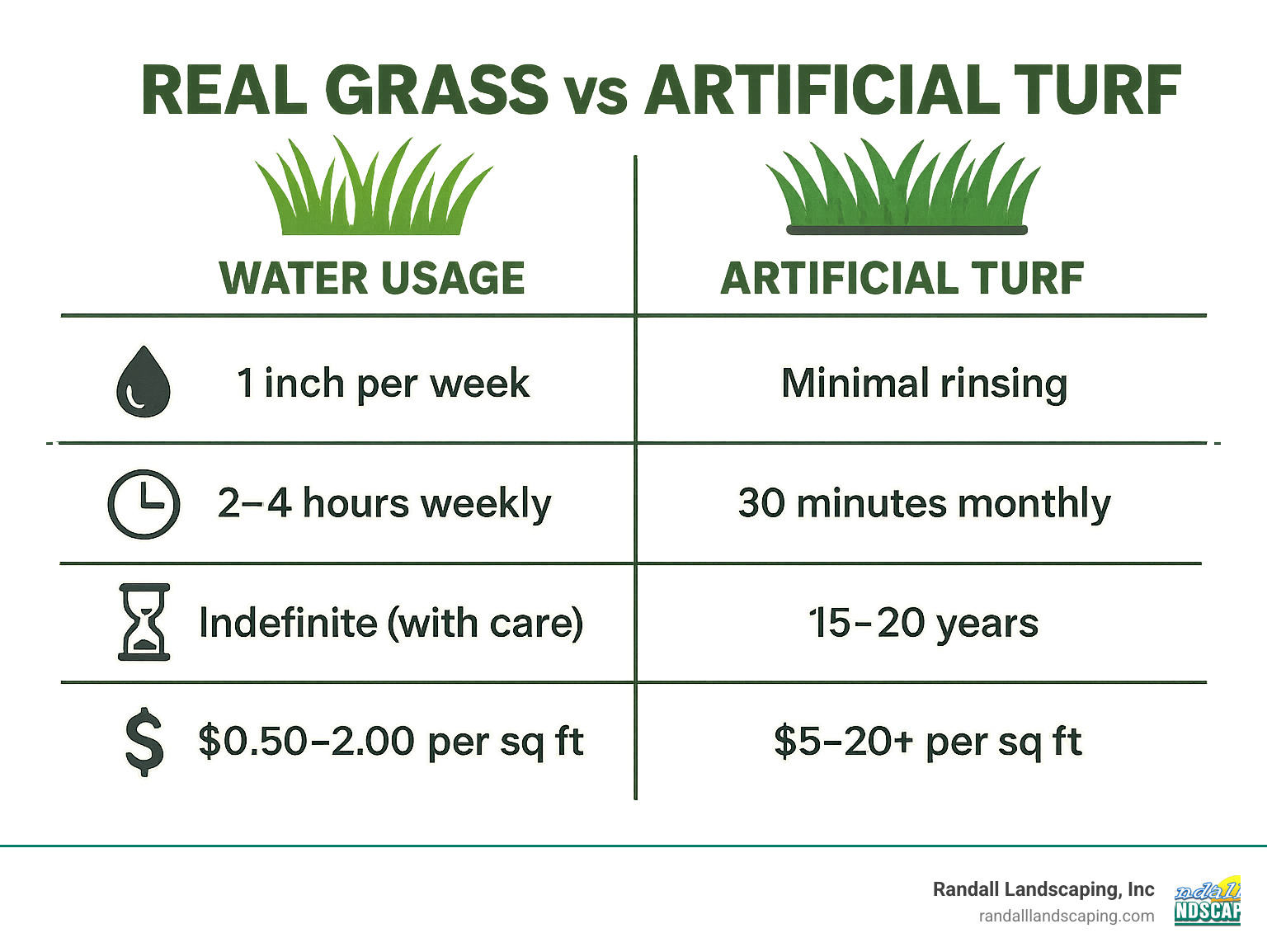
Artificial turf offers a vibrant, green lawn that is virtually self-sufficient. This means no more weekend mowing, watering, or fertilizing, and it can reduce your water consumption by up to 70%. It stays beautiful and green year-round and is durable enough to last up to 20 years, providing a consistently gorgeous, mud-free yard.
On the other hand, natural grass has an undeniable charm, with an authentic feel and fresh scent. It’s a living part of the local ecosystem, helping to keep your yard cooler and feeling soft underfoot. While it requires regular mowing and watering, its initial installation cost is significantly lower than artificial turf.
Your decision boils down to key priorities: upfront cost vs. long-term savings, and a natural, changing landscape vs. a consistently perfect green. We’re here to help you explore all options for real grass installation near me that fit your home and lifestyle. Check out our new lawn installation services for more details!
The Case for Natural Grass (Sod)
The classic green lawn offers a comfort that artificial options can’t replicate. It’s a living, breathing part of your home that changes with the seasons.
A key benefit, especially during hot New England summers, is its natural cooling effect. Unlike artificial turf which can absorb heat, real grass acts as a natural air conditioner for your yard. It also supports the local ecosystem by providing a habitat for beneficial insects and improving biodiversity.
Natural grass is an environmental workhorse, absorbing carbon dioxide, releasing oxygen, and filtering pollutants. While it requires regular care like watering and mowing, the initial cost for sod is typically much lower than for artificial turf. For many, these maintenance tasks are a cherished part of homeownership. If you appreciate the beauty of seasonal changes and the feel of real earth, natural grass is a perfect match.
If this living landscape sounds like your dream, our team at Randall Landscaping offers professional sod installation to give your new lawn the best possible start.
The Case for Artificial Grass (Turf)
Imagine a lawn that practically takes care of itself, freeing up your weekends from mowing, weeding, and fertilizing. That’s the promise of artificial grass.
One of its biggest advantages is water conservation. Artificial turf requires no irrigation, which can reduce your water use by up to 70%—a significant saving for both the environment and your wallet. It also eliminates the need for potentially harmful pesticides and fertilizers, offering peace of mind for families with children and pets.
With artificial turf, you get a vibrant, lush green lawn 365 days a year, with no brown patches or muddy spots. It’s also an excellent solution for pets, with specific ‘pet-turf’ options designed for durability and easy cleaning. It’s perfect for tricky areas where real grass struggles to grow, such as heavily shaded spots or high-traffic zones.
While the initial investment for artificial grass is higher, the long-term savings on water, equipment, and maintenance supplies often make it a cost-effective choice over its 15-20 year lifespan. Artificial turf can get warmer in direct sun than natural grass, a factor we always discuss with clients during the planning phase.
Exploring Your Lawn Options: Types of Real and Artificial Grass
Choosing a lawn involves more than just picking between real and artificial. Both categories offer a variety of types, each with unique characteristics that affect your lawn’s look, feel, and performance.
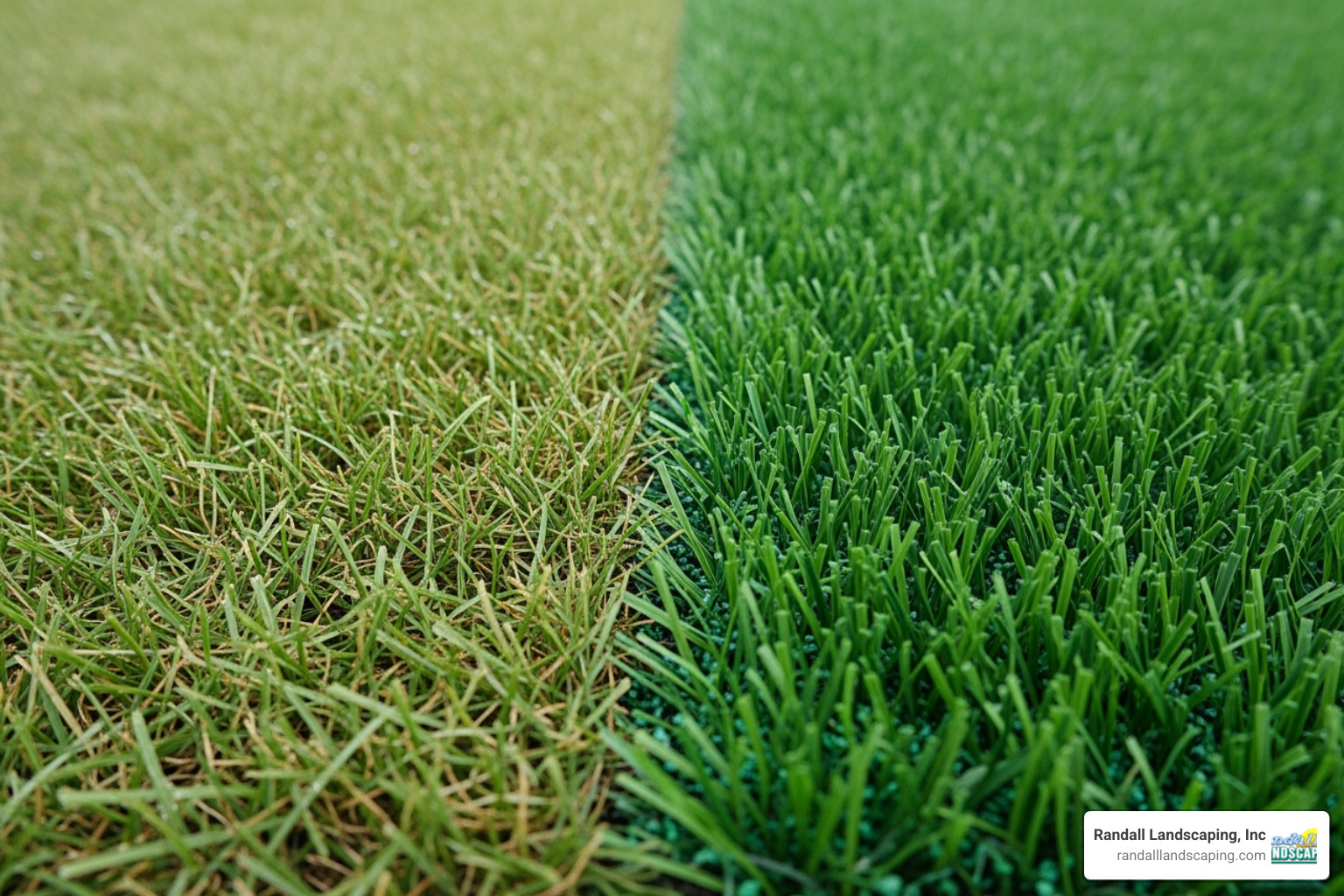
For artificial turf, factors like pile height (blade length), thatch color (for realism), and blade shape (for durability) determine the final appearance. Natural sod comes in different grass species, each suited to specific climates, sun exposure, and usage levels.
Types of Artificial Turf
Modern artificial turf is engineered to look and feel incredibly realistic, using different materials for various applications.
| Type of Artificial Grass | Material | Characteristics | Best Uses |
|---|---|---|---|
| Nylon Grass | Nylon | Extremely durable, stiff, high heat tolerance, retains shape well. | High-traffic areas, sports fields, putting greens (for stability). |
| Polyethylene Grass | Polyethylene | Softest, most realistic look and feel, good drainage. | Residential lawns, landscaping, pet turf, playgrounds. |
| Polypropylene Grass | Polypropylene | Most affordable, less durable than nylon or polyethylene, shorter lifespan. | Low-traffic areas, decorative applications, small patches. |
- Nylon Grass: This is the most durable option, ideal for high-traffic areas like sports fields where resilience is more important than a soft feel.
- Polyethylene Grass: The most popular choice for residential lawns, offering the best balance of a soft, realistic look and good durability. It’s often used for pet-specific turf due to its non-porous nature and excellent drainage.
- Polypropylene Grass: A budget-friendly option best suited for low-traffic, decorative areas due to its lower durability.
Specialized turf is also available for specific needs, including pet turf with improved drainage, sports turf for high-impact performance, and playground turf with extra cushioning for safety.
Types of Natural Grass Sod
For New England’s climate, choosing the right natural grass is key. Grasses are typically grouped into cool-season and warm-season varieties.
- Cool-Season Grasses: These are ideal for our region, thriving in the spring and fall.
- Kentucky Bluegrass: Known for its beautiful color and dense growth, it’s very durable but requires full sun and regular watering.
- Fescue (Tall and Fine): A versatile option, with fine fescues being great for shade and tall fescues offering better drought and heat tolerance.
- Ryegrass (Perennial): Establishes quickly and has a fine texture, making it excellent for mixing with other grasses to create a resilient lawn.
- Warm-Season Grasses: These grasses (like Zoysia) are more common in southern climates and are generally not the best choice for our region as they turn brown during New Hampshire winters.
At Randall Landscaping, we often use a blend of hardy cool-season grasses like perennial rye, bluegrass, and fescues. This ensures a lawn that performs well in various conditions and is more resistant to disease. For seeding projects, we also offer More info about hydroseeding options, an efficient method for establishing a lush lawn.
Understanding the Costs and Process for Real Grass Installation Near Me
When you’re ready to invest in a new lawn, it’s helpful to understand the costs and process. Whether you choose natural sod or artificial turf for your real grass installation near me project, the final investment depends on site preparation, materials, and skilled labor.
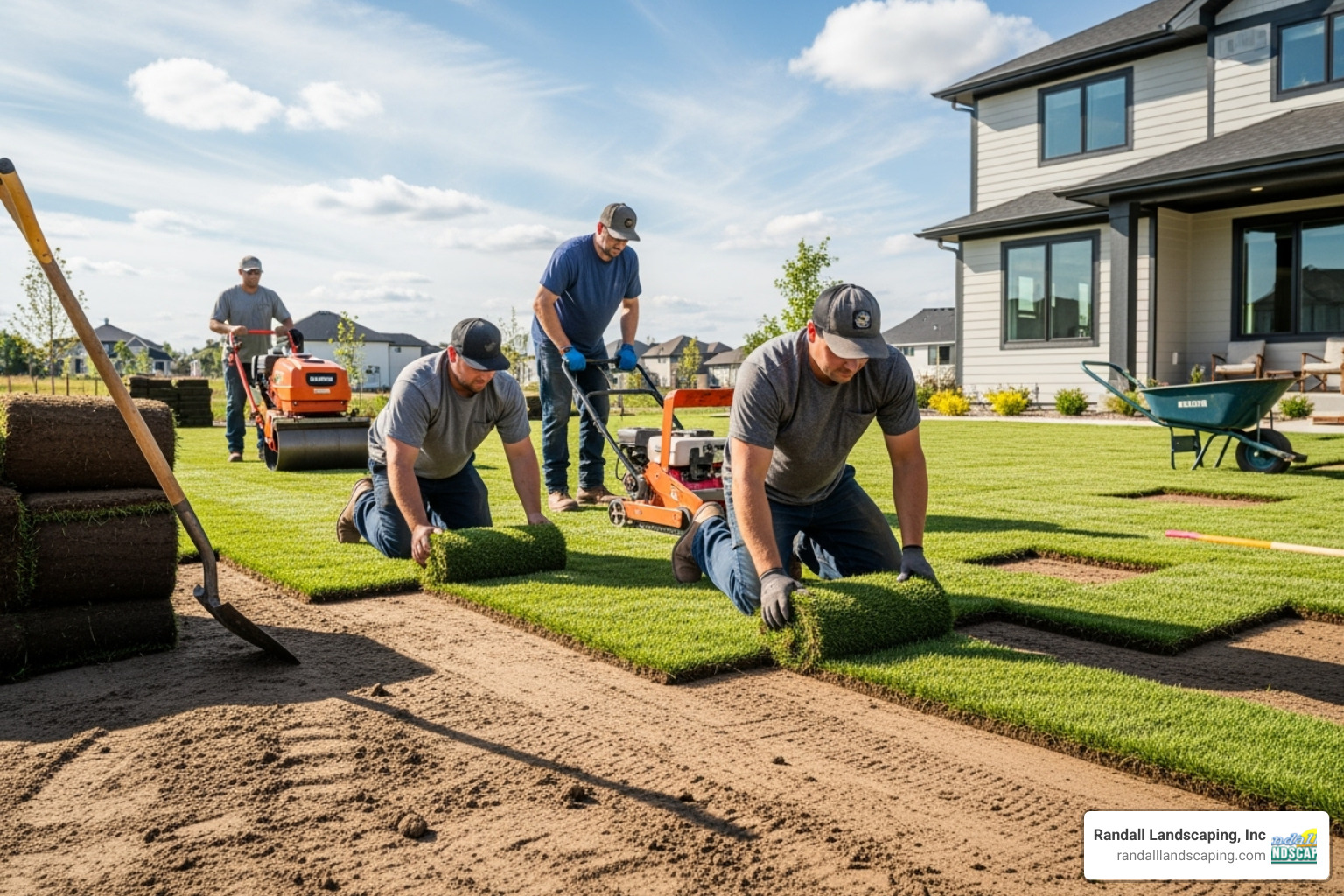
Project costs are influenced by the square footage, terrain complexity, and your chosen materials. Let’s break down what goes into creating your perfect lawn.
What is the typical cost for a real grass installation near me?
Please note: The following are average costs based on internet data and not actual costs for Randall Landscaping, Inc. We provide a free, personalized consultation for accurate pricing on your specific project.
- Natural Sod Installation: Including site prep, soil, and labor, most projects range from $1.50 to $4.00 per square foot. Premium sod or complex sites can cost $6.00 per square foot or more.
- Artificial Turf Installation: This is a higher upfront investment. With extensive base preparation, infill, and skilled labor, total costs typically fall between $5.00 to $20.00 per square foot. Highly customized installations can exceed $30.00 per square foot.
Factors that influence these costs include the extent of site preparation (e.g., removing an old lawn, grading), the type of base and infill materials required, and overall project complexity. While artificial turf has a higher initial cost, many homeowners find it pays for itself over its 15-20 year lifespan through savings on water and maintenance.
For more detailed pricing information, see our page on the cost of grass per square metre.
What is the process for a real grass installation near me?
A professional real grass installation near me follows a meticulous process to ensure lasting results. At Randall Landscaping, our refined process includes these key steps:
- Consultation & Site Assessment: We discuss your vision, help you choose the best option, measure the area, and provide a detailed quote.
- Old Lawn Removal: We strip away old turf, weeds, and debris to create a clean slate.
- Grading & Excavation: We grade the area to ensure proper water drainage away from your home’s foundation.
- Sub-Base Installation: For sod, we add nutrient-rich topsoil. For turf, we install a weed barrier and a compacted rock sub-base for stability.
- Compaction: We compact the base layer to create a stable, level foundation that prevents settling.
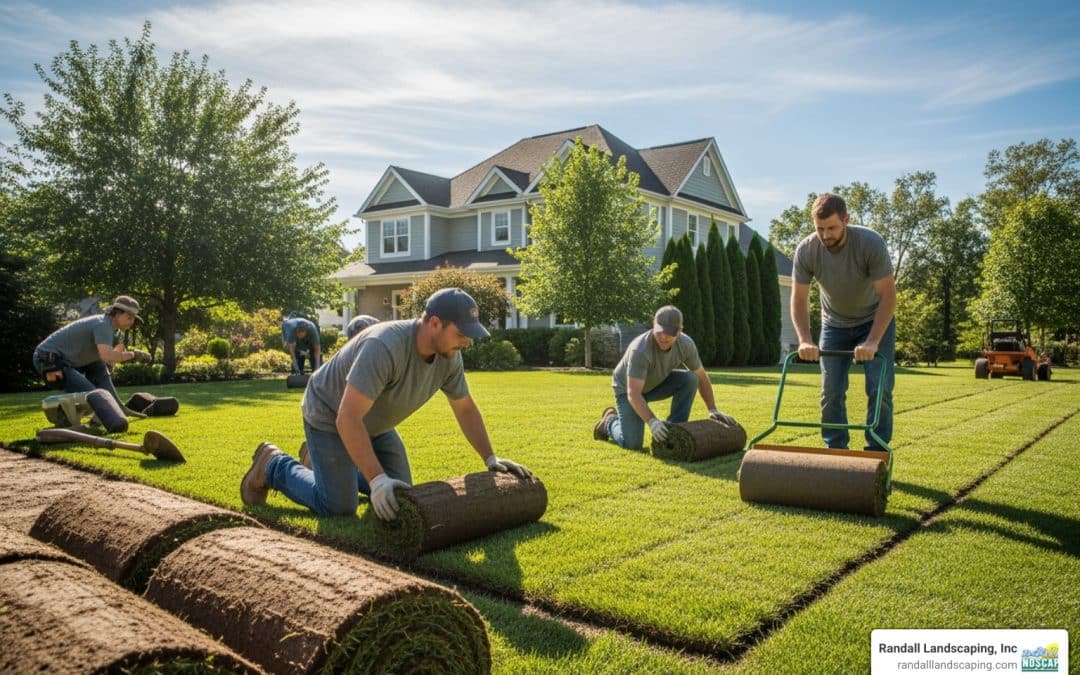
- Laying the Turf or Sod: We carefully lay the sod or turf, ensuring tight, staggered seams for a natural look.
- Seaming & Securing: Artificial turf seams are joined with adhesive, and the perimeter is secured. Sod is rolled to ensure soil contact.
- Infill Application (for Turf): We spread infill material (like sand) to help blades stand upright and provide cushioning.
- Final Brushing & Cleanup: We brush artificial turf to lift the blades and leave your entire property pristine.
Most residential projects take 1-3 days to complete, delivering quality results efficiently.
Long-Term Performance and Maintenance
Your new lawn is a long-term relationship that impacts your weekends and wallet for years. While both natural and artificial options are durable, their long-term performance and maintenance needs differ significantly, especially with New England’s variable weather.
Artificial grass has a remarkable lifespan, often lasting 15 to 20 years. It’s a ‘set it and forget it’ solution that stays green and usable year-round. It also dramatically cuts costs and environmental impact by reducing water consumption by up to 70%. In contrast, a well-cared-for natural lawn can last indefinitely, offering a cooling effect in summer and supporting the local ecosystem, but it requires ongoing effort.
Maintenance and Upkeep
This is where you decide if you’d rather spend your Saturdays relaxing or doing yard work.
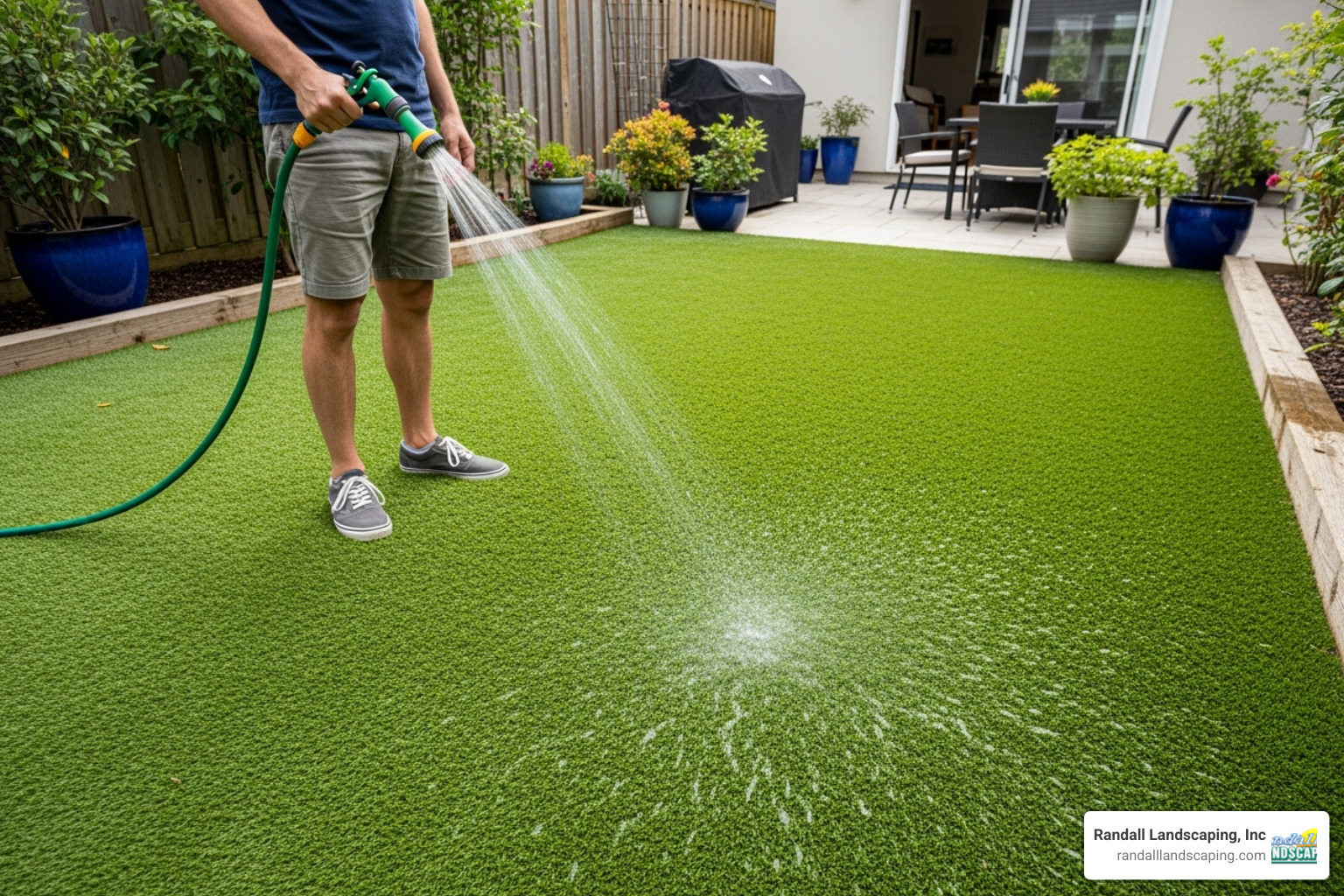
Taking Care of Your Artificial Turf
Maintenance is minimal. Your main tasks are:
- Rinsing and Brushing: Occasionally rinse with a hose to remove dust and pollen. Use a stiff broom to fluff up the blades in high-traffic areas.
- Clearing Debris: Use a leaf blower or rake to remove leaves and twigs.
- Weed Prevention: While we install a weed barrier, an occasional weed might pop up along an edge and can be easily pulled by hand.
Nurturing Your Natural Sod Lawn
Caring for a natural lawn is a rewarding ritual for many. It requires:
- Mowing: Regular mowing, typically weekly during the growing season.
- Watering: Consistent watering is crucial, especially in dry periods. An automatic sprinkler system can simplify this task.
- Feeding: Periodic fertilizing provides essential nutrients for strong growth.
- Weed Control: Ongoing management of weeds is necessary.
For those who want a beautiful natural lawn without the work, we offer comprehensive More info about landscape maintenance services.
Environmental and Weather Considerations
How your lawn impacts the environment and handles New England weather is an important factor.
- Environmental Footprint: Artificial grass excels at water conservation and eliminates the need for chemical pesticides or fertilizers. Natural grass is a living ecosystem that produces oxygen and absorbs CO2, but it requires significant water and often gas-powered mowers. For more on this, the EPA offers resources on Information on sustainable landscaping from the EPA.
- Weather Resilience: In summer, artificial turf can get hotter in direct sun than natural grass, which has a natural cooling effect. Both are designed to handle rain, but professionally installed artificial turf offers superior drainage, preventing mud. In winter, artificial turf is unaffected by snow and ice, while natural grass goes dormant and turns brown until spring.
Frequently Asked Questions about Lawn Installation
After completing hundreds of real grass installation near me projects in the Merrimack Valley and Southern New Hampshire, we’ve compiled answers to the most common questions we hear.
How long does artificial grass last?
High-quality artificial turf is a durable investment, typically lasting 15 to 20 years. Its lifespan depends on the quality of the product, the amount of foot traffic it receives, and, most importantly, the quality of the installation. A proper base and expert installation are key to longevity. Most reputable products come with an 8 to 15-year warranty that protects against UV degradation.
Is artificial grass safe for pets and children?
Yes, modern artificial grass is designed to be safe for the whole family. It’s made from non-toxic, lead-free materials, eliminating the need for the harmful pesticides and fertilizers used on traditional lawns. We often recommend pet-specific turf with improved drainage to handle pet waste easily, preventing odors and messes. For children, the turf provides a soft, cushioned surface that can help reduce scrapes from falls.
The only major consideration is that turf can get warm in direct summer sun. This can be managed with infill that has cooling properties or a quick rinse with a hose.
Why should I hire a professional for installation?
While DIY is tempting, a professional real grass installation near me ensures a beautiful, long-lasting result. Hiring a professional like Randall Landscaping offers several key advantages:
- Expert Ground Preparation: We ensure proper grading and a stable base, which is critical for drainage and preventing uneven surfaces.
- A Seamless Finish: We have the tools and experience to create invisible seams, giving your lawn a flawless, natural look.
- Drainage Expertise: We know how to manage water flow in New England’s climate, protecting your lawn and home foundation.
- Warranty Protection: We stand behind our workmanship, giving you peace of mind that you can’t get with a DIY project.
- Efficiency: We can complete most residential projects in 1-3 days, saving you weeks of difficult labor.
Our team helps you select the right materials and ensures your investment is protected from day one. We also offer more info about landscape design and installation to create a complete outdoor oasis.
Conclusion: Making the Right Choice for Your New England Home
Choosing between natural grass and artificial turf is a significant decision for any homeowner in the Merrimack Valley or Southern New Hampshire. Each option offers distinct advantages.
- Natural grass is the timeless, living choice that cools your yard and changes with the seasons, though it requires regular care.
- Artificial turf is the champion of convenience, offering a perfect, low-maintenance lawn year-round with a higher initial investment.
The right choice aligns with your lifestyle, budget, and vision for your outdoor space. Do you enjoy the ritual of lawn care, or do you dream of reclaiming your weekends?
Regardless of your choice, a beautiful, long-lasting lawn depends on two things: quality materials and professional installation. Your new lawn is a major investment in your home’s value and your daily enjoyment, and it deserves to be done right.
At Randall Landscaping, Inc., we have been proudly serving homeowners throughout the Merrimack Valley and Southern New Hampshire since 2006. We are committed to quality work and 100% reliability, ensuring your real grass installation near me project exceeds your expectations.
Ready to transform your outdoor space? Get a professional consultation for your new lawn installation with us today. Let’s create a lawn you’ll love for years to come!