
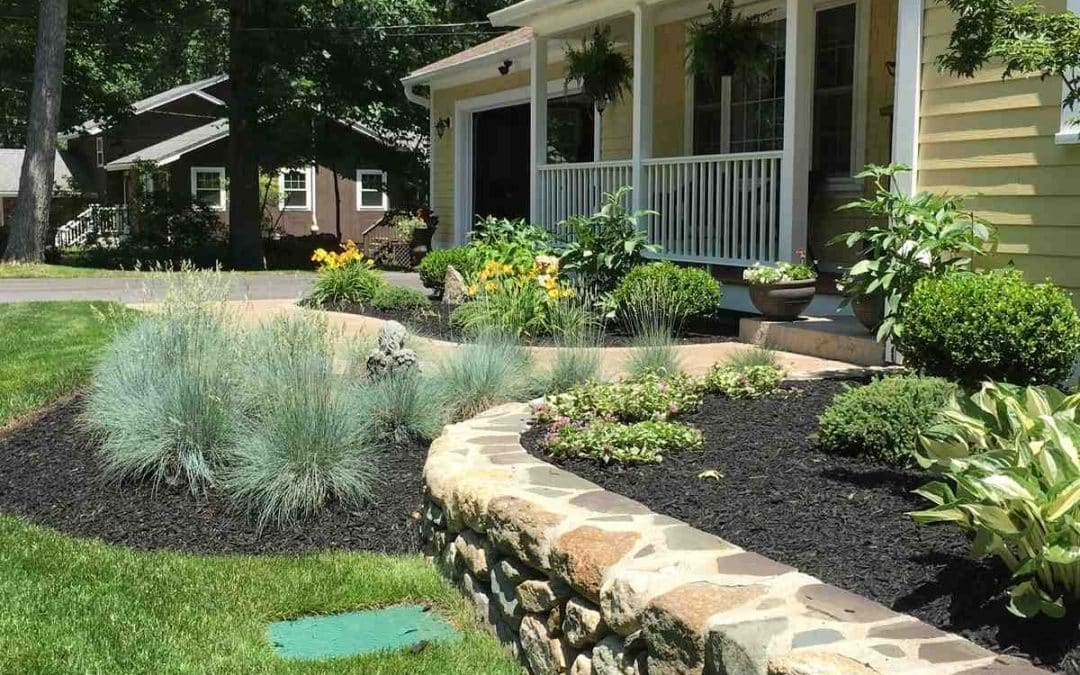
Why Fine Mulch for Flower Beds Makes All the Difference
Fine mulch for flower beds is one of the simplest upgrades you can make to your garden — and one of the most impactful.
Quick Answer: Best Fine Mulch for Flower Beds
| What You Need | Recommendation |
|---|---|
| Best texture | Double or triple shredded hardwood bark |
| Ideal depth | 2 to 3 inches |
| Top benefits | Moisture retention, weed suppression, root protection |
| How often to refresh | Once a year, typically in spring |
| Coverage rule | 1 cubic yard covers ~100 sq ft at 3 inches deep |
| Safe for pets/plants? | Yes, when using non-toxic, properly aged mulch |
Flower beds are different from tree rings or shrub borders. The plants are more delicate, the roots sit closer to the surface, and the look matters just as much as the function. A coarse, chunky mulch can overwhelm small plants and look out of place. Fine mulch fits the scale of a flower bed — it lays flat, stays put, and gives your garden that clean, finished look.
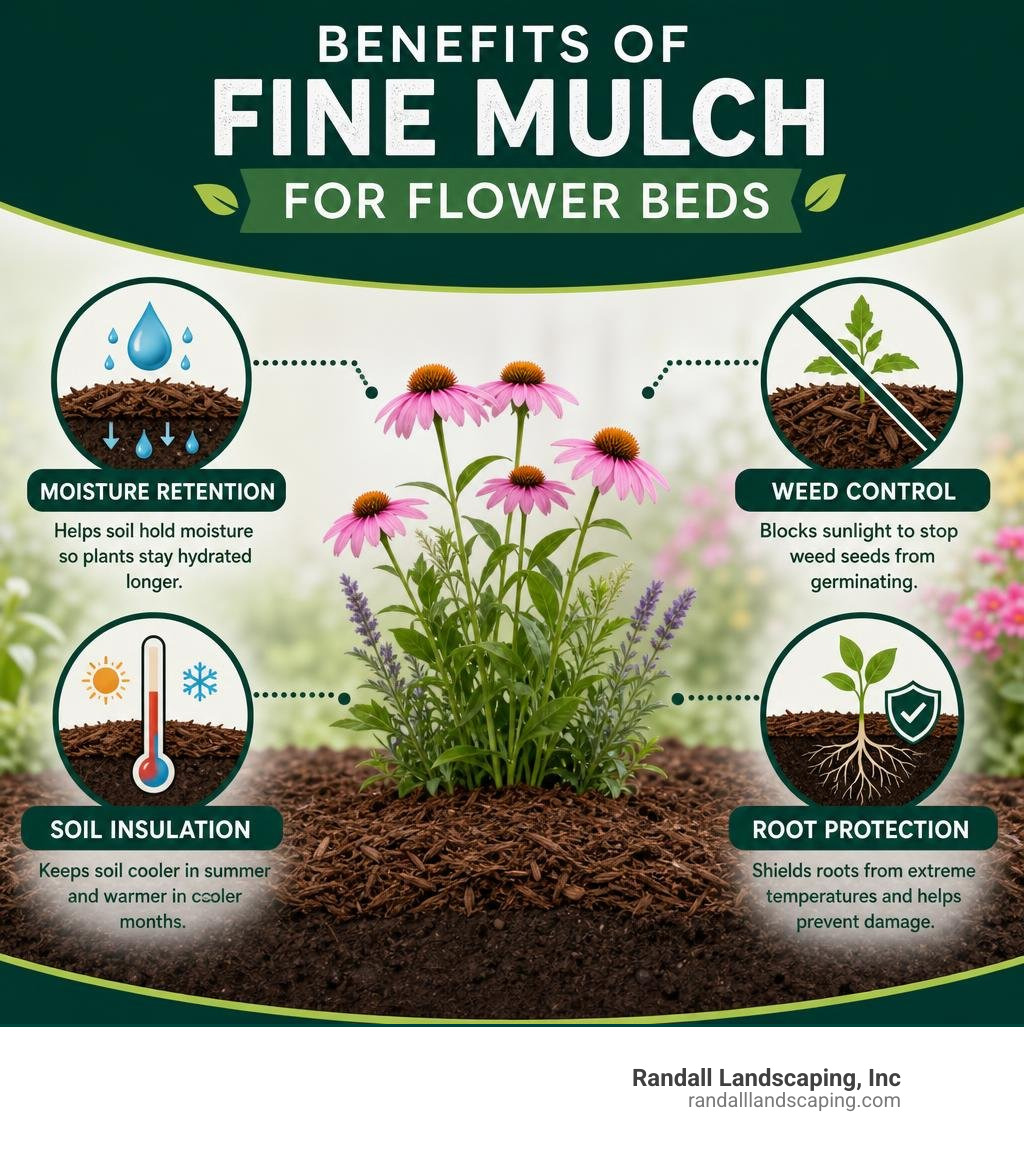
Beyond looks, the right mulch does real work. It holds moisture in the soil so you water less. It blocks light from reaching weed seeds so they never sprout. It insulates roots from temperature swings in both summer heat and cool spring nights. And as it breaks down, it quietly feeds your soil.
But not all fine mulch is created equal. There are trade-offs between ultra-fine and double or triple shredded options, differences in color and safety, and a right and wrong way to apply it — especially around new or delicate plantings.
I’m Tommy Randall, owner of Randall Landscaping, Inc., and I’ve been installing and maintaining fine mulch for flower beds across Massachusetts and Southern New Hampshire since 2006. In the sections ahead, I’ll walk you through everything you need to know to choose and apply the right mulch for your beds.
Fine mulch for flower beds vocab to learn:
What is Fine Mulch for Flower Beds and How Does It Work?

When we talk about fine mulch for flower beds, we are referring to organic material that has been processed through specialized industrial grinders and screens—often using specialized “Z” screens—to produce a soft, highly refined texture. Unlike chunky wood chips or coarse bark nuggets, fine mulch consists of much smaller, shredded particles that knit together tightly when spread across your garden beds.
This tight-knit structure is exactly how fine mulch does its magic. When applied to the soil surface, it forms a protective, breathable blanket. This blanket interacts directly with your soil biology. Because the particles are smaller, they provide an excellent environment for beneficial soil microorganisms, earthworms, and fungi. These tiny organisms slowly consume the organic matter, breaking it down and pulling nutrients deep into the root zone where your flowers can easily access them.
Using high-quality Organic Mulch for Flower Beds ensures that your plants aren’t just sitting in a pretty landscape; they are growing in a living, thriving ecosystem. The organic material acts as a slow-release fertilizer, gradually returning valuable humus to the earth, improving the soil structure, and preventing compaction from heavy rains.
Fine Mulch vs. Coarse Mulch: Understanding the Texture
The primary difference between fine mulch and coarse mulch comes down to particle size and how they behave once they are on the ground. Coarse mulch, such as large wood chips, arborist chips, or thick bark nuggets, consists of pieces that can range from 1 to 3 inches or more. Fine mulch, often referred to as “forest fines” or “super fine” grind, typically has a particle size of 1-1/2 inches down to fine organic dust.
Products like Forest Fines 1-1/2 in. Minus Bulk (per cu. yd.) are highly prized by landscaping professionals because they offer a uniform, smooth texture that mimics the natural forest floor.
To help you decide which is right for your specific project, here is a quick comparison:
| Feature | Fine Mulch (Forest Fines / Super Fine) | Coarse Mulch (Wood Chips / Nuggets) |
|---|---|---|
| Particle Size | 1.5 inches down to fine organic particles | 1 to 3+ inches |
| Best Used For | Annuals, perennials, delicate flowers, and vegetable beds | Around mature trees, established shrub borders, and slopes |
| Decomposition Rate | Fast (feeds soil quickly, needs yearly refreshing) | Slow (lasts longer, provides less immediate soil nutrition) |
| Weed Suppression | High (creates a dense, light-blocking barrier) | Moderate (weeds can slip through larger gaps between chunks) |
| Wind & Water Resistance | Excellent (knits together to resist washing away) | Moderate (heavy nuggets stay put, but light chips can float) |
| Aesthetic Appeal | Formal, manicured, clean, and highly polished | Natural, rustic, and rugged |
The Science of Soil Protection and Moisture Retention
The science behind mulching is beautifully simple. Uncovered, naked soil is highly vulnerable to the elements. When the hot summer sun beats down on bare earth, moisture rapidly evaporates, leaving your flower roots dry, stressed, and gasping for water.
Applying a layer of Moisture Retaining Mulch dramatically reduces this evaporation rate. The fine particles create a physical barrier that traps moisture in the soil, keeping the root zone consistently damp. This means you spend far less time dragging the garden hose around your yard in July and August.
Additionally, this protective layer acts as a thermal insulator. In the Merrimack Valley and Southern New Hampshire, spring and autumn temperatures can swing wildly. Fine mulch keeps the soil cooler during scorching summer days and retains warmth during chilly spring nights, protecting delicate root systems from thermal shock.
Finally, it prevents soil erosion and crusting. When heavy rain hits bare soil, it compacts the surface, creating a hard crust that prevents water and air from penetrating. Fine mulch absorbs the impact of raindrops, allowing water to gently seep through to the roots while keeping your valuable topsoil exactly where it belongs.
The Pros and Cons of Fine Mulch vs. Double and Triple Shredded Mulch

When selecting the perfect material for your flower beds, you will frequently run into terms like “double shredded” and “triple shredded.” Understanding these distinctions is key to getting the look and performance you want.
- Double Shredded Mulch: This is the workhorse of the landscaping industry. It is processed twice, balancing a refined appearance with a decent lifespan. The particles are small enough to look neat and tidy, but large enough to resist breaking down too quickly. It spreads easily and offers excellent coverage.
- Triple Shredded Mulch: This material is run through the grinder a third time, resulting in an incredibly fine, almost hair-like consistency. It looks exceptionally polished and formal. However, because the particles are so small, triple shredded mulch has a much faster decomposition rate. It integrates into the soil quickly, which is fantastic for soil health but means you will need to refresh it more frequently.
Benefits of Fine Mulch for Flower Beds
There is a reason why so many homeowners in towns like Andover, North Reading, and Windham opt for fine-textured mulches. The benefits extend far beyond simple curb appeal:
- Rapid Nutrient Release: Because the particles are smaller, they decompose faster than coarse wood chips. This process acts as a natural composting effect, transferring vital organic matter and nutrients directly into your soil.
- Superior Root Protection: Fine mulch forms a dense, snug layer around the base of your plants. This is especially beneficial for shallow-rooted flowers that are sensitive to temperature fluctuations and dry spells.
- Excellent Soil Integration: Products like Tank’s Composted Fine Mulch are pre-composted, meaning they are already teeming with beneficial microorganisms. When applied to your beds, they immediately begin working with the existing soil biology to build a richer, healthier planting environment.
- Polished Aesthetics: Fine mulch creates a smooth, velvet-like dark backdrop. It makes the bright greens of your foliage and the vivid reds, yellows, and pinks of your blooms stand out with stunning contrast.
Drawbacks and Maintenance of Ultra-Fine Mulch
While we love ultra-fine mulch, it is important to be realistic about its unique characteristics and maintenance needs:
- Compaction and Crusting Risk: If ultra-fine mulch is applied too thickly or is left undisturbed for too long, it can occasionally pack down into a tight, dense crust. This crust can become hydrophobic, meaning it actually repels water instead of letting it pass through. To prevent this, we recommend gently raking or fluffing the mulch once or twice a season.
- Faster Decomposition: You must be prepared to refresh ultra-fine mulch annually. It simply does not have the staying power of coarse wood chips.
- Nitrogen Tie-Up Myth vs. Reality: A common concern is that decaying wood mulches rob the soil of nitrogen, starving your plants. The reality is that this only happens if you physically mix raw, un-decomposed wood chips into the soil. When used correctly as a top dressing, fine mulch will not steal nitrogen from your flower roots. However, to ensure maximum safety, it is always best to use properly aged bark mulch rather than raw wood waste.
For more tips on choosing materials that keep weeds at bay, check out our guide on Mulch for Weed Control.
How to Choose, Calculate, and Apply Fine Mulch
Getting the best results from your fine mulch for flower beds comes down to three simple steps: picking the right product, calculating the correct amount, and applying it with care. Let’s break down how to handle each of these steps like a seasoned pro.
Selecting the Right Color and Safety of Dyes
The color of your mulch sets the tone for your entire landscape. Here are the most common options we install for our clients in Southern New Hampshire and the Merrimack Valley:
- Dyed Black Mulch: Extremely popular for modern homes and contemporary designs. The deep black creates an incredible contrast, making bright floral colors pop.
- Natural Brown / Aged Brown: A classic, timeless choice. It blends seamlessly into cottage gardens, rustic landscapes, and naturalized plantings.
- Dyed Red Mulch: A bold choice that can look fantastic against certain brick homes, though it tends to divide opinions as some find it a bit too bright.
A common question we get is: Are the dyes used in colored mulches safe?
Yes! High-quality dyed mulches use natural, non-toxic colorants (typically iron-oxide for red and carbon for black) that are rated at the lowest toxicity level possible. They are completely safe for your plants, your family, and your pets.
To see a great visual breakdown of how different mulches perform, check out this helpful video: What Mulch is Best (and WORST) for FLOWER BEDS? – YouTube.
Calculating Your Mulch Needs: Yards vs. Bags
Before you head to the garden center or call us for a bulk delivery, you need to know exactly how much material your beds require. Mulch is sold in two ways: bulk (measured in cubic yards) and bags (usually measured in cubic feet).
To make your life easy, follow the 100 Square Feet Rule:
1 cubic yard of mulch (which is 27 cubic feet) will cover a 100-square-foot area at a depth of 3 inches.
Here is how to calculate your needs:
- Measure your beds: Multiply the length of your flower beds by the width to get the total square footage. (For example, two beds on either side of your porch measuring 15 ft x 10 ft each equal 300 square feet total).
- Divide by 100: Divide your total square footage by 100 to find the number of cubic yards needed for a 3-inch depth.
- 300 sq. ft. ÷ 100 = 3 cubic yards.
- If buying bags: Since a standard large bag holds 2 cubic feet of mulch, you will need 13.5 bags to equal one cubic yard. If you need 3 cubic yards, you would need to buy 41 bags (3 x 13.5).
As a general rule of thumb, if your project requires more than 1 to 2 cubic yards, ordering bulk delivery is highly recommended—it saves your back and your wallet!
Best Practices for Applying Fine Mulch for Flower Beds
When it is time to spread the mulch, a little finesse goes a long way, especially around delicate flowers and fresh plantings. For a complete, step-by-step walkthrough, refer to our Garden Bed Mulching Complete Guide.
Here are our top insider tips for a flawless application:
- Mind the Depth: Keep your mulch layer between 2 and 3 inches deep. Anything less than 2 inches is too shallow to suppress weeds effectively. Anything deeper than 4 inches can smother your plants’ roots and prevent water from reaching the soil.
- Give Them Breathing Room: Never pile mulch directly against the stems of your flowers or the trunks of shrubs and trees (avoid the infamous “mulch volcanoes”). Keep the mulch an inch or two away from the plant bases to prevent rot, pests, and fungal diseases.
- Use the Right Prep: Before mulching, thoroughly weed the bed and lightly edge the borders to create a clean, professional lip that holds the mulch in place.
- Incorporate Soil Amendments: If you are planting new, delicate flowers, consider using a high-quality 2-in-1 product like Organic GroMulch 2-in-1 Planting Mix Soil and Mulch 2.0 cu. ft., OMRI Listed around the planting hole to give your new flowers a rich, organic head start.
Frequently Asked Questions about Flower Bed Mulching
Can I apply new fine mulch over existing mulch?
Yes, you can absolutely apply new fine mulch directly over your old layer, but with a few important caveats.
First, check the condition of the old mulch. If it has completely broken down into rich, dark soil, or if it is heavily matted and crusty, you should gently cultivate or scuff it up with a garden rake first. This ensures proper soil aeration and prevents a water-blocking barrier from forming.
If the existing layer is still clean and free of disease, simply add a thin 1 to 2-inch top-dressing of fresh fine mulch to restore that vibrant, clean look and replenish the depth.
How quickly does fine mulch break down and need replacing?
Because fine mulch has a smaller particle size, it decomposes much faster than chunky wood chips. On average, you can expect ultra-fine mulch to break down significantly within 10 to 12 months.
To keep your flower beds healthy and looking their absolute best, plan on an annual refresh. The ideal time for this is in early spring (typically late April or May in our Southern NH and Merrimack Valley climate) just as your perennials are starting to push through the soil.
How much does fine mulch installation cost?
Note: The following figures represent average market costs based on national internet data and are not the actual pricing of Randall Landscaping, Inc.
The cost of installing fine mulch can vary widely depending on whether you purchase materials yourself or hire a professional service, as well as the amount of bed preparation (weeding, edging) required.
- DIY Bagged Mulch: Typically ranges from $3.50 to $7.00 per bag (1.5 to 2.0 cubic feet).
- DIY Bulk Mulch: Typically costs between $35.00 to $65.00 per cubic yard (plus delivery fees).
- Professional Installation (including prep, materials, and labor): On average, professional installation costs range from $90.00 to over $300.00 per cubic yard installed. The wide range accounts for the complexity of the beds, the amount of weeding needed, and whether custom hand-spreading or mechanical mulch-blowing is utilized.
Conclusion
Your flower beds are the crown jewels of your home’s landscape. Don’t leave them unprotected! Applying high-quality fine mulch for flower beds is the ultimate way to lock in moisture, keep weeds at bay, feed your soil, and give your property that professional, manicured look.
At Randall Landscaping, Inc., we have spent the last two decades helping homeowners throughout the Merrimack Valley and Southern New Hampshire—including Amesbury, Andover, Atkinson, Boxford, Dracut, Georgetown, North Andover, North Reading, Pelham, Salem, Windham, Methuen, Lawrence, and Plaistow—build beautiful, healthy gardens. We pride ourselves on our 100% reliability, exceptional quality of work, and absolute customer satisfaction.
Let us do the heavy lifting for you this season. Contact us today to schedule our professional Professional Mulch Installation Services and give your garden the care it deserves!