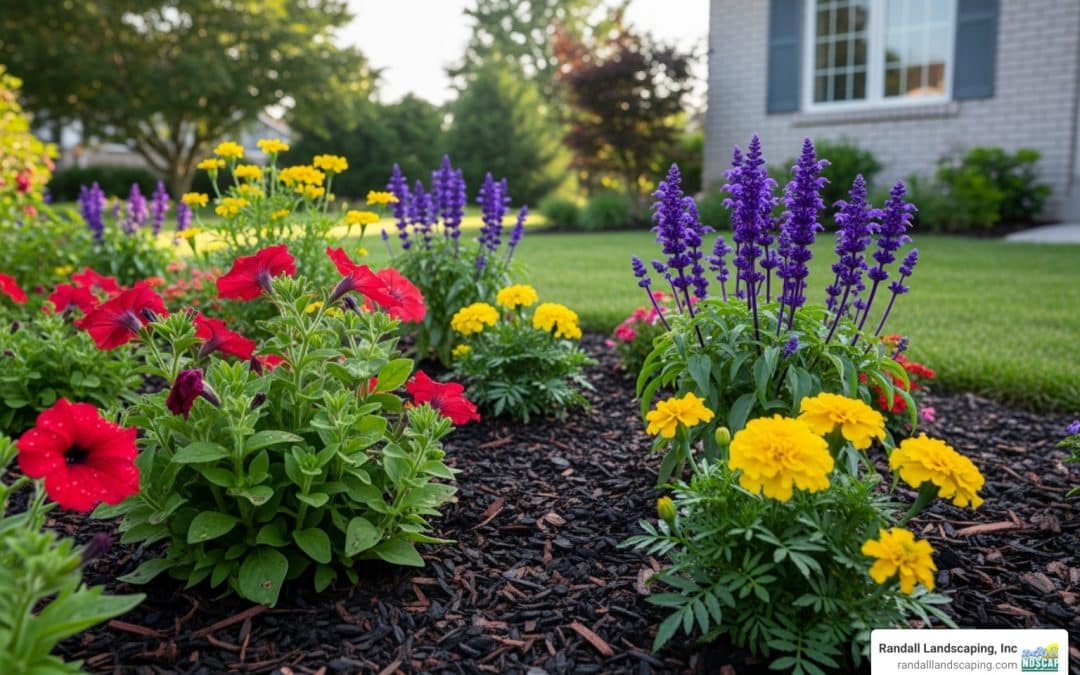
Why Homeowners Are Rethinking Traditional Mulch Options
Rubber mulch for flower beds is a durable, long-lasting alternative to traditional organic mulches, made from recycled tires. While it offers exceptional longevity (10-20 years), superior weed control, and minimal maintenance, it doesn’t enrich soil like wood mulch does and may pose concerns regarding heat retention and potential chemical leaching.
Quick Decision Guide: Is Rubber Mulch Right for Your Flower Beds?
- Choose rubber mulch if: You want a low-maintenance, long-lasting option that won’t blow away, need excellent weed suppression, and are planting around established shrubs or trees
- Skip rubber mulch if: You’re growing vegetables or annual flowers, want to improve soil health naturally, or live in a very hot climate where heat absorption could damage plant roots
- Cost consideration: Rubber mulch costs $8-$14 per cubic foot versus $2-$3 for wood mulch, but can last 10+ years without replacement
Adding mulch to your flower beds is one of the most effective ways to improve curb appeal while protecting your plants. But the choice between traditional organic mulch and rubber mulch isn’t always straightforward. Rubber mulch lasts an impressive 10 to 20 years, stays in place during heavy rain and wind, and never needs annual replacement—qualities that appeal to busy homeowners who value a pristine yard without constant upkeep.
Yet rubber mulch doesn’t break down to feed your soil, can absorb significant heat on hot days, and carries ongoing safety debates about potential toxicity. Many rubber mulch companies guarantee up to 12 years of color before fading, making it an attractive option for long-term aesthetic appeal.
I’m Tommy Randall, owner of Randall Landscaping Business, and since 2006 I’ve helped hundreds of homeowners throughout Massachusetts and New Hampshire choose the right rubber mulch for flower beds based on their specific landscape needs and maintenance preferences. Through this guide, I’ll share what I’ve learned about when rubber mulch makes sense—and when traditional options serve you better.
What is Rubber Mulch and How Is It Made?
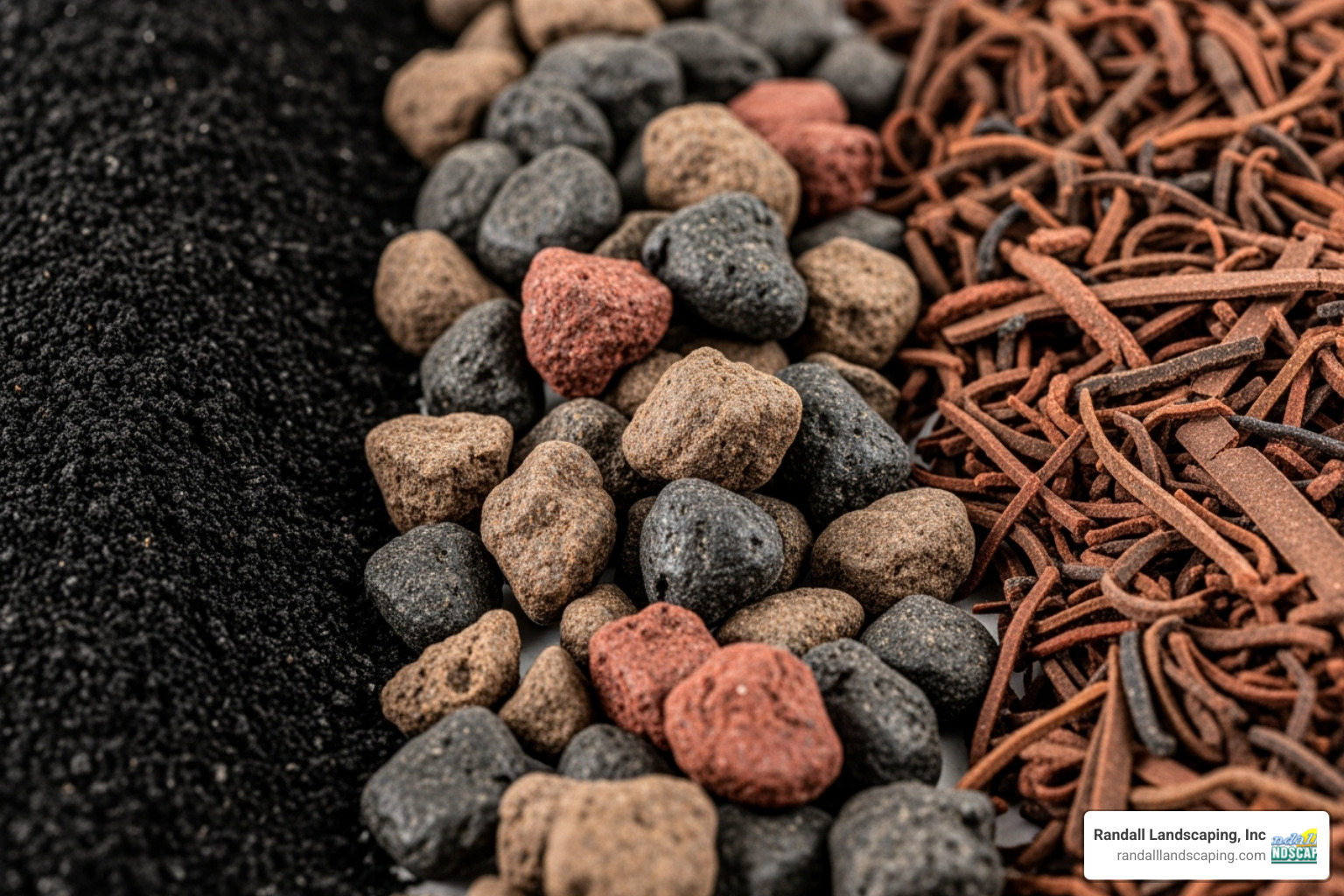
Rubber mulch for flower beds is made from recycled tires, giving a new purpose to the millions of scrap tires Americans discard annually. According to the Environmental Protection Agency, this recycling process helps keep tires out of landfills.
The manufacturing process begins with washing the tires to remove debris. Industrial shredders then tear them into various sizes, from fine shreds to larger nuggets. Next, powerful magnets remove the steel belts and wires. While high-quality producers remove nearly all metal, it’s wise to ask your supplier about their metal removal process, as some fragments can remain. Finally, the rubber pieces are coated with non-toxic, UV-resistant dyes in shades like brown, red, green, and blue. These colors last much longer than the dyes used on wood mulch.
While recycling tires makes rubber mulch an eco-friendly mulch option for some, its inorganic nature is a key point of debate. Unlike organic mulches, it doesn’t decompose to enrich the soil, which is both its main advantage and disadvantage.
Rubber Mulch vs. Organic Mulch: A Quick Comparison
When deciding between rubber mulch and traditional wood chips, the price tag tells only part of the story. Here’s how these two popular choices stack up on the factors that matter most for your flower beds and budget.
| Feature | Rubber Mulch | Organic Mulch (e.g., Wood Chips) |
|---|---|---|
| Lifespan | 10-20 years | 1-2 years |
| Cost (Upfront) | $8 – $30 per cubic foot | $2 – $7 per cubic foot |
| Cost (10-Year) | $8 – $30 per cubic foot (one-time purchase) | $20 – $70+ per cubic foot (multiple replacements) |
| Soil Benefit | No direct soil enrichment | Decomposes, adds organic matter and nutrients to soil |
| Weed Control | Excellent (blocks sunlight, dehydrates seeds) | Good (suppresses weeds, but can decompose) |
| Maintenance | Very low (no annual reapplication) | Moderate to high (annual or bi-annual reapplication) |
| Color Retention | Excellent (10-12 year guarantee) | Varies, typically fades within a season or two |
The upfront cost of rubber mulch is significantly higher, but the long-term cost can be lower. Organic mulch requires annual or biennial replacement, and over a decade, these repeat purchases and labor costs can exceed the one-time expense of rubber mulch.
The choice depends on your priorities. Rubber mulch offers convenience and longevity, while organic mulch improves soil health by decomposing and adding nutrients. This fundamental difference is key to choosing the right mulch for your garden.
The Pros and Cons of Using Rubber Mulch in Flower Beds
Choosing the right mulch for your garden bed mulching project involves weighing its effects on your plants, maintenance, and budget. With nearly two decades of experience in the Merrimack Valley and Southern New Hampshire, I’ve seen both the successes and failures of rubber mulch. Let’s break down the pros and cons to help you decide.
The Benefits of Using Rubber Mulch for Flower Beds
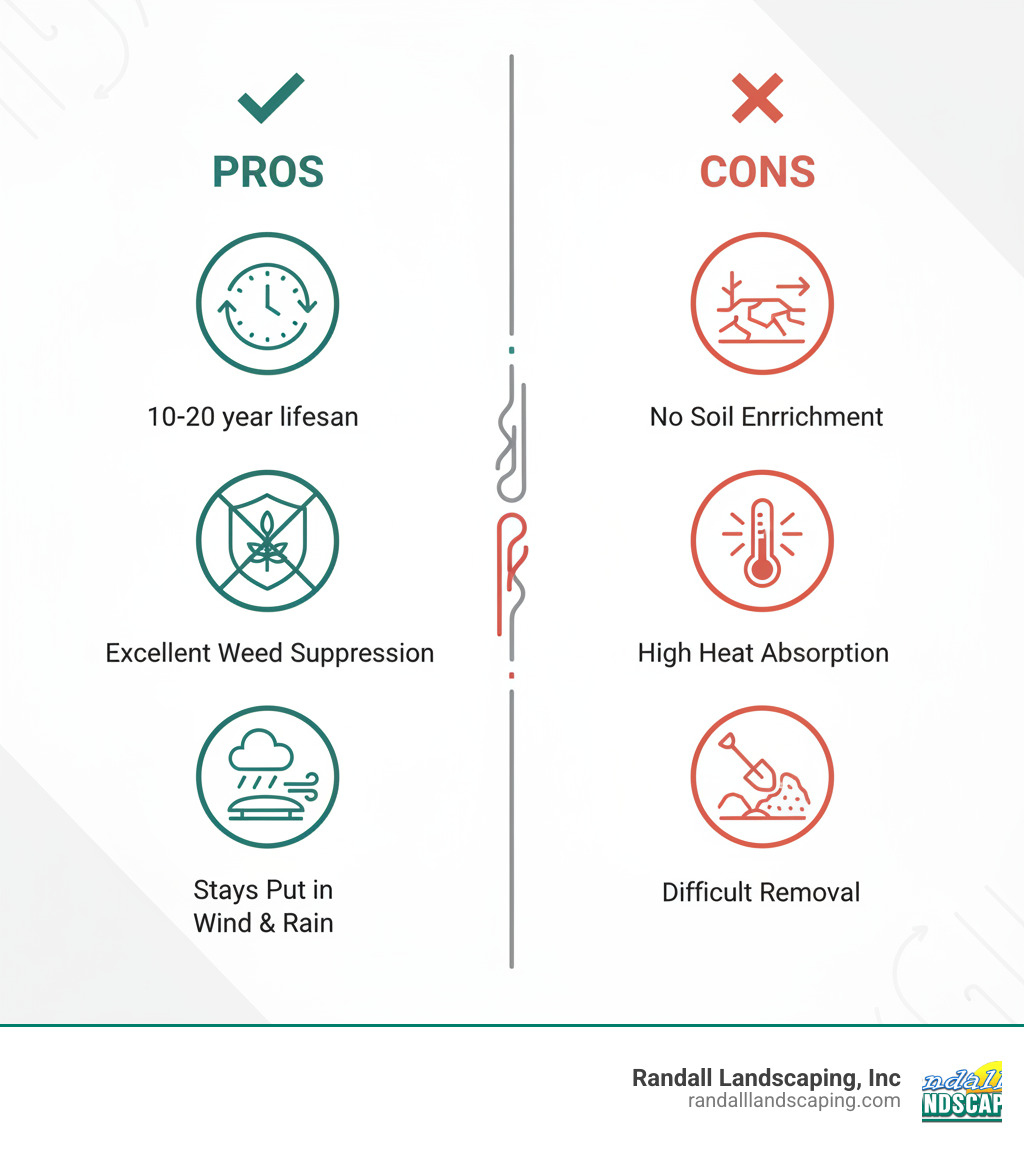
The primary appeal of rubber mulch is its exceptional longevity and low maintenance. With a lifespan of 10 to 20 years and color guarantees of up to 12 years, it’s a one-time installation that eliminates the annual chore of replacing traditional wood mulch. Its durability is another major plus; made from recycled tires, it’s heavy enough to stay in place during heavy rain and strong winds, maintaining a neat appearance year-round. For homeowners who value a pristine yard without constant upkeep, this is a significant advantage.
Other key benefits include:
- Superior Weed Control: It provides superior mulch for weed control by forming a dense barrier that blocks sunlight and prevents weed seeds from sprouting.
- Moisture Retention: It’s also an excellent moisture retaining mulch. Unlike absorbent wood mulch, rubber allows water to pass through to the soil and then reduces evaporation, keeping plant roots hydrated longer.
- Pest Deterrence: Its inorganic nature offers pest-deterring properties. Rubber mulch doesn’t attract termites or carpenter ants and won’t harbor mold, which is a significant benefit for protecting your home’s foundation.
- Vibrant Color: Rubber mulch comes in vibrant, long-lasting color options (browns, reds, greens, and even blues) that don’t fade to gray in a single season like wood mulch does, allowing for more creative and durable landscape designs.
- Insulation: Finally, it provides an insulation benefit, helping to regulate soil temperature by protecting roots from extreme cold and heat.
The Drawbacks and Risks of Rubber Mulch for Flower Beds
However, rubber mulch has significant drawbacks that require careful consideration before you commit.
The biggest drawback is its lack of soil enrichment. Unlike organic mulch, rubber does not decompose to add nutrients or improve soil structure. For gardeners focused on building healthy soil, this is a critical disadvantage.
There is also the potential for chemical leaching. Recycled tires contain heavy metals and other chemicals. Research from Dr. Linda Chalker-Scott at Washington State University has raised concerns about these substances leaching into the soil. While some studies suggest it can act as a zinc fertilizer, high zinc levels can inhibit plant growth. For a deeper dive, review this research on rubber mulch toxicity.
Other risks include:
- High Heat Absorption: In sunny locations, dark rubber mulch can get extremely hot, transferring heat to the soil and potentially damaging the roots of delicate plants. The heat can also intensify an unpleasant rubber odor.
- Flammability: Rubber mulch is flammable. Research has shown it can burn hotter and faster than wood mulch while releasing toxic fumes, posing a serious safety hazard in fire-prone areas.
- Environmental Concerns: Beyond leaching, environmental concerns include the potential for rubber mulch to shed microplastics into soil and water systems. For those seeking a truly sustainable environmental mulch, these long-term impacts are a serious consideration.
- Difficult Removal: If you change your mind, rubber mulch is difficult to remove. It doesn’t decompose and can’t be tilled into the garden, making its removal a tedious, manual process.
- Metal Strands: Finally, small metal strands from the original tire belts can sometimes be found in the final product, even after magnetic separation.
Cost Analysis: Upfront Expense vs. Long-Term Value
Let’s talk money, because the price tag on rubber mulch makes many people hesitate. Based on internet data, rubber mulch can cost anywhere from $8 to $30 per cubic foot, while wood mulch is typically $2 to $7 per cubic foot. That means your initial investment could be significantly higher. For a modest 10-cubic-foot flower bed, you might spend $80-$300 for rubber versus just $20-$70 for wood. These are average costs based on internet research, not actual Randall Landscaping prices, which can vary significantly based on supplier, quality, and location.
That sticker shock is real. But here’s where the math gets interesting. Rubber mulch lasts 10 to 20 years, while wood mulch needs replacing every one to two years. Let’s run the numbers over a decade for that same 10-cubic-foot bed:
With rubber mulch, your one-time cost is $80-$300. With wood mulch replaced annually at an average of $4.50 per cubic foot, you’re spending $450 over 10 years. Even at the low end of $20 per year, that’s $200 total.
Suddenly, even a mid-range rubber mulch purchase looks like a potential long-term saving. And we haven’t even factored in your time and labor, or potential mulch delivery cost for those annual wood mulch refreshes. For homeowners looking to minimize recurring expenses, this long-term value proposition makes rubber mulch worth serious consideration, as long as you’re comfortable with the non-financial trade-offs.
Installation and Maintenance Guide
Getting rubber mulch installed properly is the foundation for years of low-maintenance beauty. Whether you’re tackling this as a weekend DIY project or calling in the professionals, understanding the right approach makes all the difference. The good news? Once it’s in, you’ll barely need to think about it again. For comprehensive guidance on getting started, we always recommend checking out a mulch installations complete guide.
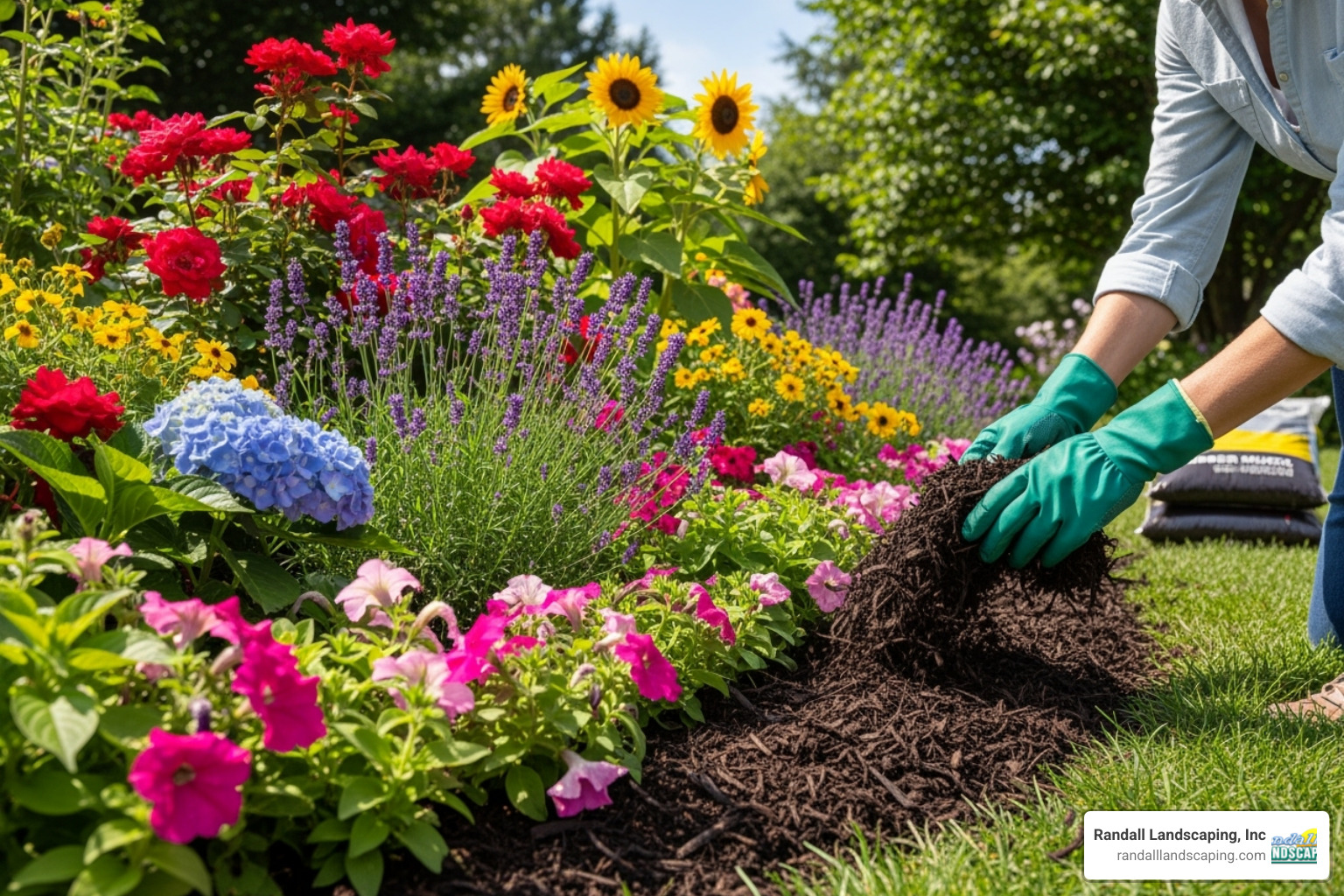
How to Properly Install Rubber Mulch
Installing rubber mulch for flower beds isn’t complicated, but doing it right from the start prevents headaches down the road. I’ve seen plenty of homeowners skip crucial steps and regret it later when weeds push through or the mulch shifts.
Start by clearing out your flower bed completely. Pull every weed, remove grass, and clean out any debris that’s accumulated. If you have old organic mulch that’s broken down into a dark, soil-like layer, you can leave that—it’s essentially become part of your soil at this point. But if there’s still recognizable wood chips or bark, consider removing some to keep your bed level.
Next, create a clear edge around your flower bed. You can dig a shallow trench about two inches deep with a sharp spade, or install physical edging like metal, plastic, or stone borders. This containment system keeps your rubber mulch exactly where you want it, preventing it from creeping into your lawn or pathways. Trust me, you don’t want to be fishing rubber nuggets out of your grass with a lawnmower.
Here’s the step that many people skip but shouldn’t: laying down landscape fabric. This permeable barrier goes directly on top of your prepared soil and serves multiple purposes. It blocks weeds from pushing through, prevents direct contact between the rubber and your soil (which addresses some of the chemical leaching concerns), and actually helps your mulch coverage go further. Use landscape staples to secure the fabric, and make sure any seams overlap by several inches to prevent gaps. A felt-type weed fabric works particularly well under rubber mulch.
Now comes the satisfying part—spreading the mulch itself. For flower beds, aim for a depth of about one to one-and-a-half inches. That’s thinner than you might think, but it’s plenty for weed suppression and moisture retention without creating the heat buildup that can stress plant roots. Spread it evenly across the bed, and be careful around plant stems and tree trunks. You want to leave a small gap rather than piling mulch against them.
If you’re looking at a larger project or simply prefer to skip the manual labor, our landscape mulch installation team handles everything from bed preparation to the final spread. We’ve refined the process over years of working in the Merrimack Valley and Southern New Hampshire, and we know exactly how to set up your beds for long-term success.
Long-Term Care and Maintenance
This is where rubber mulch really shines—there’s almost nothing to do. No annual trips to the garden center for fresh bags. No spreading new layers every spring. No watching your hard work wash away after the first heavy rain.
The most maintenance you’ll typically need involves clearing off fallen leaves and debris. A leaf blower works perfectly for this, and you can use a higher setting than you’d dare with wood mulch. Rubber mulch is heavy enough that it stays put while the leaves blow right off. Some homeowners find that using their leaf blower on the mulch every few weeks keeps it looking fresh and prevents leaves from breaking down on top of it.
If you notice the mulch looking a bit flat or uneven in spots where people walk frequently, a quick rake-through fluffs it right back up. This takes maybe five minutes and instantly refreshes the appearance. Unlike organic mulches that compact and decompose, rubber mulch bounces back easily.
The vibrant colors that initially attracted you to rubber mulch will stick around for years. Most manufacturers guarantee their colors won’t fade significantly for up to twelve years, and in practice, many homeowners find their mulch still looks great beyond that. Eventually, you might notice some dulling, especially with lighter colors. When that happens, you don’t need to remove anything—just spread a thin fresh layer on top to restore that like-new appearance. Because the old mulch hasn’t decomposed or blown away, you’re only topping off, not replacing, which keeps costs minimal even after a decade or more.
The contrast with traditional wood mulch is striking. While your neighbors are scheduling their annual mulch delivery and spending a weekend spreading it, you’ll be enjoying your flower beds with barely any effort at all. That’s the trade-off rubber mulch offers—higher upfront investment for dramatically lower ongoing maintenance.
Frequently Asked Questions about Rubber Mulch for Flower Beds
Homeowners often ask the same key questions about rubber mulch for flower beds. Here are answers to the most common concerns, based on our research and real-world experience in New England.
How long does rubber mulch last?
Rubber mulch lasts an impressive 10 to 20 years. Unlike wood mulch that requires annual replacement, rubber mulch resists decomposition and rot. Manufacturers often provide color guarantees for up to 12 years, making it a long-term, “set it and forget it” solution that saves time and recurring effort.
Is rubber mulch safe for all plants, pets, and children?
The safety of rubber mulch is complex and depends on your specific use case.
For plants, rubber mulch offers no nutritional benefit and doesn’t improve soil health. This is a major issue for vegetable gardens and delicate annuals. We recommend avoiding it for edibles (see our guide to the best mulch for vegetable garden). Concerns about chemical leaching also make it less suitable for sensitive plants. For established, hardy shrubs and trees, the risks are generally considered lower.
For pets and children, the debate is more nuanced. The Consumer Product Safety Commission (CPSC) recommends rubber mulch for playgrounds in its Public Playground Safety Handbook due to its shock-absorbing qualities. However, some health experts have raised concerns about long-term exposure to chemicals in shredded tires, as noted in an interview with NBC Nightly News.
The Minnesota Department of Health has also noted potential exposure to harmful chemicals, and there have been reports of athletes being diagnosed with cancer after years of playing on similar materials. For pets, the primary risk is ingestion. Given these concerns, we advise caution. If your flower bed is purely decorative, the risk is low. But for play areas or if you have pets that chew on things, traditional organic mulch is a safer choice.
How does rubber mulch perform in different climates?
In New England’s variable climate, rubber mulch’s performance depends on the season.
In hot summers, dark rubber mulch absorbs significant heat, which can stress or damage the roots of sensitive plants. The heat can also amplify the rubber odor.
In cold winters, rubber mulch acts as an excellent insulator, protecting roots from extreme cold and damaging freeze-thaw cycles.
In rainy or windy conditions, rubber mulch excels. Its weight prevents it from washing away or blowing around, unlike lighter organic mulches. This durability is a major advantage in our region.
Conclusion
After weighing all the factors we’ve discussed, the question becomes: is rubber mulch for flower beds the right choice for your landscape? There’s no one-size-fits-all answer, but I can help you think through it based on what matters most to you.
If you’re someone who values a pristine, low-maintenance yard and you’re tired of the annual mulching routine, rubber mulch offers genuine appeal. Its 10 to 20-year lifespan means you can install it once and essentially forget about it—no more spring weekends spent spreading fresh mulch. The superior weed control and resistance to wind and rain means your beds will look neat and tidy year-round without constant attention. For established shrubs and trees where soil enrichment isn’t as critical as it is for younger plants, rubber mulch can be an excellent, practical solution.
However, if improving your soil health is a priority—especially if you’re growing vegetables, herbs, or delicate annuals—then rubber mulch simply won’t serve you well. It doesn’t break down to feed your soil like organic mulches do. And if you live in a very hot climate, that heat absorption issue is real and could stress your plants’ roots during summer’s peak. The ongoing questions about potential chemical leaching, while still being researched, are worth considering if you’re particularly environmentally conscious or have young children and pets who spend a lot of time in the garden.
The best use cases for rubber mulch for flower beds? Around mature plantings like shrubs and trees, in areas where you want a consistent look with minimal upkeep, and in climates where wind and rain tend to scatter lighter mulches. When to avoid it? Vegetable gardens, annual flower beds that benefit from soil enrichment, extremely hot climates, and areas where children or pets might be tempted to taste-test the landscaping.
At Randall Landscaping, we’ve helped hundreds of homeowners throughout Massachusetts and New Hampshire make this decision based on their specific landscape needs, climate, and lifestyle. We’re not here to push one option over another—we’re here to help you find what works best for your unique situation.
For professional advice on the best ground cover for your landscape in the Merrimack Valley or Southern New Hampshire, explore Randall Landscaping’s expert garden bed mulching services. Our team can walk you through the pros and cons for your specific property, ensuring your flower beds not only look beautiful but thrive for years to come.