Why Lawn Installations Transform Your Property
A new lawn installation is one of the most effective ways to boost your home’s curb appeal. Whether you’re starting with bare soil or patchy grass, a new lawn provides a clean slate for your ideal landscape.
Quick Answer for Lawn Installation Services:
- Sod Installation: Instant lawn in 1-3 days, higher cost but immediate results
- Seeding: Most affordable option, takes 2-3 months to establish fully
- Hydroseeding: Best for large areas and slopes, faster than seeding
- Artificial Turf: No maintenance required but highest upfront investment
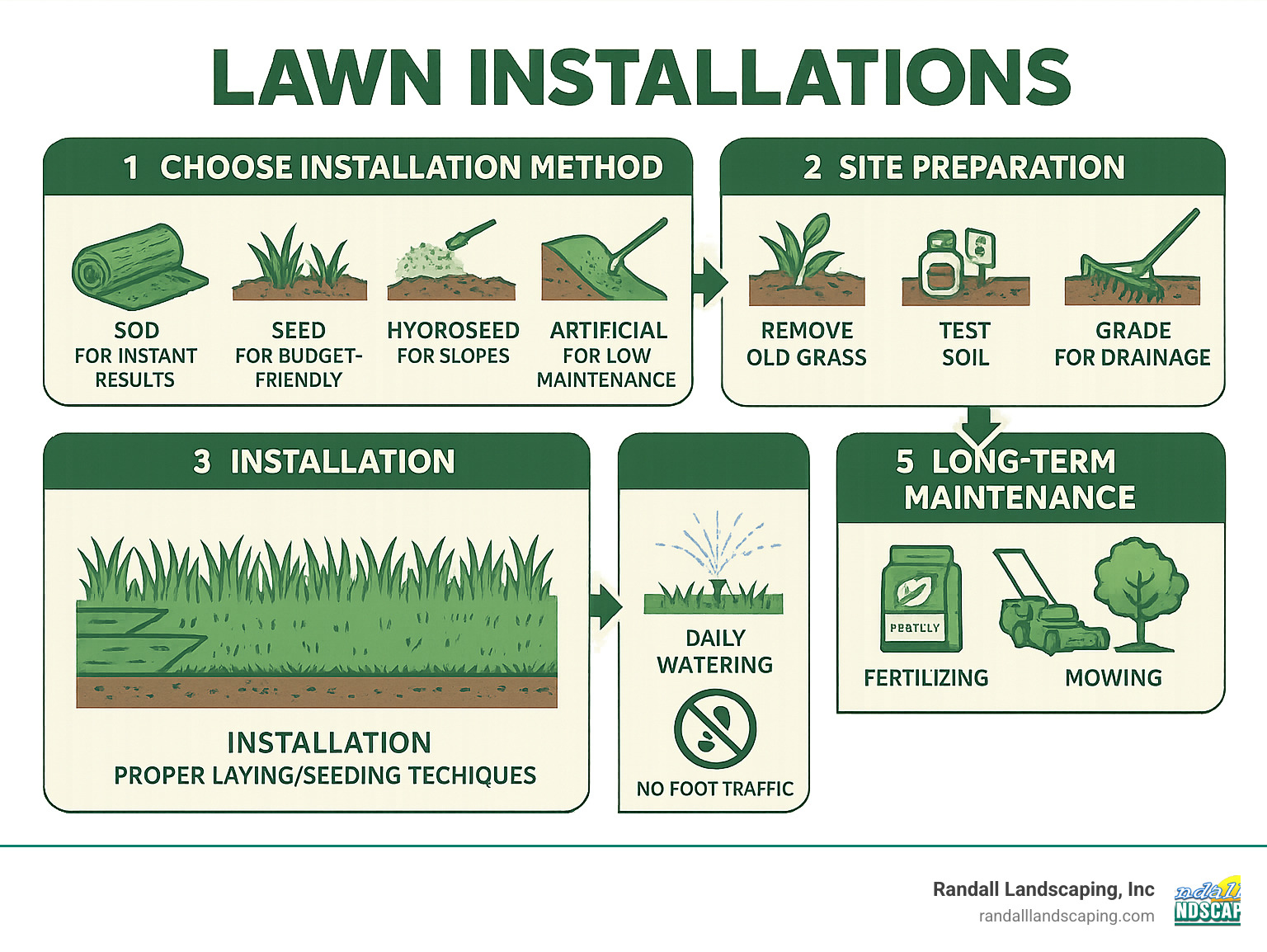
The process breaks down into five manageable steps. Each decision, from the installation method to aftercare, impacts your lawn’s long-term performance.
“Though installing a lawn seems straightforward, there are number of pitfalls involved in the process which may not be obvious at first glance,” according to landscape professionals. Understanding your options upfront saves time, money, and frustration.
I’m Tommy Randall, owner of Randall Landscaping Business, and I’ve helped homeowners in Massachusetts and New Hampshire with Lawn Installations since 2006. For nearly two decades, I’ve guided clients through this exact process, ensuring beautiful, lasting results.
Lawn Installations basics:
- cost of grass per square metre
- garden water irrigation system installation
- professional sprinkler installation
Step 1: Choose the Right Lawn Installation Method
The first step in any successful Lawn Installations project is choosing the right method. There’s no single “best” choice—it depends on your budget, timeline, desired maintenance level, and property’s climate considerations. Factors like sun vs. shade and soil testing are also crucial for long-term success.
Let me walk you through the four main options:
| Method | Cost (Initial) | Speed (Establishment) | Labor (Installation) | Best Use Cases |
|---|---|---|---|---|
| Sod | Higher | Instant | Moderate | Immediate results, erosion control, small to medium areas |
| Seed | Lower | Slow (2-3 months) | Lower | Budget-friendly, large areas, custom grass blends |
| Hydroseed | Mid-range | Moderate (2-3 weeks) | Lower (professional) | Large areas, slopes, quick germination |
| Artificial Turf | Highest | Instant | Moderate | Low maintenance, water conservation, high-traffic |
Sod Installation
Sod is the “instant lawn” option, consisting of mature grass rolls ready to be laid. The primary benefit is immediate gratification and a beautiful lawn overnight. While it has a higher initial cost, sod offers excellent erosion control and faces less weed competition since the grass is already established. For many, the convenience and instant results are worth the investment. Our Professional Sod Installation ensures a perfect finish, and we offer local services like Sod Installation in Methuen, MA.
Seeding a Lawn
Seeding is the most affordable route for Lawn Installations and offers a wider variety of grass types. This allows for custom blends suited to specific conditions, like shady areas or high-traffic zones. The trade-off is a longer establishment time of 2-3 months and the need to plant during the best planting seasons (early fall is ideal in New England). While it requires more patience and initial weed management, seeding is a rewarding, budget-friendly choice. Our Lawn Care in Salem, NH can help your new seeded lawn thrive.
Hydroseeding
Hydroseeding offers a balance of cost and speed. This method involves spraying a slurry of seed, water, fertilizer, and protective mulch, resulting in faster germination than traditional seeding. It’s excellent for large areas or sloped terrain where the mulch mixture prevents erosion and keeps seeds moist. The green-tinted mulch protects seeds and provides ideal growing conditions, with sprouts often appearing within a week. Our Hydroseeding Services and local Hydroseeding in Salem, NH provide professional application for optimal results.
Artificial Turf
Artificial turf has the highest upfront cost but the lowest maintenance. Once installed, there’s no watering, no mowing, and no fertilizing. It remains always green regardless of weather, making it perfect for problem areas where natural grass struggles, such as deep shade or high-traffic zones. While the initial investment is significant and it can get hot in direct sun, artificial turf provides a maintenance-free, perfect lawn for homeowners seeking to eliminate yard work.
Step 2: Prepare the Ground for a Perfect Lawn
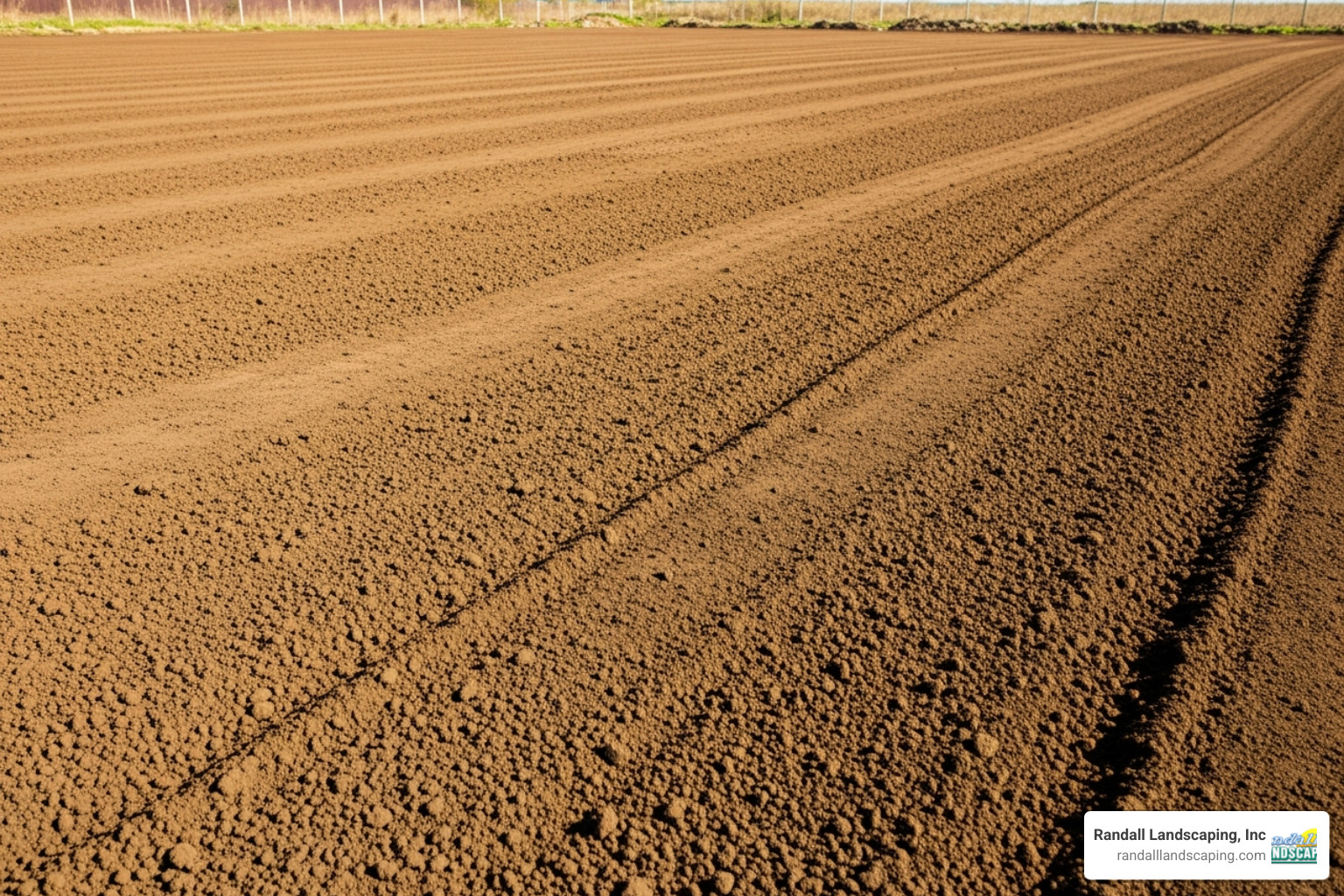
After choosing your method, the next step is ground preparation. This is the foundation for your new lawn and arguably the most critical part of Lawn Installations. As landscape professionals often say, “This is the most important step in a new lawn creation because once it’s done, you can’t go back.”
Site Clearing
First, clear the area of all old grass, weeds, rocks, and debris. A sod cutter or rototiller is effective for large areas, while a shovel works for smaller patches. This creates a clean canvas for your new lawn.
Tilling the Soil
Next, till the soil to a depth of 6-8 inches. This breaks up compacted ground, allowing new roots to establish easily. During this step, incorporate soil amendments like compost and topsoil to create a nutrient-rich growing medium for your future lawn.
Grading for Drainage
Proper grading for drainage is crucial to prevent water from pooling, which can lead to root rot and disease. The goal is to create a gentle slope that directs water away from your home’s foundation. The final grade should be about 1 inch below surrounding walkways or driveways for a clean, professional look.
Final Raking
The last preparation step is a final raking. Use a bow rake to smooth the entire surface, filling in low spots and removing any remaining debris. A level surface now prevents an uneven lawn later. This attention to detail is part of our expert advice on site preparation and a key component of our Landscape Design and Installation services.
Tools and Equipment Needed
Having the right tools makes this whole process so much easier. You may need a sod cutter, rototiller, wheelbarrow, garden rake, spreader, and lawn roller. A good shovel, utility knife, and work gloves are also essential.
Step 3: The Installation Process
With the ground prepared, it’s time for the most exciting part of Lawn Installations: bringing your new lawn to life. The process varies depending on your chosen method.
How to Install Sod
Installing sod is like laying a green carpet. For best results, use fresh sod and install it the day it arrives.
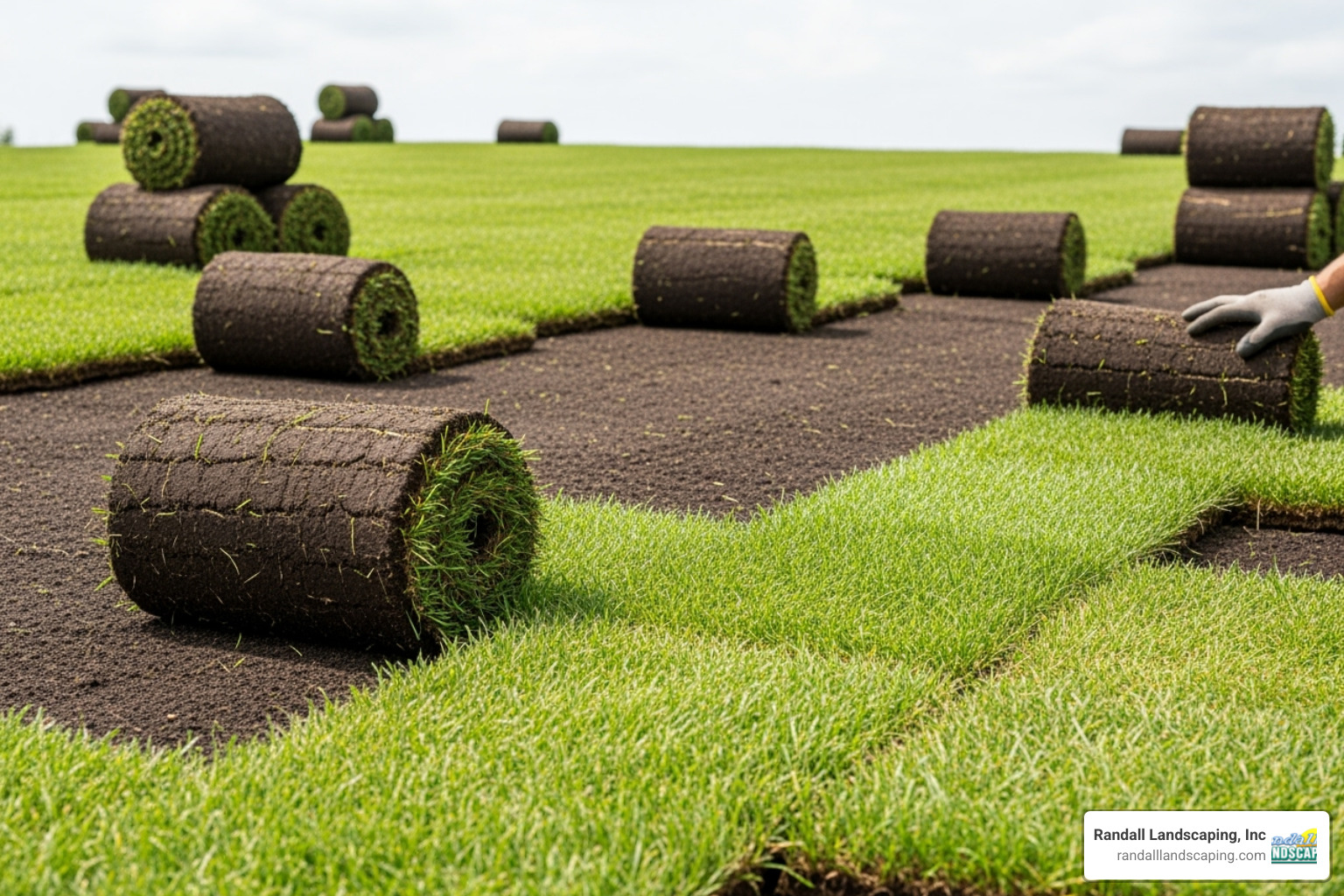
Start the first row along a straight edge, like a driveway. Stagger the joints in a brick-like pattern to create a uniform, strong lawn and avoid visible seams. Push the edges together tightly without overlapping to eliminate gaps. Use a sharp utility knife to trim the sod around curves or obstacles. Finally, roll the sod with a lawn roller to ensure root-to-soil contact and eliminate air pockets, then water thoroughly immediately after installation.
How to Plant with Seed
Seeding requires a gentle touch and attention to detail. Even distribution is key. Use a broadcast spreader to apply half the seed in one direction and the other half in a perpendicular pass. This cross-pattern prevents bare spots.
After spreading, rake lightly to ensure seed-to-soil contact without burying the seeds more than 1/8-inch deep. Apply a starter fertilizer to provide essential nutrients, then cover the area with a light layer of straw mulch. This protects the seeds, retains moisture, and prevents erosion. Finish with a gentle, consistent watering.
How to Install with Hydroseed
Hydroseeding is a professional method ideal for large or sloped areas. It uses specialized equipment to spray a slurry of grass seed, water, fertilizer, and a protective fiber mulch.

The fiber mulch is the key component, as it bonds the seed to the soil, retains moisture, and provides erosion control. This process ensures excellent seed-to-soil contact, leading to high germination rates. The slurry adheres well to slopes, making it a superior choice for challenging terrain. If you’re considering Hydroseeding in North Andover, MA, our team has the expertise and equipment for any project.
Step 4 & 5: New Lawn Care and Ongoing Maintenance
The work isn’t over after your Lawn Installations are complete. Proper care in the following weeks and months is essential for establishing a strong, beautiful lawn.
Initial Care (First 6 Weeks)
Those first six weeks are crucial. Watering is everything during this phase. New sod may need watering up to three times a day for the first two weeks to keep the sod and underlying soil consistently moist. Seeded or hydroseeded lawns require similar frequent, gentle watering to prevent the vulnerable seeds from drying out. The importance of proper irrigation cannot be overstated. A Professional Sprinkler System Installation can automate this crucial task.
Stay off the grass! Avoid foot traffic on new sod for at least two weeks and on seeded lawns for up to two months to protect delicate roots and sprouts.
Your first mowing for sod can happen when the grass reaches 3 inches, usually after three weeks. Seeded lawns may take 2-3 months to be ready. Always use a sharp blade and never remove more than one-third of the grass height.
Fact: After sod installation, it may take up to 6 weeks for the roots to take securely. You can check by gently tugging a corner; resistance means the roots are establishing.
Long-Term Maintenance Plan
Once established, your lawn care routine changes.
- Watering: Water deeply but less frequently, aiming for about 1 inch per week. Early morning is the best time to water to minimize evaporation.
- Fertilization: Apply a balanced fertilizer 4-6 weeks after installation, then continue feeding every 6-8 weeks during the growing season.
- Weed Control: Regular mowing is a natural weed deterrent. For stubborn weeds, use targeted treatments.
- Aeration: Annual aeration in the spring or fall helps relieve soil compaction, allowing water and nutrients to reach the roots.
- Pest Management: Keep an eye out for common pests like grubs and apply preventative treatments as needed.
- Seasonal Care: Prepare your lawn for each season with tasks like overseeding in the spring and a final fertilization in the fall. Our Residential Landscaping services can cover all your long-term maintenance needs.
Deciding Between DIY and Professional Lawn Installations
Making the right choice between tackling Lawn Installations yourself or bringing in the pros depends on your budget, time, and the project’s complexity. While DIY can be rewarding, it’s important to understand the factors involved before you start.
Factors Influencing the Cost of Lawn Installations
Several factors determine the final cost of Lawn Installations. Please note that the following are average costs based on internet data and are not actual costs for Randall Landscaping, Inc. For a precise estimate for your project, please contact us directly.
- Lawn size: Larger areas require more materials and labor.
- Installation method: Prices vary significantly. Seeding can range from $0.75 to $2.50 per square foot, while hydroseeding may cost $1.50 to $5.00 per square foot. Sod installation typically runs $3.00 to $10.00+ per square foot, and artificial turf can be $6.00 to $20.00+ per square foot. These are broad averages, and costs can vary.
- Site preparation: Extensive clearing, grading, or adding amendments to poor soil quality will increase costs.
- Labor and Location: Costs differ based on regional pricing and whether you hire a professional or do the work yourself. For more details, see our guide on the Cost of Grass Per Square Metre.
When to Hire a Professional for Lawn Installations
Hiring a professional is often the best choice in certain situations:
- Complex grading or drainage: Professionals have the equipment and expertise to handle significant slopes and prevent water issues.
- Large areas: A professional crew can complete most average-sized lawns in just 1-3 days, saving you from backbreaking labor.
- Lack of time or equipment: If you don’t have the time or access to specialized tools like tillers and sod cutters, hiring a pro is more efficient.
- Specialized methods: Techniques like hydroseeding require professional equipment and knowledge for proper application.
- Guaranteed results: Reputable companies offer experience and a guarantee of quality, ensuring your investment results in a beautiful, healthy lawn. We pride ourselves on 100% reliability and customer satisfaction.
Frequently Asked Questions about Lawn Installation
After nearly two decades of handling Lawn Installations in the Merrimack Valley and Southern New Hampshire, I’ve answered countless questions. Here are some of the most common ones.
What is the best time of year to install a new lawn?
The best time depends on your grass type. For the cool-season grasses common in New England, early fall (late August to mid-September) is ideal. The warm soil and cool air provide perfect growing conditions. Spring (April to May) is the next best option, but the new grass will face the stress of summer heat, requiring more diligent watering.
How long until I can use my new lawn?
Patience is key. For sod installations, limit foot traffic for the first 2 weeks. The lawn should be fully rooted and ready for regular use in about 4-6 weeks. For seeded or hydroseeded lawns, it typically takes 2-3 months before the grass is durable enough for moderate foot traffic and play.
Can I just put new topsoil and seed over my old, weedy lawn?
In short, no, this approach is not recommended. Taking this shortcut often leads to failure. Your new grass roots will struggle to grow through the old, compacted turf, and the old weed seeds will quickly sprout and compete with your new grass. You’ll also likely end up with a bumpy, uneven surface. For a healthy, long-lasting lawn, proper ground preparation—which includes removing the old lawn—is essential. It’s more work upfront, but it’s the only way to ensure great results.
Get a Flawless Lawn with Professional Installation
Creating the perfect lawn comes down to five key steps: choosing the right method, preparing the ground, installing correctly, providing initial care, and committing to long-term maintenance.
While DIY lawn installation can be a rewarding project, it requires significant time, effort, and the right equipment. For a hassle-free process with guaranteed results, a professional touch makes all the difference.
At Randall Landscaping, Inc., we’ve been perfecting our Lawn Installations process since 2006. Our experience allows us to handle any challenge, ensuring a quality outcome. We stand by our promise of quality and reliability, backed by a 100% customer satisfaction guarantee.
A beautiful lawn is the foundation of your home’s curb appeal. Investing in professional installation ensures a lush, healthy result you’ll enjoy for years.
Ready to transform your yard? Contact us for your New Lawn Installation needs and let’s create the lawn you’ve always dreamed of.