
How Much Does Sprinkler System Installation Cost? (2026 Quick Answer)
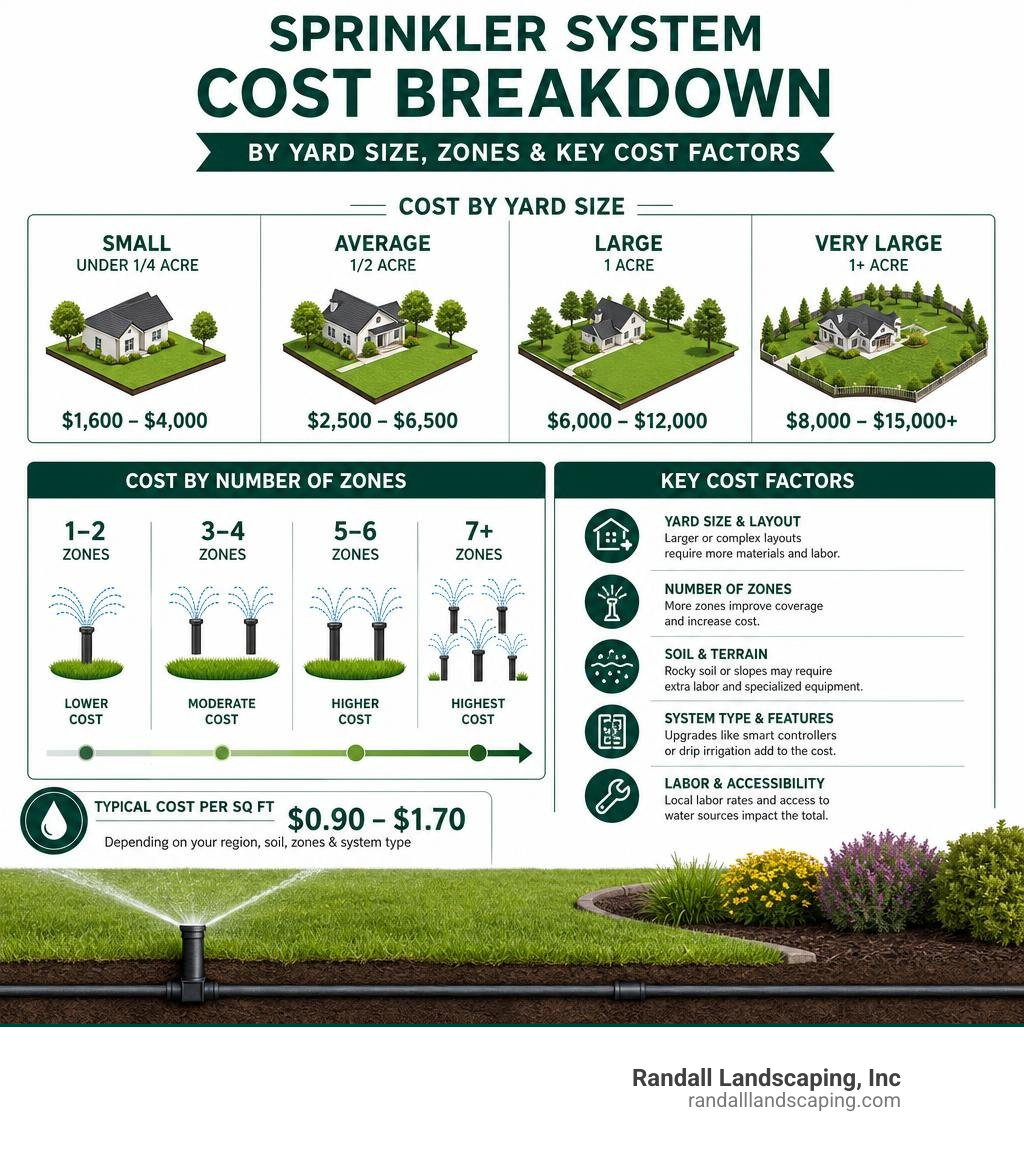
The average cost of sprinkler system installation for a residential property runs about $2,500–$6,500 for a typical half-acre yard — though prices can range from under $1,000 for a basic setup to $15,000 or more for a large, complex property.
Here’s a quick snapshot based on national internet data:
| Yard Size | Estimated Cost Range |
|---|---|
| Small (under 1/4 acre) | $1,600 – $4,000 |
| Average (1/2 acre) | $2,500 – $6,500 |
| Large (1 acre) | $6,000 – $12,000 |
| Very large (1+ acre) | $8,000 – $15,000+ |
Cost per square foot typically falls between $0.90 and $1.70, depending on your region, soil conditions, number of zones, and system type.
Note: These are average costs based on national internet data and do not reflect actual pricing from Randall Landscaping. Your actual cost will vary based on your specific property and location.
Getting a sprinkler system installed is one of the most practical upgrades you can make for your lawn — but figuring out what it will actually cost can feel overwhelming. Prices vary widely depending on yard size, the number of irrigation zones, soil conditions, local labor rates, and the type of system you choose. This guide breaks it all down so you can budget with confidence before you call a contractor.
I’m Tommy Randall, owner of Randall Landscaping, Inc., and with nearly 20 years of hands-on experience designing and installing outdoor spaces across Massachusetts and New Hampshire, I’ve helped hundreds of homeowners understand the average cost of sprinkler system installation and choose the right system for their property and budget. Let’s walk through everything you need to know.
Average cost of sprinkler system installation terminology:
- average cost of inground sprinkler system
- cost of garden irrigation system
- professional sprinkler installation
What is the Average Cost of Sprinkler System Installation?
When you start researching the average cost of sprinkler system installation, you will quickly find that there is no “one-size-fits-all” price. According to industry-wide internet data, the national average cost to install a residential sprinkler system is approximately $2,539 to $4,080, with a typical professional range spanning from $1,637 to $8,500+.
For highly complex, multi-acre properties with extensive landscaping, costs can scale up to $15,000 or more. This wide pricing spread is completely normal because no two yards are identical.
Disclaimer: Please keep in mind that all prices listed throughout this guide are average costs compiled from national internet databases and historical project registries. They do not represent the exact pricing or project quotes offered by Randall Landscaping, Inc.
To get a better idea of how these national figures break down, we can look at reputable cost databases. For instance, the How Much Does a Lawn Sprinkler System Cost? [2026 Data] report highlights that most homeowners spend between $1,637 and $3,583 for standard residential installations.
However, when you scale those numbers up to cover larger, established properties in our region—where we often deal with mature root systems, rocky soil, and complex property layouts—the total investment can easily reach that higher tier.
If you are looking for a permanent, subterranean solution, understanding the average cost of inground sprinkler system projects is your best starting point. In-ground systems require trenching, dedicated plumbing connections, and durable components that protect your water supply, making them a premium but highly rewarding home upgrade.
Average Cost of Sprinkler System Installation by Yard Size
Lawn size is the single most influential variable when calculating your potential irrigation budget. Most professional installers calculate their baseline estimates using square footage, with average rates running anywhere from $0.20 to $1.00 per square foot for material coverage, or $0.90 to $1.70 per square foot of total yard area.
If you have a small, compact yard in a suburban neighborhood like Methuen or North Andover, your system will naturally require fewer materials and less labor. Conversely, if you own a sprawling multi-acre property in Windham or Boxford, the sheer volume of piping, sprinkler heads, and trenching will drive the price upward.
Here is a comparative look at how yard size correlates with estimated installation costs and zone requirements:
| Yard Size (Square Feet / Acreage) | Typical Number of Zones | Estimated Cost Range (Internet Data Average) |
|---|---|---|
| 2,000 sq. ft. (Small Yard) | 1 to 2 Zones | $1,500 – $3,000 |
| 5,000 sq. ft. (Suburban Yard) | 3 to 4 Zones | $2,500 – $5,500 |
| 10,000 sq. ft. (1/4 Acre) | 4 to 6 Zones | $3,500 – $8,000 |
| 21,780 sq. ft. (1/2 Acre) | 6 to 8 Zones | $4,500 – $10,500 |
| 43,560 sq. ft. (1 Acre) | 10 to 14 Zones | $6,000 – $18,000+ |
As the table shows, the high-end cost for large properties can be more than three times the average cost of a standard suburban yard. This is because larger properties often require heavy machinery, specialized high-flow valves, and sometimes even dedicated water wells or booster pumps to maintain adequate water pressure across multiple acres.
Average Cost of Sprinkler System Installation by Number of Zones
Rather than just looking at square footage, irrigation professionals design systems based on “zones” (sometimes called hydrozones). A zone is a group of sprinkler heads controlled by a single valve that run simultaneously.
We group these zones based on several factors:
- Water Pressure and Flow Rate: Your home’s water pressure (measured in PSI) and flow rate (measured in GPM) dictate how many sprinkler heads can run at one time. If your water pressure is low, you will need more zones with fewer heads per zone to ensure proper coverage.
- Sun and Shade Exposure: Shady areas under mature trees in places like Georgetown or Pelham require far less water than wide-open, sun-drenched turf. Separating them into different zones prevents overwatering and turf disease.
- Plant Types: Grass, delicate flower beds, and deep-rooted shrubs all have unique watering requirements. Mixing them in a single zone is a recipe for soggy flowers and dry grass.
According to the How Much Does It Cost to Install a Sprinkler System? [2025 Data] report, a single-zone installation can run anywhere from $500 to $1,335. However, adding additional zones to a larger project is more cost-effective on a per-zone basis, typically averaging $500 to $1,000 for each additional zone.
A standard residential property usually requires 4 to 8 zones, which brings the average cost into that familiar $2,500 to $6,500 range. If your system requires 12 or more zones to handle a complex landscape design, the total cost can easily climb past $12,000.
Cost Factors of Installing an Irrigation System
Beyond the physical size of your lawn, several critical cost factors shape the final price on a professional estimate. Understanding these variables will help you ask the right questions when comparing quotes from local contractors.
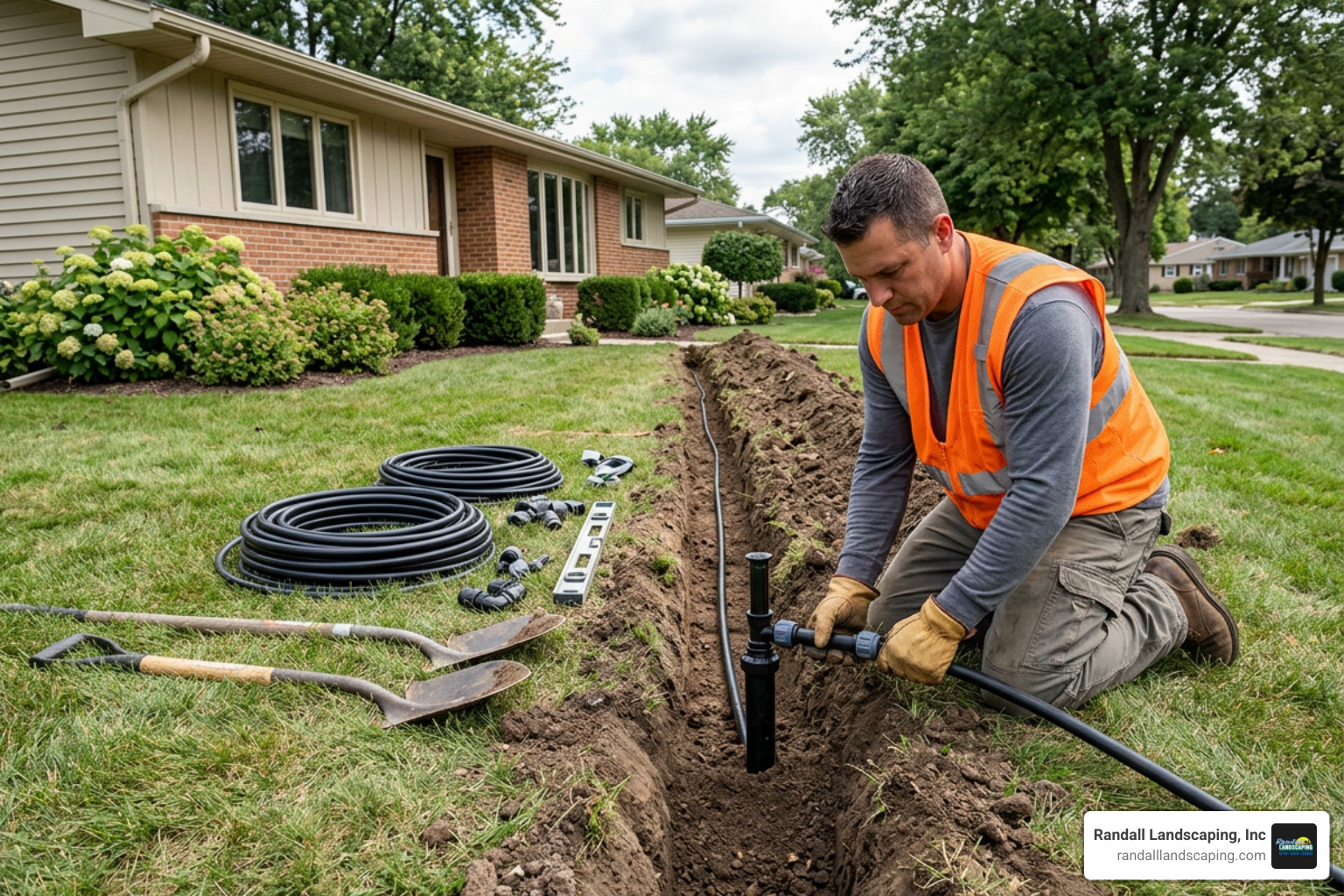
To get a better sense of what a comprehensive, worry-free project looks like, you can read our guide on professional sprinkler system installation. A proper installation involves a detailed site survey, precise hydraulic calculations, and a layout designed to provide head-to-head coverage without wasting water on your sidewalks or driveway.
Irrigation Methods and System Types
The method you use to deliver water to your plants plays a major role in pricing. Different areas of your yard will benefit from different irrigation types, and many modern systems use a hybrid approach.
- Underground Sprinkler Systems: This is the traditional, highly reliable method for watering large lawns. Pipes are buried 8 to 12 inches underground, and pop-up rotor or spray heads rise only when the system is active. Standard installations average $1,740 to $3,410 for a typical quarter-acre lawn, but can scale significantly higher depending on the terrain.
- Drip Irrigation Systems: Instead of spraying water through the air, drip systems use flexible tubing with built-in emitters to deliver water directly to the root zones of your plants. This is incredibly efficient and virtually eliminates water loss from evaporation. A dedicated drip zone for your flower beds or ornamental gardens typically costs $450 to $650 to install. For a deep dive into these setups, check out our garden irrigation system guide 2025.
- Automatic Sprinkler Systems: An automatic system includes a central controller (or timer) and electric solenoid valves. This allows you to set a watering schedule and let the system run on its own. An automatic setup for a quarter-acre yard averages $1,800 to $2,630 and is highly recommended for busy homeowners.
- Rainwater Collection Systems: If you want to minimize your environmental footprint and reduce your municipal water bills, you can tie your irrigation system into a rainwater harvesting setup. These can range from a simple rain barrel connection to massive underground cisterns with filtration systems. Costs vary wildly, from $120 for a basic DIY barrel setup to $21,000+ for large-scale, professionally engineered underground harvesting systems.
If you are curious about the specific costs of keeping your garden lush without overwatering, our breakdown on the cost of garden irrigation system options offers excellent guidance on tailoring a system specifically for flower beds, vegetable gardens, and shrub borders.
Labor, Permits, and Soil Conditions
The physical environment of your property heavily influences the amount of labor required to complete the installation.
- Labor Rates: Professional irrigation technicians typically charge between $45 and $100 per hour for labor. Labor generally accounts for 45% to 60% of the total installation cost.
- Permits and Plumbing Codes: Tying an irrigation system into a municipal water line requires a permit in almost every municipality across the Merrimack Valley and Southern New Hampshire (including towns like Andover, Dracut, and Salem, NH). Permits typically cost $35 to $200. Furthermore, local building codes mandate the installation of a testable backflow preventer ($100 to $600) to ensure that irrigation water cannot siphon back into your home’s clean drinking water supply.
- Soil Conditions and Terrain: Digging a trench is straightforward in soft, sandy soil. However, if your yard is full of ledge, heavy clay, or buried rocks—which are incredibly common in places like Boxford and Atkinson—trenching becomes much more difficult. Rocky soil can add up to $0.40 per linear foot to your trenching costs due to the need for specialized equipment or manual hand-digging around obstacles.
- Established Landscapes vs. New Construction: Installing a system on a “blank slate” new construction yard is faster and cheaper because there is no existing sod or established root systems to navigate. If we are retrofitting a system into an established, beautifully manicured lawn, we must use specialized trench-less pipe-pulling machines to minimize damage to your turf, which requires more precision and time.
Smart Upgrades and Add-Ons
Investing in modern technology during the initial installation can save you thousands of gallons of water—and hundreds of dollars on your water bills—over the life of your system.

- Smart Wi-Fi Controllers: A standard digital timer runs on a set schedule regardless of the weather. A smart Wi-Fi controller ($200 to $500) connects to local weather stations to automatically skip watering cycles when rain is in the forecast. These smart systems typically pay for themselves within 12 to 24 months by reducing water waste by 20% to 35%. You can compare different options in our review of the best garden irrigation timers.
- Rain and Soil Sensors: Rain sensors ($25 to $50) mount to your roofline and temporarily shut down your system when they detect physical rainfall. Soil moisture sensors ($25 to $50 each) measure the actual moisture levels in your lawn’s root zone, ensuring the sprinklers only turn on when the grass actually needs water.
- Upgraded Sprinkler Heads: High-quality rotary nozzles or gear-driven rotors ($10 to $40 each) cost more upfront than cheap plastic spray heads ($2.50 to $10 each), but they deliver water much more uniformly and are far less likely to clog or break when bumped by a lawnmower.
Pros and Cons of a Lawn Sprinkler System
Before committing to the average cost of sprinkler system installation, it is wise to weigh the long-term benefits against the upfront investment and ongoing responsibilities.
Benefits of Automatic Irrigation
- Healthier, Greener Turf: Hand-watering with a hose or moving a manual sprinkler around your yard rarely provides even coverage. An automatic system delivers precise, uniform watering, which eliminates dry patches and keeps your lawn vibrant all summer long.
- Incredible Convenience: You no longer have to wake up early or drag heavy hoses across your yard. Your lawn gets watered automatically, even when you are away on vacation.
- Water Conservation: By watering at the optimal time of day (early morning before the sun rises) and using smart sensors, a professionally designed system minimizes evaporation and runoff, using up to 30% to 50% less water than manual watering.
- Enhanced Curb Appeal and Home Value: A lush, green lawn instantly boosts your home’s curb appeal. According to the National Association of Realtors (NAR), a well-maintained lawn and irrigation system can recoup 50% to 86% of its installation cost at resale, making your home much more marketable to potential buyers.
For a broader look at how professional design can transform your property’s water management, read our guide water you waiting for: a guide to professional irrigation.
Drawbacks and Ongoing Maintenance Costs
- Upfront Cost: There is no denying that a professional in-ground system is a significant financial investment.
- Annual Winterization: In cold climates like New England, any water left in your underground pipes will freeze, expand, and shatter the plastic lines. Every autumn, you must hire a professional to perform a “blowout” to clear all water from the system using a high-volume air compressor. This service typically costs $50 to $230 per year.
- Spring Startups and Repairs: Every spring, the system must be reactivated, the backflow preventer tested, and the sprinkler heads adjusted. Over time, heads will clog, valves may leak, or a lawnmower might crack a nozzle. Average annual repair costs run between $130 and $400.
- Higher Water Bills: While an automatic system is highly efficient, consistently watering your entire lawn will inevitably increase your monthly water utility bill during the hot summer months.
Frequently Asked Questions
Can I DIY a sprinkler system installation?
Yes, you can install a sprinkler system yourself using DIY retail kits, but it is a massive undertaking that requires significant physical labor and technical knowledge.
A DIY installation typically costs $1,500 to $2,200 in materials. You will need to rent a heavy-duty walk-behind trencher, map out your yard’s hydraulics, and spend several weekends digging up your lawn.
The biggest risk with DIY is making mistakes in your water pressure and flow calculations. If you place too many heads on a single zone, none of them will have enough pressure to pop up and spray correctly. Additionally, tying into your home’s main water line and installing a backflow preventer often requires a licensed plumber to comply with local building codes.
If you are looking for a simpler, non-invasive alternative that you can easily set up yourself, check out our guide on no digging, all drenching: the best above ground sprinkler systems for your garden. For those committed to a permanent system, we highly recommend reading our garden sprinkler installation complete guide to understand the exact steps and tools required before you start digging.
How much will my water bill increase?
The impact on your water bill depends entirely on your climate, the size of your lawn, and how efficiently your system is designed. During a scorching New England summer, running a standard multi-zone sprinkler system can increase your water bill by $50 to $150+ per month.
However, you can keep these costs to a minimum by:
- Watering between 4:00 AM and 8:00 AM to reduce evaporation.
- Installing a smart Wi-Fi controller that automatically skips watering cycles when it rains.
- Using drip irrigation instead of spray heads in your garden beds.
How long do sprinkler systems last?
With proper care and annual winterization, a professionally installed underground sprinkler system is a highly durable investment:
- Underground Piping (PVC or Polyethylene): 20 to 40 years.
- Sprinkler Heads and Nozzles: 10 to 15 years (often less if struck by lawnmowers or aerators).
- Solenoid Valves: 10 to 20 years.
- Control Timers: 10 to 15 years.
Conclusion
Investing in a lawn sprinkler system is one of the most effective ways to protect your landscaping, save time, and elevate your home’s curb appeal. While the average cost of sprinkler system installation typically ranges from $2,500 to $6,500 for a standard yard, the long-term benefits of automatic, worry-free watering make it a highly rewarding upgrade for your property.
At Randall Landscaping, Inc., we pride ourselves on delivering top-tier quality and 100% reliability to homeowners across the Merrimack Valley and Southern New Hampshire. Whether you are in Andover, Boxford, Dracut, or Salem, NH, we can design a custom irrigation system tailored specifically to your yard’s unique topography, soil conditions, and budget.
If you are ready to stop dragging hoses and start enjoying a lush, healthy lawn, we are here to help. If you are starting completely fresh with a new property or renovating an old yard, learn more about our comprehensive Randall Landscaping New Lawn Installation services, which seamlessly combine professional grading, hydroseeding or sodding, and custom irrigation design for a flawless finish.
Contact us today to schedule your professional site consultation!