

Why Understanding Mulch’s Environmental Impact Matters
Mulch environmental impact is more nuanced than most homeowners realize. While mulch is a landscaping staple that can conserve water, improve soil health, and reduce chemical use, not all mulches are created equal—and some can actually harm the environment through unsustainable sourcing, contamination, or pollution.
Quick Answer: The Environmental Impact of Mulch
- Positive Impacts: Reduces water use by up to 35%, improves soil health, suppresses weeds naturally, reduces need for synthetic fertilizers and pesticides, provides habitat for beneficial insects
- Negative Impacts: Some types (plastic, rubber) create microplastic pollution; colored mulch may contain toxic chemicals from recycled wood; cypress mulch depletes natural ecosystems; poorly processed mulch spreads weeds and disease
- Bottom Line: Organic, locally-sourced mulches (wood chips, straw, compost) typically offer the best environmental benefits, while synthetic and contaminated materials pose the greatest risks
The choice you make about mulch affects more than just your garden beds. It impacts local water quality, soil ecosystems, and even the broader carbon footprint of your landscape. Understanding these trade-offs helps you make decisions that benefit both your yard and the environment.
I’m Tommy Randall, and with 18 years of experience at Randall Landscaping in Massachusetts and New Hampshire, I’ve seen the significant mulch environmental impact firsthand. From changing poor soils with organic mulches to dealing with contaminated materials, I’ve learned what works. This guide will help you make these choices with confidence.
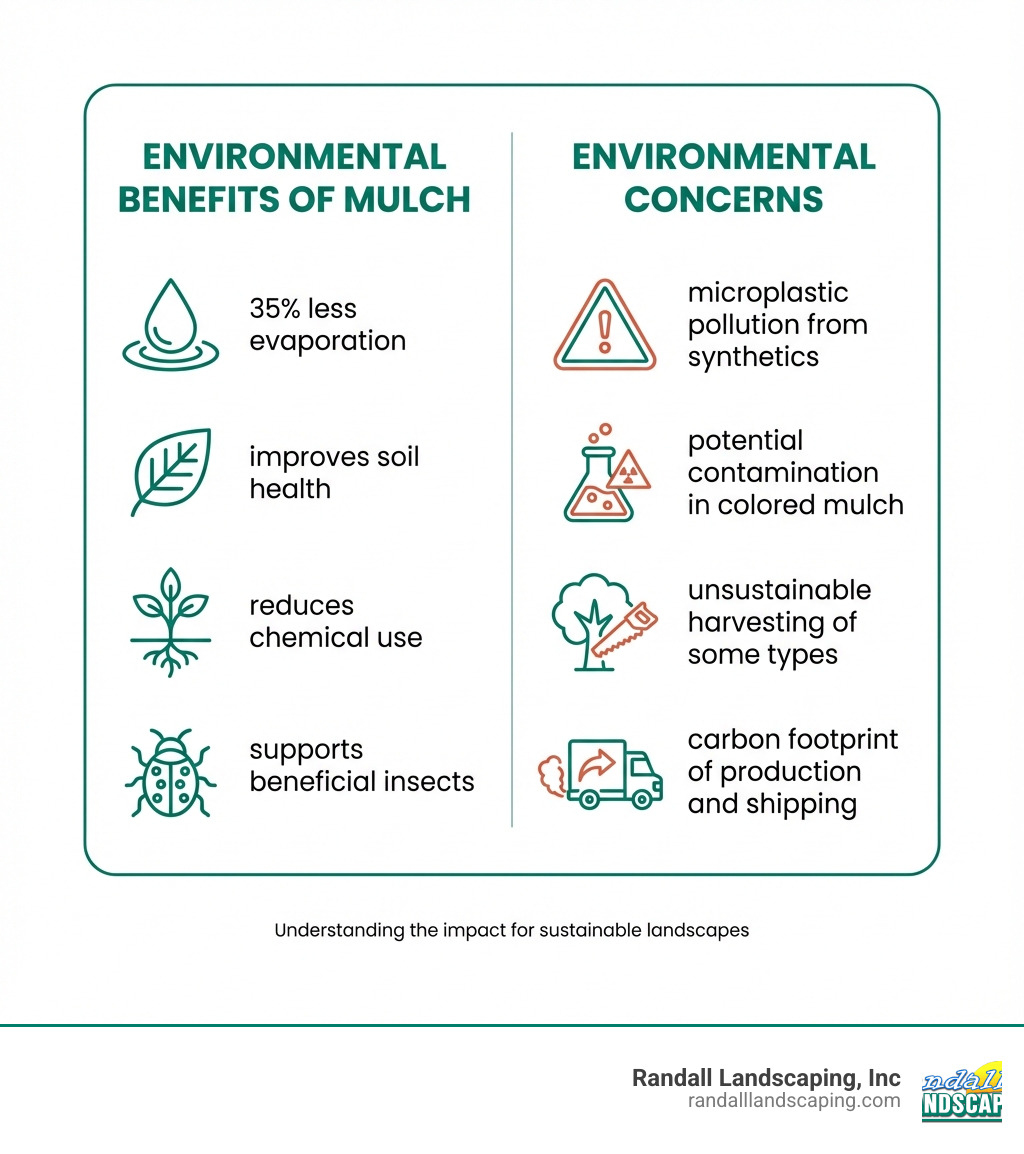
Quick mulch environmental impact terms:
The Green Side of Ground Cover: Environmental Benefits of Mulching
When discussing the mulch environmental impact, the positive contributions are significant. Mulching is more than aesthetic; it’s a powerful ecological tool. At Randall Landscaping, we’ve seen how proper mulching helps plants flourish across the Merrimack Valley and Southern New Hampshire, even in challenging conditions.
Enhancing Soil Health and Conserving Water
One of the most significant environmental benefits of mulch is its role in water conservation. In our sometimes dry summers, reducing water waste is paramount. Organic mulches are champions in this regard, keeping moisture where it belongs: in the soil, readily available for your plants. They create a protective barrier that significantly reduces evaporation from the soil surface, with some studies documenting a remarkable 35% reduction in evaporation when a straw mulch was applied.
Mulch also protects precious topsoil from the elements. It guards against wind and water erosion, preventing valuable soil from washing or blowing away, and it helps prevent soil compaction caused by heavy rains or foot traffic. By moderating soil temperatures, mulches keep the soil cooler in the scorching summer months and warmer during unexpected cold snaps, creating a stable environment where roots can thrive.
As organic mulches slowly break down, they contribute vital organic matter to the soil, building rich, dark humus. This process improves soil structure, boosting its ability to hold water and nutrients and promoting better drainage and aeration. Humus increases water-holding capacity in sandy soils and helps open up dense clay soils, providing slow-releasing organic nutrients and retaining fertilizers.
A Natural Approach to Pest and Weed Control
Mulches are highly effective for weed control, acting as a physical barrier that blocks sunlight and suppresses the germination and growth of unwanted plants. A 7-10cm (3-4 inch) layer of mulch is often ideal for this purpose, significantly reducing weed competition and saving countless hours of weeding. For more detailed strategies, check out our guide on Mulch for Weed Control.
Beyond weeds, mulch plays a role in integrated pest management and disease prevention. By reducing the splashing of rain or irrigation water, mulches can prevent the spread of disease organisms, whose spores are often carried from the soil to the leaves and stems of plants.
A mulched environment can also provide shelter for desirable predatory insects, such as beetles, which prey on common garden pests. Mulched plots often support more invertebrates than bare soil plots, helping create a balanced ecosystem where most insects are beneficial or innocuous.
Reducing Reliance on Synthetic Chemicals
One of the most profound mulch environmental impact benefits is its ability to reduce reliance on synthetic chemicals. Because mulches effectively suppress weeds and deter some pests, there is less need for herbicides and insecticides, meaning fewer harsh chemicals entering soil, water, and local ecosystems in places like Andover, Salem, and Windham.
As organic mulches decompose, they provide a consistent and complete source of natural plant fertilization. This slow-release nutrient system often allows you to reduce synthetic chemical fertilizers, which are environmentally damaging and typically derived from the petroleum industry. Instead, mulch helps nurture a self-sustaining soil food web, where microorganisms and earthworms break down organic matter, making nutrients available to plants in a natural, balanced way. Organic mulches can even help dilute salts and support the breakdown of some contaminants already present in the soil.
By embracing mulching, you’re not just maintaining a landscape; you’re supporting a healthier environment, one garden bed at a time. For those interested in deeper dives into sustainable choices, explore More info about eco-friendly mulch options.
The Hidden Downsides: Understanding the Full Mulch Environmental Impact

While the benefits of mulch are extensive, it’s equally important to understand that not all mulches are created equal, and some can have significant negative environmental impacts. As landscapers serving the Merrimack Valley and Southern New Hampshire, we strive to make informed choices, and we encourage our clients to do the same. The “ugly” side of mulch often comes down to its origin, composition, and how it’s processed.
The Negative Mulch Environmental Impact of Sourcing and Production
The journey of mulch from its source to your garden can sometimes leave a considerable environmental footprint. Unsustainable harvesting practices, such as the clear-cutting of cypress trees, can deplete natural ecosystems. While some cypress mulch is a byproduct of other operations, finely shredded cypress from harvested trees ultimately contributes to environmental degradation.
The production and transportation of mulch also contribute to its mulch environmental impact. Grinding and processing wood materials require energy, and transporting heavy mulch over long distances burns fossil fuels, increasing carbon emissions.
A significant concern arises with raw, non-composted mulch, especially that produced by tub grinding trees and shrubs from land clearing. This type of “fresh” mulch, often containing a high degree of “fines” (small particles), can be problematic. Such mulch is notorious for spreading weeds, as it hasn’t been heated sufficiently through composting to help kill weed seeds. More critically, it can cause “nitrogen drawdown,” where the microorganisms breaking down the fresh wood consume available nitrogen in the soil, robbing plants of essential nutrients. This can lead to stunted growth and unhealthy plants. Moreover, mulches with many fines can become water-repellent over time, hindering water infiltration rather than conserving it.
The Colored Mulch Controversy: Dyes vs. Wood Source
The vibrant hues of colored mulch are often appealing, but they raise questions about their environmental safety. Many individuals are concerned about the possibility of negative environmental impact from the dyes used on wood chips. Fortunately, the dyes themselves are generally not the primary concern. According to sources like the University of Massachusetts, there is no evidence that the dyes used to color wood chip mulch are toxic. These dyes are primarily of two types: carbon-based dyes and iron oxide-based dyes, and some are even vegetable-based. You can read more about these Concerns about colored mulches.
The real environmental issue with colored mulch lies not in the dye, but in the source of the wood. Much colored mulch is made from recycled wood, which can include construction and demolition (C&D) waste, old pallets, and other reclaimed timber. If these sources are not carefully vetted, they can introduce harmful chemicals into your garden. For instance, CCA (chromated copper arsenate)-treated wood, though banned for new residential use in 2003, can still find its way into recycled mulch. CCA-treated wood contains arsenic, copper, and chromium, which can leach into the soil and harm beneficial soil bacteria, insects, earthworms, and even young plants. Similarly, wood pallets used for chemical transport can become contaminated by spills.
To mitigate these risks, we always recommend asking your supplier about the source of their colored mulch. Look for mulch certified by the Mulch and Soil Council (MSC), which ensures the product is free of CCA-treated wood. Without proper certification, avoiding the use of colored mulches is often the safest choice.
Problematic Materials: Plastic, Rubber, and Contaminated Wood
Beyond colored mulches, other materials pose significant environmental challenges:
- Plastic Mulch: Widely used in agriculture, polyethylene plastic mulch can have a detrimental mulch environmental impact. While it offers benefits like weed suppression and soil warming, it does not biodegrade. When not properly removed and recycled, it can break down into microplastics, contaminating soil and water systems. Landfilling plastic mulch is inefficient and contributes to this microplastic pollution. The Effects of plastic mulch film residues on ecosystems are a growing concern.
- Rubber Mulch: Often made from recycled tires, rubber mulch is durable and long-lasting. However, studies have shown that rubber mulch may leach heavy metals and other chemicals into the soil, potentially affecting plants and soil organisms. While the dyes are generally safe, the chemicals within the rubber itself are a concern.
- Toxic Mulch Problems: Any mulch derived from contaminated wood can be problematic. This includes not just CCA-treated wood, but also wood treated with creosote (used for railroad ties and utility poles) or other industrial chemicals. These contaminants can damage soil life, affect plant health, and potentially pose risks to pets and children. The University of Maryland Extension provides further information on Toxic Mulch Problems.
It’s clear that the choice of mulch extends beyond aesthetics; it’s an environmental decision with far-reaching consequences.
Organic vs. Inorganic Mulch: An Environmental Showdown
When considering the mulch environmental impact, a key distinction lies between organic and inorganic materials. Each type brings its own set of advantages and disadvantages to the table, influencing soil health, water conservation, and long-term sustainability.
| Environmental Factor | Organic Mulch (Wood chips, Straw, Compost) | Inorganic Mulch (Gravel, Plastic, Rubber) |
|---|---|---|
| Sustainability | Generally high, especially when locally sourced and made from recycled green waste. Renewable resource. | Varies. Gravel/rock are natural but non-renewable. Plastic/rubber are often recycled but have energy-intensive production and disposal challenges (microplastics). |
| Biodegradability | Yes, decomposes over time, enriching soil. | No, does not fully decompose. Plastic and rubber can fragment into microparticles. |
| Soil Improvement | Significantly improves soil structure, adds organic matter, improves microbial life, retains nutrients, moderates temperature. | Minimal to none. Does not add organic matter or nutrients. Can contribute to compaction if used with fabric or sheeting. |
| Water Conservation | Excellent. Reduces evaporation, improves water infiltration, increases soil water-holding capacity. | Good for reducing evaporation. Does not improve soil’s water-holding capacity. Plastic can restrict water infiltration if not perforated. |
| End-of-Life Options | Composts naturally, can be tilled into soil, or added to municipal composting. | Requires specialized recycling (plastic, rubber) or can be reused indefinitely (gravel/rock). Landfilling is common for non-recycled plastic/rubber. |
| Carbon Footprint | Low, especially for local, recycled materials. Can help store carbon in soil. | Varies. Often high for new plastic/rubber production and long-distance transport. Recycled materials reduce impact but still involve processing. |
| Chemical Leaching | Generally low, unless contaminated source material is used. | Potential for leaching (heavy metals from rubber, chemicals from certain plastics, contaminants from recycled wood in some products). |
| Temperature Control | Excellent. Insulates, keeps soil cooler in summer, warmer in winter. | Varies. Dark gravel can heat soil significantly. Light plastic can cool soil. Some materials can contribute to heat buildup in tight urban spaces. |
The Case for Organic Mulches
For us, the choice is often clear: organic mulches offer the most comprehensive environmental benefits for our clients in places like Dracut, Georgetown, and Boxford. These materials are derived from natural sources such as wood, bark, leaves, and straw.
One of the greatest strengths of organic mulches is their biodegradability. As they slowly break down, they enrich the soil, adding vital organic matter that feeds the soil food web. This process creates nutrient-rich humus, which improves soil structure, aeration, and water-holding capacity. A thriving community of beneficial microorganisms, fungi, and earthworms follows, which is crucial for healthy plant growth and nutrient cycling.
Organic mulches also play a role in carbon storage. By building organic matter in the soil, they help keep more carbon below ground. They provide a continuous, slow release of nutrients, effectively acting as a natural fertilizer and reducing the need for synthetic chemicals. This is particularly beneficial for vegetable gardens, where healthy soil directly translates to healthy food. To learn more about optimal choices for edibles, visit our page on Best Mulch for Vegetable Garden.
Common and highly effective organic mulches include:
- Wood Chips: Excellent for perennial beds and around trees and shrubs. They decompose slowly, provide good weed suppression, and moderate soil temperature.
- Straw: Ideal for vegetable gardens, it’s light, improves soil, and offers good moisture retention.
- Compost: A fantastic soil builder, compost adds nutrients and improves soil structure rapidly. It’s often used as a top-dressing or incorporated into the soil.
- Leaf Mold: Decomposed leaves create a rich, fine mulch that’s excellent for woodland gardens and improving heavy clay soils.
The Role and Risks of Inorganic Mulches
Inorganic mulches, such as gravel, rock, plastic sheeting, and rubber chips, offer different characteristics. Their primary appeal often lies in their longevity and low maintenance, as they don’t decompose and therefore don’t need frequent replenishment. Rock and gravel, for instance, hold up well and dissipate the energy of falling water effectively, making them useful for erosion control in specific applications.
However, inorganic mulches come with significant environmental drawbacks. They do not contribute organic matter or nutrients to the soil, meaning they don’t improve soil structure or feed beneficial soil life. Dark-colored inorganic mulches, like some gravels, can absorb and radiate heat, potentially raising soil temperatures to levels that stress plant roots and contribute to heat buildup in dense neighborhoods.
Plastic sheeting, while effective for weed control, can hinder water and air penetration to the soil, and like other plastics, can break into persistent microplastics if not carefully removed. Rubber mulch, as discussed, can leach heavy metals and other chemicals. While inorganic mulches can be useful in specific, limited applications (such as pathways or drainage areas), they generally lack the holistic benefits that organic mulches provide for soil health and the broader ecosystem.
Making Eco-Friendly Choices: A Homeowner’s Guide to Responsible Mulching
Making environmentally responsible choices about mulch is a powerful way to contribute to a healthier landscape and planet. At Randall Landscaping, we believe in empowering our clients across Amesbury, Methuen, and Londonderry to make choices that align with their values and our shared environmental goals. It’s not just about what kind of mulch you pick, but also where it comes from and how you apply it.
How to Choose the Most Sustainable Mulch
Choosing the right mulch involves considering its entire lifecycle, from sourcing to decomposition. Here’s how to select the most sustainable options:
- Prioritize Locally Sourced Materials: Opting for mulch produced close to your home significantly reduces the carbon footprint associated with transportation. Look for local arborists, sawmills, or municipal composting facilities for wood chips and compost.
- Arborist Wood Chips: Often a byproduct of tree removal and trimming, these chips are an excellent sustainable option. They are typically uncolored and come from diverse tree species, providing a mix of nutrients as they decompose.
- Pine Straw (Pine Needles): Abundant in many regions, pine straw is a renewable resource that creates a light, airy mulch ideal for acid-loving plants.
- Compost: Composted organic materials, whether from your own backyard pile or a municipal facility, are incredibly beneficial. They directly enrich the soil and divert waste from landfills.
- Grass Clippings: If you don’t treat your lawn with chemicals, grass clippings can be a free and effective mulch, especially for vegetable gardens. Apply them in thin layers to prevent matting.
- Avoid Unsustainably Harvested Products: Be wary of mulches that contribute to deforestation or habitat destruction, such as cypress mulch from old-growth forests.
- Ask Suppliers About Sourcing: Don’t hesitate to inquire about where mulch comes from. Reputable suppliers should be transparent about their sourcing to ensure quality and environmental responsibility. For colored mulches, always look for the Mulch and Soil Council (MSC) Certification Logo on packaging to help ensure it’s free of CCA-treated wood.
Best Practices for Application and Disposal
Even the most environmentally friendly mulch can become problematic if not applied correctly. Proper application maximizes benefits and minimizes risks, while responsible disposal keeps the mulch environmental impact positive.
- Proper Depth is Key: For most applications, a 7-10cm (3-4 inch) layer of organic mulch is ideal. This depth effectively suppresses weeds, conserves moisture, and moderates soil temperature without suffocating plants. For detailed guidance on preparing your beds, see our tips on Garden Bed Mulching.
- Avoid “Volcano Mulching”: This common mistake involves piling mulch in a cone shape directly against the trunk of trees or shrubs. This traps moisture against the bark, leading to trunk rot, pest infestation, and shallow root growth. Always leave a 3-6 inch space between the mulch and the plant stem or tree trunk.
- Keep Mulch Away from Stems: For smaller plants, ensure mulch isn’t piled directly against their stems. This prevents moisture-related diseases and allows for proper air circulation.
- Composting Old Mulch: When organic mulch breaks down, it can often be tilled directly into your garden beds to further enrich the soil. If you have excess, add it to your compost pile.
- Reusing in Other Areas: Partially decomposed mulch can be moved to less prominent areas of the landscape, like pathways or under mature trees, to continue its beneficial work.
- Leverage Local Programs: Many communities in Southern New Hampshire and the Merrimack Valley offer municipal composting programs or yard waste drop-off days. These are excellent resources for disposing of organic mulches responsibly. For non-organic mulches like plastic or rubber, seek out any available specialized recycling options rather than sending them to landfill when possible.
By following these best practices, you can keep your mulching efforts beneficial for both your landscape and the wider environment.
Frequently Asked Questions about Mulch’s Environmental Impact
Is colored mulch toxic to my plants and soil?
The main risk with colored mulch isn’t typically the dye itself, which is generally non-toxic (often carbon or iron oxide-based). Instead, the primary concern lies with the source of the wood used to make the mulch. Recycled wood from construction debris or old pallets can contain harmful chemicals like CCA (chromated copper arsenate), creosote, or other industrial residues. These contaminants can leach into your soil, harming beneficial soil organisms, plants, and potentially posing risks to pets and children. To ensure safety, we recommend looking for MSC-certified mulch, which guarantees it’s free from CCA-treated wood. When in doubt, natural, uncolored mulches are always the safest bet.
How does mulch help me use less water in my garden?
Mulch is a fantastic water-saving tool! It acts as a protective blanket over your soil, significantly reducing water loss from evaporation. By shielding the soil from direct sun and wind, mulch keeps the ground cooler and slows down the rate at which moisture escapes into the atmosphere. Studies have shown that a layer of straw mulch, for instance, can reduce evaporation by as much as 35% compared to bare soil. This means your soil stays moist longer, your plants have more consistent access to water, and you can reduce your irrigation needs, saving both water and effort.
What is the best type of mulch for the environment?
The most environmentally sound mulches are typically organic and locally sourced. Arborist wood chips, compost, pine straw, and shredded leaves are excellent choices. These materials recycle local green waste, which reduces transportation emissions and diverts waste from landfills. As they decompose, they enrich your soil with organic matter, improve soil structure, and support beneficial microbial life, leading to healthier plants and reducing the need for synthetic fertilizers. By choosing these options, you’re not only benefiting your garden but also contributing to a lower overall mulch environmental impact.
Conclusion: Mulching for a Healthier Planet
We’ve explored the multifaceted mulch environmental impact, from its incredible benefits in conserving water and enhancing soil health to the potential pitfalls of unsustainable sourcing and contaminated materials. It’s clear that mulch is a powerful tool in our landscaping arsenal, capable of changing gardens across the Merrimack Valley and Southern New Hampshire into vibrant, resilient ecosystems.
The key takeaway is the importance of informed choices. By opting for locally sourced, organic mulches, understanding the risks associated with certain recycled or colored products, and applying mulch correctly, we can maximize the positive environmental contributions while minimizing any negative ones. We can reduce water waste, foster thriving soil biodiversity, lessen our reliance on synthetic chemicals, and create landscapes that are both beautiful and sustainable.
At Randall Landscaping, we are committed to quality work and 100% reliability, always focusing on customer satisfaction and environmentally responsible practices. We believe that every landscaping decision is an opportunity to nurture our natural world. For professional guidance on selecting and applying the best eco-friendly mulch options for your landscape, contact us today. Let’s work together to create greener, healthier spaces for our communities.