
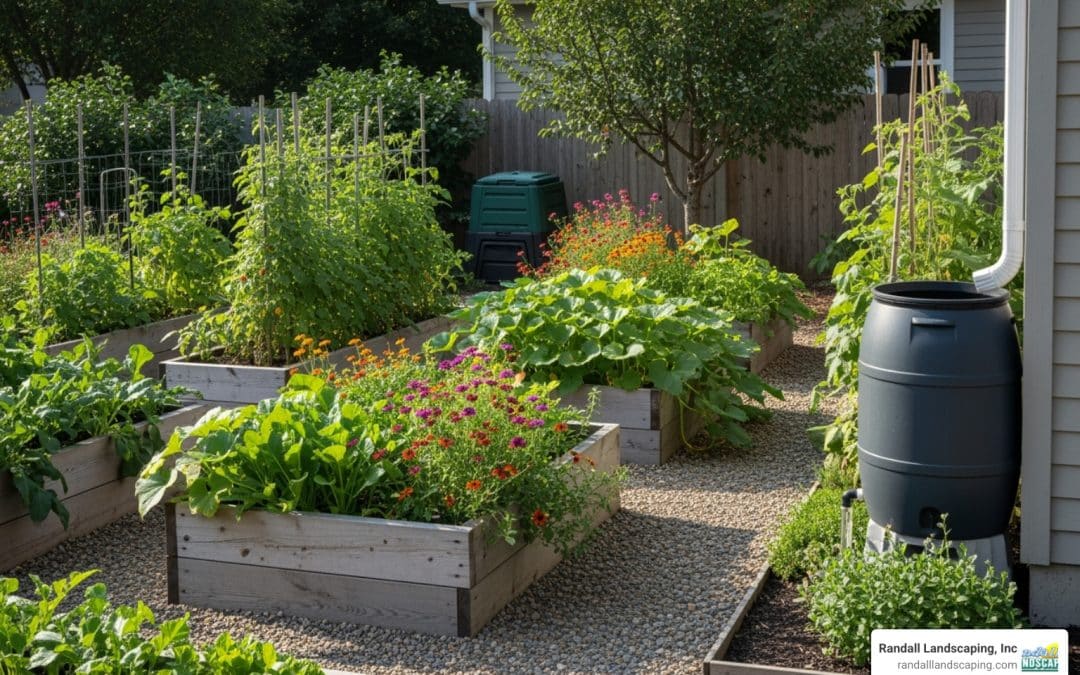
Why Sustainable Garden Practices Transform Your Outdoor Space
Sustainable garden practices are methods that work with nature to create beautiful, resilient landscapes while conserving resources and supporting local ecosystems. These eco-friendly approaches reduce your environmental impact, cut costs, and create healthier outdoor spaces.
Core Sustainable Garden Practices:
- Native Plant Selection – Choose plants adapted to your local climate
- Water Conservation – Use rain barrels and drought-tolerant plants
- Composting – Turn organic waste into nutrient-rich soil
- Natural Pest Control – Support beneficial insects
- Smart Design – Plan layouts to reduce resource consumption
- Chemical-Free Care – Avoid synthetic fertilizers and pesticides
- Wildlife Support – Create habitats for pollinators
As author Michael Pollan notes, “The garden teaches that our relationship to the planet need not be zero-sum… we can, if we bother to try, find ways to provide for ourselves without diminishing the world.”
Research highlights the collective power of gardeners: planting trees can store massive amounts of carbon, composting saves CO2 emissions, and replacing paving with plants can generate significant energy savings.
Why Go Sustainable?
Environmental Benefits: Reduce carbon emissions, conserve water, support biodiversity, and minimize chemical runoff.
Personal Benefits: Lower maintenance, healthier soil, more resilient plants, and reduced need for chemicals.
Economic Benefits: Cut utility bills with strategic tree placement, save on fertilizers by composting, and reduce water costs.
I’m Tommy Randall. With 18 years in landscaping, I’ve seen sustainable practices create beautiful, low-maintenance spaces. My team at Randall Landscaping helps homeowners across Massachusetts and New Hampshire transform their yards using these proven eco-friendly methods.
Designing Your Sustainable Oasis
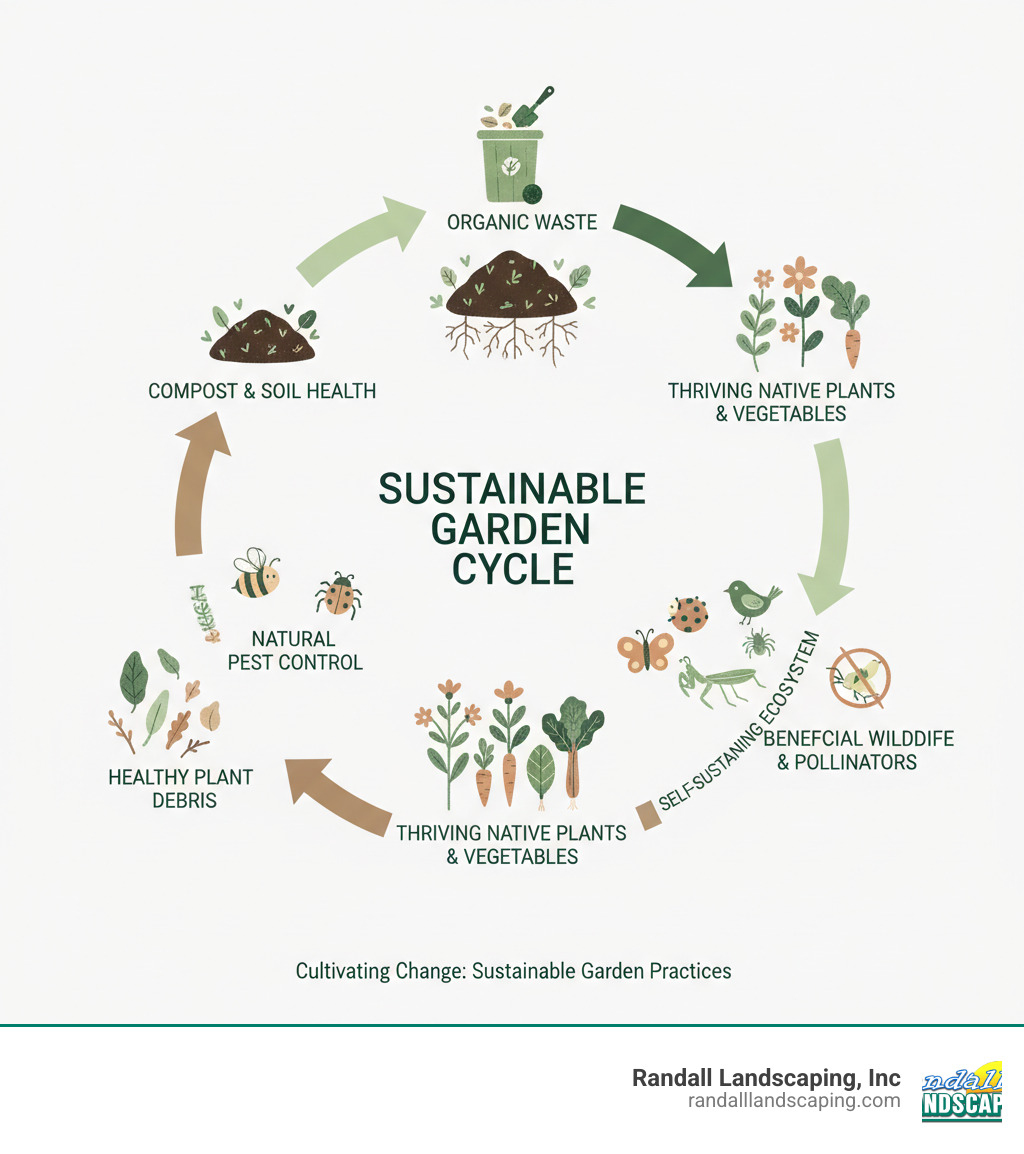
A sustainable garden starts with smart design—working with nature, not against it. The key is to understand your garden’s natural tendencies and help it thrive with minimal effort. The foundation of sustainable garden practices is the “right plant, right place” philosophy. Matching plants to their preferred conditions means they’ll thrive with less water, fertilizer, and pest control.
Understanding your garden’s sun patterns is crucial. Mapping which areas get full sun (6+ hours), partial shade, or full shade helps you choose plants that will flourish naturally. This helpful guide on how to make a sun map can walk you through it. For professional guidance, our landscape design services create beautiful, sustainable spaces custom to your property.
Strategic Layout for Energy and Water Efficiency
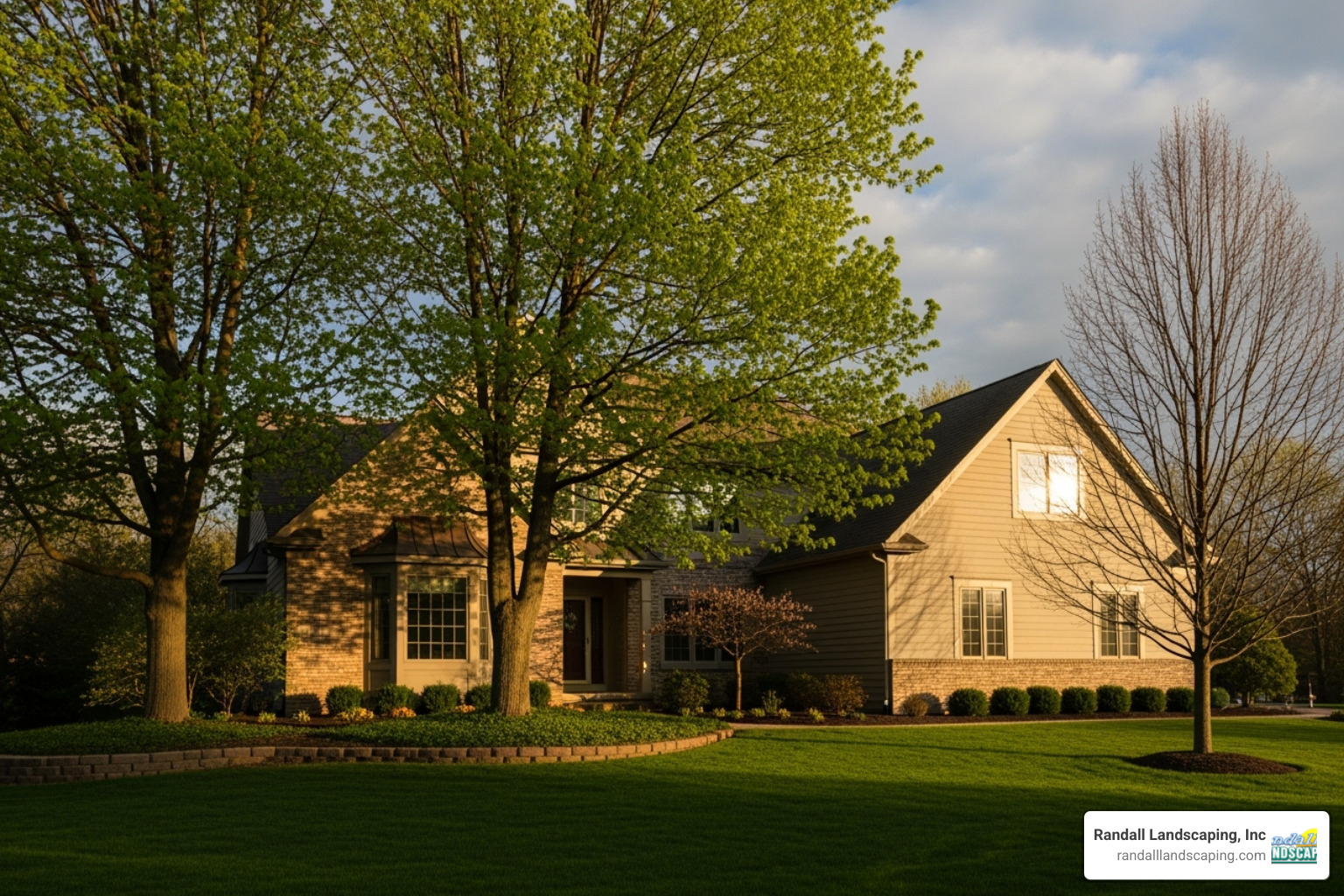
Your garden design can reduce home energy bills. Planting deciduous trees on your home’s sunny sides provides cooling summer shade, then they drop their leaves to allow warming winter sun. The Arbor Day Foundation reports that trees can reduce residential energy use by 7.2%. Shading an AC unit can boost its efficiency by 10%, and evergreen windbreaks can cut winter heating costs by up to 25%.
Thoughtful design also simplifies water management. Rain gardens and bioswales act like natural sponges, capturing rainwater runoff from roofs and driveways. Instead of causing erosion, the water soaks into the soil for your plants to use. These features help control soil erosion on slopes and keep water on your property. For steeper slopes that need more support, our team specializes in retaining wall construction.
Sustainable Hardscaping Choices
Your hardscaping offers more sustainable choices. Unlike traditional concrete, permeable alternatives like gravel or permeable pavers allow rainwater to soak into the ground, reducing stormwater runoff and recharging groundwater.
Choose sustainable materials like reclaimed wood, recycled plastic, or locally sourced stone to reduce the demand for new resources and minimize transportation’s carbon footprint. Rock gardens are another excellent, drought-tolerant option that prevents erosion and suppresses weeds.
Our hardscaping services prioritize beauty and environmental responsibility. Whether you need an eco-friendly walkway installation or other features, we create outdoor spaces that work with nature.
The Living Foundation: Soil, Water, and Resources
Sustainable garden practices aim for a closed-loop system—a self-sustaining ecosystem where waste becomes a resource. This approach recycles nutrients, conserves water, and minimizes external inputs, reducing your environmental footprint and workload.
Building Healthy Soil with Composting
Healthy, living soil is the foundation of a healthy garden. Composting is one of the most impactful practices, turning organic waste like kitchen scraps and leaves into nutrient-rich humus, or “black gold.”
Benefits of composting include:
- Nutrient-rich soil: It provides slow-release nutrients, reducing the need for synthetic fertilizers.
- Waste reduction: It diverts organic waste from landfills, cutting methane emissions. Every 1kg of homemade compost saves over 0.1kg of fossil CO2 emissions.
- Improved water retention: Compost helps soil hold more water, meaning you water less.
- Improved soil structure: It improves drainage in clay soils and water retention in sandy soils.
To compost, simply balance “green” (nitrogen-rich) and “brown” (carbon-rich) materials in a pile or bin. Also, avoid peat moss. Peatlands are vital carbon stores, and mining them is destructive. Use compost or shredded leaves instead.
We also recommend “no-dig” gardening. Instead of digging, layer organic matter on the soil surface. This protects the soil’s intricate structure, fungal networks (did you know a fungus is one of the largest living organisms on Earth!), and living organisms. For more ways to enrich your soil, explore our eco-friendly mulch options.
Smart Water Conservation Strategies
Conserving water is a cornerstone of sustainability. A significant portion of household water is used outdoors, but we can reduce this with smart techniques.
- Water deeply and infrequently to encourage deep, drought-resilient roots.
- Water in the morning to minimize evaporation and reduce disease risk.
- Harvest rainwater with rain barrels. You can pledge to switch from mains to rain on mains2rains.uk.
- Use efficient irrigation like drip lines or soaker hoses. We offer professional garden irrigation system services.
- Apply mulch to retain soil moisture and suppress weeds. We can advise on the best moisture retaining mulch.
Reducing Waste and Choosing Sustainable Tools
Minimizing waste and making conscious tool choices are integral to sustainable gardening. Repurpose old items into planters, reuse plastic pots, and compost all organic yard waste.
When it comes to tools, invest in durable, long-lasting equipment. The impact of garden equipment varies; petrol tools emit significant carbon and pollutants. Switching to electric or manual tools offers huge environmental savings. For many tasks, hand tools are the most efficient, zero-emission option.
Smart Planting for a Resilient, Living Garden
The core of sustainable garden practices is the “right plant, right place” philosophy. By understanding your local climate and soil to select plants that naturally thrive there, you’ll find they need far less water, fertilizer, and pest control. Start by identifying your USDA plant hardiness zone and consulting your local extension service for region-specific advice.
The Power of Native and Drought-Tolerant Plants
Native plants are my top recommendation. Having adapted over thousands of years to the local environment, they are the ultimate low-maintenance garden companions.
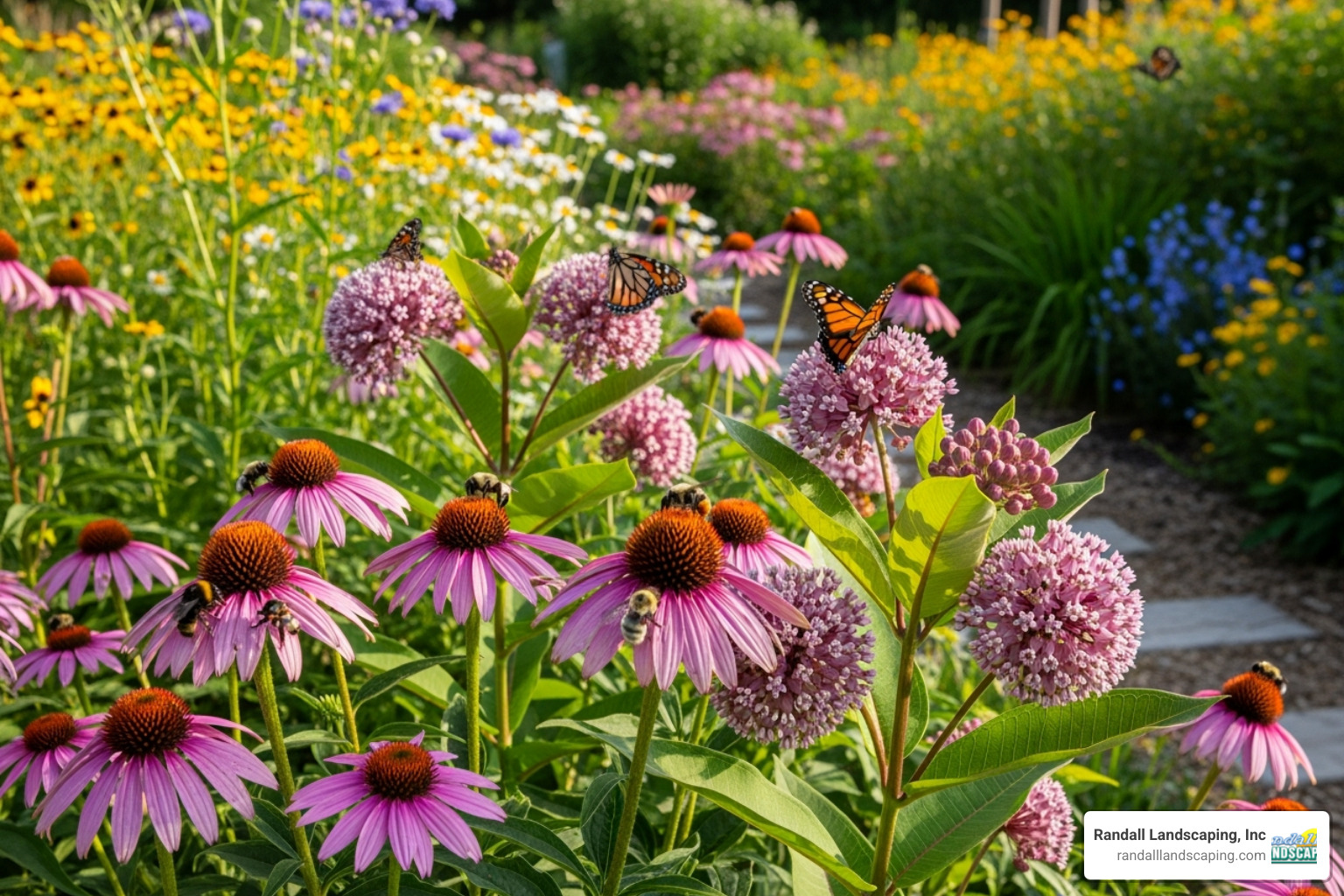
Native plants are adapted to your local climate, making them resistant to local pests and diseases. They also require significantly less water—often 50% less water than non-native species once established. Crucially, native plants support your local ecosystem by providing specific food and shelter for wildlife. With biodiversity loss being a top economic threat, your plant choices matter.
Xeriscaping, or drought-tolerant landscaping, is another smart approach. It involves designing beautiful landscapes with plants that require minimal watering, like native grasses and hardy perennials. This Guide to Gardening with Native Plants offers more ideas.
Creating a Haven for Wildlife and Pollinators
A sustainable garden is a thriving ecosystem that supports local wildlife. Creating habitat for pollinators transforms your yard into a vital part of the local environment. Since every third bite of food you eat exists because of pollinators, supporting them contributes to both biodiversity and food security.
- Provide Food: Plant for a full season of blooms, from spring flowers to late-season asters. Include seed and berry producers like elderberry to feed birds through winter. Leaving spent flower heads standing provides winter food and shelter.
- Provide Water: A shallow birdbath or a dish with pebbles gives birds and insects a safe place to drink.
- Provide Shelter: Leave some “messy” areas. Fallen leaves, brush piles, and patches of bare soil provide crucial habitat for beneficial insects and ground-nesting bees. Dense shrubs also offer protection.
This biodiversity creates a natural pest management system. For more tips, see this guide on how to attract pollinators. Our backyard landscape design services can help you create a wildlife-friendly oasis.
Natural Garden Care and Sustainable Garden Practices
Sustainable garden care means working with nature. It’s about nurturing a healthy ecosystem using Integrated Pest Management (IPM)—a strategy focused on prevention and natural solutions over chemical sprays. In a balanced garden, problems often solve themselves: ladybugs control aphids, healthy soil microbes ward off disease, and diverse plantings deter pests.
Embracing Chemical-Free Sustainable Garden Practices
Synthetic fertilizers contribute up to 5% of total greenhouse gas emissions and can pollute waterways. Organic alternatives like compost and well-aged manure work beautifully, building long-term soil health. Another great practice is using cover crops like clover, which prevent erosion, suppress weeds, and fix nitrogen from the air, creating free fertilizer.
IPM uses a multi-layered approach:
- Cultural Controls: Choose resistant plants and space them properly for good air circulation.
- Physical Controls: Hand-pick pests, use row covers, and set simple traps (like beer for slugs).
- Biological Controls: Encourage beneficial insects like ladybugs and lacewings to manage pests for you.
- Companion Planting & Crop Rotation: Pair plants that help each other (like marigolds and tomatoes) and rotate crop locations annually to prevent disease buildup.
If you must use a pesticide, apply it in the evening when pollinators are inactive and avoid products with neonicotinoids.
Sustainable Lawn Care Practices
Traditional lawns are resource-intensive. You can make yours more sustainable with a few changes:
- Mow High: Set your blades to 3-4 inches. Taller grass shades the soil, reducing evaporation and suppressing weeds.
- Grasscycle: Leave grass clippings on the lawn. They decompose quickly, acting as a free, natural fertilizer.
- Aerate: Creating small holes in the lawn improves air and water penetration to the roots.
- Reduce Lawn Size: Replace portions of your lawn with garden beds or native plants.
Consider lawn alternatives like clover lawns, which use less water and fix nitrogen, or wildflower meadows that support pollinators with minimal upkeep. If you need a new lawn, our team offers professional sod installation and can advise on sustainable options. We also specialize in low maintenance landscaping solutions.
Frequently Asked Questions about Sustainable Gardening
Where do I start with sustainable gardening?
You don’t have to do everything at once. Start small with one manageable change that excites you. Set up a compost bin, install a rain barrel, or replace a small patch of lawn with native wildflowers. A single success builds confidence and shows how effective sustainable garden practices are, inspiring you to do more.
Is sustainable gardening more expensive?
While some items like a rain barrel have an initial cost, sustainable gardens save money in the long run. You’ll spend less on water, fertilizers, and pesticides. Growing your own organic produce also offers significant savings compared to store prices. Plus, many DIY options like making your own compost or saving seeds cost next to nothing.
How can I make my small balcony garden more sustainable?
Absolutely! Even small balconies can be sustainable. Here’s how:
- Compost: Use a compact worm bin (vermicompost) to turn kitchen scraps into fertilizer without mess or smell.
- Water: Collect rainwater in a watering can for your plants.
- Plants: Choose herbs and other plants suited for containers and your balcony’s sun exposure.
- Pollinators: A few pots of bee-friendly flowers like lavender will support local pollinators.
- Space: Use vertical growers and hanging baskets to maximize your growing area.
Conclusion: Grow a Greener Future
Sustainable gardening is more than a trend; it’s a way to make a real difference for the planet while creating a beautiful space. Every sustainable garden practice you adopt, from installing a rain barrel to planting native wildflowers, creates positive change. By working with nature, your soil becomes healthier, your water usage drops, and local wildlife finds a sanctuary in your yard.
The benefits speak for themselves:
- Environmental Impact: You’ll keep waste from landfills, support local wildlife, reduce home energy needs, and contribute to massive collective carbon savings.
- Personal Rewards: Enjoy the satisfaction of growing your own food and watching wildlife thrive, all while saving money on water and garden supplies.
- Garden Beauty: Sustainable gardens are stunning, featuring the unique colors and textures of native plants adapted to your region.
In the Merrimack Valley and Southern New Hampshire, we at Randall Landscaping, Inc. help homeowners create gardens that work in harmony with our local ecosystem. Our reputation is built on quality and reliability, and sustainable practices deliver enduring beauty that improves over time.
Whether you’re starting small or ready for a full change, every change contributes to a healthier future. Your garden can be both a personal retreat and a gift to the environment.
Ready to transform your yard with eco-friendly practices? Explore our eco-friendly mulch options to build healthier soil and conserve water today.