Before a Landscape-Maintenance Walkthrough: A Property Manager’s Checklist

Before a landscape-maintenance site walkthrough, gather the information that helps someone understand your existing grounds: available plans, the current maintenance scope, location-specific concerns, photographs and practical access details. Keep unresolved questions visible rather than trying to solve them before the visit.
For commercial and HOA property managers in the Merrimack Valley and Southern New Hampshire, the checklist below provides a practical way to organize that information. It is a preparation aid, not a required Randall Landscaping packet or a description of a prescribed inspection process.
Define what you want the walkthrough to clarify
Write a short purpose statement focused on care of the existing landscape. Identify which property or common areas you want to discuss, what information is missing and which concerns deserve attention during the visit. This keeps the conversation grounded without turning your preparation notes into a proposed service agreement.
If requests for new features or broader property changes come up while gathering notes, keep them on a separate list. You do not need to classify or resolve those requests to prepare for a maintenance discussion.
Gather the records you already have
Use available records to show what exists and what has previously been discussed. Do not delay the conversation because a plan is missing or an older document is incomplete. Label gaps and outdated information so they can be checked on site.
- Site layout: An available property plan or simple sketch showing lawns, planting beds and common areas under discussion. Flag uncertain boundaries rather than treating them as confirmed.
- Existing scope: The current grounds-care task list or relevant scope pages, with any known exclusions or separately handled areas identified.
- Prior work notes: Relevant records of recent planting, landscape repairs or changes that may not appear on the plan.
- Management records: Applicable common-area responsibilities, approved landscape requirements and unresolved grounds-related requests.
Mark whether each record reflects current conditions, historical information or a proposal that was never approved. A past scope can explain the property’s history, but it should not be presented as the scope a new provider has agreed to perform.
Record observations someone can locate
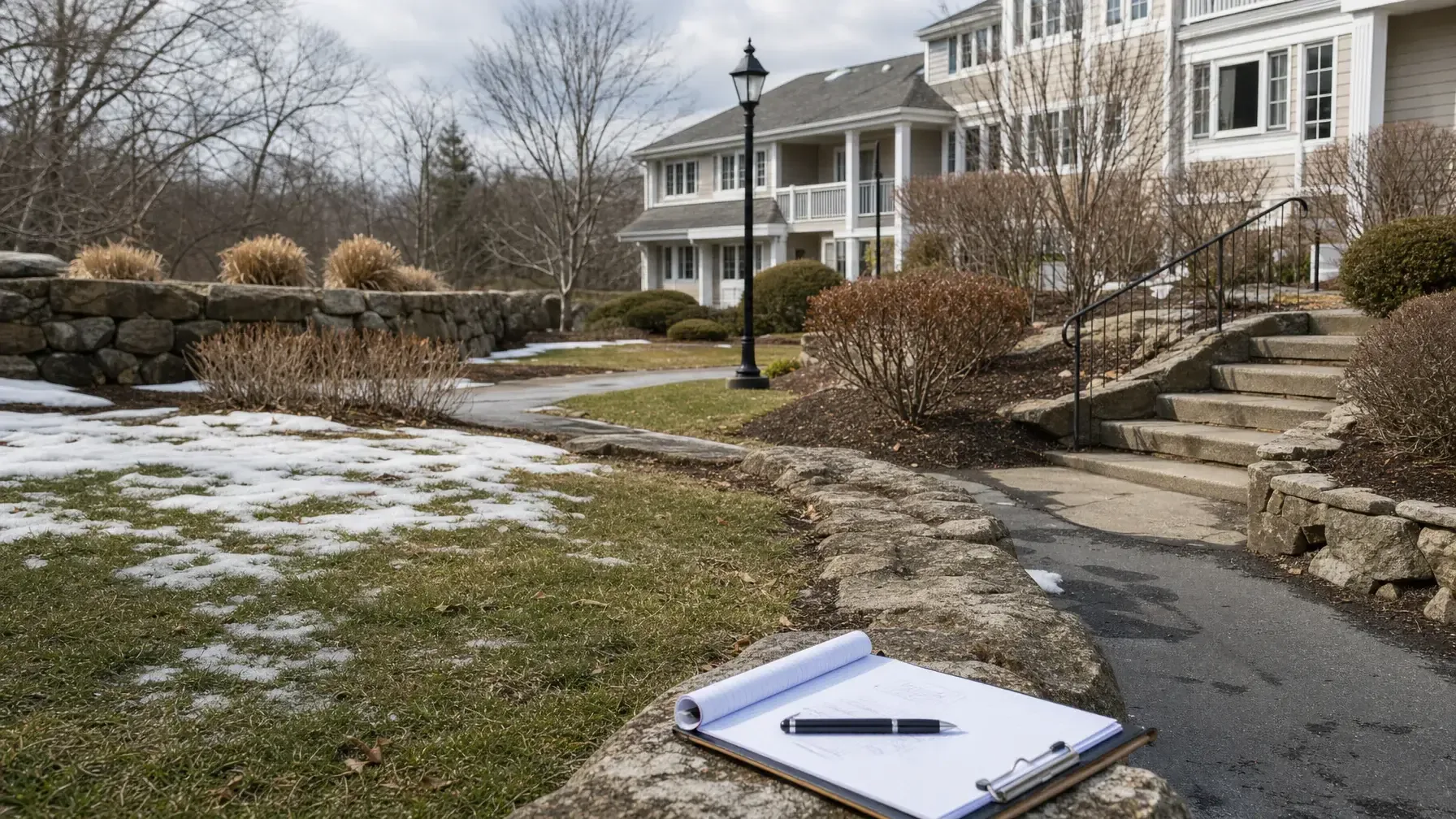
Walk the areas you can safely access and record representative concerns. Replace broad descriptions with a specific location and a plain account of what is visible. Note whether the condition is present now or was reported previously, and distinguish your own observations from reports supplied by residents, tenants or staff.
- Use consistent location labels across the layout, photographs and notes.
- Include a wider photograph that shows the location and a closer view of the concern where useful.
- Label photographs with when they were taken, especially when the condition may no longer be visible during the walkthrough.
- Describe visible turf, bed, shrub or debris conditions without diagnosing the cause or prescribing a treatment.
- Note any effect on use of the grounds and why management wants the area discussed.
A compact observation record can use these fields: location; condition observed; when observed; photograph label; effect on property use; question for the contractor. Focus on representative concerns rather than collecting photographs without context.
Prepare seasonal-cleanup questions by area
Randall Landscaping’s maintenance information includes spring and fall cleanups for commercial and managed sites, including cutbacks, leaf removal and debris hauling. Before the walkthrough, identify where you have questions about those tasks rather than using “seasonal cleanup” as a catch-all request.
- Cutbacks: Which planting areas need discussion, and are there plants management wants retained or handled differently?
- Leaf removal: Where does management observe recurring accumulation, and which areas should be reviewed?
- Debris removal: Where is material currently present, what is known about it and what needs confirmation about removal or hauling?
- Prior cleanup notes: Are there unresolved questions about areas previously omitted or instructions that are no longer current?
These notes prepare a scope conversation. They do not establish that every material, area or requested task is included, or that work can be completed by a particular deadline.
Make the grounds accessible for discussion
Prepare the details needed to reach and discuss the landscape areas, not a construction-access plan. Identify the meeting location, gates or locked courtyards, permission needed to enter shared areas and any restrictions affecting access to lawns or beds. Explain which occupied outdoor spaces or routinely used paths need consideration.
Identify who can answer questions about the grounds and who can confirm management or association requirements. If those responsibilities belong to different people, gather their input beforehand or note which questions will need follow-up.
Separate requirements, preferences and open questions
Label each request according to its status. A documented management requirement should identify its source. A preferred appearance or desired outcome should be marked as a preference. Questions about plant care, task suitability, inclusion or timing should remain open for contractor confirmation.
Note Marking an area on a plan or adding a task to your notes means you want to discuss it. It does not confirm a service commitment. Keep requested work separate from work explicitly agreed upon.
Assemble a concise pre-visit packet
- Purpose: Property identification, areas to discuss and the questions you want the visit to clarify.
- Available records: Layout, current scope and relevant prior work notes, with outdated information flagged.
- Observations: Location-labeled notes and photographs showing when conditions were observed.
- Cleanup questions: Areas requiring discussion about cutbacks, leaves or debris.
- Access and people: Meeting details, entry restrictions and the people who can answer site questions.
- Status labels: Known requirements, preferences, missing information and items needing contractor confirmation.
Ask the contractor which materials would be useful and how to share them before sending a large collection of files. Missing records can remain identified gaps rather than becoming prerequisites for the conversation.
After the walkthrough, preserve what remains unresolved
Update the same notes with corrections, unanswered questions and agreed next steps. Record who will supply missing information and which items still need confirmation. Keep suggestions made during the discussion distinct from any confirmed scope so the follow-up does not turn an open question into an assumed agreement.
For service context, review Randall Landscaping’s landscape maintenance information. When you are ready to ask about your property and what information to provide, contact Randall Landscaping to confirm the appropriate next step.