Landscape Maintenance or a Separate Improvement Project? A Property Manager’s Guide
The useful distinction between landscape maintenance and landscape improvements is the intended result: are you caring for the grounds as they exist, or asking to change them? Removing accumulated leaves raises a different scope question from expanding a planting bed. A recurring problem may not fit either category until someone assesses it on site.
For property managers, the goal is not to prescribe the work during a grounds walk. It is to organize observations so the maintenance contact can address routine-care questions, assess uncertain conditions, and distinguish proposed improvements from currently authorized work.
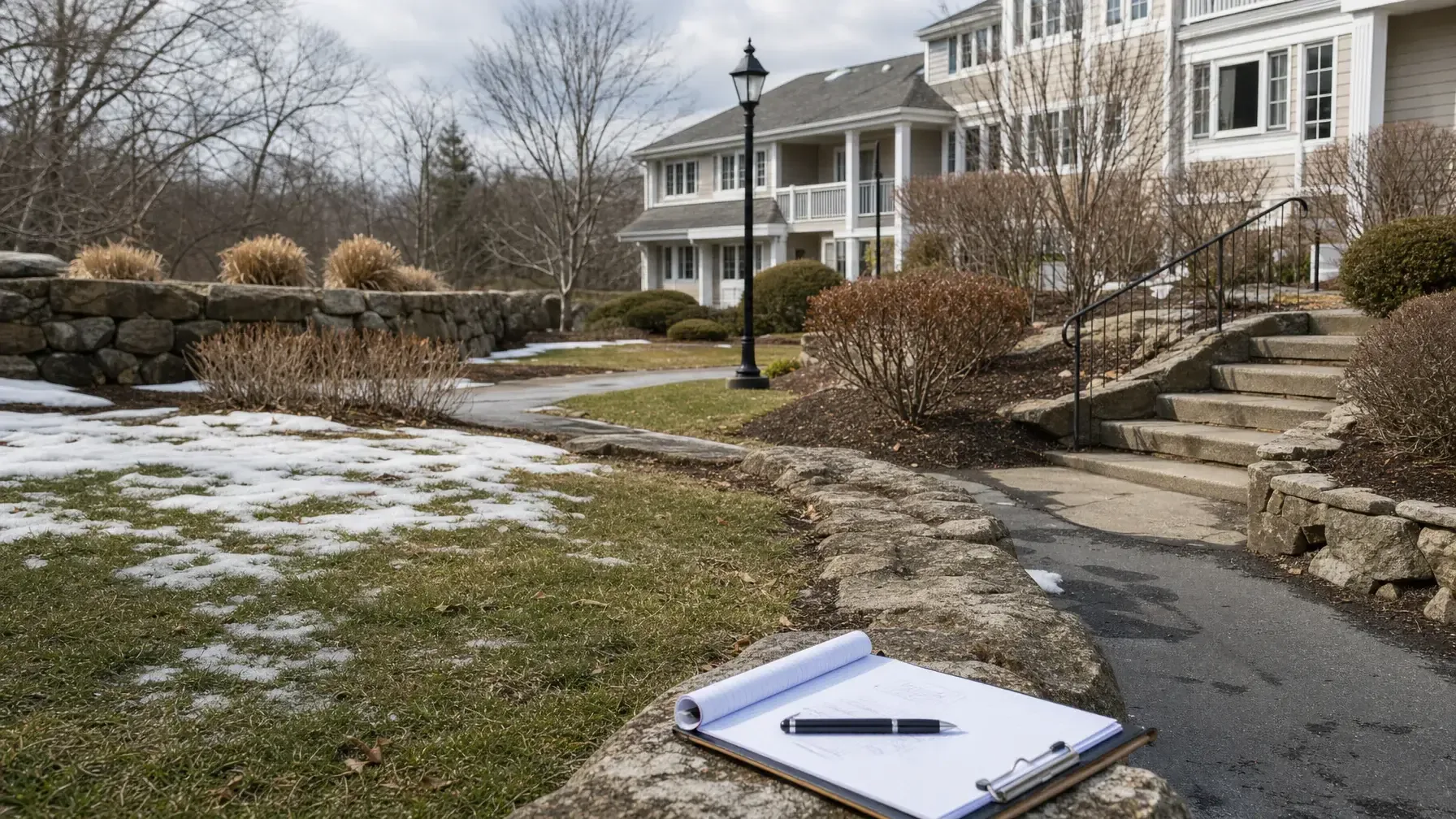
Start with the observation, not the remedy
Write down what you can see before requesting removal, replacement, or grading. Naming a remedy too early can turn an unresolved condition into an assumed project. A useful observation gives the contractor enough context to ask informed questions without presenting your interpretation as a diagnosis.
- Location: identify the entrance, bed, lawn area, or other recognizable reference point.
- Visible condition: describe the material, appearance, or change you noticed, rather than its presumed cause.
- Recurrence: record whether the condition is newly noticed, ongoing, or returning after previous work.
- Photographs: include a view showing the location and a closer view of the condition. Keep later photographs comparable.
- Operational impact: explain whether the issue affects appearance, access, use of the space, or management requests.
Put routine-care questions in the maintenance category
A maintenance discussion generally concerns care of the existing landscape rather than a change to its layout or purpose. Leaf removal, debris removal, and seasonal cutbacks can belong in this discussion, but the actual tasks and locations still need to match the agreed scope.
Randall Landscaping describes spring and fall cleanups for commercial and managed sites that include cutbacks, leaf removal, and debris hauling. Its landscape maintenance and grounds care page provides service context, not confirmation that a particular task is included at your property.
Ask: “Is care of this existing area covered by our current scope, and what follow-up is appropriate?” That keeps the request focused on the observed condition without assuming a missed service or authorizing additional work.
Separate requests that would change the landscape
A proposed change to bed boundaries, planting arrangements, lawn layout, or ground elevations belongs in a possible improvement discussion. The important distinction is not how small the work looks. It is whether the request changes what is there or asks for a different result.
State the desired use or appearance, then ask what assessment and scope would be needed. Do not turn a wish for a different planting arrangement into a replacement instruction, or assume that visible water means grading is the required solution. A landscape design and installation discussion is a separate avenue for considering landscape changes, not an automatic extension of routine care.
Keep an uncertain category for unresolved conditions
Repeated symptoms deserve a question, not an automatic upgrade to project work. Recurring bare areas, persistent water, displaced material, or changes in plant appearance can be recorded without identifying a cause. Ask what can be determined on site and whether any further evaluation is needed before discussing a remedy.
Note “Needs assessment” is a useful status. It does not mean the contractor has confirmed a defect, that replacement is necessary, or that corrective work is included in the maintenance scope.
Seasonal cleanup can make previously obscured conditions easier to notice. Keep the cleanup question and the newly visible condition as separate entries. Otherwise, a routine removal request can become mixed with an unassessed repair or improvement request.
Build an observation-to-discussion worksheet
Use the following fields in your own issue register. This is an editorial planning aid, not Randall Landscaping’s established intake or assessment procedure. Keep each distinct concern in a separate entry.
- Observation and evidence: record the location, visible condition, recurrence, photographs, and operational impact.
- Provisional category: mark maintenance question, needs assessment, or possible improvement. Leave room to revise the category.
- Question for the contractor: ask whether existing care applies, what needs assessment, or what would be involved in a proposed change.
- Responsible contact: name the person coordinating the response and, where relevant, the owner or association representative responsible for authorizing a change.
- Next decision: identify whether you are waiting for scope confirmation, an on-site assessment, clarification of the desired result, or a separate proposal.
After the discussion, update the entry with what was confirmed and what remains unresolved. A request sent is not the same as work authorized, and an assessment is not approval to proceed.
Keep the next conversations separate
Group routine-care questions together, retain uncertain items for assessment, and list proposed changes separately. If an assessment moves an item into another category, record why. This gives everyone a clear distinction between caring for existing grounds and considering new work.
For managers in the Merrimack Valley and Southern New Hampshire, where Randall Landscaping operates, the practical starting point is a documented observation and a clear question. Confirm the applicable service scope for your property before treating any task as included or any improvement as approved.