
Why Professional Flagstone Walkway Installation Near Me Matters for Your Property
Flagstone walkway installation near me is one of the most effective ways to improve your property’s curb appeal while creating durable, functional pathways that last for decades. Professional installation ensures proper drainage, stable foundations, and expert craftsmanship that DIY projects often lack.
Quick Answer for Flagstone Walkway Installation:
- Average Cost: $15-$27 per square foot professionally installed
- Timeline: 2-5 days for typical residential walkways
- Base Depth: 6-8 inches excavation with 4-6 inch compacted gravel base
- Popular Types: Bluestone, sandstone, slate, and quartzite
- Maintenance: Minimal – occasional sweeping and joint sand refilling
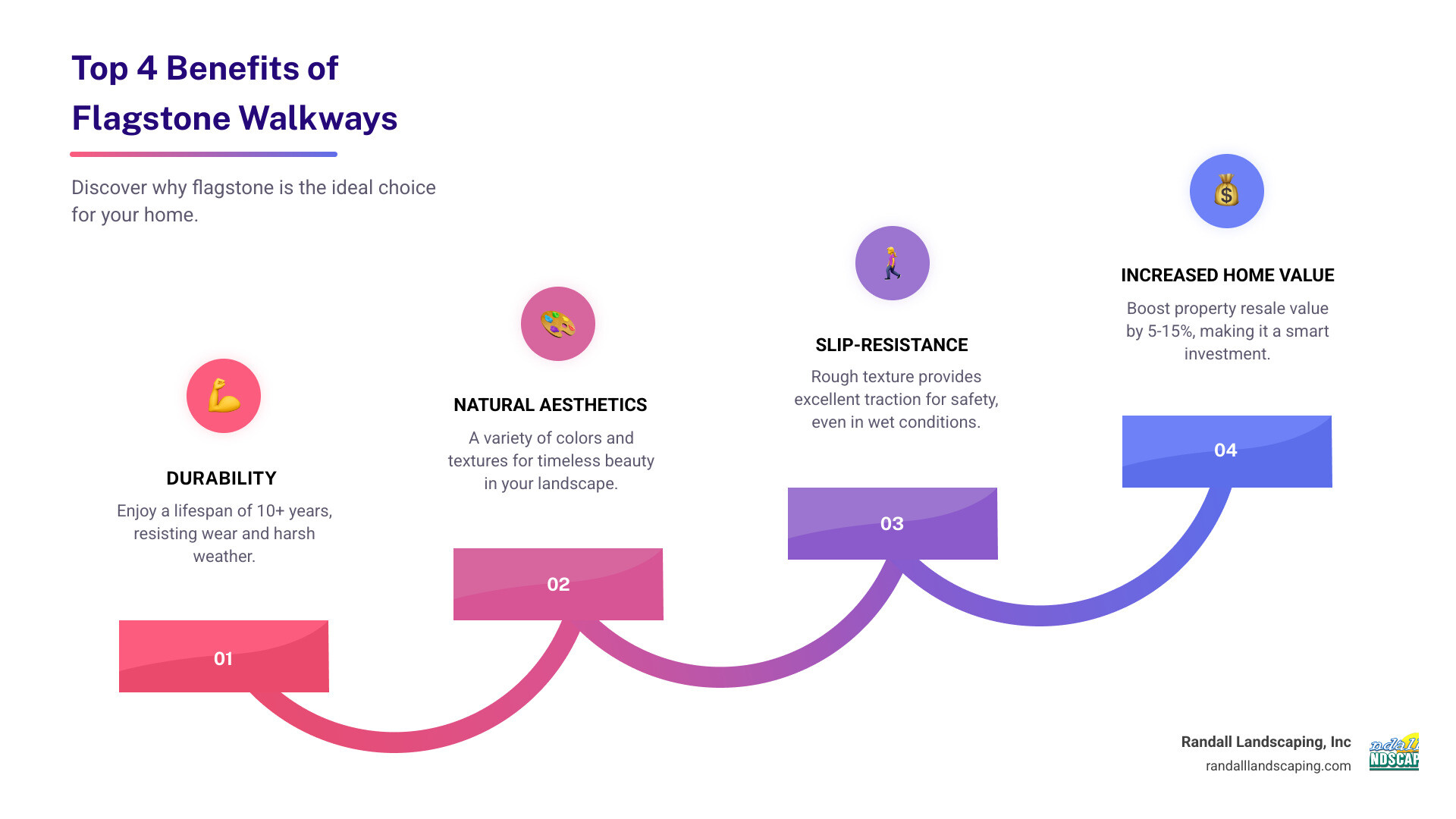
Natural stone walkways offer unique benefits that synthetic materials simply can’t match. The rough texture provides excellent traction even in wet conditions, making flagstone paths safer than smooth concrete or tile surfaces. With proper installation, these walkways can withstand New England’s harsh freeze-thaw cycles without cracking or shifting.
Quality hardscaping like flagstone paths can boost home resale value by 5-15%, according to industry research. The investment pays dividends in both daily enjoyment and long-term property value.
I’m Tommy Randall, owner of Randall Landscaping Business, and I’ve been creating beautiful outdoor spaces since 2006 with nearly two decades of hands-on experience in flagstone walkway installation near me throughout Massachusetts and New Hampshire. My team specializes in custom walkways and hardscape features that transform ordinary yards into stunning outdoor living spaces.
Flagstone walkway installation near me definitions:
Why Choose Flagstone? Key Benefits and Planning Factors
This section explores the advantages of flagstone and what to consider before starting your project, ensuring a result that is both beautiful and functional.
The Enduring Appeal of Natural Stone
When homeowners search for flagstone walkway installation near me, they’re often drawn to something that manufactured materials simply can’t deliver: authentic natural beauty that gets better with age. Flagstone isn’t just another walkway material – it’s nature’s own artwork, sliced into perfect pieces that bring timeless elegance to any property.
What makes flagstone so special? Unlike uniform concrete pavers or predictable brick patterns, each piece of flagstone tells its own story through unique colors, textures, and shapes. This natural variation creates walkways that feel organic and established, as if they’ve always been part of your landscape.
The practical benefits are just as impressive as the aesthetics. Flagstone’s durability is legendary – these walkways routinely last decades with minimal maintenance. The stone’s natural texture provides excellent slip-resistance, keeping your family safe even during New England’s unpredictable weather. Rain, snow, or morning dew won’t turn your flagstone path into a skating rink.
From a financial perspective, flagstone walkways are smart investments. Quality hardscaping can boost your property value by 5-15%, making it one of the few home improvements that truly pays for itself. Plus, flagstone’s weather resistance means it handles our harsh freeze-thaw cycles without the cracking and shifting problems that plague other materials.
The environmental benefits are worth mentioning too. Flagstone is completely natural – no manufacturing processes, no harmful chemicals, just stone that’s been shaped by time and carefully extracted from quarries.
Ready to explore how flagstone can transform your outdoor space? Our comprehensive Hardscaping Services can help bring your vision to life.
Planning Your Perfect Path
Here’s the truth about flagstone walkway installation near me: the magic happens long before we lay the first stone. Thoughtful planning is what separates stunning walkways that last for decades from disappointing projects that cause headaches down the road.
Design and layout set the foundation for everything else. Will your walkway be a formal, straight path that makes a bold architectural statement, or a gently curving route that invites leisurely strolls through your garden? The choice should feel natural with your home’s style and existing landscape. We often have clients use a garden hose to outline potential paths – it’s amazing how different a walkway feels when you can actually walk the route.
Width matters more than most people realize. A 30-36 inch path works perfectly for single-file traffic, but if you want to walk side-by-side with family or guests, you’ll want at least 4 feet of width.
Your walkway’s purpose shapes every other decision. A high-traffic main entrance demands thicker stones and more robust installation than a quiet garden path. Heavy foot traffic requires different planning than occasional weekend strolls.
Material selection goes beyond just picking pretty stones. Different flagstone types handle weather differently, and some complement certain architectural styles better than others. Thickness typically ranges from 1 to 2 inches for walkways, though we sometimes recommend thicker stones for heavy-use areas.
Site conditions can make or break your project. New England’s clay soils behave very differently than sandy soils, especially during freeze-thaw cycles. Understanding your property’s drainage patterns and soil composition helps us design the proper foundation depth and drainage solutions.
Speaking of drainage – this is absolutely critical. A properly installed flagstone walkway needs a gentle slope (about ¼ inch per foot) to direct water away from your home’s foundation. Poor drainage leads to shifting stones, ice problems, and expensive repairs.
Budgeting deserves honest conversation upfront. Beyond the flagstone itself, costs include excavation, base materials, labor, and potential extras like edging or lighting. Planning your budget carefully prevents unpleasant surprises mid-project.
For detailed cost information and planning guidance, this guide to flagstone project costs provides helpful industry insights to inform your planning process.
Understanding Flagstone: Costs, Types, and Comparisons
A deep dive into the specifics of flagstone, from material costs to how it stacks up against other popular walkway options.
Exploring Flagstone Varieties
When it comes to choosing flagstone for your walkway, you’re not selecting just one type of stone. The term “flagstone” actually refers to how natural stone is prepared – cut or split into flat, manageable slabs – rather than a specific rock type. This gives you an exciting variety of natural stones to choose from, each bringing its own personality to your outdoor space.
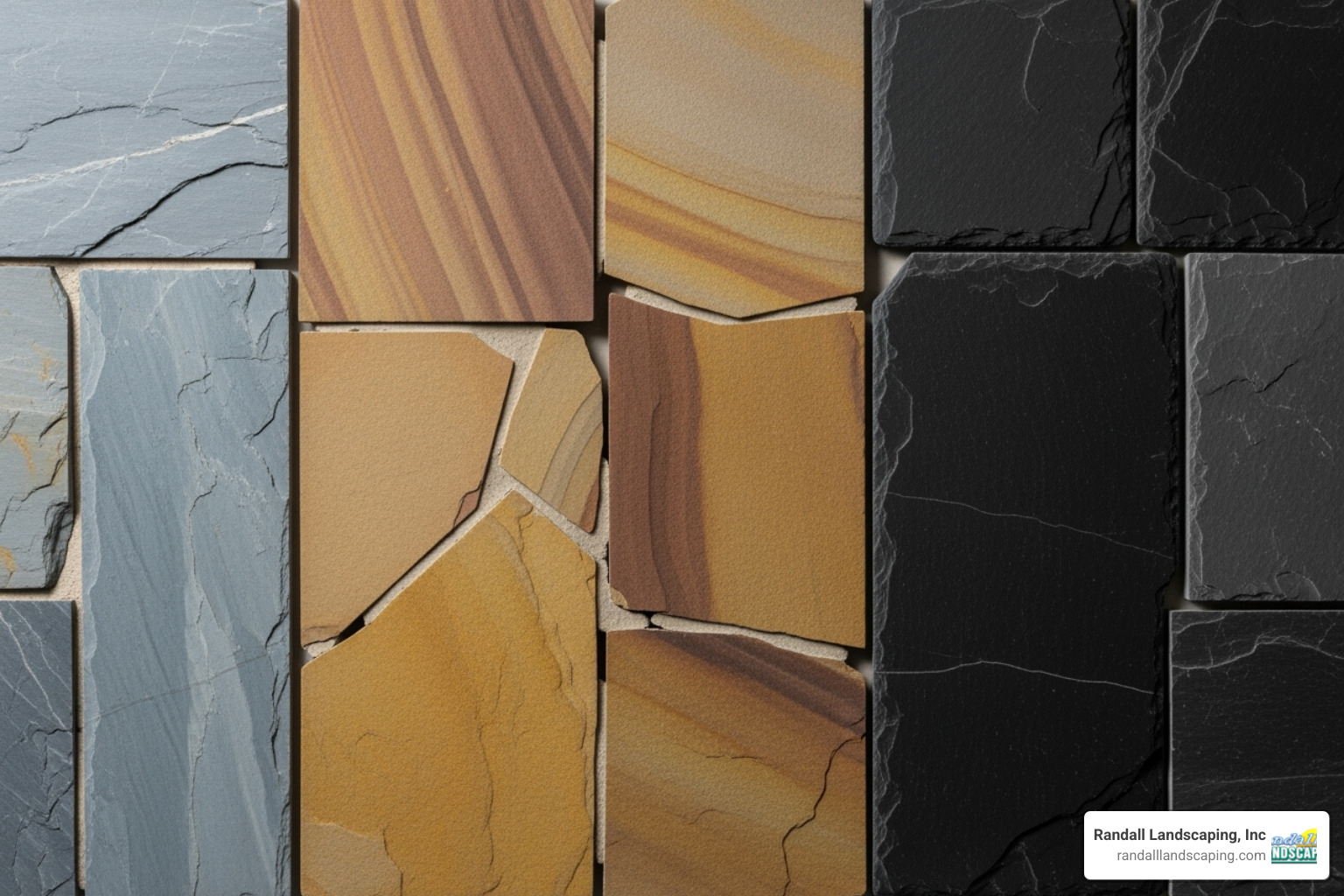
Bluestone is particularly popular here in New England, and for good reason. This type of sandstone showcases beautiful blue-gray coloration, though you’ll often find pieces with hints of brown, green, or purple mixed in. Its dense composition makes it incredibly durable and perfect for our climate’s freeze-thaw cycles. You can find bluestone in irregular, natural shapes or cut into more uniform patterns for a formal look.
Sandstone offers perhaps the widest palette of warm, earthy tones. From rich reds and browns to soft tans and even multi-colored variations, sandstone brings warmth to any landscape. This sedimentary rock is prized for both its durability and its naturally textured surface that provides excellent grip underfoot.
For those seeking sophistication, slate delivers with its smoother, more refined surface and dramatic dark colors. You’ll often see hints of purple or green dancing across its surface. As a metamorphic rock, slate naturally splits into thin, flat layers, making it ideal for flagstone applications while offering a neat, polished appearance.
Quartzite brings a touch of sparkle to your walkway with its crystalline appearance. Typically found in shades of white, gray, and silver, this metamorphic rock is extremely hard and durable, making it an excellent choice for high-traffic areas where you need both beauty and strength.
Limestone rounds out our popular options with its neutral, calming tones ranging from light grays to creams and warm tans. This sedimentary rock often has a smoother texture and brings natural warmth to your landscape design.
Each variety offers distinct color variations and texture differences, allowing us to create truly unique looks that complement your home’s style. Most flagstone for walkways measures between 1 to 3 inches thick, with 1 to 2-inch thickness being most common. For areas with regular foot traffic or when using larger stones, we recommend pieces at least 1.5 inches thick, and preferably 2 inches or more, to ensure long-term stability and prevent cracking.
To explore the full range of materials we work with, visit our Hardscape Products page.
Budgeting for Your Flagstone Walkway Installation Near Me
Understanding your investment is crucial when planning your flagstone walkway installation near me. While flagstone offers best beauty and durability, costs can vary significantly based on several factors.
Disclaimer: These are average costs based on general internet data and not actual costs for Randall Landscaping, Inc. We provide custom quotes custom to your specific project.
Professional flagstone walkway installation typically ranges from $15 to over $45 per square foot. This wide range reflects the many variables involved in each project. For perspective, a 200-square-foot flagstone walkway could cost anywhere between $3,000 and $9,000 or more for professional installation.
Material costs form the foundation of your budget. The flagstone itself typically ranges from $2.50 to $5 per square foot, though specialty stones can cost significantly more. When purchasing by weight, flagstone is often priced between $200 to $450 per ton, or $0.20 to $0.55 per pound. Premium options like certain bluestone or quartzite varieties command higher prices, while more common sandstone varieties offer budget-friendly alternatives.
Labor costs represent the largest portion of most projects, typically averaging $13 to $16 per square foot, though complex installations can reach $40 to $125 per hour. The physical demands of working with flagstone – individual stones can weigh 12 to 20 pounds each – contribute to these costs. Professional installation ensures proper base preparation, drainage, and stone setting that DIY projects often lack.
Project size and complexity directly impact your total investment. Larger walkways naturally require more materials and labor hours. Intricate designs featuring curves, steps, or detailed patterns increase complexity and cost. Extensive site preparation, including challenging excavation or significant leveling work, can also add to the overall expense.
Your choice of installation method significantly affects pricing. Dry-set installation, where flagstones are laid on a prepared sand or gravel base, typically costs $10 to $25 per square foot installed. This method offers a natural look and lower upfront costs. Wet-set installation, where flagstones are mortared onto a concrete slab, provides superior durability and stability, especially for high-traffic areas, but costs typically range from $20 to $40 per square foot installed.
Geographic factors also influence costs. The proximity of flagstone quarries to your location affects material and shipping expenses. Specialty stones requiring long-distance transport will increase your overall investment.
Don’t forget additional expenses like sealants, which can cost $100 to $200 per gallon and need reapplication every 18-36 months, or specialized cleaners at $10 to $40 per quart. We also factor in an extra 5-10% of material to account for potential breakage, natural stone variations, or future repairs.
For a rough estimate customized to your specific project, the Homewyse Calculator: Cost to Install Flagstone Walkway can provide helpful baseline numbers.
Flagstone vs. Other Walkway Materials
When planning your new walkway, it’s smart to compare flagstone against other popular materials. Each option brings distinct advantages and considerations regarding cost, durability, aesthetics, maintenance, and installation complexity.
Flagstone excels in natural beauty and uniqueness. Every stone is different, creating organic patterns that synthetic materials can’t match. It offers excellent durability, lasting decades with minimal maintenance, and provides superior slip resistance. The natural texture hides dirt well, and the material won’t fade, rot, or need regular treatments. However, flagstone requires higher upfront investment and professional installation for best results.
Concrete pavers offer uniformity and predictable patterns at a lower initial cost. They’re easier to replace individually if damaged and come in various colors and shapes. However, they can look artificial compared to natural stone, may fade over time, and don’t offer the unique character that flagstone provides. Their smooth surfaces can also be more slippery when wet.
Poured concrete represents the most budget-friendly option initially and creates smooth, continuous surfaces. It’s quick to install for large areas and can be stamped or colored for added appeal. The downsides include tendency to crack over time, especially in freeze-thaw climates like ours, limited repair options (cracks often require full section replacement), and a more industrial appearance that lacks natural charm.
Gravel walkways offer the lowest upfront costs and excellent drainage. They’re easy to install and can complement natural landscapes beautifully. However, gravel requires regular maintenance to prevent spreading, can be difficult to walk on (especially in heels), and may not be suitable for all situations or users with mobility concerns.
For those interested in alternative natural materials, our Decomposed Granite Walkway Installation services offer another attractive option that combines natural appeal with different aesthetic and functional characteristics.
When weighing these options, consider not just the initial cost but the long-term value. Flagstone’s durability, timeless appeal, and low maintenance requirements often make it the most cost-effective choice over the walkway’s lifetime, while providing best natural beauty that improves your property’s value and your daily enjoyment of your outdoor space.
Understanding Flagstone: Costs, Types, and Comparisons
A deep dive into the specifics of flagstone, from material costs to how it stacks up against other popular walkway options.
Exploring Flagstone Varieties
When it comes to choosing the perfect flagstone for your walkway, you’re entering a world of natural beauty and endless possibilities. The term “flagstone” doesn’t refer to a single type of rock – instead, it describes how natural stone is cut into flat, workable slabs. This means you have access to an incredible variety of colors, textures, and characteristics.
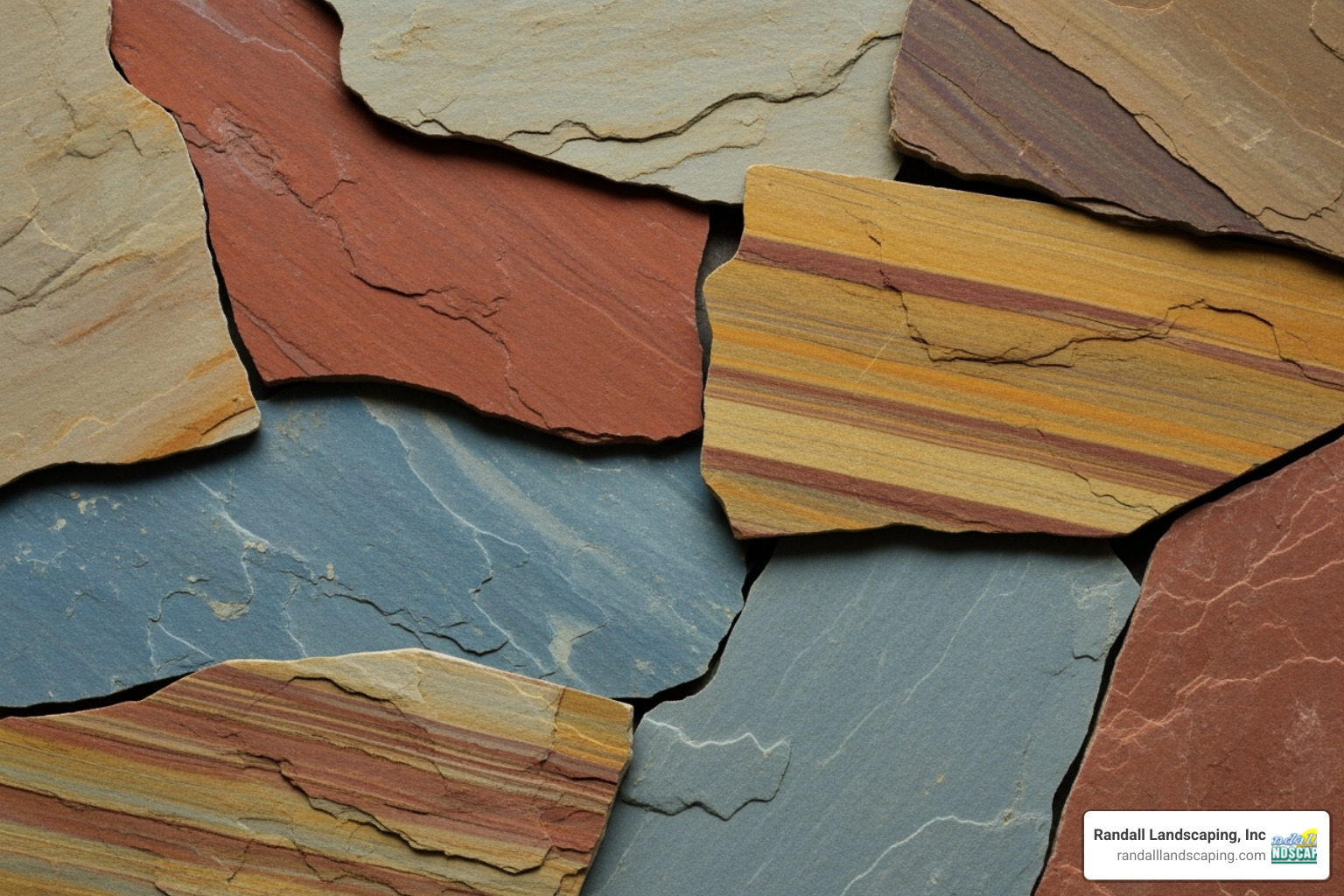
Each type of flagstone brings its own personality to your outdoor space. Bluestone remains one of our most popular choices here in New England, and for good reason. This sandstone variety offers stunning blue-gray tones that can shift from deep slate to lighter pewter, often with hints of green, brown, or even purple dancing through the stone. Its dense composition makes it incredibly tough – perfect for handling our region’s freeze-thaw cycles without missing a beat.
For homeowners drawn to warmer, earthier tones, sandstone flagstone delivers in spades. Picture rich reds reminiscent of autumn leaves, warm browns like freshly turned soil, and golden tans that seem to glow in afternoon sunlight. The natural texture of sandstone creates visual interest while providing excellent grip underfoot.
If you’re looking for something more dramatic and refined, slate might be your perfect match. This metamorphic rock typically showcases deeper, more sophisticated colors – charcoal grays, rich blacks, and sometimes surprising hints of green or purple. Slate’s naturally smooth yet slip-resistant surface gives walkways an neat, almost formal appearance.
Quartzite flagstone is the showstopper of the bunch. Its crystalline structure catches and reflects light, creating an almost sparkling effect that can transform an ordinary walkway into something truly special. Usually found in whites, silvers, and light grays, quartzite is also one of the hardest options available, making it ideal for high-traffic areas.
For those who prefer a softer, more neutral palette, limestone flagstone offers gentle creams, warm tans, and subtle grays. Its naturally smooth texture creates a welcoming, comfortable feel that works beautifully with both traditional and contemporary home styles.
When selecting flagstone thickness, we typically recommend pieces between 1.5 to 2 inches thick for walkways. This provides the structural integrity needed for regular foot traffic while ensuring your investment will last for decades. Thinner stones might work for purely decorative applications, but for a walkway that will see daily use, don’t skimp on thickness.
Our team works with premium suppliers to ensure every piece meets our quality standards. You can explore more about the materials we use on our Hardscape Products page.
Budgeting for Your Flagstone Walkway Installation Near Me
Let’s talk numbers – because understanding the investment involved in flagstone walkway installation near me is crucial for making informed decisions about your project.
Important Note: The following cost estimates are based on national averages from various online sources and are not actual quotes from Randall Landscaping, Inc. We provide personalized, detailed estimates for every project.
Professional flagstone walkway installation typically ranges from $15 to over $45 per square foot. Yes, that’s a wide range, but there’s good reason for it. A typical 200-square-foot walkway could cost anywhere from $3,000 to $9,000 or more, depending on several key factors.
Material costs form the foundation of your budget. The flagstone itself usually runs between $2.50 to $5 per square foot, though premium varieties like certain quartzites or specially sourced bluestone can push costs higher. Many suppliers sell flagstone by the ton, with prices ranging from $200 to $450 per ton (roughly $0.20 to $0.55 per pound). Custom-cut shapes or unique pieces typically command premium pricing.
Labor costs often represent the largest portion of your investment – and for good reason. Installing flagstone properly is both an art and a science. Individual stones can weigh 12 to 20 pounds each, and fitting them together like a natural puzzle requires skill, patience, and experience. Professional installation typically costs $13 to $16 per square foot for labor, though complex designs or challenging site conditions can increase this to $40 to $125 per hour.
Project complexity significantly impacts your final cost. A straight, simple path requires less time and skill than a winding walkway with curves, elevation changes, or intricate patterns. Site preparation also matters – if we need to remove existing hardscape, deal with challenging drainage issues, or work around established landscaping, these factors add to the overall investment.
Installation method creates another cost consideration. Dry-set installation (stones laid on a sand and gravel base) typically costs less and offers a more natural look, while wet-set installation (stones mortared to a concrete base) provides maximum stability but comes with higher material and labor costs.
Don’t forget about the extras that complete your project. Edge restraints, joint-filling materials like polymeric sand, and optional sealants all add to the total. Speaking of sealants, they typically cost $100 to $200 per gallon and may need reapplication every 18-36 months. We always factor in an extra 5-10% of material to account for cutting waste, potential breakage, and future small repairs.
For a more detailed cost breakdown based on specific project parameters, the Homewyse Calculator: Cost to Install Flagstone Walkway can provide additional insights.
Flagstone vs. Other Walkway Materials
While we’re passionate about flagstone, we believe in helping homeowners make the best choice for their specific situation. Here’s how flagstone stacks up against other popular walkway materials:
Flagstone brings best natural beauty to your landscape. Its slip-resistant surface, extreme durability (lasting 10+ years with proper installation), and low maintenance requirements make it an excellent long-term investment. The material increases property value significantly and offers unlimited design possibilities with its variety of colors and textures. However, flagstone does require a higher upfront investment and professional installation for best results.
Concrete pavers offer lower initial costs and consistent sizing that makes installation more predictable. They come in various colors and patterns and are readily available. However, they lack the natural character of flagstone, may fade over time, and can appear generic or manufactured compared to natural stone.
Poured concrete represents the most budget-friendly option upfront and provides quick installation for large areas. It offers smooth surfaces and design flexibility through stamping or coloring. Unfortunately, poured concrete is prone to cracking, especially in freeze-thaw climates, lacks natural beauty, and requires regular maintenance including sealing and potential patching.
Gravel walkways cost very little initially and offer excellent drainage and easy installation. They work well for informal garden paths and require minimal site preparation. However, gravel shifts over time, requires regular maintenance, can be difficult to walk on, and may track into your home on shoes and clothing.
For homeowners interested in alternative natural materials, our Decomposed Granite Walkway Installation services provide another excellent option that combines affordability with natural appeal.
The bottom line? While each material has its place, flagstone offers the best combination of beauty, durability, and long-term value for homeowners who want their walkway to be both functional and stunning for decades to come.