How to Review a Landscape Plan Before Installation: A Homeowner’s Checklist
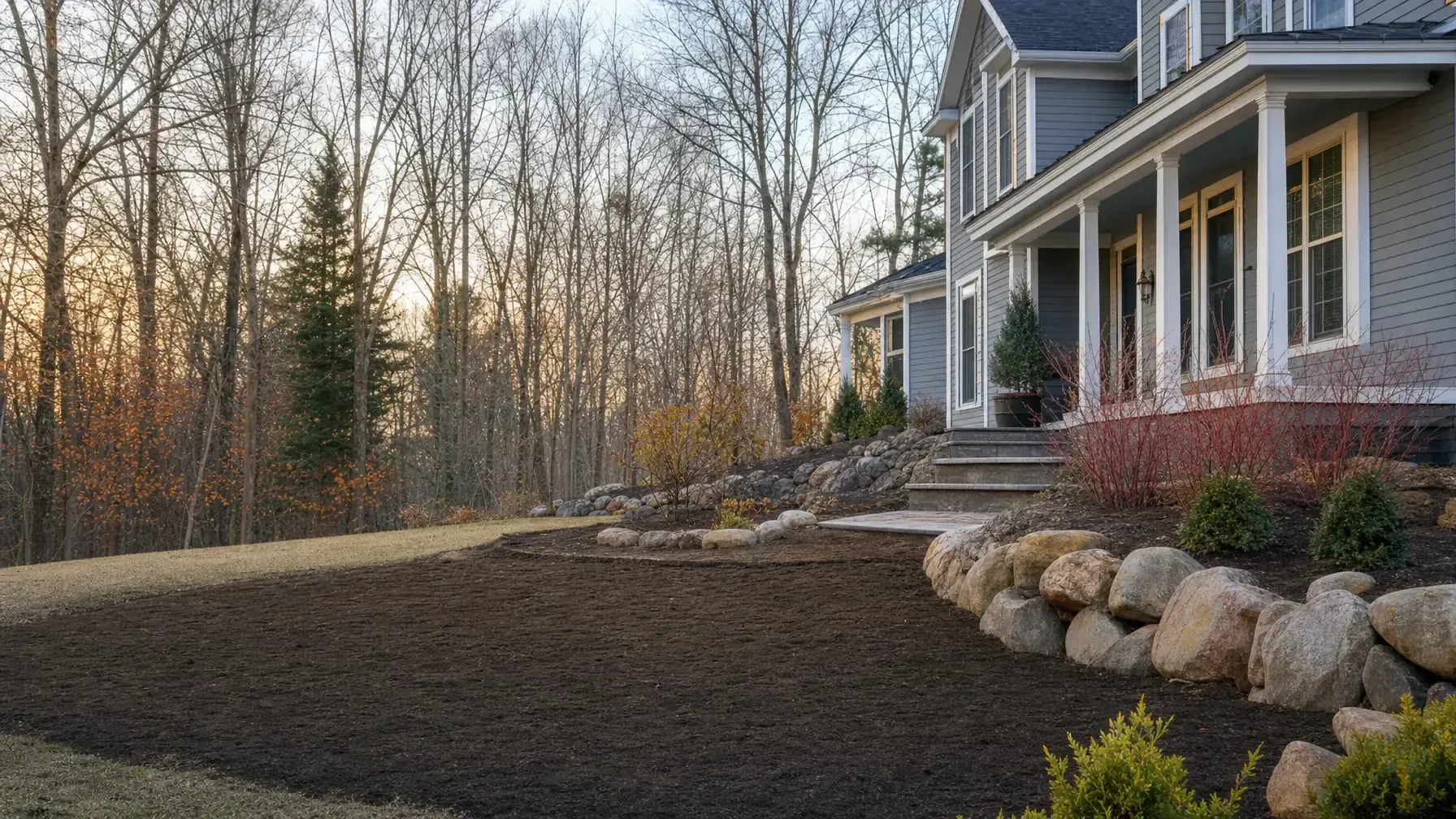
To review a landscape design plan, compare the proposal with what you want your yard to do, identify what stays or changes, and record anything you cannot confidently explain. The decision is not simply whether you like the drawing. It is whether you understand the proposal well enough to discuss the next step.
Note This is a homeowner preference and understanding check, not technical approval. Reviewing a drawing does not establish drainage performance, grading suitability, plant health, structural safety, regulatory compliance, or construction feasibility. Ask the designer to explain technical questions and identify any further assessment needed.
Compare the proposal with your intended uses
Keep the goals and priorities you discussed before design beside the proposal. For each goal, point to where the plan addresses it. If you cannot find that connection, ask for an explanation rather than assuming the goal was overlooked, or that an attractive feature fulfills it.
- Intended activities: Where does the proposal accommodate the ways you want to use the yard?
- Everyday movement: Can you identify the routes you expect to use between the house, lawn, beds, and existing outdoor areas?
- Views and appearance: Does the proposal address the views you wanted to preserve, change, or screen?
- Competing priorities: Where does the proposal favor an optional feature over an outcome you considered essential?
Describe a mismatch in terms of the goal, not a prescribed fix. “I cannot see how this layout preserves the open area we discussed” gives the designer a clearer question than an unexplained request to move a bed.
Identify what stays, changes, or remains undecided
Review existing features separately from proposed additions. Ask the designer to help you distinguish retained features, altered features, removals, and unresolved items. Do not interpret an unlabeled or absent feature as confirmation that it will stay or be removed.
- Retained: Are the trees, beds, lawn areas, paths, or other features you wanted to keep identifiable?
- Changed or removed: Do you understand which existing features the proposal would alter or take out?
- Undecided: Which features still need a homeowner decision, a designer explanation, or professional assessment?
Keep your preference separate from its feasibility. Wanting to retain a tree, for example, is a preference to communicate, not confirmation that the surrounding proposed work is suitable for it.
Ask how the landscape elements connect
Randall Landscaping handles grading, soil preparation, beds, plantings, and lawn as a connected job. Use that relationship as a prompt to discuss the overall proposal rather than reviewing only the visible planting choices.
- Where do the proposed beds, plantings, and lawn meet, and what would those boundaries mean for how you use the space?
- Does the proposal involve grading or soil preparation? What does the designer need to explain about that work and its relationship to the visible layout?
- Would changing a bed, planting area, or lawn boundary affect other parts of the proposal?
- Which questions about water movement or existing conditions remain open, and who needs to assess them?
Record the explanation you need rather than choosing slopes, soil treatments, or drainage fixes yourself. For a detailed comparison of proposed planting candidates, use the guide to choosing trees and shrubs by mature size, site fit, and maintenance. Keep this review focused on whether you understand how those choices serve the overall plan.
Separate what is shown from what needs explanation
Ask the designer to walk you through the drawing’s labels, symbols, and any accompanying notes. Use the information actually supplied; do not assume every proposal includes the same drawings or documents.
When something matters to your decision, distinguish “I can locate it” from “I understand what is proposed.” A planting symbol may show a location without answering your questions about the intended appearance or care. Likewise, an illustrated feature should prompt a scope question if you do not know whether it belongs to the work being discussed.
Request written clarification for decision-critical explanations that are not clear in the supplied material. Keep “not shown,” “not understood,” and “not included” as separate possibilities until the project team confirms which applies.
Use a priority-to-plan worksheet
Copy the prompts below for each priority or unresolved feature. This worksheet is an editorial aid for organizing your review, not Randall Landscaping’s required approval form or established project documentation.
| Worksheet field | What to record |
|---|---|
| Original goal | The intended use, retained feature, or outcome you discussed. |
| Where the plan addresses it | The location, label, or accompanying note you are reviewing. Write “not located” if you cannot find it. |
| What is clear | What you understand from the supplied proposal or a confirmed explanation. |
| What remains uncertain | The missing explanation, possible mismatch, scope uncertainty, or assessment still needed. |
| Question to resolve | A specific question for the project team and whose explanation or decision is needed. |
Sort your notes before requesting changes
Give each worksheet entry a decision category so the team can distinguish a necessary change from an idea you are still considering.
- Essential change: The proposal does not reflect an outcome you consider necessary. Explain the unmet goal.
- Preference: You understand the proposal but would prefer a different appearance or arrangement.
- Optional addition: You want to discuss an extra without treating it as part of the understood scope.
- Unresolved question: You need an explanation or assessment before deciding whether a change is appropriate.
Confirm the version, open questions, and next decision
Before agreeing to move toward installation, confirm which proposal version everyone is discussing. Identify it by its date or revision label if available, or ask the team how to distinguish it from earlier material.
Summarize your understanding of what stays, what changes, and what work is included or still needs clarification. Ask which questions need resolution before the next decision, who will address them, and what you are being asked to decide now. If an answer changes the proposal, ask where that change will be recorded so you can review the updated understanding.
For a project in the Merrimack Valley or Southern New Hampshire, explore Randall Landscaping’s Landscape Design & Installation service. Bring your plan-review notes to the project conversation, with essential changes and unanswered questions clearly separated from optional ideas.