

Your Instant Lawn Awaits
Dreaming of a lush, green lawn without the long wait? Laying sod transforms a bare or patchy yard into a beautiful lawn in just a day or two. Unlike seeding, which can take weeks to establish, sod provides instant results, better erosion control, and fewer weeds from the start. While it can be installed almost year-round, the best time for cool-season grasses like fescue is the fall.
The secret to a perfect sod installation isn’t complicated—it’s all about proper soil preparation and consistent watering. Get these basics right, and you’ll have a healthy lawn that lasts for years. With nearly two decades of experience laying sod for homeowners across Massachusetts and New Hampshire, I’m Tommy Randall, and I know that success starts from the ground up.
Before You Unroll: Planning Your Perfect Sod Lawn
Proper planning is crucial for a successful lawn. This means choosing the right time to lay your sod and selecting the best type of grass for your specific needs.
When to Lay Sod: Timing is Everything
While you can lay sod anytime the ground isn’t frozen, spring and fall are ideal for the New England climate.
- Fall: This is the best time for cool-season grasses like Fescue and Kentucky Bluegrass. The cooler temperatures and reliable rainfall help the roots establish before winter, leading to a stronger lawn the following summer. We typically install from late August through October in areas like Andover and Pelham.
- Spring: Early to mid-spring is the next best option, giving the new lawn a full growing season to mature before the summer heat.
- Summer/Winter: Installation during these seasons is possible but riskier. Summer requires intensive watering, while winter installation is only an option if the ground isn’t frozen.
Choosing Your Turf: The Right Grass for Your Yard
The Merrimack Valley and Southern New Hampshire are best suited for cool-season grasses. The most popular choices include:
- Kentucky Bluegrass: Known for its lush, deep green color and ability to self-repair. It thrives in full sun.
- Tall Fescue: A durable, adaptable choice with good drought and heat tolerance. It’s also more shade-tolerant than Kentucky Bluegrass.
When choosing, consider your yard’s sun exposure, foot traffic, and desired maintenance level. We help clients in towns like Methuen and Salem select the perfect match for their property.
Sod Investment: What to Expect for Cost and Time
Laying sod has a higher initial cost than seeding but offers instant results and superior erosion control, often saving time and money on maintenance in the long run. While seed can cover more area for less money, it requires months of care and is vulnerable to weeds and washout. For a detailed quote custom to your property in areas like Andover or North Andover, it’s best to contact us directly.
| Feature | Sod | Seed |
|---|---|---|
| Result | Instant green lawn | Weeks to months for coverage |
| Time to Establish | Ready for light use in 2-3 weeks | Months to a full season |
| Cost | Higher initial investment | Lower initial cost |
| Weed Control | Naturally weed-free | Requires significant weed control |
| Durability | Immediately durable, good for slopes | Vulnerable to washout and traffic |
The Groundwork: Preparing Your Soil for a Flawless Sod Installation
Soil preparation is the most crucial step in laying sod. Think of it as creating the foundation for a beautiful, long-lasting lawn.
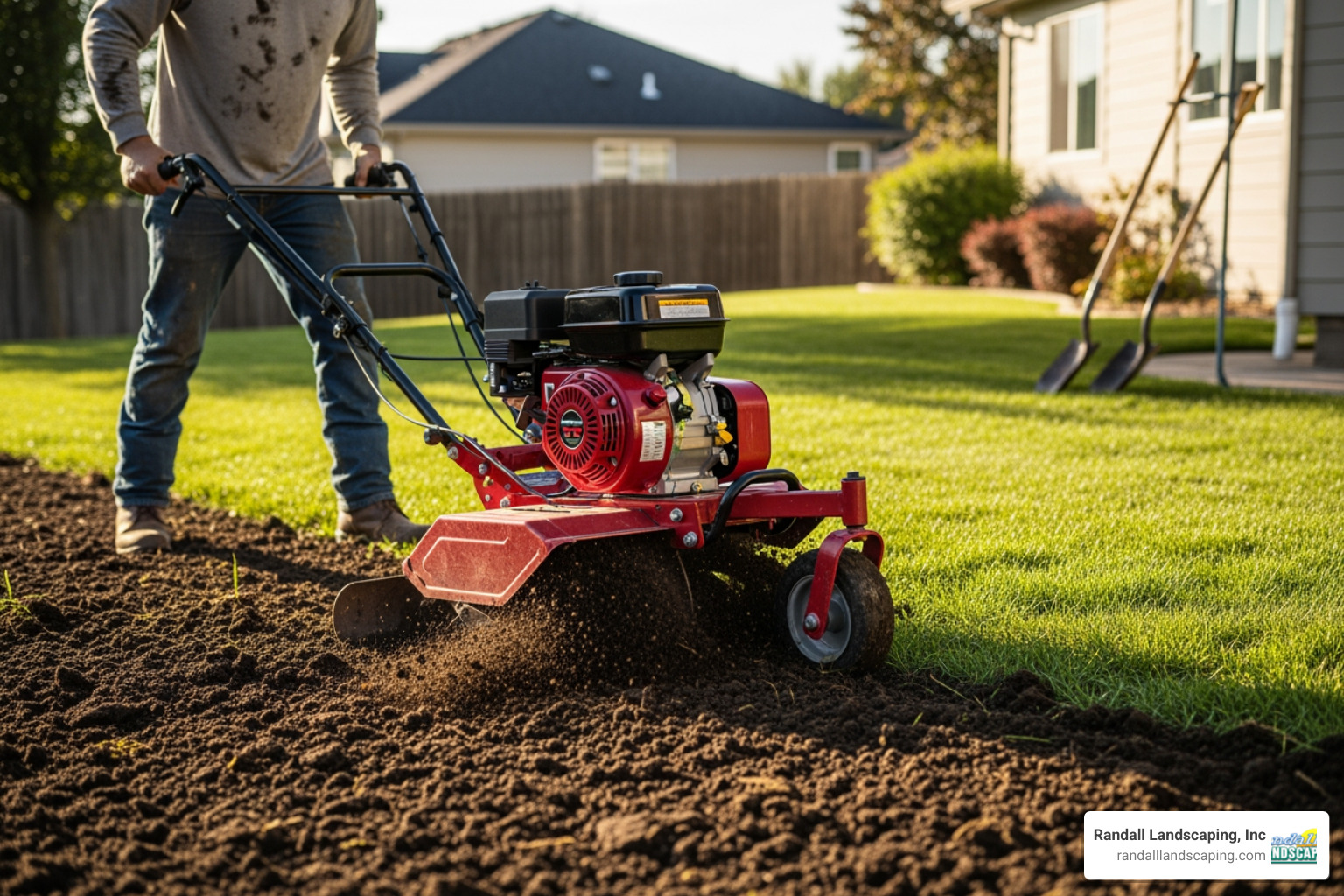
Can sod be laid on existing grass?
No, sod cannot be laid on existing grass. For the new sod to establish strong roots, it needs direct contact with the soil. Laying it over old grass creates a barrier, preventing proper rooting and leading to an unhealthy lawn. We use professional-grade sod cutters to remove the old turf completely. If you’re considering a new lawn, explore our New Lawn Installation services.
Creating the Perfect Bed: Tilling, Amending, and Grading
- Soil Testing: A soil test will determine the pH and nutrient levels. Most turf grasses thrive in a pH between 6.0 and 7.5. This helps us choose the right amendments, like lime for acidic soil or sulfur for alkaline soil.
- Tilling and Amending: We use a rototiller to loosen the soil to a depth of 6 inches. Then, we mix in organic matter like compost to improve soil structure and nutrient content.
- Grading and Leveling: We grade the area to ensure proper drainage, sloping it away from your house. The final surface is raked smooth and should be about 1 inch below any hardscapes like sidewalks or patios. A light roll with a lawn roller creates a firm, even base for the new sod.
The Main Event: A Step-by-Step Guide to Laying Sod
With your soil prepared, it’s time to lay the sod. Sod is a living product and should be installed within 24 hours of delivery for the best results. If you can’t install it immediately, keep the pallets in a shady spot.
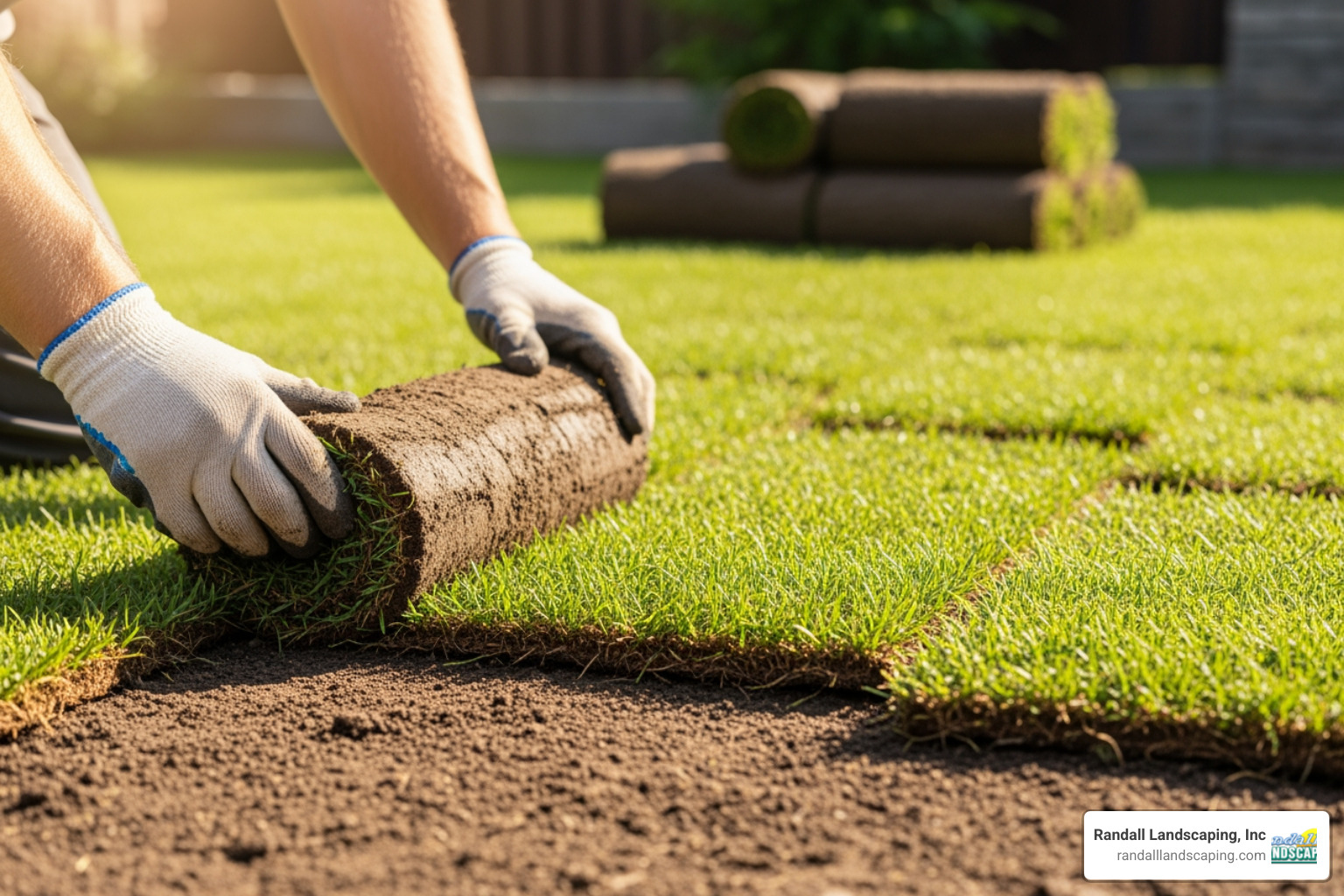
Laying and Finishing Your New Lawn
- Start with a Straight Edge: Begin laying your first row of sod along a straight line, like a driveway or sidewalk.
- Stagger the Seams: Lay subsequent rows in a brick-like pattern. This helps the seams blend together and prevents them from drying out.
- Ensure Tight Seams: Butt the edges of the sod pieces tightly together without overlapping or stretching them.
- Trim to Fit: Use a utility knife to cut sod pieces to fit around curves, sprinkler heads, and other obstacles.
- Roll the Sod: Once all the sod is in place, use a lawn roller to press it down firmly. This ensures good contact between the sod roots and the soil, which is crucial for establishment.
For a professional, hassle-free installation, consider our Professional Sod Installation services. We ensure every step is done right for a perfect result.
The Aftercare: Nurturing Your New Lawn to Establishment
Your work isn’t done once the sod is down. The first few weeks are critical for establishing a healthy, long-lasting lawn.
The Golden Rule of Watering New Sod
Proper watering is the most important step. The golden rule for new sod is consistent moisture, but not saturation.
- Immediate Watering: Water thoroughly within 30 minutes of laying the last piece, soaking the sod and the soil beneath.
- First Week: Water daily, keeping the sod and soil consistently moist but not waterlogged.
- Following Weeks: Gradually reduce watering frequency to every other day, then to twice a week as the roots take hold. A good rule of thumb is to ensure the lawn receives about one inch of water per week, including rainfall.
To check if you’re watering enough, simply lift a corner of a sod piece and see if the soil underneath is moist. It should feel damp, not dry or muddy. For more long-term care and maintenance of your property, consider our Residential Landscaping services.
The Waiting Game: Rooting, Mowing, and Fertilizing
Patience is a virtue, especially with a new lawn.
- Root Establishment (2-3 Weeks): It takes about two to three weeks for new sod to establish roots firmly into the underlying soil. During this time, it’s crucial to minimize disturbance.
- The Tug Test: To check if your sod has rooted, gently tug on a corner of a sod piece. If it resists and you can’t easily lift it, the roots are taking hold!
- First Mow: Do not mow the sod until it has firmly rooted. Once the grass grows to roughly three inches high and has rooted, it’s time for its first trim. We recommend setting your mower at a relatively high blade height (no lower than 2.5 inches) for the initial mowings to avoid scalping. After three or four mowings, you can gradually lower it to your desired height.
- Fertilizing: Your new sod has enough nutrients to start. Wait at least 4-6 weeks before applying any fertilizer to encourage strong root growth. Purdue University Extension offers comprehensive guidance on Establishing a Lawn From Sod.
Signs of Success and Troubleshooting Common Problems
How do you know if your sod installation is successful, and what are potential problems to watch out for?
Signs of Success:
- Uniform Green Color: Your lawn should maintain a consistent, healthy green color.
- Firmly Rooted: The sod pieces should resist lifting when gently tugged, indicating strong root growth.
- Seams Disappearing: Over time, the seams between sod pieces should become less noticeable as the grass grows and spreads.
Potential Problems:
- Yellowing or Brown Spots: This often indicates inconsistent watering – either too much or too little. Check the moisture level by lifting a corner.
- Shrinking Gaps: If gaps appear between sod pieces, it might mean the sod wasn’t pushed tightly enough, or it dried out and shrunk. These can sometimes be filled with topsoil and overseeded.
- Fungal Growth: Overwatering or poor drainage can sometimes lead to fungal issues. Adjusting your watering schedule and improving air circulation can help.
- Sod not rooting: If after 2-3 weeks the sod still lifts easily, it’s a sign of poor root-to-soil contact or insufficient water reaching the roots. Re-rolling and adjusting watering might be necessary.
Frequently Asked Questions about Laying Sod
We get a lot of great questions from our clients in Boxford, Dracut, and Haverhill about their new lawns. Here are some of the most common:
How long until I can walk on my new sod?
While that fresh green carpet is inviting, it’s crucial to minimize foot traffic for at least three weeks after installation. This allows the delicate new roots to firmly establish themselves in the underlying soil. Walking on it too soon can displace the sod, create air pockets, and hinder proper rooting. After three to four weeks, light use should be fine, but we still recommend caution for the first month or so.
What are the most common mistakes to avoid when laying sod?
We’ve seen it all, and most mistakes can be avoided with careful planning and execution. Here’s a list of common pitfalls to steer clear of:
- Poor Soil Preparation: This is number one! Not removing old grass, skipping soil testing, or failing to amend and level the soil will undermine even the best sod.
- Leaving Gaps or Overlapping Seams: Gaps dry out and create an uneven look, while overlapping prevents proper rooting. Always butt pieces tightly together.
- Delaying Installation: Remember the 24-hour rule! Letting sod sit on pallets for too long will cause it to dry out and die.
- Inadequate Watering: Not watering immediately after installation, or inconsistent watering during the establishment period, is a primary cause of failure.
- Walking on it Too Soon: Premature foot traffic compacts the soil and disrupts root establishment.
- Not Rolling the Sod: Skipping the lawn roller leaves air pockets that prevent good root-to-soil contact.
- Choosing the Wrong Sod Type: Selecting a grass that isn’t suited for your yard’s sun exposure, traffic, or climate.
How does sod installation help with erosion control?
Sod is an excellent solution for erosion control, offering immediate benefits that grass seed simply can’t match. Because sod is a mature, pre-grown layer of grass with an established root system, it acts like an instant blanket, holding the soil in place from day one.
This is particularly beneficial for sloped areas in places like Windham or Plaistow, or any newly graded sections of your yard that are vulnerable to heavy rainfall or strong winds. Unlike grass seed, which takes weeks to germinate and develop a fragile root system, sod provides instant stability, protecting your valuable topsoil from washing away.
Conclusion: Enjoy Your Lush, Green Carpet
Laying sod is a fast and effective way to achieve a beautiful, green lawn. The key to a long-lasting result is proper soil preparation, choosing the right type of sod, and consistent watering during the first few weeks. While it can be a rewarding DIY project, it requires significant effort and attention to detail.
For a guaranteed professional result without the hassle, trust the experts at Randall Landscaping, Inc. We serve communities across the Merrimack Valley and Southern New Hampshire, including Amesbury, Andover, Atkinson, Boxford, Dracut, Georgetown, Methuen, Lawrence, North Andover, North Reading, Pelham, Salem, and Windham. Contact us for your Professional Sod Installation Near Me and enjoy a perfect lawn in no time.
Frequently Asked Questions about Laying Sod
We get a lot of great questions from our clients in Boxford, Dracut, and Haverhill about their new lawns. Here are some of the most common:
How long until I can walk on my new sod?
While that fresh green carpet is inviting, it’s crucial to minimize play and foot traffic for at least three weeks after installation. This allows the delicate new roots to firmly establish themselves in the underlying soil. Walking on it too soon can displace the sod, create air pockets, and hinder proper rooting. After three to four weeks, light use should be fine, but we still recommend caution for the first month or so.
What are the most common mistakes to avoid when laying sod?
We’ve seen it all, and most mistakes can be avoided with careful planning and execution. Here’s a list of common pitfalls to steer clear of:
- Poor Soil Preparation: This is number one! Not removing old grass, skipping soil testing, or failing to amend and level the soil will undermine even the best sod.
- Leaving Gaps or Overlapping Seams: Gaps dry out and create an uneven look, while overlapping prevents proper rooting. Always butt pieces tightly together.
- Delaying Installation: Remember the 24-hour rule! Letting sod sit on pallets for too long will cause it to dry out and die.
- Inadequate Watering: Not watering immediately after installation, or inconsistent watering during the establishment period, is a primary cause of failure.
- Overwatering: While rare for new sod, continuous saturation can lead to fungal issues and root rot.
- Walking on it Too Soon: Premature foot traffic compacts the soil and disrupts root establishment.
- Not Rolling the Sod: Skipping the lawn roller leaves air pockets that prevent good root-to-soil contact.
- Choosing the Wrong Sod Type: Selecting a grass that isn’t suited for your yard’s sun exposure, traffic, or climate.
- Failing to Fix Grading Issues: Improper grading leads to drainage problems and standing water.
- Fertilizing Too Early: New sod needs to focus its energy on rooting, not excessive top growth. Wait at least six weeks.
How does sod installation help with erosion control?
Sod is an excellent solution for erosion control, offering immediate benefits that grass seed simply can’t match. Because sod is a mature, pre-grown layer of grass with an established root system, it acts like an instant blanket, holding the soil in place from day one.
This is particularly beneficial for sloped areas in places like Windham or Plaistow, or any newly graded sections of your yard that are vulnerable to heavy rainfall or strong winds. Unlike grass seed, which takes weeks to germinate and develop a fragile root system, sod provides instant stability, protecting your valuable topsoil from washing away.
Conclusion: Enjoy Your Lush, Green Carpet
Laying sod is more than just installing a lawn; it’s about changing your outdoor space into a vibrant, functional extension of your home. The secret to success, as we’ve learned through years of experience in the Merrimack Valley and Southern New Hampshire, lies in meticulous planning, thorough soil preparation, careful installation, and diligent aftercare.
By choosing the right grass for your climate, preparing the soil to perfection, laying the sod correctly, and providing consistent watering and care, you’ll be rewarded with a lush, healthy lawn that improves your property’s beauty and value for years to come.
While laying sod can be a rewarding DIY project, it’s also a significant undertaking that requires time, effort, and the right equipment. For a guaranteed perfect lawn without the hassle, consider the experts at Randall Landscaping, Inc. for your Professional Sod Installation Near Me. We serve communities across Amesbury, Andover, Atkinson, Boxford, Dracut, Georgetown, Methuen, Lawrence, North Andover, North Reading, Pelham, Salem, Windham, and Plaistow, bringing our commitment to quality and customer satisfaction to every project.