Securing Your Home’s Future: Understanding Your Residential Property Maintenance Contract
A residential property maintenance contract is a formal agreement for the ongoing upkeep of your home and yard. It outlines defined services, a schedule of visits, payment terms, and the responsibilities of both the homeowner and the provider.
This legally binding document is a strategic tool for keeping your home in top shape. For busy homeowners who lack the time or expertise for upkeep, these contracts offer a clear path to a well-maintained property. They provide peace of mind by ensuring routine care and handling unexpected issues, ultimately protecting your home’s value and appearance.
I’m Tommy Randall, owner of Randall Landscaping. For nearly two decades, I’ve helped homeowners maintain beautiful outdoor spaces with comprehensive residential property maintenance contract solutions. This guide shares insights from years of experience and building lasting client relationships.
What is a Residential Property Maintenance Contract?
A residential property maintenance contract is a formal, legally binding agreement between a homeowner and a service provider. It details the maintenance services to be performed, the frequency of visits, and the cost. Think of it as your property’s personalized care plan, ensuring nothing important is overlooked.
These contracts allow professional teams to handle everything from weekly lawn care to seasonal cleanups, changing property upkeep from a weekend burden into a scheduled responsibility.

This isn’t just about convenience; it’s about asset management. A well-structured contract is a proactive approach that preserves and increases your property’s value over time.
Defining the Agreement’s Purpose
The primary purpose of a residential property maintenance contract is to establish clear expectations and responsibilities. Written agreements prevent the misunderstandings that can arise from verbal deals.
A comprehensive contract defines the exact scope of work, leaving no room for the “I thought that was included” conversation. It clarifies which services will be provided, when they’ll happen, and the quality standards you should expect. As a maintenance agreement sets out the steps a contractor will take to maintain your property, it ensures everything operates satisfactorily.
By clarifying expectations upfront, we build a professional relationship based on trust and transparency, contributing to the long-term property health of your home.
Types of Maintenance Contracts
Different homes have different needs, so several types of residential property maintenance contract options exist.
- Preventive Maintenance contracts focus on stopping problems before they start through regular inspections and treatments. This means routine fertilization, pest control, and strategic pruning to maintain plant health and avoid costly future disasters.
- Corrective (Reactive) Maintenance contracts address problems after they occur. While they ensure you get help when something goes wrong, this approach is often more stressful and expensive.
- Comprehensive Maintenance agreements offer a complete package, combining preventive and corrective elements. They can cover everything from general landscaping to specific system checks, providing a one-stop solution.
- Seasonal Maintenance contracts are popular in Southern New Hampshire, addressing the unique challenges of each season. A spring contract might focus on preparing beds for growth, while a fall contract handles leaf removal and winterization. For larger properties, seasonal contracts can even include services like Commercial Snow Plowing to ensure safe winter access.
Here’s how Preventive and Corrective Maintenance contracts stack up against each other:
| Feature | Preventive Maintenance Contracts | Corrective (Reactive) Maintenance Contracts |
|---|---|---|
| Primary Goal | Avoid issues before they occur, extend asset lifespan. | Fix problems after they occur. |
| Cost | Predictable, often lower overall costs over time due to fewer major repairs. | Unpredictable, potentially high costs for emergency repairs and associated damage. |
| Response Time | Scheduled in advance, no urgent response needed for covered items. | Urgent response often required for unexpected breakdowns. |
| Long-Term Value | Higher property value, increased longevity of systems and components, reduced homeowner stress. | Can lead to faster degradation of property assets, higher stress, and potentially lower property value over time. |
| Example | Regular Landscape Maintenance Services like mowing, pruning, fertilization. | Emergency tree removal after a storm, fixing a burst pipe. |
Choosing the right contract comes down to your property’s needs, your budget, and how hands-on you want to be. We can help you find the perfect fit for your home and lifestyle.
Key Components of a Strong Maintenance Agreement
A residential property maintenance contract is a partnership that protects your property and peace of mind. A well-crafted contract details legal clauses, financial terms, and insurance requirements, providing a professional document everyone can rely on.

It’s about ensuring you know exactly what you’re getting, when, and at what cost. And just as importantly, it clarifies what happens if something doesn’t go according to plan.
Essential Clauses for Your Residential Property Maintenance Contract
The heart of any strong residential property maintenance contract lies in its clauses, which spell out the details of your property care.
- Scope of Services: This is the most critical section, listing every service we’ll provide (e.g., weekly mowing, Landscape Maintenance Services) and, just as importantly, what’s not included.
- Performance Standards: This defines quality, specifying details like lawn height or that walkways will be cleared of clippings.
- Schedule of Maintenance: This outlines when we’ll be there, such as weekly visits during the growing season, with flexibility for weather delays.
- Payment Terms and Due Dates: Your contract will clearly state the cost, billing frequency, and due dates, with no hidden fees.
- Term and Termination Clause: This specifies the contract’s duration and the process for ending the agreement, typically with 30 days’ written notice.
- Liability and Indemnification: This addresses “what if” scenarios, outlining who is responsible if property is damaged or someone is injured.
- Insurance Proof: We provide documentation of our liability and workers’ compensation insurance. This protects you if a crew member is injured on your property or if we cause accidental damage.
- Dispute Resolution: This provides a roadmap for handling disagreements, usually through mediation or arbitration, before resorting to legal action.
Understanding Legal Responsibilities and Implications
A residential property maintenance contract is a legally binding document. Once signed, both parties have legal obligations: you agree to provide access and timely payment, and we commit to delivering the promised services.
The liability aspect is crucial. Our comprehensive insurance protects you from lawsuits related to maintenance issues. When you hire Randall Landscaping, we are an independent contractor, meaning we handle our own taxes, insurance, and equipment. You don’t have to worry about the complexities of being an employer.
Our team also stays current with all local Merrimack Valley and Southern New Hampshire codes and regulations, ensuring all work is compliant. The contract should also address warranty information for any materials we install. While resources like a Sample Contract for Home Maintenance can be helpful, we design our contracts to be clear and encourage you to ask questions. A contract only works when both parties fully understand it.
The Mutual Advantages of Maintenance Contracts
A residential property maintenance contract creates a win-win partnership. You enjoy a beautiful, well-cared-for home without the hassle, and we can provide consistent, high-quality care. This mutual commitment builds strong, long-lasting relationships and allows us to operate more efficiently.
How Property Owners Benefit
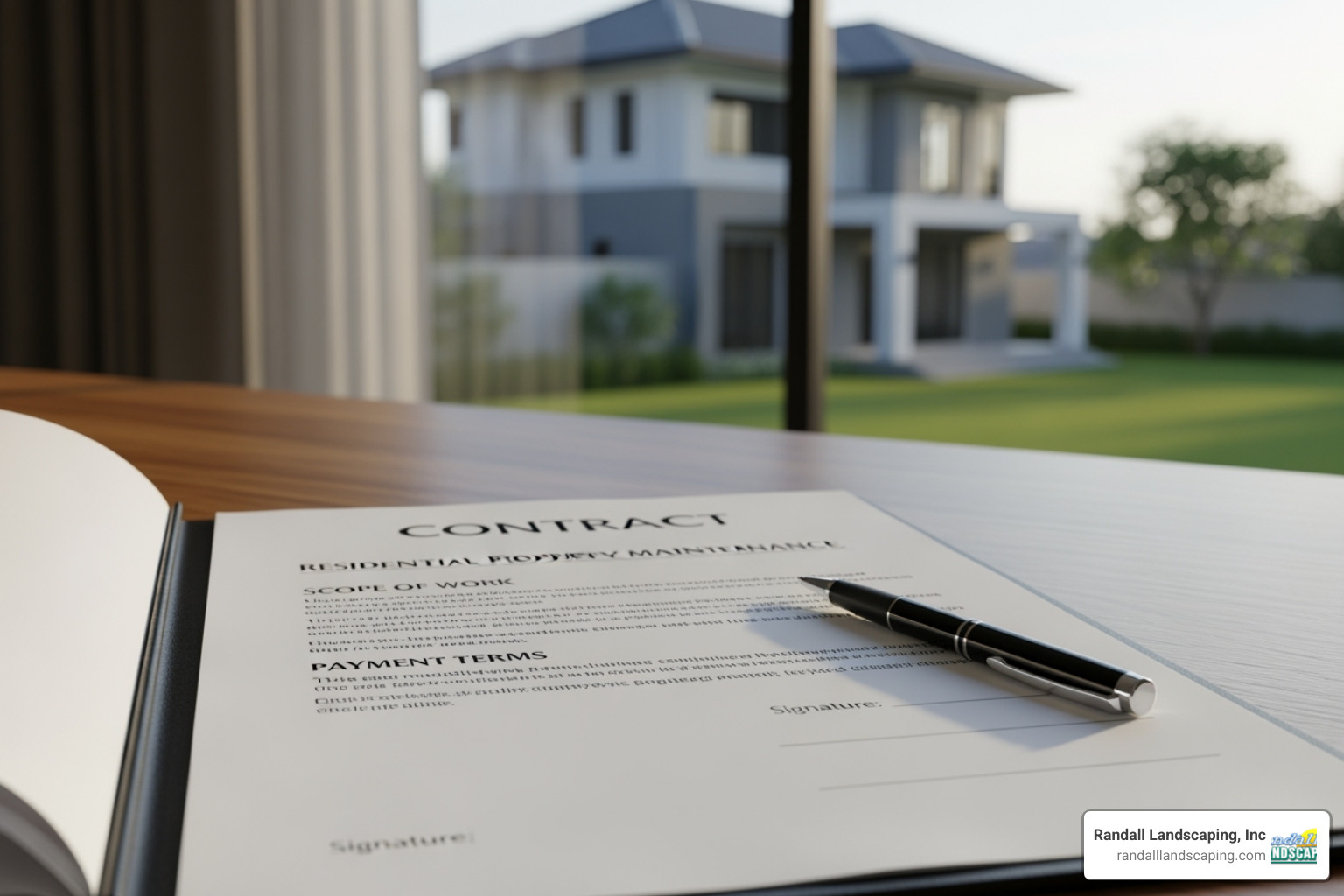
For homeowners, the advantages of a residential property maintenance contract are significant:
- Cost Savings: Proactive care saves money by catching small issues before they become major repairs. As a Forbes Real Estate Council article notes,
[Preventive maintenance can reduce repair costs by up to 30%](https://www.forbes.com/sites/forbesrealestatecouncil/2018/02/12/best-practices-for-efficiency-in-property-maintenance-and-emergency-management/#379498d96c7a). - Reduced Emergency Repairs: Routine checks minimize the chance of sudden, stressful problems.
- Increased Property Value: A consistently maintained home, especially with beautiful
[Residential Landscaping](https://randalllandscaping.com/residential-landscaping/), holds its value and has greater curb appeal. - Time Savings: Delegating maintenance frees up your weekends for family and relaxation.
- Consistent Quality: A contract guarantees regular, professional service from a dedicated team.
- Budget Predictability: A fixed contract price makes budgeting easier and eliminates surprise expenses.
Why Service Providers Offer a Residential Property Maintenance Contract
These contracts are just as beneficial for service providers like us:
- Predictable Revenue: Contracts provide a steady income stream, which is crucial for business planning and retaining staff year-round. Service agreements are key to
[grow your customer base](https://www.contractingbusiness.com/contracting-business-success/article/20870647/service-agreements-to-grow-your-customer-base). - Improved Customer Loyalty: Regular interaction builds trust and rapport, leading to long-term clients and referrals.
- Efficient Scheduling: Contracts allow us to plan routes and allocate resources effectively, improving operational efficiency.
- Upselling Opportunities: During routine visits, we can identify additional ways to improve your property, such as new landscape design or hardscaping projects.
- Reduced Administrative Overhead: Managing contract clients is more efficient than constantly seeking one-off jobs, allowing us to focus on quality service.
Choosing a Contractor and Managing Your Agreement
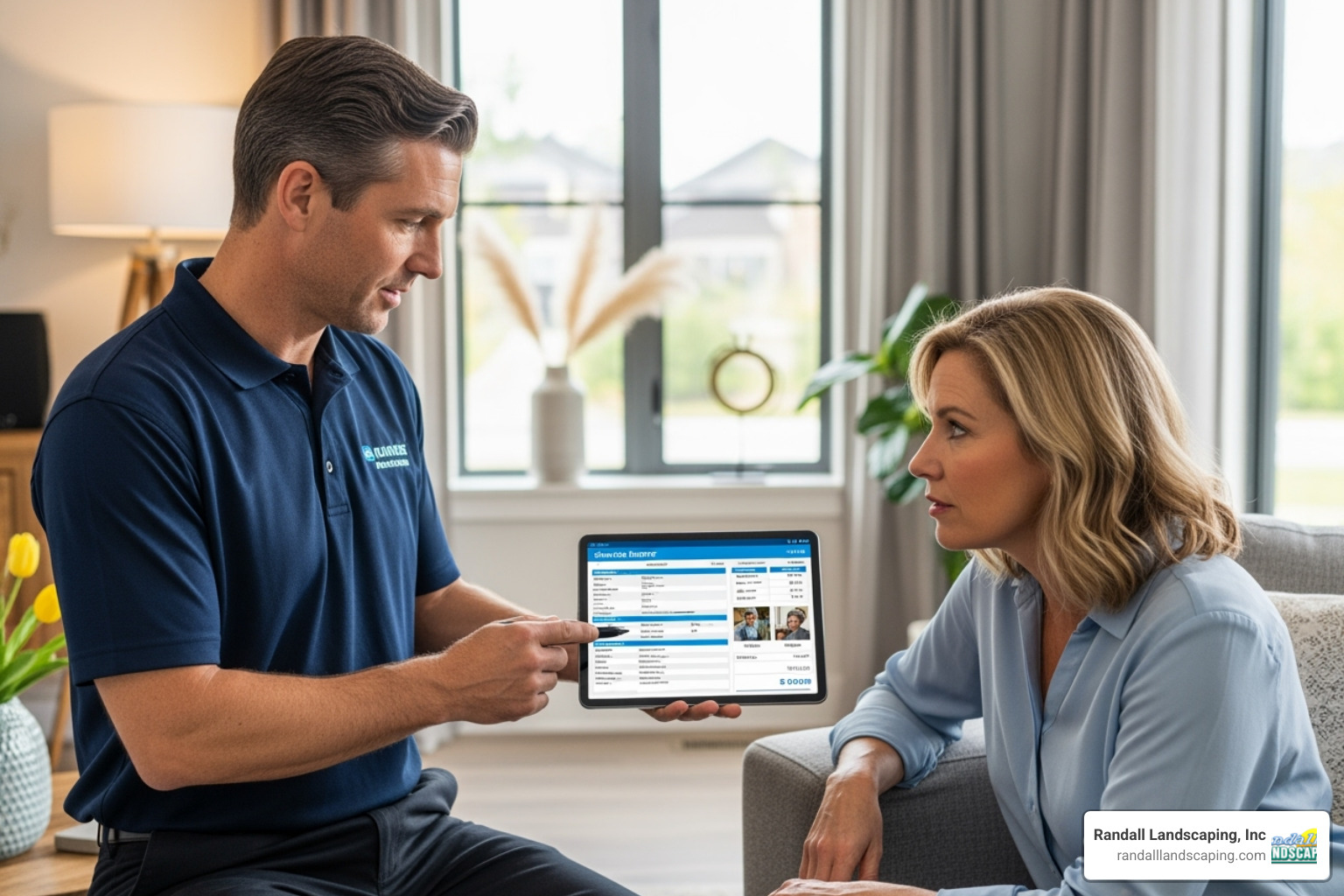
Choosing the right partner for your residential property maintenance contract is a crucial decision. You’re entrusting a team with the care of your most valuable asset. Once you find the right fit, managing the agreement effectively ensures your property stays in great shape.
Key Considerations When Choosing a Contractor
Focus on these key areas to make a confident choice:
- Licensing and Insurance: This is non-negotiable. A licensed contractor meets professional standards, and comprehensive insurance protects you from liability in case of accidents or damage.
- References and Reviews: Check online reviews and ask for references. A contractor with a solid reputation will happily share feedback from other homeowners.
- Experience and Specialization: A contractor experienced with properties like yours will understand its unique challenges. Look for expertise in comprehensive
[Residential Landscaping](https://randalllandscaping.com/residential-landscaping/)and seasonal needs like[Commercial Snow Plowing](https://randalllandscaping.com/commercial-snow-plowing/). - Communication Skills: You need a contractor who is responsive and keeps you informed. Poor communication during the sales process is a red flag.
- Written Estimate: Always get a detailed written estimate breaking down the scope of work and costs before signing anything.
- Understanding of Local Needs: A contractor familiar with the Merrimack Valley and Southern New Hampshire climate, soil, and common plant issues will provide more effective care.
How Technology Streamlines Contract Management
Technology has revolutionized how residential property maintenance contract agreements are managed, making the process more transparent and efficient.
- Automated Scheduling: Software automatically schedules recurring services based on your contract, sending reminders to you and our team.
- Digital Documentation: Work orders, inspection reports, and photos are stored electronically, creating a clear service history.
- Customer Portals: Many systems offer portals where you can view service history, check appointments, review invoices, and message our team.
- Automatic Billing and Renewals: Invoices are sent on schedule, and automatic payments can be set up. The system also sends timely renewal notifications.
- Performance Tracking: Software allows us to monitor contract fulfillment and ensure we consistently meet our commitments.
- Mobile Access: Our technicians arrive with all job details, preferences, and service history on a mobile device, ensuring they are prepared and efficient. As
[Go Time Success Group](https://www.gotimesuccessgroup.com/)notes, this software automates scheduling and customer communications, smoothing operations for everyone.
The result is less paperwork, fewer errors, and better communication.
Frequently Asked Questions about Residential Maintenance Contracts
It’s natural to have questions when considering a residential property maintenance contract. Here are answers to the most common ones I’ve heard from homeowners in the Merrimack Valley and Southern New Hampshire.
What is a fair price for a residential property maintenance contract?
The price of a residential property maintenance contract depends entirely on what you’re getting. Key factors include:
- Property size: A larger property requires more time and materials.
- Scope of services: Basic mowing is less expensive than comprehensive care including fertilization, pest control, and seasonal cleanups.
- Frequency: Weekly visits cost more than bi-weekly or monthly service.
- Geographic location: Local labor costs and market conditions affect pricing.
Based on general internet averages—which are not quotes from Randall Landscaping but industry benchmarks—basic lawn care contracts can range from $150 to $500 or more per month. For comprehensive maintenance plans covering extensive landscaping needs, prices could range from $500 to over $2,000 per month, depending on property complexity.
The only way to get an accurate price is through a detailed on-site assessment where we can create a custom plan for your property and budget.
How do I terminate a maintenance contract?
If you need to end your residential property maintenance contract, the process is usually outlined in the agreement itself.
- Review the Termination Clause: This section will specify the required notice period, typically 30 to 90 days.
- Provide Written Notification: Send your request in writing (email or certified mail) to create a clear record.
- Understand the Reasons: Termination can be for a breach of contract (e.g., failure to provide services) or without cause, as long as proper notice is given. Sometimes a mutual agreement can allow for early termination.
Always review your specific contract terms before taking action.
Are seasonal services like snow plowing included?
This depends on how your residential property maintenance contract is structured. The scope of services is highly customizable. We can design a comprehensive, year-round contract that includes everything from lawn care to snow management.
Alternatively, seasonal add-ons are a popular option. You can have a core landscaping contract and add winter services like Commercial Snow Plowing as needed. In some cases, we draft a separate contract for specialized services like snow removal, which operates on different terms. You can learn more on our Commercial Snow Plowing Contracts page.
The key is to clearly communicate all the services you need for the entire year when setting up your contract. Never assume a service is included unless it’s in writing.
Conclusion
A well-crafted residential property maintenance contract transforms home care from a burden into a predictable process that protects your investment and gives you back your time. These agreements define expectations, outline services, and provide legal protection for both homeowners and providers.
The benefits are clear: cost savings, fewer emergencies, and the peace of mind that comes with professional care. For homeowners in the Merrimack Valley and Southern New Hampshire, the key is finding a partner you can trust. At Randall Landscaping, we’ve built our reputation on quality work and 100% reliability for nearly two decades. We treat your property as if it were our own.
A beautiful, well-maintained home is about protecting a valuable asset and creating a space for you to relax. When you partner with us, you gain a dedicated team that cares about your property’s long-term health.
Ready to take the stress out of property maintenance? Explore our comprehensive residential landscaping services and find how a residential property maintenance contract with Randall Landscaping can give you the pristine property you’ve always wanted, without the hassle.